Shoulder Level Test
Shoulder Level Test is a simple seated posture check that helps you see whether both shoulders sit evenly when you are tall on a flat bench. It is not a power movement or a loaded lift; the point is to create a repeatable position that exposes asymmetry in the shoulder girdle, ribcage, and upper back. That makes it useful for warmups, assessment work, and any session where you want a clearer picture of how you are sitting and stacking before you train.
When you hold the posture correctly, the work shifts to the stabilizers around the shoulder blades, the rotator cuff, the upper back, and the core that keeps the ribcage from drifting. The bench gives you a simple reference point, so small changes in shoulder height or trunk rotation are easier to notice. A clean Shoulder Level Test is calm and symmetrical: both sit bones stay planted, the head stays centered, and the arms hang without hiking the upper traps.
Set up by sitting in the middle of the bench with your feet flat and roughly hip-width apart, then let both arms rest straight by your sides. Lengthen through the crown of the head, soften the ribs down, and keep the chin level so you are not tilting to one side to fake an even line. If you are using the position as a screen, stay in the same seat depth and foot placement each time so the comparison is meaningful.
From there, take a quiet breath and hold the posture long enough to compare the left and right shoulder height. Do not squeeze the shoulders down hard or arch the low back to make the line look better, because that usually hides the real pattern you are trying to observe. If one shoulder wants to rise, notice it, exhale, and re-set to the same neutral seat instead of twisting or leaning away from it.
Shoulder Level Test is most useful when you need a quick check before overhead pressing, pulling, or any movement where shoulder position matters. It is also helpful after long periods of sitting, when one side can drift higher without you noticing. Keep the test pain-free, repeat it under the same setup, and treat it as a posture check rather than something to force through range or load. A better result comes from honesty in the setup and consistency in the hold, not from trying to look perfectly even at all costs.
[ Workout Log & Planner ]
Put your next workout in Fitwill
Keep your plan and training log ready when you are.


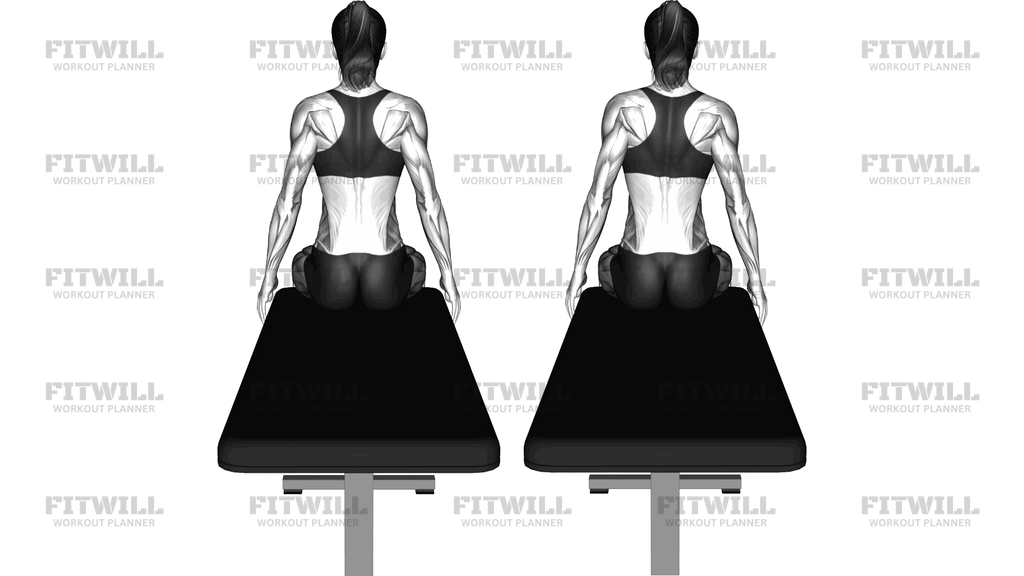
Instructions
- Sit in the middle of a flat bench with both feet planted and your weight evenly spread across both sit bones.
- Let both arms hang straight beside the bench with relaxed hands and level shoulders.
- Stack your head over your ribs and your ribs over your pelvis without leaning or twisting.
- Take a breath in, then lengthen through the crown of your head while keeping the chin level.
- Check that both shoulders sit at the same height and that the upper traps are not hiking up.
- Hold the position for the prescribed test time while breathing quietly through the nose or mouth.
- If one shoulder climbs or the torso shifts, exhale and re-center on the bench instead of forcing a correction.
- Keep the same foot placement and bench contact for each repeat so the comparison stays consistent.
- Finish by relaxing the posture, stepping off the bench under control, and noting any left-right difference.
Tips & Tricks
- Use a flat, firm bench; a soft seat can hide small shoulder-height differences.
- Keep your hands relaxed instead of bracing on the bench, or the shoulders may look artificially level.
- If the chin juts forward, the upper back usually follows; reset the head over the chest before judging the line.
- Let the ribs settle instead of flaring them up to make one side look better.
- Compare shoulder height after a full exhale, because a held breath can lift both shoulders.
- If one side always looks higher, repeat the check from the same foot position before blaming the shoulder itself.
- Do not pinch the shoulder blades together hard; that can hide the resting position you are trying to observe.
- Stop the test if the shoulder pinches or the neck tightens; this should feel like a quiet posture check, not a strain.
Frequently Asked Questions
What does Shoulder Level Test measure?
It checks how evenly the shoulders sit when you are upright and relaxed on a bench.
Which muscles are doing the work in Shoulder Level Test?
The upper back, rotator cuff, and core stabilize the posture while the arms stay quiet.
Do I need to actively push my shoulders down?
No. Hold a tall neutral position and observe the natural shoulder height instead of forcing it.
Why is the bench position important in Shoulder Level Test?
A flat bench gives you a consistent reference so hip tilt and uneven sitting are easier to spot.
Can I use Shoulder Level Test before pressing or overhead work?
Yes. It is a useful quick screen before movements that depend on shoulder position.
What should I do if one shoulder is higher?
Re-set your seat, check your head and rib position, then compare again without twisting or shrugging.
Is Shoulder Level Test supposed to be painful?
No. It should be a calm, pain-free posture check; stop if you feel pinching, sharp pain, or neck strain.
How long should I hold Shoulder Level Test?
Long enough to compare both sides and breathe steadily, usually just a short hold rather than a long isometric effort.