Posterior Chain Flexibility Test
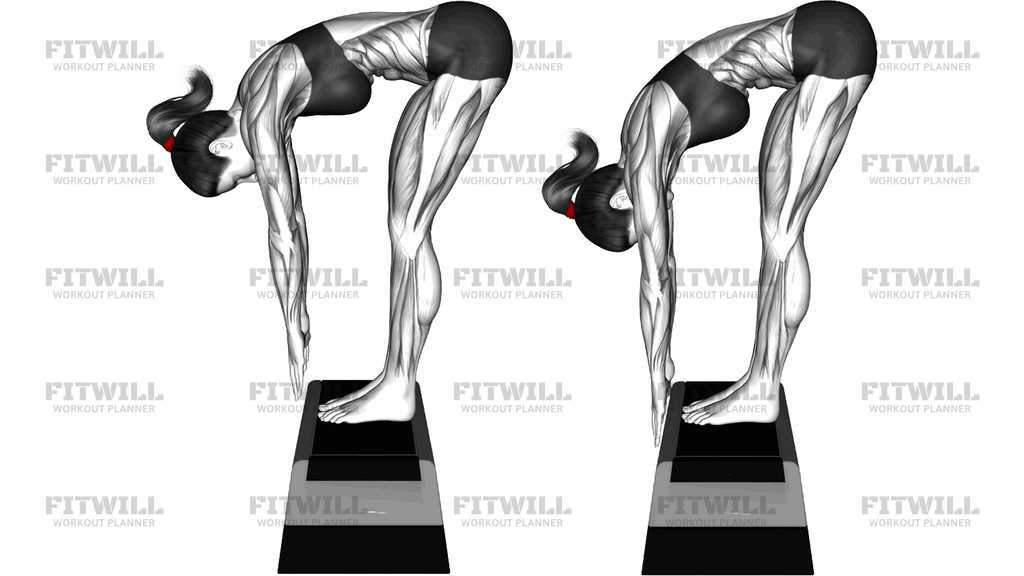
Posterior Chain Flexibility Test is a standing forward-fold assessment for the back of the body. The image shows you standing on a raised platform and hinging into a deep toe-touch position so the body can reveal how freely the hamstrings, calves, glutes, and lower back lengthen together. It is less about strength and more about how well you can control the fold, breathe through the stretch, and keep the pelvis and knees organized while you reach.
The raised platform matters because it gives the feet a fixed surface while the torso folds below the level of the toes. That makes the range easier to observe and compare from session to session. A good test starts with balanced feet, a calm brace, and a slow hip hinge before the spine rounds. If you rush the fold or dump your weight into the forefoot, the result turns into a balance challenge instead of a clean look at posterior-chain mobility.
During the bottom position, the goal is a long, even stretch rather than a forced touch. The hands can slide down the shins, ankles, or toward the floor depending on your range, but the key is to let the neck relax and to keep breathing instead of bouncing. Slight knee softness is acceptable if it lets you keep a smooth hinge, but dramatic knee bend changes the test and hides how much length the hamstrings and calves actually have.
This movement is useful in warmups, mobility checks, rehab-style screenings, and as a simple way to track improvement over time. It can also show side-to-side asymmetry through small shifts in pelvis height, knee bend, or foot pressure even though the body is facing forward. Stop the test if you feel sharp pain, tingling, or a hard pinch in the lower back, and repeat only with the same setup each time so your results stay comparable.
[ Workout Log & Planner ]
Put your next workout in Fitwill
Keep your plan and training log ready when you are.


Instructions
- Stand centered on the platform with both feet flat, parallel, and hip-width to together, and keep the toes pointing forward.
- Spread the weight evenly through the whole foot so you are not pitched onto the toes or rocking back onto the heels.
- Soften the knees just enough to avoid locking them hard, then brace lightly through the midsection.
- Hinge the hips backward first and let the arms hang toward the floor before you actively reach any lower.
- Exhale and fold forward, sliding the hands down the shins toward the ankles, toes, or edge of the step.
- Keep the neck relaxed and let the head drop with the torso instead of lifting to look forward.
- Pause at the deepest comfortable position and breathe into the back of the legs without bouncing or pulsing.
- Return to standing by driving the hips forward and stacking the spine slowly until you are tall again.
Tips & Tricks
- Keep the same foot position on every attempt so the test measures flexibility, not stance changes.
- A tiny knee bend is fine, but if the knees keep drifting farther forward you are turning the move into a squat.
- The fold should start at the hips; if your chest drops first, the lower back is doing too much of the work.
- Reach only as far as you can maintain steady breathing and a smooth hamstring stretch.
- Do not bounce at the bottom. A long exhale usually creates a better stretch than forcing another inch.
- If your fingers do not reach the toes, measure the same distance from the platform each time instead of chasing contact.
- Keep pressure through the entire foot. Lifting the heels or collapsing the arches changes the feel of the test.
- Sharp pain, numbness, or a pulling sensation behind the knee is a sign to shorten the range immediately.
Frequently Asked Questions
What does the Posterior Chain Flexibility Test measure?
It mainly shows how well the hamstrings, calves, glutes, and lower back lengthen together in a forward fold.
Why am I standing on a platform for this test?
The raised surface lets your hands travel below the feet so the depth of the fold is easier to see and compare.
Should my knees stay straight on the platform?
Keep them mostly straight, with only a small softness if needed. A big knee bend hides the true posterior-chain range.
Do I need to touch my toes or the floor?
No. The goal is a repeatable stretch position, not forcing contact if your current range does not allow it.
Where should I feel this movement?
You should feel it mainly in the back of the legs, with some stretch through the glutes and lower back if the fold is clean.
What is the biggest mistake in this toe-touch style test?
Bouncing, locking the knees, or dumping all the weight into the toes usually makes the result less accurate.
Can beginners do the Posterior Chain Flexibility Test?
Yes. Beginners can use a smaller fold and keep the knees slightly soft while they learn the pattern.
How long should I hold the bottom position?
Hold it long enough to breathe calmly and compare range, usually a few steady breaths or the length your program calls for.