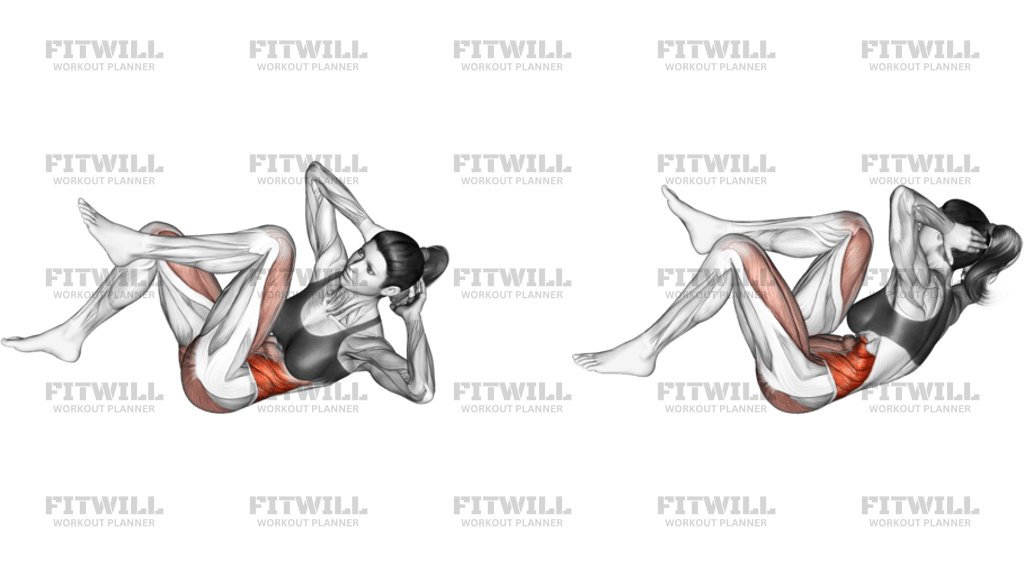
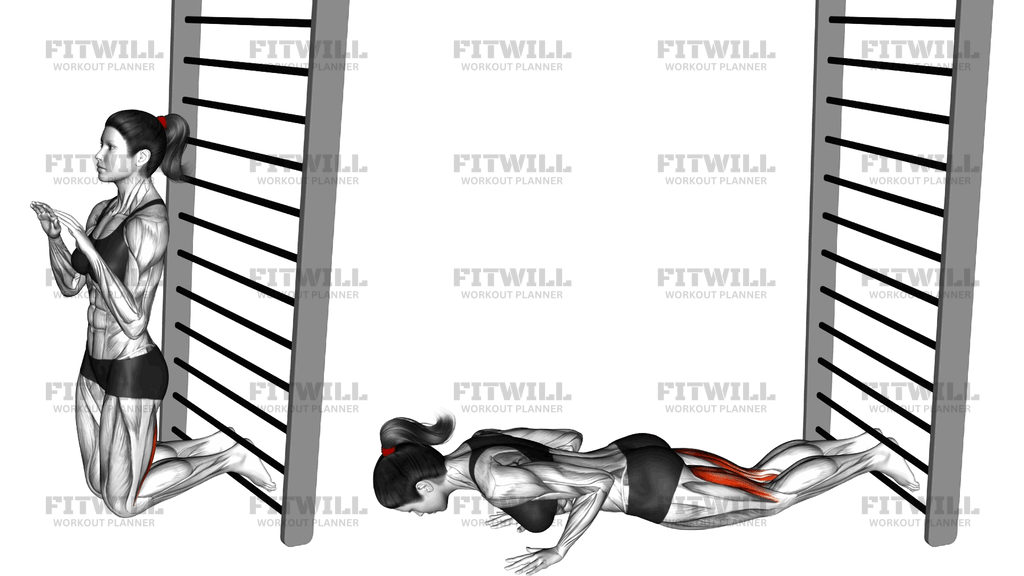
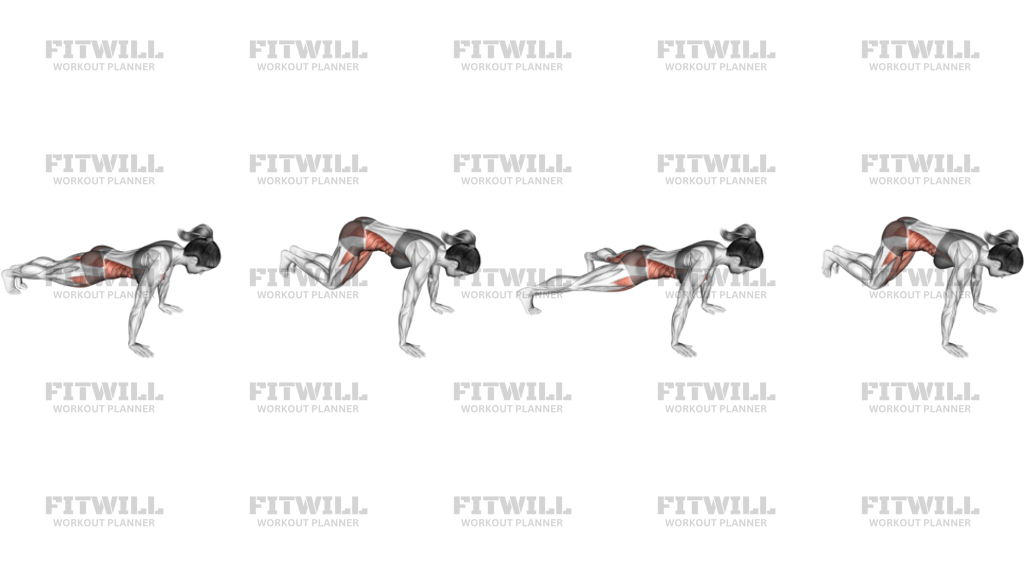
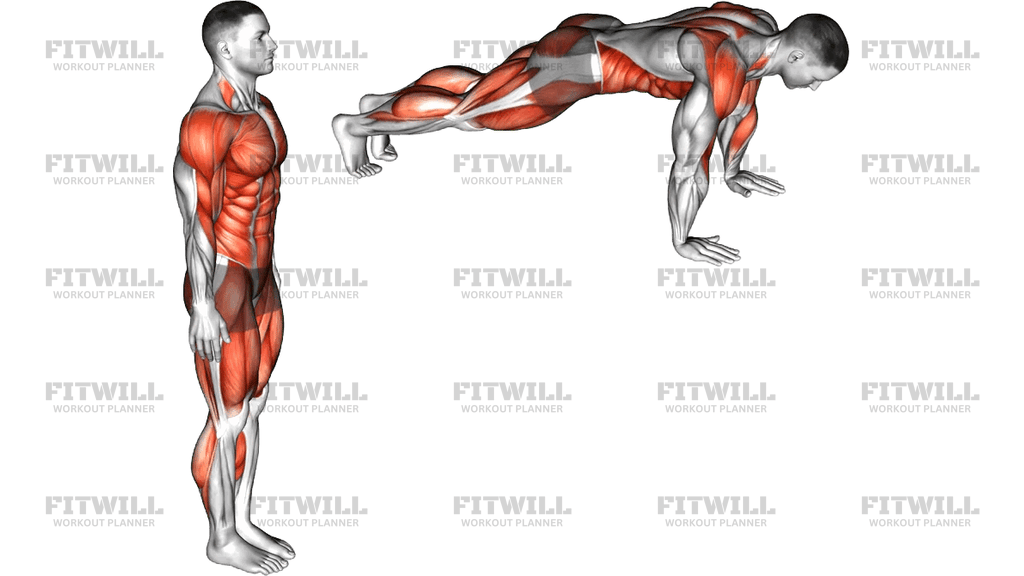
Side And Front In Out
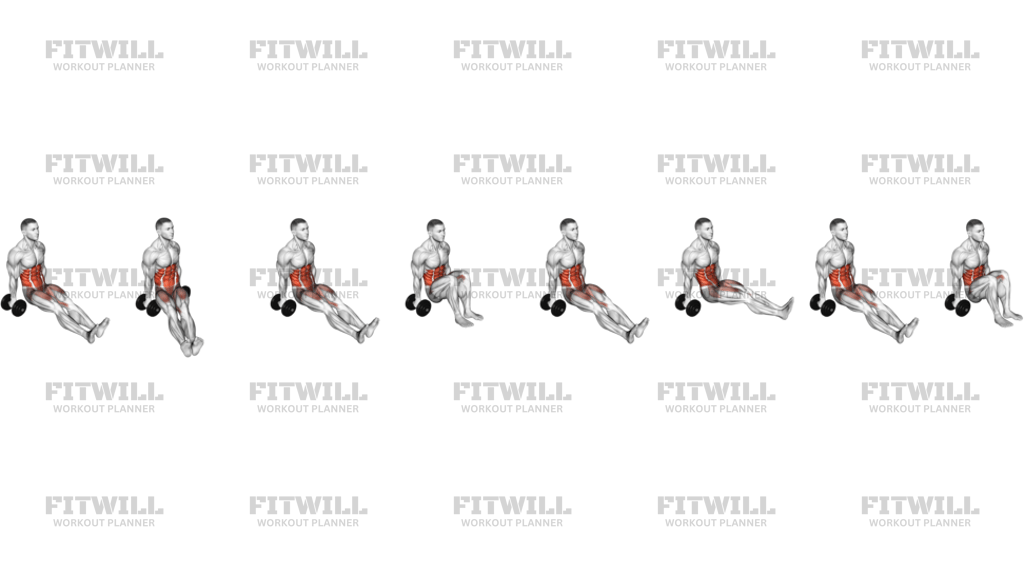
Side and Front In Out is a seated bodyweight core drill built around controlled leg movement while the torso stays braced and mostly still. In the image, the lifter is supported on the hands behind the hips, leaning back just enough to keep the abdominals working, with the legs moving between a tucked position and a longer, more open position. That makes the exercise feel less like a pure crunch and more like a coordination drill for the waist, hips, and lower abdominals.
The setup matters because the hands, shoulder angle, and torso lean decide whether the set stays crisp or turns into a swing. Sit on the floor with the palms behind you, chest open, ribs down, and weight shared between the hands and sit bones. From there, keep the pelvis steady while the legs travel in and out under control. If your version includes a slight side-to-side path, keep it small and deliberate; the goal is to control the hips, not to roll the whole body.
This exercise is useful when you want trunk control, hip flexor involvement, and a low-load abdominal challenge without equipment. It can work as a warm-up drill, an accessory core movement, or a short finisher because it teaches you to hold posture while the legs move. The value comes from staying organized through the range, not from chasing speed or forcing the feet lower than you can control.
A good rep looks smooth: the torso stays tall enough to keep tension in the abs, the shoulders stay relaxed, and the legs move with a clear in-and-out rhythm rather than bouncing. Control the return as carefully as the reach, especially if the legs straighten or sweep outward. If the lower back starts to arch, shorten the range or keep a slight bend in the knees. The exercise should finish with the core engaged, not with the neck strained or the hips collapsing backward.
Fitwill
Log Workouts, Track Progress & Build Strength.
Achieve more with Fitwill: explore over 9600 exercises with images and videos, access built-in and custom workouts, perfect for both gym and home sessions, and see real results.
Start your journey. Download today!




Instructions
- Sit on the floor with your hands behind your hips and your fingertips angled out or slightly back for support.
- Lean your torso back just enough to feel your abs switch on while keeping your chest open and your neck long.
- Plant your sit bones, keep your shoulders away from your ears, and set your feet so the legs can move freely.
- Begin with the legs in the starting position shown in the image, either tucked in or extended depending on your program's rep pattern.
- Draw the legs inward under control, keeping the pelvis steady instead of rocking backward on the spine.
- Move the legs back out or slightly to the side as required, but keep the motion small enough that the trunk stays quiet.
- Exhale as you pull the legs in or make the hardest part of the rep, then inhale as you open the legs back out.
- Keep the lower back long and avoid letting the ribcage flare as the legs extend.
- Repeat for the planned reps, then lower the feet and sit up before releasing the support with your hands.
Tips & Tricks
- Keep your palms planted far enough behind you that you can support the lean without shrugging the shoulders.
- If the legs are straight, stop the range before the low back starts to round or the pelvis tips under hard.
- A small knee bend is better than forcing a long lever that makes you swing through the rep.
- Think about pulling the thighs toward the torso instead of yanking the feet with momentum.
- If the rep includes a slight side travel, keep the pelvis square and let the hips do only a small amount of work.
- Do not let the chest collapse toward the thighs; keep the ribcage stacked over the hips as much as the position allows.
- Slow the return phase down because that is where the abs and hip flexors have to resist the most.
- If your shoulders feel overloaded, move the hands a little wider behind you so the support is more stable.
Frequently Asked Questions
What does Side and Front In Out train most?
It mainly trains the abdominals and hip flexors, with the deep trunk stabilizers working to keep the torso from rocking.
Why are my hip flexors doing most of the work?
That usually means the torso is too upright or the legs are extending too far. Lean back slightly more, shorten the range, and keep the ribs down.
How should my hands be positioned?
Place your hands behind your hips with the palms down so they can support the lean without forcing your shoulders to shrug.
Can beginners do this exercise?
Yes. Start with a small range, keep one knee bent if needed, and prioritize balance and control over leg length.
Should my lower back stay flat the whole time?
The goal is to keep it long and controlled, not to jam it flat. If the back starts to arch or collapse, shorten the leg reach.
What is the most common mistake?
People usually swing the legs or push too far out and lose trunk control. The rep should look smooth, not explosive.
How can I make Side and Front In Out harder?
Straighten the legs a little more, slow down the return, or reduce how much the hands help support your body.
Where does the side and front part come in?
If your version sweeps the legs slightly side to side as well as in and out, keep the sweep small and let the hips move without twisting the chest.