Supported Headstand Yoga Pose Sirsasana
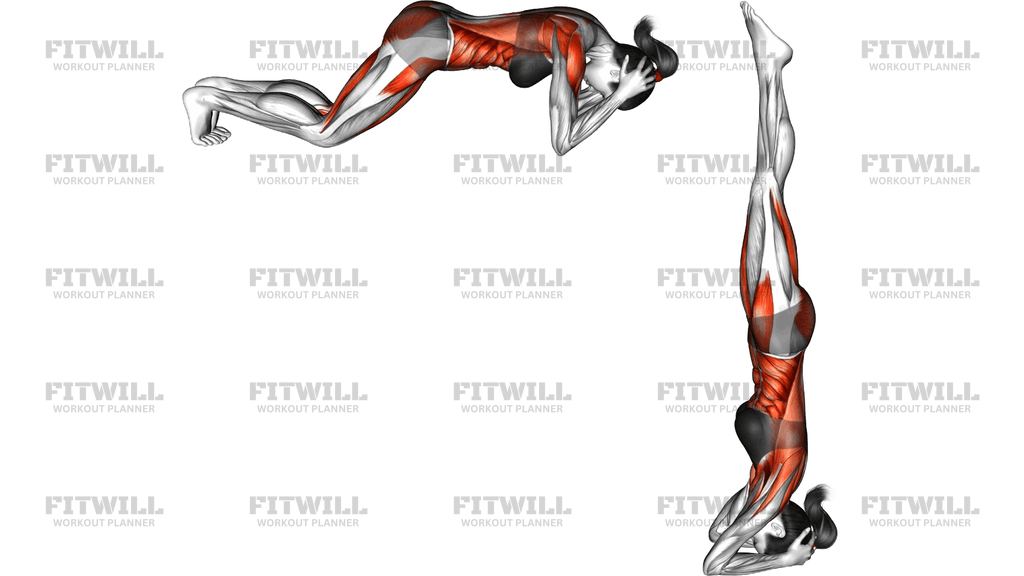
Supported Headstand Yoga Pose Sirsasana is an inverted yoga balance built around a stable base on the forearms and crown of the head. The pose trains shoulder stability, upper-back engagement, trunk control, and whole-body coordination while also demanding calm breathing and precise line through the torso and legs. Because the body is upside down, the setup matters as much as the hold itself: the elbows, head, shoulders, and hips need to stack in a way that keeps the neck protected and the balance point predictable.
This variation is usually learned as a controlled hold rather than a fast repetition pattern. The support can come from the forearms, the hands, and, when needed, a wall or spotter while you practice entering and exiting without rushing. The goal is not to throw the legs up; it is to build a clean vertical line from the elbows through the hips and ankles with enough upper-back pressure to keep the weight off the neck. When done well, the pose feels organized, quiet, and deliberate instead of wobbly.
The starting position is critical. A narrow or unstable elbow base, a collapsed shoulder line, or a head position that carries too much load can quickly turn the movement into a neck exercise instead of an inversion. A good rep or hold begins with the forearms grounded, the shoulders active, the ribs contained, and the pelvis moving over the shoulder line before the legs extend. That gives you a safer path into the balance and makes the return to the floor just as controlled as the entry.
Use this pose when the session calls for balance skill, shoulder and core integration, or a controlled inversion with a low impact on the joints compared with jumping or impact-based work. It fits best in a technique block or the calmer part of a yoga sequence, where you can hold the shape, breathe steadily, and exit before form breaks down. If the neck feels compressed, the elbows drift wide, or the legs have to kick violently to get up, reset and shorten the hold. This is a precision drill, not a momentum drill.
[ Workout Log & Planner ]
Put your next workout in Fitwill
Keep your plan and training log ready when you are.


Instructions
- Kneel on a mat and place your forearms on the floor with your elbows directly under your shoulders.
- Interlace your fingers or cup your hands, then lower the crown of your head to the floor so your head and forearms form a stable tripod-like base.
- Press your forearms down and lift your shoulders away from your ears before moving any weight into the inversion.
- Tuck your toes and walk your feet in until your hips begin to rise over your shoulders, keeping your ribs pulled in.
- Shift more weight into your forearms than your neck, and keep your gaze steady between your hands.
- Lift one knee, then the other, or float both feet up slowly if you already have the control to do so.
- Stack your hips over your shoulders and extend your legs upward with your inner thighs lightly engaged.
- Breathe steadily while you hold the position, then lower one leg at a time and walk your feet back out with control.
Tips & Tricks
- Keep the elbows shoulder-width apart; if they flare wider, the base gets less stable and the neck takes more strain.
- Most of the load should stay in the forearms and shoulders, not on the crown of the head.
- Press the floor away through the forearms so the upper back stays active instead of sinking into the shoulders.
- If the kick-up feels messy, keep one knee bent or use a wall so you can enter the pose without swinging.
- Do not try to muscle your way up with a big jump; a small, controlled lift is safer and more repeatable.
- Keep the ribs drawn in and the pelvis stacked so the body line stays vertical instead of banana-shaped.
- Look for quiet breathing; if you have to hold your breath to stay up, shorten the hold.
- Come down before your balance turns into neck pressure, shaking elbows, or a hard landing.
Frequently Asked Questions
What does Supported Headstand Yoga Pose Sirsasana train?
It mainly challenges shoulder stability, upper-back support, core control, and balance while you hold an inverted position.
Should my weight be on my head or my forearms?
Most of the support should come from the forearms and shoulders, with the head only lightly touching the floor for balance.
How do I know my base is set correctly?
Your elbows should stay under your shoulders, your forearms should press evenly into the floor, and your shoulders should feel active instead of collapsed.
Can beginners do this pose?
Yes, but beginners should use a wall, a short hold, or a partial lift until the entry and exit feel controlled.
What is the most common mistake?
Kicking up hard and dumping too much weight into the neck instead of building the inversion from a stable forearm base.
Why does my lower back arch when I go up?
That usually means the ribs are flaring and the pelvis is drifting forward; keep the ribs tucked and bring the hips over the shoulders before straightening the legs.
How should I come out of the pose?
Lower one leg at a time, keep the forearms grounded, and walk the feet back out instead of dropping out of the inversion.
What if my neck feels compressed?
Stop the hold, reset the forearm base, and reduce the amount of weight on the head before trying again.