Forearms Stand Yoga Pose Pincha Mayurasana
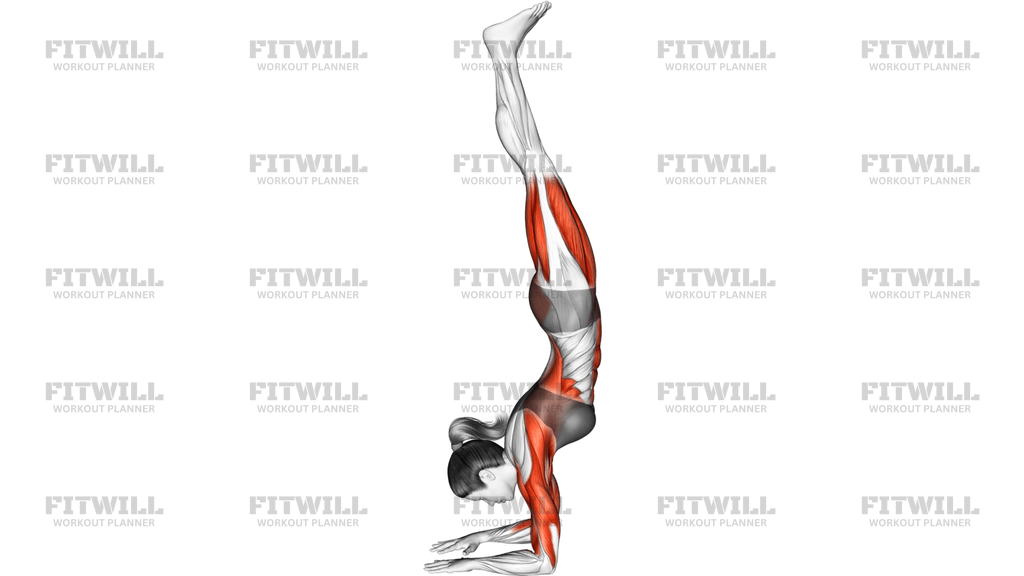
Forearms Stand Yoga Pose Pincha Mayurasana is a demanding inversion that places the body on the forearms while the legs stack overhead in a long vertical line. It is less about moving a weight and more about holding a precise shape under tension, which makes it useful for shoulder stability, upper-back control, core strength, and full-body coordination. The pose also teaches patience, because the best reps come from a steady setup rather than a rushed kick-up.
In a good Pincha Mayurasana, the forearms create a wide, stable base and the shoulders actively press away from the floor. The head stays light, the neck stays free, and the torso stays organized so the balance comes from stacking rather than collapsing. That alignment matters more than height, because drifting through the lower back or dumping into the shoulders usually makes the inversion feel shaky and short-lived.
The setup should be deliberate. Place the forearms on the floor with the elbows under the shoulders, hands flat or lightly clasped, and the fingers spread for control. From there, walk the feet in, lift the hips, and enter the balance with a controlled kick-up, a split entry, or a wall-assisted variation if you are still learning the pattern. Once you are up, keep the ribs contained, squeeze the legs, and reach the feet toward the ceiling instead of arching backward to look taller.
This exercise is useful in yoga sessions, mobility work, and advanced bodyweight training because it builds the kind of overhead stability that carries over to handstands, arm balances, and other inversions. It is also a good test of shoulder tolerance and body awareness, but it should never feel jammed in the neck or pinched in the front of the shoulders. If you cannot keep the line clean, work a partial range, use the wall, or practice dolphin pose until the forearm base and shoulder position feel secure.
[ Workout Log & Planner ]
Put your next workout in Fitwill
Keep your plan and training log ready when you are.


Instructions
- Kneel on the floor and place your forearms down with your elbows under your shoulders, your hands flat, and your fingers spread for grip.
- Set your forearms parallel or slightly angled in, then press the inner edges of the forearms and hands into the mat so the base feels firm.
- Tuck your toes, walk your feet closer to your elbows, and lift your hips high like a strong dolphin base before you leave the floor.
- Keep your shoulders active and your ribs drawn in as you shift your weight forward onto the forearms.
- Kick one leg up at a time, or lift both legs together if you are strong enough to control the entry without swinging.
- Stack your hips over your shoulders, squeeze your legs together, and point your toes so the body line stays long.
- Breathe steadily while you hold the balance, making only small corrections through the shoulders and forearms.
- Lower with control by bringing one leg down at a time, then rest in dolphin or kneeling before repeating.
Tips & Tricks
- Keep the head light and let the forearms, shoulders, and upper back do the work instead of resting weight on the skull.
- If your elbows keep sliding, practice with a folded mat or towel under the forearms so the base does not drift.
- Think about pushing the floor away through the forearms; that upward shoulder action keeps the chest from sinking.
- A small tuck of the ribs and tailbone helps prevent the banana-back shape that makes Pincha Mayurasana unstable.
- Squeeze the inner thighs together once you are inverted so the legs behave like one long line instead of two separate levers.
- Use a wall until you can hold the forearm stack without overkicking or wobbling through the lower back.
- If you feel compression in the front of the shoulders, come down and rebuild the hold from a shorter kick-up or dolphin work.
- Lower before fatigue turns into a hard arch, because sloppy exits are where the neck and shoulders usually lose position.
Frequently Asked Questions
What muscles does Forearms Stand Yoga Pose Pincha Mayurasana work?
It mainly challenges the shoulders, upper back, core, and triceps, with the glutes and inner thighs helping keep the body line stacked.
Is Forearms Stand Yoga Pose Pincha Mayurasana beginner-friendly?
Not as a full inversion. Most beginners should build it with dolphin pose, wall kicks, and short holds before trying a free balance.
Should my head touch the floor in Forearms Stand Yoga Pose Pincha Mayurasana?
No. The weight should stay on the forearms and shoulders, with the head light and the neck free.
How wide should my forearms be?
Set the elbows about shoulder-width apart and keep the forearms parallel or only slightly turned in so the base feels stable.
Can I use a wall for Forearms Stand Yoga Pose Pincha Mayurasana?
Yes. A wall is one of the best ways to learn the balance, especially if you need help stacking the hips without overkicking.
Why do I keep arcing my back in the inversion?
Usually the ribs are flaring or the kick-up is too aggressive. Keep the ribs tucked, squeeze the legs, and aim the feet straight up instead of back.
What is a good substitute if I cannot hold the full pose?
Dolphin pose is the best substitute because it trains the same forearm base, shoulder angle, and core demand without full inversion.
How do I come down safely from Forearms Stand Yoga Pose Pincha Mayurasana?
Lower one leg at a time, bend the knees if needed, and return to dolphin or kneeling before resetting for another attempt.