Cow Yoga Pose Bitilasana
Cow Yoga Pose Bitilasana is a floor-based spinal extension exercise performed on hands and knees. It is a controlled yoga drill, not a loaded strength movement, and its value comes from how cleanly you move the spine, pelvis, and breath together. The body should flow into extension without collapsing into the lower back or shrugging through the shoulders.
In the cow position, the chest reaches forward, the tailbone tips up, the abdomen lengthens, and the collarbones stay open. That shape puts the emphasis on the front of the trunk and the muscles that help extend the spine, while the shoulders, hips, and midsection stabilize the position. In practical terms, it is a mobility and control exercise for the thoracic and lumbar spine, often used to teach better spinal awareness before harder lifting, running, or core work.
Setup matters because this pose is easy to overdo. A good rep begins with the hands under the shoulders, knees under the hips, and weight spread evenly through the palms and shins. From there, the movement should be smooth and deliberate: inhale as you let the belly soften, lift the sitting bones, and guide the chest forward. The neck stays long so the head follows the line of the spine instead of cranking upward.
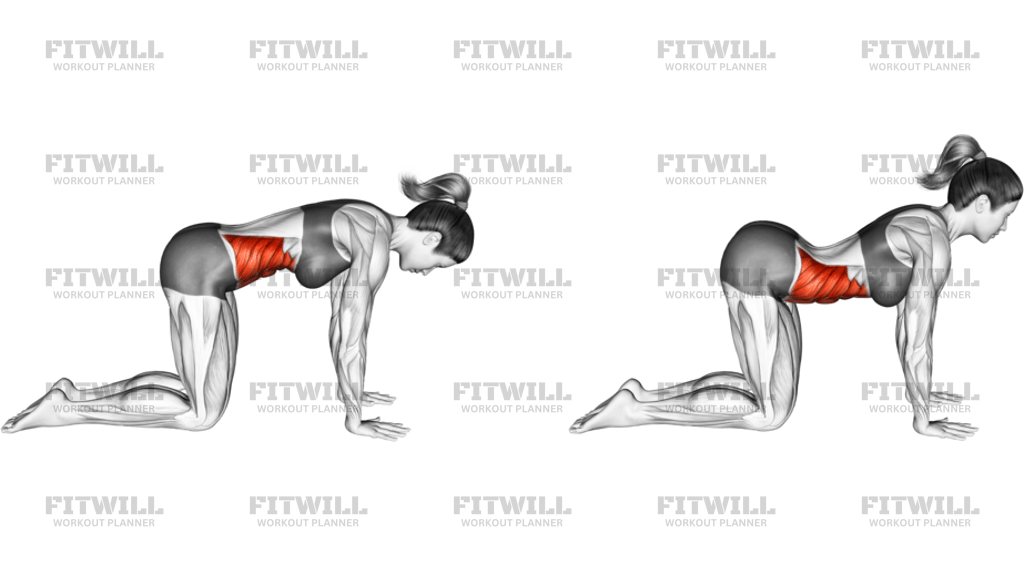
The image for this exercise shows the transition into a clearly arched cow position, with the midsection lengthened and the pelvis tipped forward. That means the main coaching goal is not range for its own sake; it is finding a controlled extension that feels open, active, and repeatable. If the low back pinches, the elbows lock hard, or the shoulders drift past the hands, the position is too aggressive and needs to be reduced.
Use Cow Yoga Pose Bitilasana in warm-ups, recovery flows, or mobility sessions where you want better spinal segmentation and breath control. It is also useful as the extension half of cat-cow drills, where it can be paired with spinal flexion for a simple, effective reset. Beginners can do it comfortably because there is no external load, but the exercise still rewards precision: the cleaner the setup and breathing, the more useful the movement becomes.
[ Workout Log & Planner ]
Put your next workout in Fitwill
Keep your plan and training log ready when you are.


Instructions
- Start on all fours with your hands under your shoulders and your knees under your hips.
- Spread your fingers, press the floor away, and keep your arms straight without locking the elbows.
- Keep your shins and the tops of your feet relaxed on the floor so your weight is balanced.
- From a neutral spine, inhale and let your belly soften toward the floor.
- Tip your tailbone up and slightly back as you move your chest forward between your upper arms.
- Open through the collarbones and let the head follow the line of the spine without jamming the neck back.
- Hold the cow position briefly while you keep breathing smoothly into the ribcage and belly.
- Exhale and return to a neutral tabletop with control before repeating.
- Repeat for the planned number of cycles or flow continuously with the paired cat pose if programmed.
Tips & Tricks
- Think about lengthening the front of the torso rather than forcing the lower back into a deep arch.
- Keep the hands planted under the shoulders so the chest can move forward without drifting too far ahead.
- Let the pelvis tilt from the hips, not from a hard squeeze in the glutes or a crunch in the abdomen.
- If the wrists feel crowded, turn the hands slightly outward and keep pressure spread across the whole palm.
- Stop the rep before the neck pinches; the head should follow the spine, not lead the movement.
- Move slowly enough that you can feel each segment of the back open instead of hinging all at once.
- Use nasal or quiet mouth breathing so the ribs can expand while you stay in the pose.
- Reduce the range if you feel compression in the lumbar spine or if the shoulders start to shrug toward the ears.
Frequently Asked Questions
What is the main goal of Cow Yoga Pose Bitilasana?
It is mainly used to train controlled spinal extension, posture awareness, and breath coordination on hands and knees.
Where should my hands and knees be in cow pose?
Place your hands under your shoulders and your knees under your hips so the spine can move without the base shifting around.
What should I feel in the cow position?
You should feel the chest opening, the front of the torso lengthening, and a gentle extension through the spine without sharp low-back pressure.
Should I look up as far as I can?
No. Let the head follow the spine and keep the neck long; cranking the chin up usually turns the pose into neck compression instead of a clean backbend.
Is this the same as cat-cow?
Cow pose is the extension half of cat-cow. Cat-cow combines spinal flexion and extension in one flowing sequence.
Can beginners do this exercise?
Yes. It is beginner-friendly because there is no external load, and the movement can be kept small and comfortable.
What is a common mistake in cow pose?
The most common mistake is dumping all the motion into the lower back instead of spreading the extension through the full spine.
When should I use cow yoga pose in a workout?
Use it in a warm-up, mobility flow, or recovery block when you want gentle spinal motion and better breathing mechanics.