Deep Push-Up On Parallel Bars
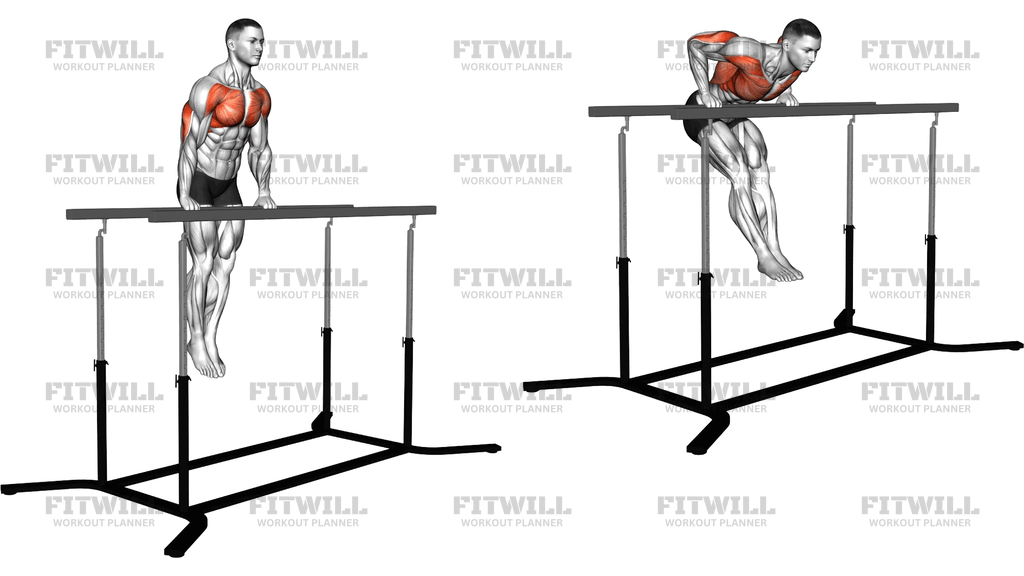
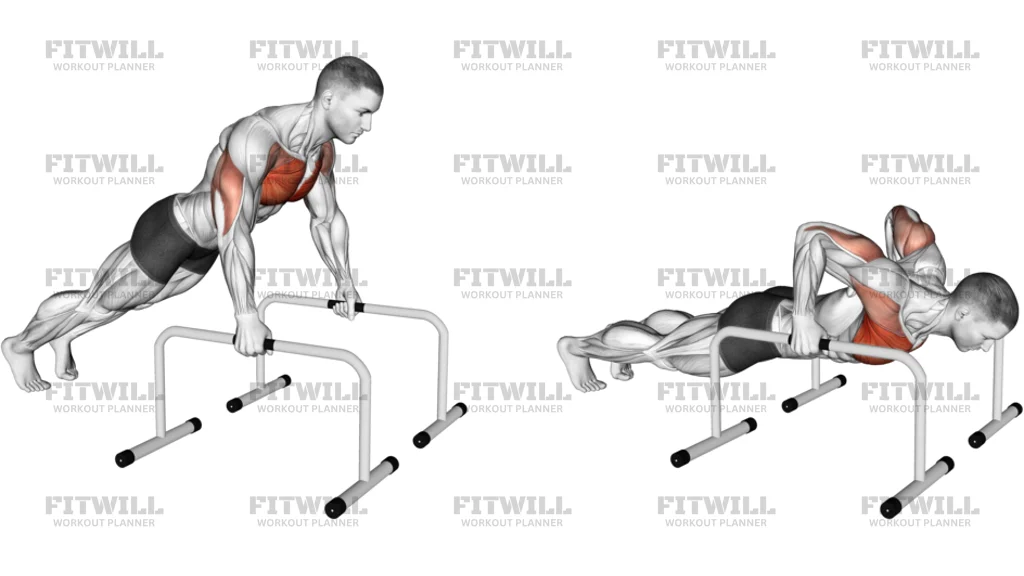
Deep Push-Up On Parallel Bars is a deficit push-up variation that uses two parallel bars to let the chest travel lower than it can on the floor. That extra depth increases the range of motion at the shoulders and elbows, so the exercise hits the chest hard while still demanding strong control from the triceps, front shoulders, and trunk. It is a bodyweight pressing exercise, but the longer range makes it feel more demanding than a standard push-up.
The main training effect comes from stretching the pecs under load and pressing back out of the deeper bottom position. In anatomy terms, the primary work centers on the Pectoralis major, with help from the Anterior deltoid, Triceps brachii, and Rectus abdominis. The chest has to produce force from a deeper position, which is useful for hypertrophy work, upper-body strength endurance, and building better control through the bottom half of a press.
The setup matters because the bars change how the shoulders feel at the bottom. Your hands should be planted firmly on the bars, wrists stacked over the handles, and your body held in a long straight line from head to heels. If the bars are too wide, the shoulders often drift forward and the bottom position gets sloppy. If they are too narrow, the chest cannot open naturally and the press feels cramped. A stable torso keeps the movement focused on the chest instead of turning it into a swinging plank.
On each rep, lower under control until the chest drops between the bars and the upper arms reach a deep, pain-free position. Keep the elbows from flaring straight out, let the shoulder blades move naturally, and press the bars away until the elbows are fully extended without shrugging into the top. The rep should look smooth from start to finish, with no bouncing off the bottom and no sagging through the midsection.
This exercise works best as a controlled strength or hypertrophy movement when you want more range than a floor push-up provides. It can be a strong progression for someone who already owns standard push-ups and wants more chest loading without adding external weight. If the bottom stretch feels too aggressive, reduce depth or switch to regular push-ups until the shoulders are ready for the larger range.
Fitwill
Log Workouts, Track Progress & Build Strength.
Achieve more with Fitwill: explore over 9600 exercises with images and videos, access built-in and custom workouts, perfect for both gym and home sessions, and see real results.
Start your journey. Download today!




Instructions
- Grip the parallel bars firmly and position your hands just wider than shoulder width.
- Walk your feet back until your body forms a straight line from head to heels.
- Brace your abs and glutes so your hips do not sag before the first rep.
- Start with your elbows extended and your shoulders set down away from your ears.
- Lower your chest between the bars in a slow, controlled descent.
- Keep your elbows at a moderate angle so they track back rather than flaring straight out.
- Let your chest reach the deepest pain-free point without bouncing or losing tension.
- Press the bars away until your elbows lock out and your torso returns to a tall plank.
- Exhale as you press up, then reset your body before the next repetition.
Tips & Tricks
- Keep the bars parallel and your wrists stacked so the force goes straight through the handles.
- A slight forward lean helps the chest stay loaded; an upright torso shifts more work toward the triceps.
- Do not chase depth by letting the shoulders roll forward and collapse at the bottom.
- Think about lowering the sternum between the bars instead of dropping the head first.
- If the elbows flare wide, the shoulders usually take over and the bottom position gets unstable.
- Pause for a split second only if you can keep tension; otherwise rebound-free reps are enough.
- A controlled three-second descent usually works better than rushing into the stretch.
- Stop the set when the hips start to pike or the lower back loses its straight line.
- If shoulder discomfort shows up, shorten the range before you reduce control.
Frequently Asked Questions
What muscle does Deep Push-Up On Parallel Bars target most?
The chest is the main target, with the front shoulders, triceps, and core helping to stabilize and press.
How is this different from a regular push-up?
The parallel bars let your chest sink lower than the floor usually allows, so you get more shoulder extension and a bigger pec stretch.
How deep should I go on the bars?
Lower only until you can keep the shoulders controlled and the chest tight. The deepest useful rep is the one you can repeat without pain or bouncing.
Are the bars supposed to be wider than my shoulders?
A grip just outside shoulder width is usually best. Too wide can irritate the shoulders, while too narrow often limits the chest stretch.
Can beginners do this variation?
Yes, if they already control standard push-ups and can keep a straight body line on the bars. Shortening the depth is a good first step.
Why do my shoulders feel more involved at the bottom?
The deeper range asks the shoulders to stabilize more. If that feeling turns into pain, reduce the depth or switch to a standard push-up.
What should my body line look like?
Keep your head, rib cage, hips, and heels aligned so the rep stays a true press instead of a sagging or piking movement.
How do I make the exercise harder without adding weight?
Increase control, slow the lowering phase, or use a deeper but still pain-free bottom position before adding external load.