Lever Seated Single Calf Press
Lever Seated Single Calf Press is a single-leg calf exercise performed on a leverage machine with the knee bent and the ball of one foot pressing into the platform. The seated setup changes the line of force so the lower leg has to drive the lever through a controlled ankle extension while the thigh stays quiet. That makes the exercise especially useful for training the calves with a steady, machine-guided path instead of relying on bounce or body swing.
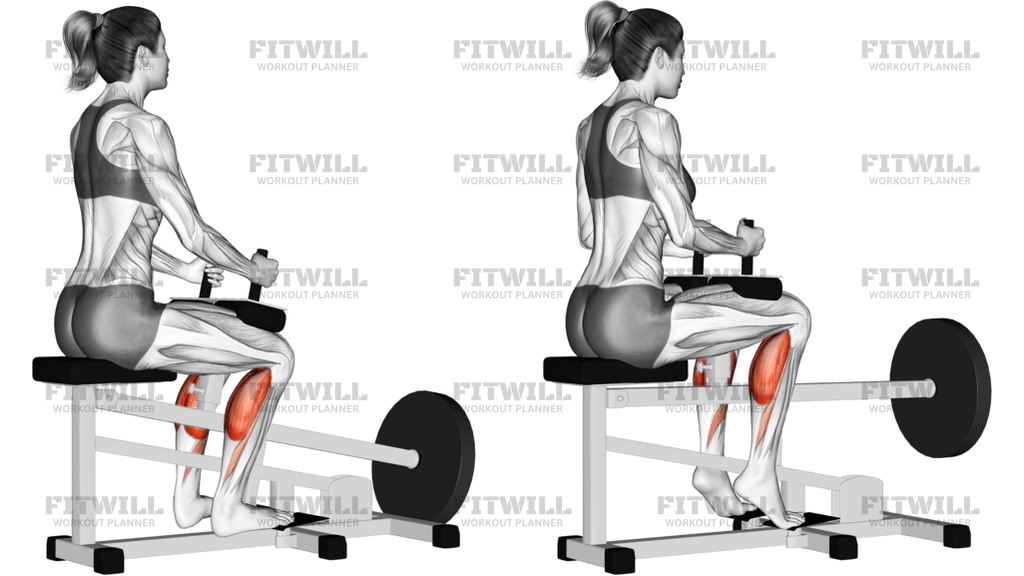
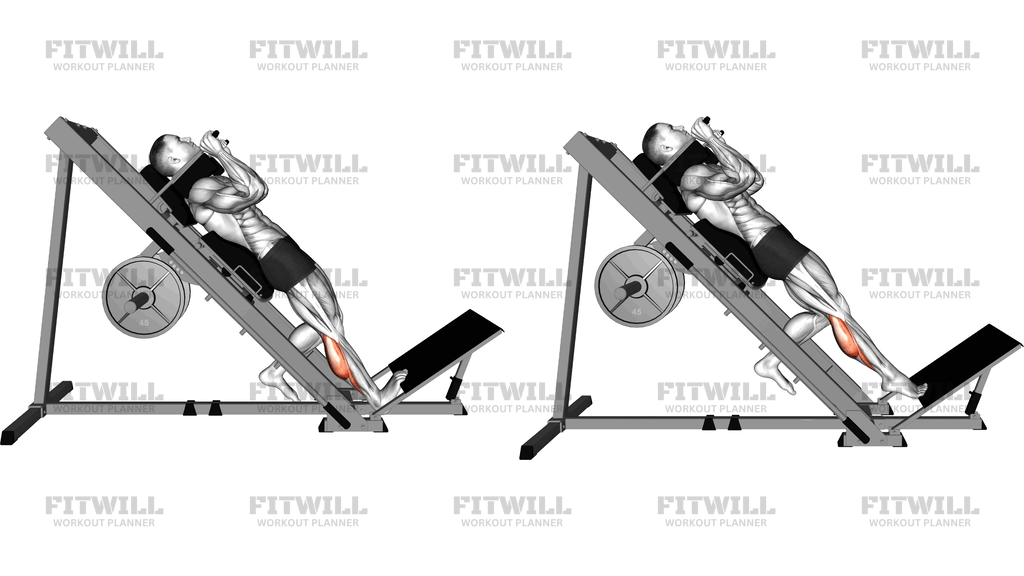
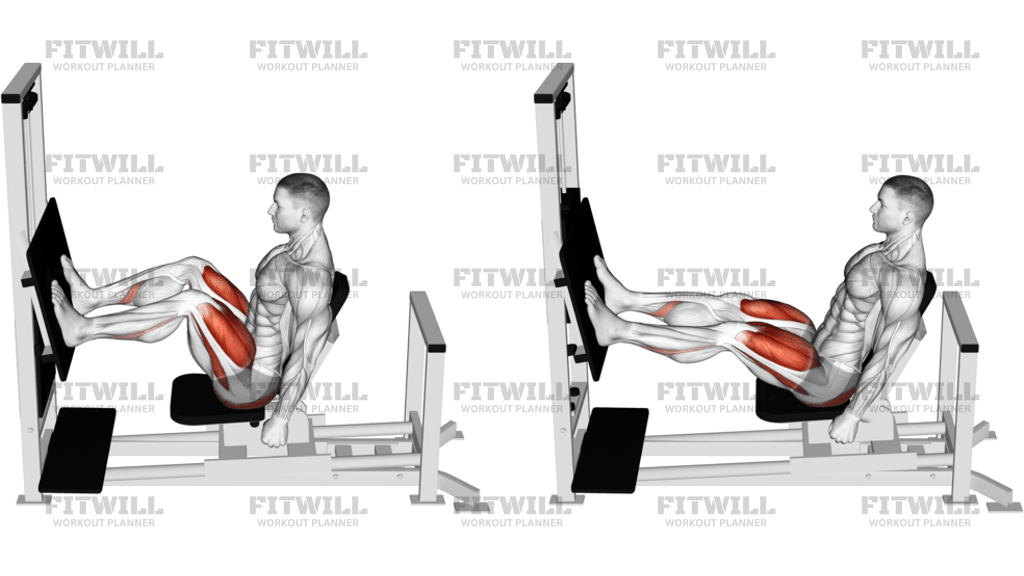
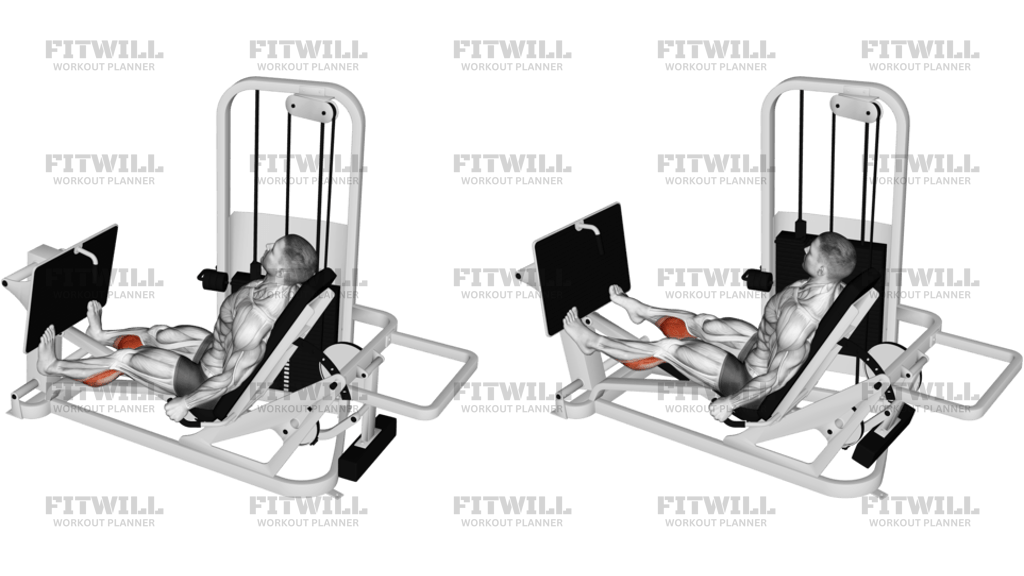
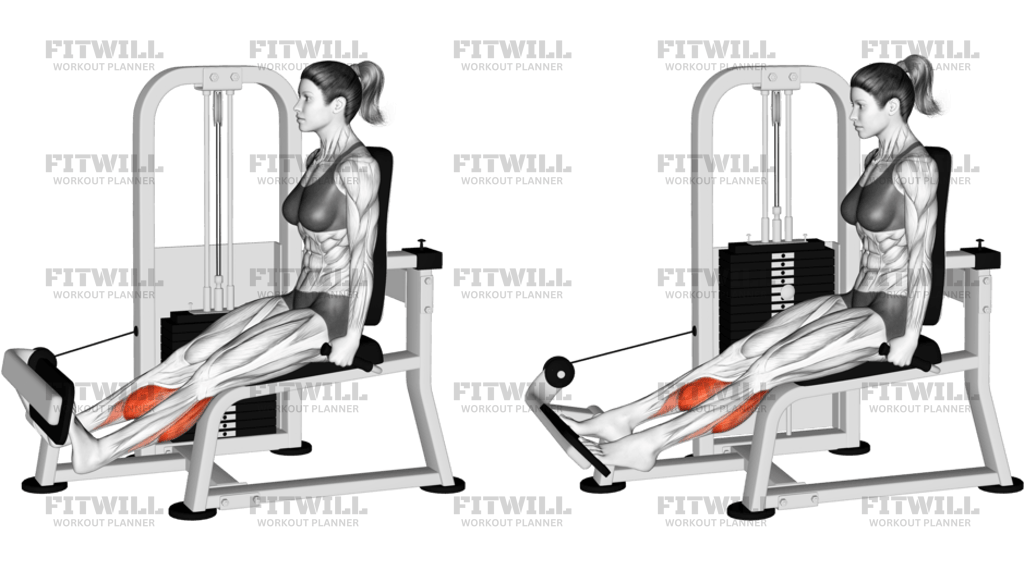
The image shows the working foot planted on the front platform with the heel free to drop below the pad, which is the key detail for getting a useful calf contraction. Keep the foot centered so pressure stays through the big toe and second toe, and let the heel travel through a full stretch at the bottom. Because this is done one leg at a time, the non-working side should stay relaxed and out of the way instead of helping the press.
This movement is most direct on the soleus because the knee is bent, but the gastrocnemius still contributes to the press and the ankle stabilizers help keep the foot from rolling. The machine supports the torso and thigh, so the quality of the set depends on how cleanly you position the foot, how still you keep the knee, and how smoothly you reverse direction at the bottom of the rep. If the heel lifts too quickly or the foot slides, the tension shifts away from the calf and into momentum.
Use a controlled range that includes a deliberate stretch and a hard squeeze at the top. Press the lever upward by driving through the forefoot, pause briefly near the peak, then lower slowly until the calf is lengthened again. That tempo is the main benefit of this exercise: it loads the ankle through a repeated, measurable path while keeping the rest of the body quiet.
Lever Seated Single Calf Press fits well in accessory calf training, lower-body sessions, or rehab-style work when you want focused unilateral loading and a stable machine setup. It is also a practical way to expose side-to-side differences in strength or ankle mobility. The safest version is the one you can repeat without twisting the hip, bouncing out of the bottom, or letting the knee drift as the weight moves.
[ Workout Log & Planner ]
Put your next workout in Fitwill
Keep your plan and training log ready when you are.


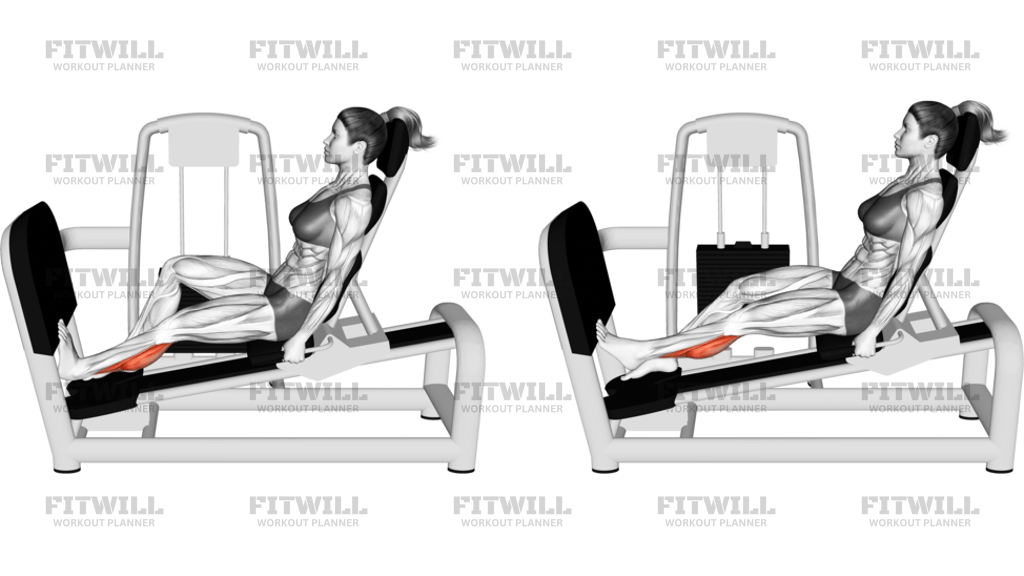
Instructions
- Adjust the leverage machine seat so your back is supported and one foot can sit squarely on the platform with the ball of the foot loaded and the heel free to drop.
- Sit tall and hold the side handles or seat edges so your torso stays quiet while the working leg does the movement.
- Place one foot on the platform, keep the toes pointing mostly forward, and let the other leg rest out of the way without pushing.
- Start with the heel lowered until you feel a clear calf stretch, keeping the ankle aligned and the knee softly bent.
- Press through the ball of the foot and big toe to drive the lever upward and lift the heel as high as you can without bouncing.
- Squeeze at the top for a brief moment while keeping the hip, knee, and foot position steady.
- Lower the heel slowly back through the full stretch under control instead of dropping the weight.
- Breathe out on the press, breathe in on the lowering phase, then switch legs after completing the planned reps.
Tips & Tricks
- Keep pressure through the ball of the foot and big toe, not through the arch or the outer edge of the shoe.
- Let the heel travel below the platform if your ankle tolerates it; the bottom stretch is a major part of the exercise.
- Do not lock the knee straight, because that turns the rep into a different calf emphasis and can make the machine feel unstable.
- Keep the pelvis and torso glued to the pad so the lever moves from the ankle instead of from hip drive.
- Use a pause at the top to remove bounce and force the calf to finish the rep under tension.
- Choose a load that lets you lower the platform slowly; if the stack or lever drops fast, the set is too heavy.
- If one ankle is stiffer, shorten the bottom range slightly on that side rather than twisting the foot to fake depth.
- Stop if the foot starts sliding forward on the pad, because that usually means the calf has lost the load path.
Frequently Asked Questions
What muscles does Lever Seated Single Calf Press train?
It targets the calves, with a strong emphasis on the soleus because the knee is bent. The gastrocnemius and ankle stabilizers still contribute to the press.
Why is the foot placed on the ball of the foot instead of flat on the platform?
Loading the forefoot lets the heel move through plantarflexion and makes the calf do the work. A flat foot position would reduce the ankle motion that this exercise is built around.
Should my heel drop below the platform at the bottom?
Yes, if your ankle can tolerate it comfortably. The controlled bottom stretch is one of the main reasons to use this seated calf setup.
Can beginners use the single-leg version?
Yes, as long as the load is light enough to keep the foot centered and the lowering phase slow. Start with a smaller range if balance on the machine feels awkward.
What is the most common mistake on this machine?
People usually bounce out of the bottom or let the foot slide forward on the pad. Both mistakes reduce calf tension and make the rep less controlled.
What should move during each rep, the knee or the ankle?
The ankle should do most of the visible work. The knee stays softly bent and still while the heel rises and lowers.
How should I breathe on Lever Seated Single Calf Press?
Exhale as you press the lever up, then inhale as you lower into the stretch. That helps keep the torso quiet and prevents rushing the return.
How do I progress this exercise over time?
Add load only after you can keep the same foot position, top pause, and slow lowering phase on both sides. You can also progress by using a deeper controlled stretch or more reps per leg.