Lever Rotary Calf
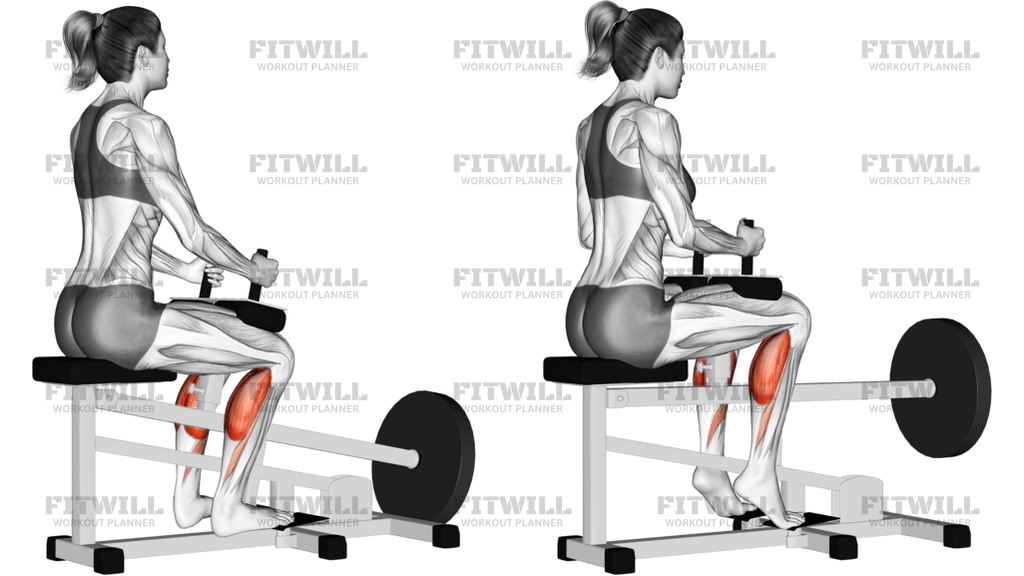
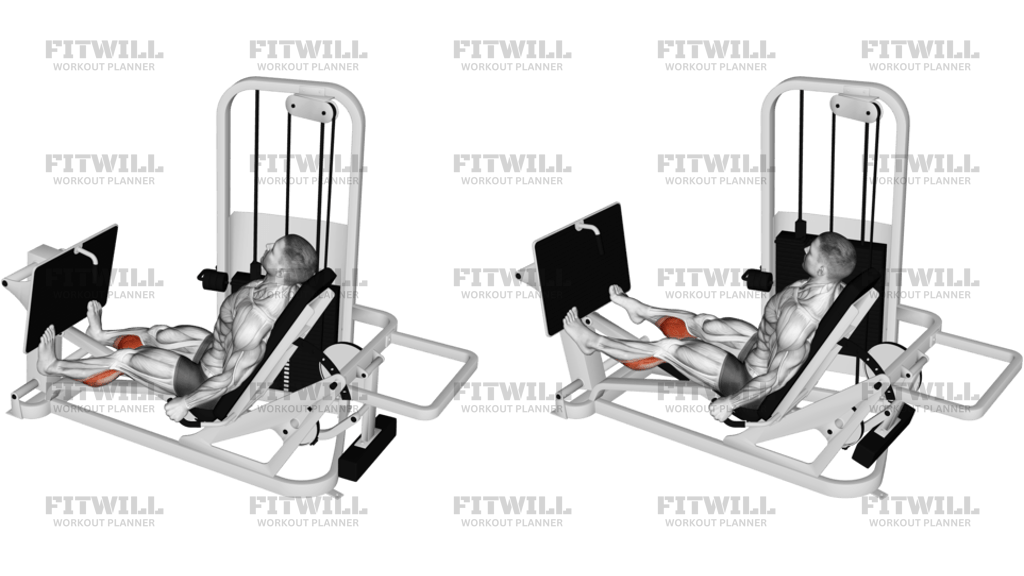
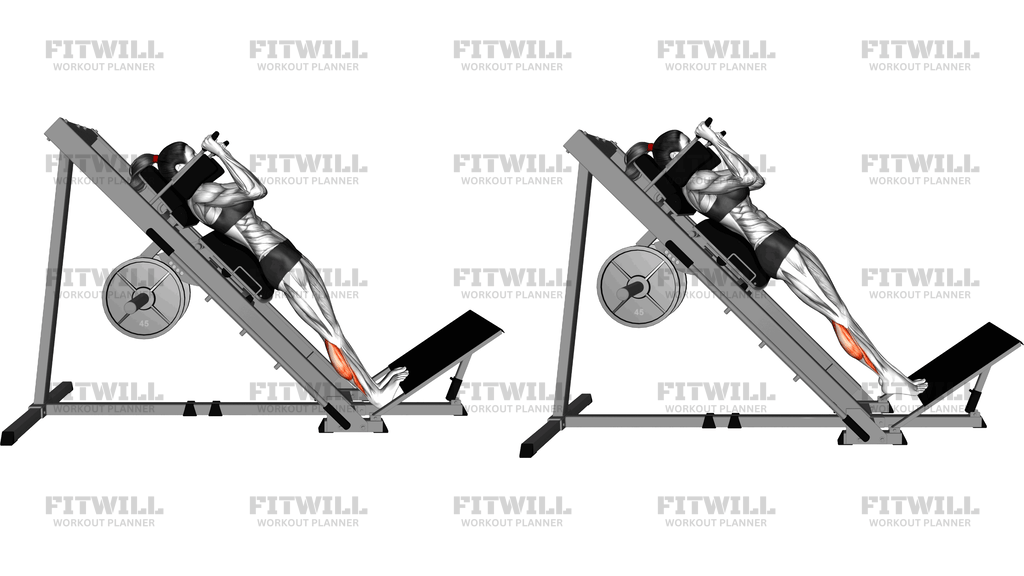
Lever Rotary Calf is a seated machine calf exercise that loads the ankles through a smooth lever path, with the balls of the feet on the platform and the heels free to drop and rise. It is built to train plantar flexion under control, making the calves do the work instead of the hips, thighs, or torso. The machine guides the movement, but the quality of each rep still depends on how well you set up your foot placement, range, and tempo.
This variation is especially useful when you want direct calf work without balancing a barbell or holding your bodyweight on a step. The seated position reduces the need for whole-body stabilization and lets you focus on the calf contraction, while the lever keeps resistance smooth through the rep. Depending on foot angle and knee position, it can bias both the gastrocnemius and soleus, so small setup changes matter more than people expect.
A good set begins before the first rep. Sit deep on the pad, keep your hips anchored, and place the forefoot firmly on the platform so the heel can travel freely. If your feet are too far forward, you shorten the stretch; too far back, and you lose leverage or pressure through the toes. The goal is a controlled ankle arc: lower into a clear stretch, then drive through the big-toe side of the foot and the second toe to raise the platform without bouncing.
At the top of each rep, finish with a hard calf contraction instead of a jerky kick. Keep the knees quiet, the torso still, and the ankles doing the motion. The descent should be slower than the lift so the calves stay loaded through the full range. If the machine starts moving because you are rocking, locking your knees, or forcing the hips to help, the set is too heavy or the range is too aggressive.
Use Lever Rotary Calf as accessory work for lower-body strength, calf size, ankle conditioning, or sports that need strong push-off and landing control. It also works well after compound leg training when the calves are fresh enough to move through a full range without cheating. Stay strict, keep the platform path smooth, and stop the set when the ankle motion gets shorter or the reps start turning into momentum.
[ Workout Log & Planner ]
Put your next workout in Fitwill
Keep your plan and training log ready when you are.


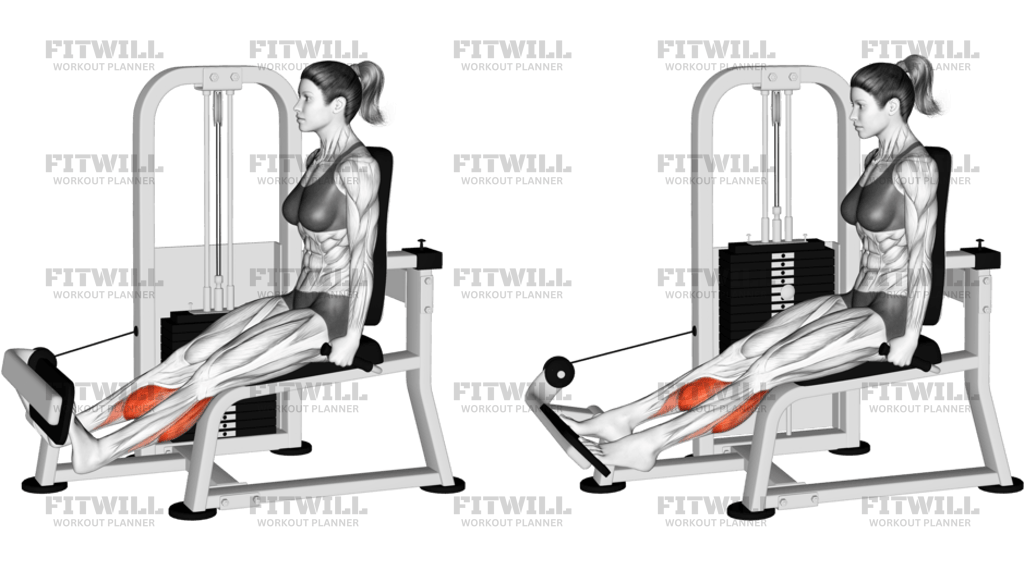
Instructions
- Sit fully on the pad with your back supported and place the balls of your feet on the lever platform, leaving your heels free to drop below level.
- Adjust your foot position so the pressure sits across the forefoot, not the toes, and keep both feet even on the platform.
- Hold the side handles or seat edges, brace lightly through the trunk, and keep your thighs and torso still before the first rep.
- Let the heels lower under control until you feel a strong calf stretch without losing contact through the forefoot.
- Drive through the big-toe side of the foot and the second toe to lift the lever by plantar flexing the ankles.
- Raise the platform until the calves fully contract, but stop before your ankles roll outward or you bounce at the top.
- Lower the lever slowly into the next stretch, keeping the motion smooth and even on both sides.
- Repeat for the planned reps, then set the weight down carefully and reset your feet before stepping off the machine.
Tips & Tricks
- Keep the forefoot planted so the heel can move freely; if your toes take over, the calf tension drops and the set turns into foot gripping.
- Do not bounce out of the bottom stretch. A brief controlled pause makes the machine do real calf work instead of using rebound.
- Use a slower lowering phase than lifting phase so the calves stay under tension through the full ankle range.
- If the machine has a rotary footplate, keep pressure centered so the platform rises evenly instead of twisting to one side.
- Keep the knees quiet and avoid sliding the hips forward; extra motion from the seat usually means the load is too heavy.
- A slightly longer range is useful, but only if the heel drop stays controlled and the ankle does not collapse inward.
- Exhale as you raise the lever and inhale as you lower it so the torso stays relaxed and the rep rhythm stays consistent.
- Choose a load that lets you reach a clear top contraction without bouncing through the last few reps.
Frequently Asked Questions
What muscle does Lever Rotary Calf target most?
The calves are the primary target, with the gastrocnemius and soleus sharing the work depending on knee and foot position.
How should my feet sit on the lever platform?
Place the balls of your feet on the edge of the platform so the heels can drop below it and rise through a full calf contraction.
Should I lock my knees on this machine?
No. Keep the knees quiet and supported so the ankles do the work instead of turning the rep into a leg press motion.
What is the main mistake on Lever Rotary Calf?
Most people bounce out of the bottom or twist the feet on the platform, which reduces calf tension and makes the motion sloppy.
Is this more of a seated calf raise or a standing calf raise?
It behaves like a seated calf raise pattern: you are supported by the machine while the ankles drive the lever through plantar flexion.
Can beginners use this calf machine?
Yes. It is beginner-friendly when the load is light enough to control the full heel drop and the top squeeze without bouncing.
How can I make the calf contraction stronger?
Use a full stretch at the bottom, drive through the forefoot evenly, and pause briefly at the top instead of rushing the lever upward.
What rep range works well here?
Moderate to higher reps usually work well because the machine allows controlled, repeatable calf tension without needing maximal loads.