Bent Arm Lift
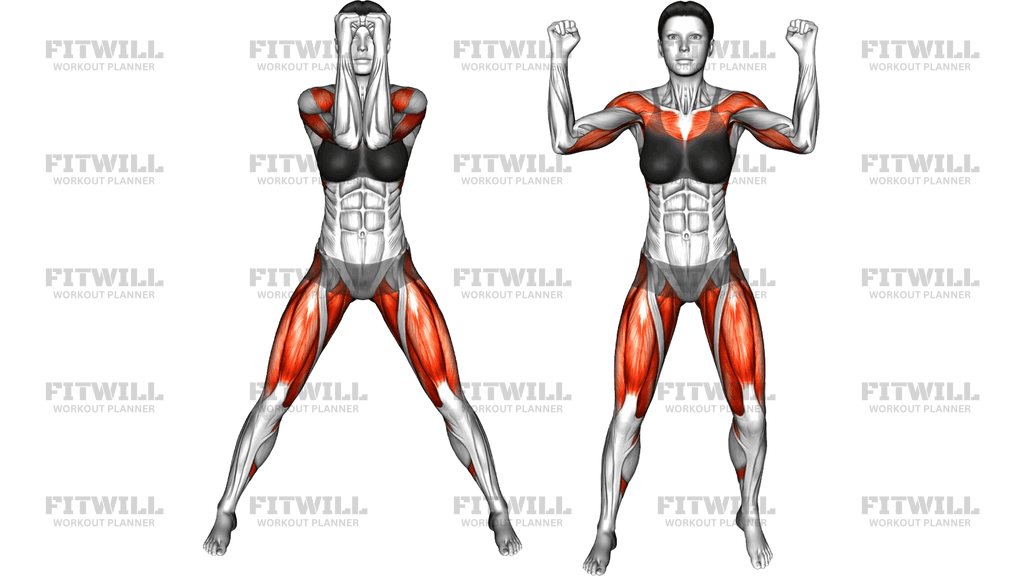
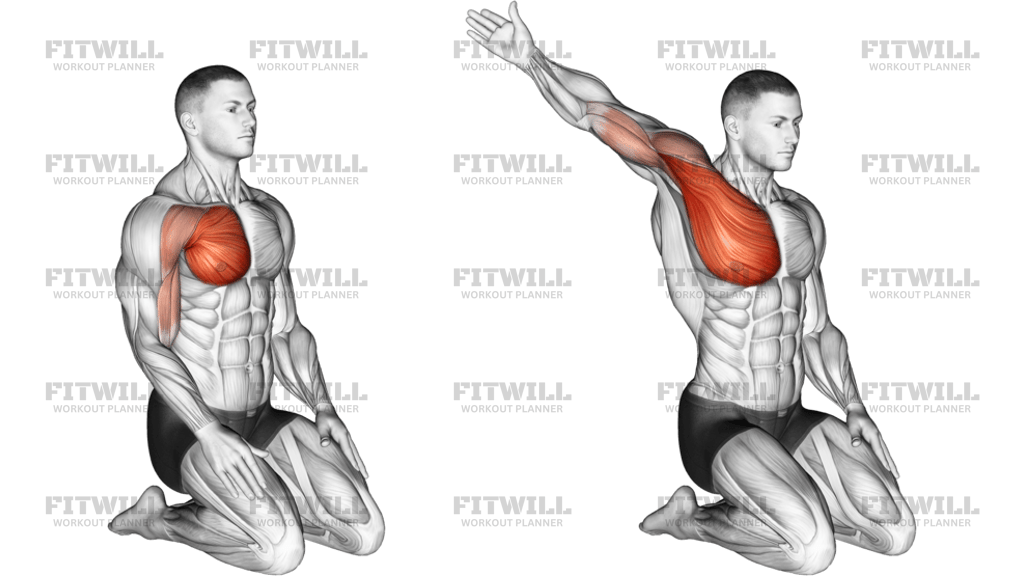
The Bent Arm Lift is a simple standing bodyweight movement where you raise both arms from chest height straight up overhead while keeping the elbows bent, then lower them back down under control. Because there is no external load, the exercise relies entirely on deliberate muscle tension and a full, clean arc of motion. It is a close relative of front raises and arm circles, but the bent-elbow position shortens the lever and keeps the emphasis on the chest and front of the shoulders rather than the arms themselves.
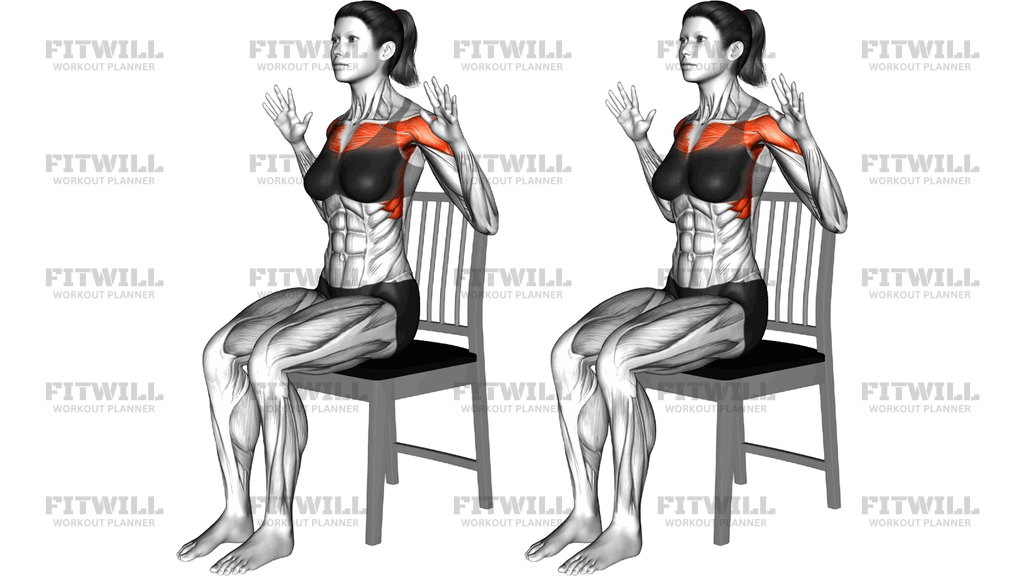
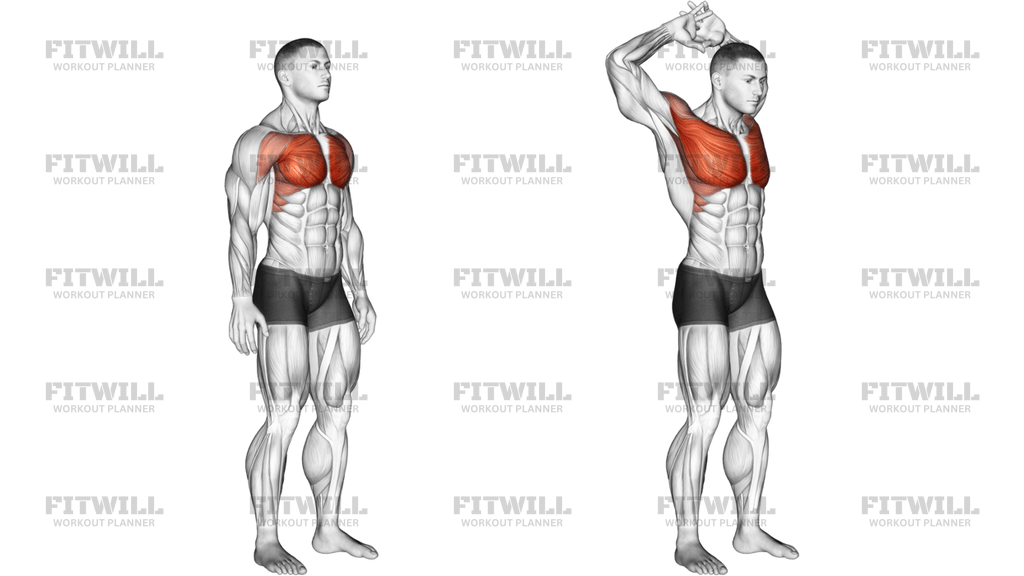
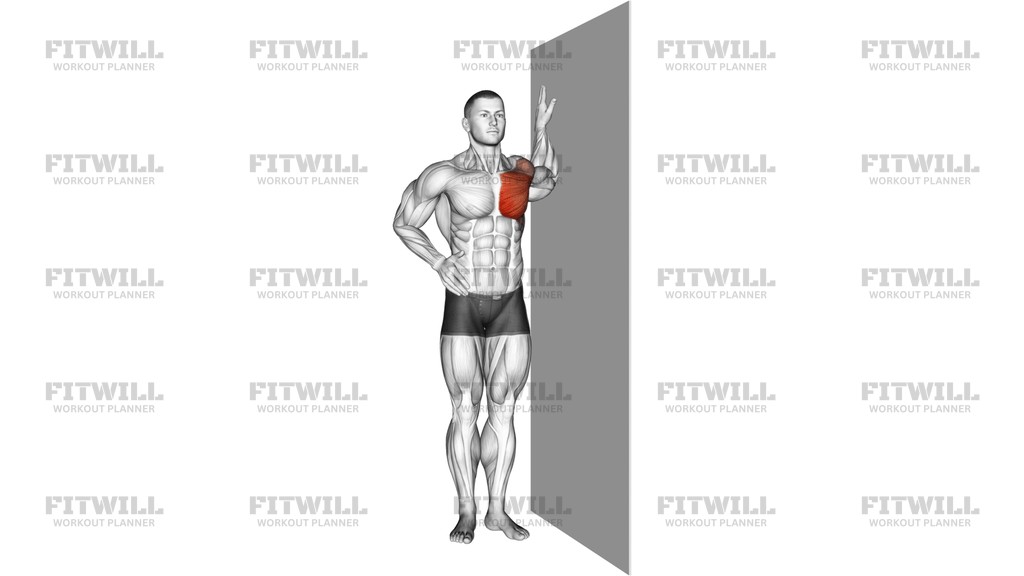
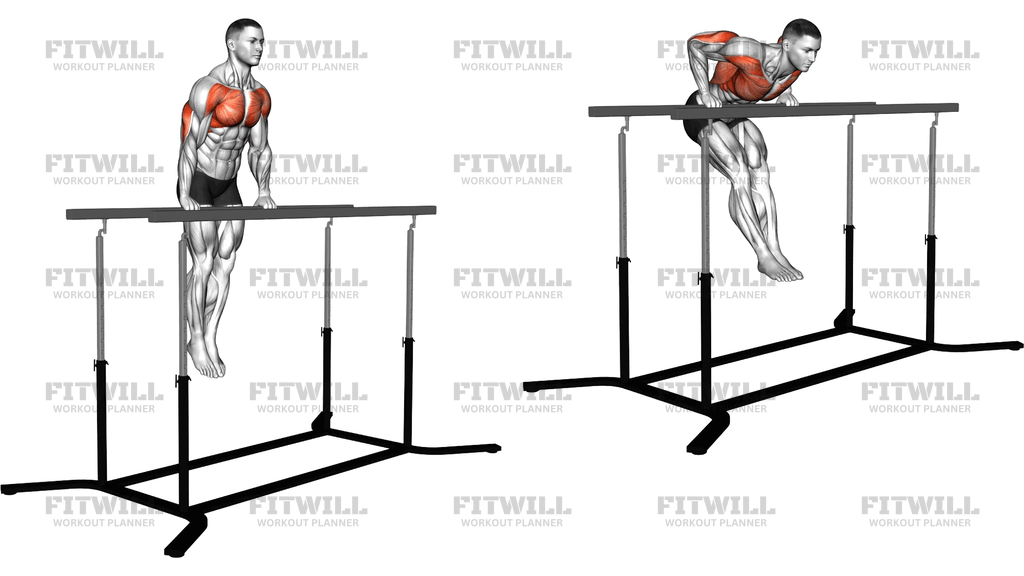
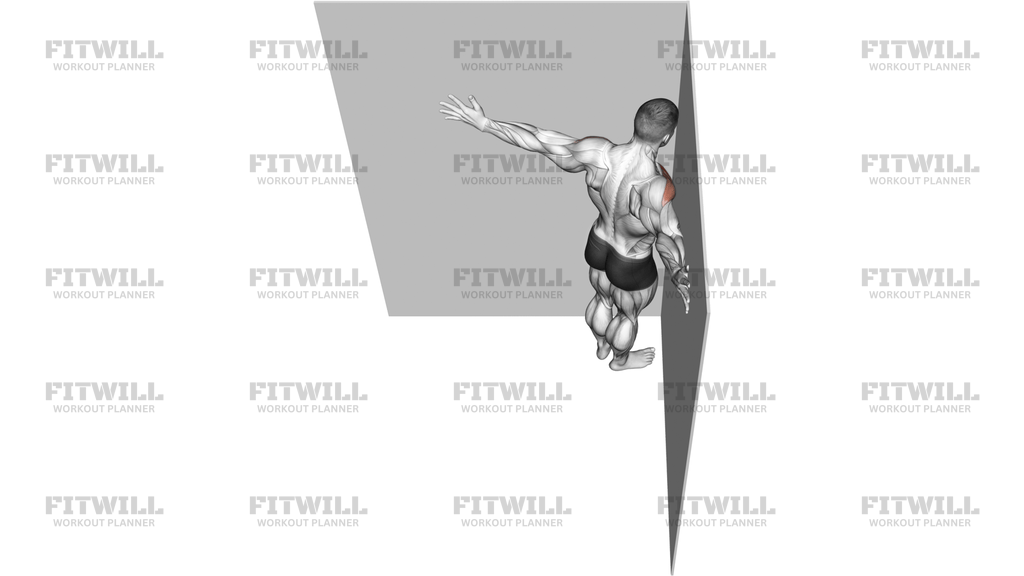
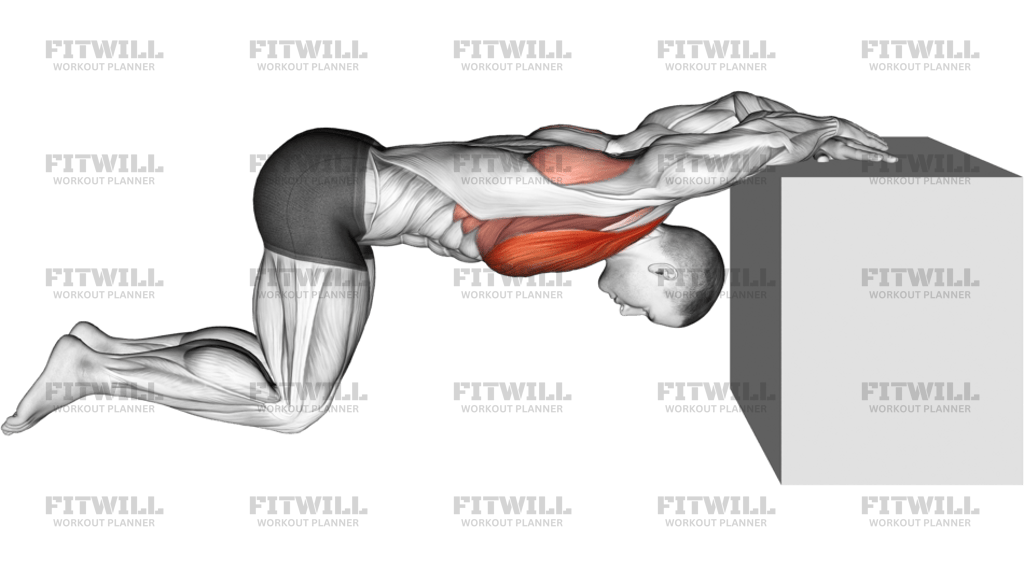
The highlighted work comes from the pectoralis major, which helps pull and steer the upper arm through the lift, and the anterior deltoids at the front of each shoulder, which drive the arms upward. The upper chest fibers contribute strongly near the top of the arc, and the muscles between the shoulder blades and around the ribcage stabilize the torso so the arms can move without the shoulders shrugging or the back arching.
This movement suits beginners learning to feel their chest and shoulders working without equipment, people warming up before pressing or chest day, and anyone training at home or traveling with no gear available. It is also useful as a rehab-style or activation exercise when heavier pressing feels too demanding, since the bent arm position reduces the load on the shoulder joint while still taking the arms through a large range.
Setup matters more than it looks. Stand tall with feet about hip-width apart, a soft bend in the knees, and the ribcage stacked over the pelvis. Start with the upper arms roughly level with the shoulders and the elbows bent so the hands sit in front of the chest. From there, the entire motion should come from the shoulders, not from leaning back, shrugging, or swinging the hands.
To execute it well, sweep the forearms and hands upward and slightly outward until the arms are extended overhead, keeping the elbows traveling along a path in front of the body rather than drifting behind it. Pause briefly at the top, then reverse the arc slowly, drawing the hands back down to the starting position at chest height. Think of the movement as a controlled scoop rather than a throw.
A few practical points keep the exercise honest. Move slowly enough that you could stop at any point in the arc, keep the neck relaxed, and stop the lift at a height where you can maintain upright posture. If you feel it more in the neck or lower back than in the chest and shoulders, reduce the range or slow the tempo until the target areas are doing the work.
[ Workout Log & Planner ]
Put your next workout in Fitwill
Keep your plan and training log ready when you are.


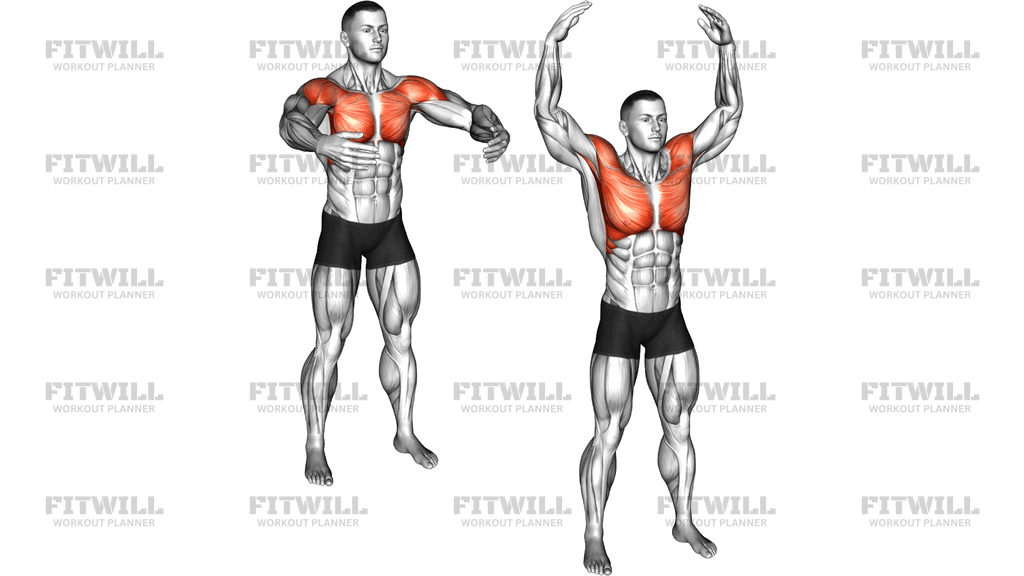
Instructions
- Stand upright with feet hip-width apart, knees soft, and your weight balanced evenly across both feet.
- Raise your upper arms out to about shoulder height, then bend the elbows so your hands rest in front of your chest with palms facing inward or slightly down.
- Draw your shoulder blades down and gently brace your abdominals so your ribcage stays stacked over your pelvis.
- Exhale as you sweep your forearms and hands upward in front of your body, keeping the elbows bent and tracking forward, not behind you.
- Continue the arc until your arms are extended straight overhead, feeling the front of the shoulders and upper chest working.
- Pause for a beat at the top without shrugging your shoulders toward your ears or leaning back.
- Inhale as you reverse the same path, bending the elbows and lowering your hands back to chest height with control.
- Avoid dropping the arms; the lowering phase should take about the same time as the lift.
- Complete your repetitions, then release the brace and shake out the shoulders between sets.
Tips & Tricks
- A common mistake is turning the lift into a shrug — check that the space between your ears and shoulders stays the same throughout each rep.
- If your lower back arches as the arms go overhead, squeeze your glutes lightly and think about tucking the bottom of your ribs down before starting.
- Keep the elbows from drifting outward behind the body; the forearms should sweep up along a path roughly in front of the chest.
- Slow the tempo down to a two-second lift and a two-second lower — because there is no weight, speed is the only way to make this exercise demanding.
- Imagine scooping water upward with your forearms; this cue keeps the chest engaged instead of letting the hands do a loose swing.
- Do not lock the elbows hard at the top; a soft elbow keeps tension on the chest and shoulders rather than resting on the joint.
- If one arm tends to lead, do the first set with a lighter, slower tempo or work one side at a time to even things out.
- Use this as a warm-up before bench presses or push-ups — a couple of controlled sets primes the chest and front shoulders without fatiguing them.
Frequently Asked Questions
Which muscles does the Bent Arm Lift work?
The main muscles are the pectoralis major in the chest and the anterior deltoids at the front of the shoulders, with the upper chest fibers working hardest near the top of the lift. Upper back and core muscles contribute as stabilizers.
Is the Bent Arm Lift good for beginners?
Yes, it is an excellent starting point because it requires no equipment and the bent elbows reduce the load on the shoulders. Beginners should focus on slow, controlled reps rather than speed or volume.
Why keep the elbows bent instead of doing straight-arm raises?
The bent elbow shortens the lever arm, which lowers the strain on the shoulder joint and shifts the emphasis toward the chest. It also makes it easier to keep the arm path in front of the body.
Should I feel the Bent Arm Lift in my neck?
No, neck tension usually means you are shrugging as the arms rise. Keep your shoulder blades drawn down and stop the lift slightly lower if the shrugging continues.
How many repetitions should I do?
For warm-up or activation, 10 to 15 slow reps for one or two sets works well. As a standalone home exercise, you can do 2 to 3 sets of 15 to 20 reps with a deliberately slow tempo.
Can I replace the Bent Arm Lift with light dumbbell front raises?
Yes, light dumbbell or resistance band front raises are a close substitute once bodyweight reps feel easy. Start with a very light load since the bent-arm version is intentionally low in resistance.
Is it safe to do the Bent Arm Lift every day?
Generally yes, since it is a low-load movement, as long as the shoulders are pain-free through the full arc. If you have a current or previous shoulder injury, check the movement with a physical therapist or qualified coach first.
Why do I arch my back when my arms go overhead?
Limited shoulder or upper back mobility often causes the torso to lean back to finish the arc. Brace your abdominals, squeeze your glutes, and only lift as high as you can while staying upright — the range will improve with practice.
Should my palms face each other or face down during the lift?
Either works. Palms facing slightly down and inward tends to emphasize the chest a little more, while palms facing each other is often more comfortable for stiff shoulders, so choose the version that feels smoothest.