Bodyweight Single Leg Squat With Support
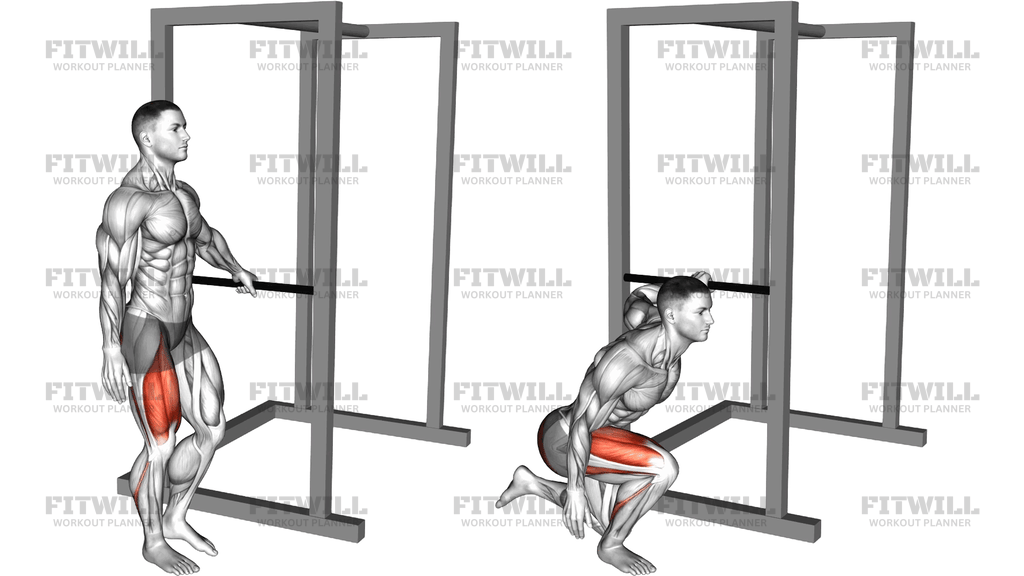
The Bodyweight Single Leg Squat With Support is a one-legged squat performed while you hold onto a fixed bar, rack upright, or frame for balance assistance. Instead of trying to freestand on one leg, you grip a stable anchor point in front of you and use light hand pressure to stay controlled while the working leg handles the load. The non-working leg is typically held forward off the floor, so all of your weight travels through one hip, one knee, and one ankle.
This setup makes the exercise accessible to people who are working toward a full pistol squat or freestanding single leg squat but cannot yet manage the balance demands. The support removes the fall-risk element without taking away the strength work. Your legs still press your entire bodyweight up and down on one limb, which is a much greater demand than a two-legged bodyweight squat, roughly double the load per leg.
The main muscles worked are the quadriceps of the standing leg, which drive the knee extension through the bottom half of the squat. The glutes and hamstrings extend the hip and control your descent, while the smaller stabilizers around the hip and ankle work hard to keep your knee tracking over your foot and your foot from rolling. Holding the bar lightly also lets your core stay engaged as it resists rotation and keeps your torso upright.
Setup matters more than most people expect. The support should sit at about hip to waist height and be solid enough that you can pull on it without it moving. Stand close enough that your arm stays nearly vertical when gripping the bar, so it acts as a balance point rather than a way to haul yourself up. Your stance should be close to the bar with your weight over the middle of the working foot.
To execute it well, keep your torso tall, extend the free leg forward, and sit down into the standing heel as you descend. Lower as far as you can control, ideally until your thigh reaches parallel or below, then drive back up through your heel. Light hand pressure only — if you are pulling yourself up with your arm, you are turning it into a supported row rather than a single leg squat.
This exercise fits well into lower body sessions as a strength or progression movement, particularly for home trainers with minimal equipment, runners and field sport athletes building single-leg control, or anyone rehabbing balance after being comfortable with split squats and step-ups. Start with partial depth and gradually lower your range over weeks rather than forcing a deep rep with poor knee position.
[ Workout Log & Planner ]
Put your next workout in Fitwill
Keep your plan and training log ready when you are.


Instructions
- Stand facing a fixed bar, rack upright, or similar sturdy anchor set at about hip to waist height, with your feet hip-width apart.
- Grip the bar with one or both hands so your arm is roughly vertical, and shift your weight fully onto one working leg.
- Lift your free leg off the floor and extend it slightly forward in front of you, keeping it relaxed and off the ground for the whole set.
- Brace your core, lift your chest, and think about keeping your shoulders square to the bar rather than twisting.
- Push your hips back and bend your working knee, letting your torso lean forward slightly as you descend.
- Lower until your thigh is parallel to the floor or as deep as you can control, keeping your knee lined up over your second toe and your heel down.
- Drive up through the heel and mid-foot of the working leg, using only light hand pressure on the bar to steady yourself.
- Exhale as you press up, and inhale slowly as you lower into each rep.
- Finish the rep standing tall on one leg, re-set your balance, then either continue on that leg or switch to the other.
- Complete all reps on one side before switching legs, or alternate legs if balance fatigues quickly.
Tips & Tricks
- Keep your grip honest: if your arm is straightening and pulling you out of the hole, the leg is not doing the work. Reduce depth until the leg can lift you back up.
- The most common mistake is the working knee caving inward at the bottom. Cue yourself to press the knee out over your little toe as you descend.
- If your heel lifts as you go down, you are shifting weight forward. Sit back into the hip more and lean your torso slightly toward the bar.
- Keep the free leg's heel hovering just above the floor rather than swinging it high — a low, controlled front leg keeps your balance much easier to manage.
- Point the toes of the working foot slightly outward and let the knee track in that direction; forcing a perfectly forward knee on one leg often creates strain.
- Slow the lowering phase to a two- or three-second count. Most people fail this exercise on the descent, not the press up.
- If your standing leg starts to shake or your ankle wobbles late in a set, stop the set rather than fighting through it — that is where sloppy knee positions appear.
- Hold your breath brace before descending and release it on the way up rather than exhaling at the bottom, where the position is weakest.
- Progress by gradually reducing hand pressure to fingertips, then one finger, before attempting the squat with no support at all.
Frequently Asked Questions
Which muscles does the Bodyweight Single Leg Squat With Support work most?
The quadriceps of the standing leg do the bulk of the work, with the glutes and hamstrings extending the hip. Ankle and hip stabilizers on the working side also work hard to keep your knee and foot aligned.
How high should the support bar be for the Bodyweight Single Leg Squat With Support?
Around hip to waist height works best, so your arm hangs nearly vertical when you grip it. Too high and you lean forward excessively; too low and you end up pulling yourself out of the squat.
Can beginners do the Bodyweight Single Leg Squat With Support?
Yes, and it is actually a sensible entry point to single-leg training. Begin with a shallow depth — a quarter of the way down — and deepen the range as your strength and knee control improve.
Why is my knee caving inward when I do the Bodyweight Single Leg Squat With Support?
One-legged squats expose weakness in the hip stabilizers, especially the gluteus medius, which normally stops the knee from collapsing inward. Slow the descent, reduce depth, and deliberately press the knee out over your toes.
How much can I pull on the bar during the Bodyweight Single Leg Squat With Support?
Use just enough pressure to steady your balance. If you are visibly hauling yourself up with your arm, lighten the load by reducing depth instead of increasing grip effort.
What can I use instead of a rack bar for the Bodyweight Single Leg Squat With Support?
Any solid, immovable anchor at hip height works — a door frame, squat rack upright, table edge, or sturdy railing. Avoid anything that can slide or tip, since you will be applying some lateral force to it.
Should my free leg go forward or stay behind in the Bodyweight Single Leg Squat With Support?
Holding it forward with the heel hovering just off the floor keeps your weight over the standing foot and makes balance easier. A low, controlled front leg also prevents your torso from tipping backward.
Is it safe for my knees to squat that deep on one leg?
For most people with healthy knees and gradual progression, yes, but build depth over weeks rather than forcing it. If you feel pinching, sharp pain, or your knee shifts position at depth, work within a shallower range.
How does the Bodyweight Single Leg Squat With Support differ from a regular two-legged squat?
All of your bodyweight goes through one limb, roughly doubling the load per leg, and the balance and hip-stabilizer demands are far higher. It also reveals and corrects side-to-side strength differences that bilateral squats hide.
How do I progress from the Bodyweight Single Leg Squat With Support to a freestanding single leg squat?
Progressively reduce your grip to fingertips, then a single finger, while keeping the same depth and knee position. Once you can control parallel reps with minimal hand contact, practice the same pattern without the bar.