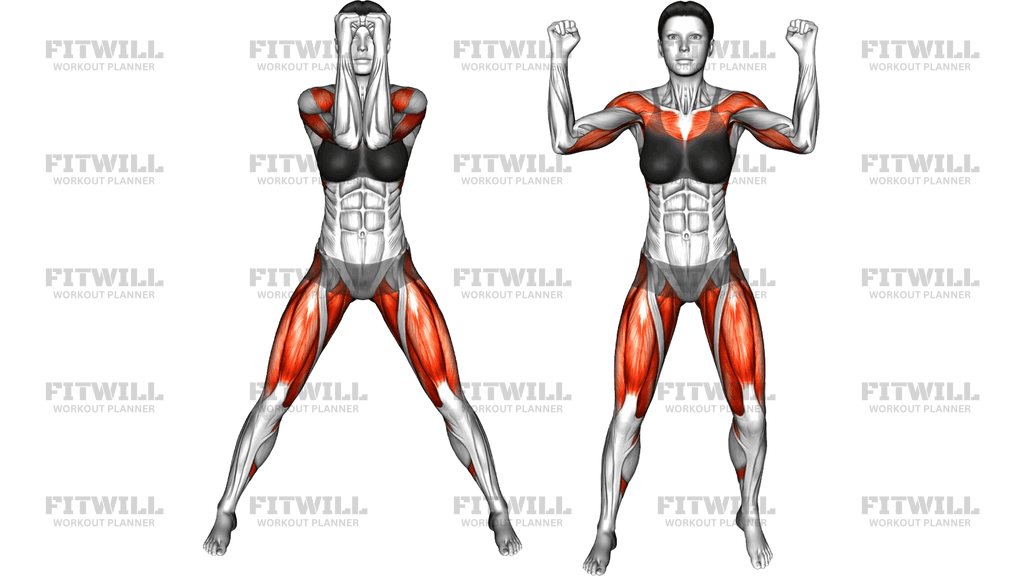
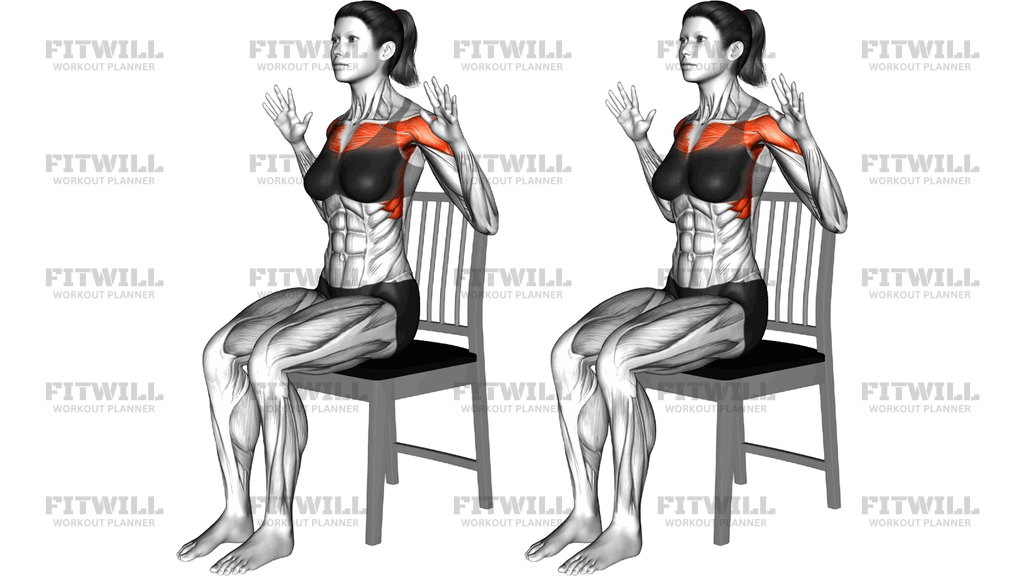
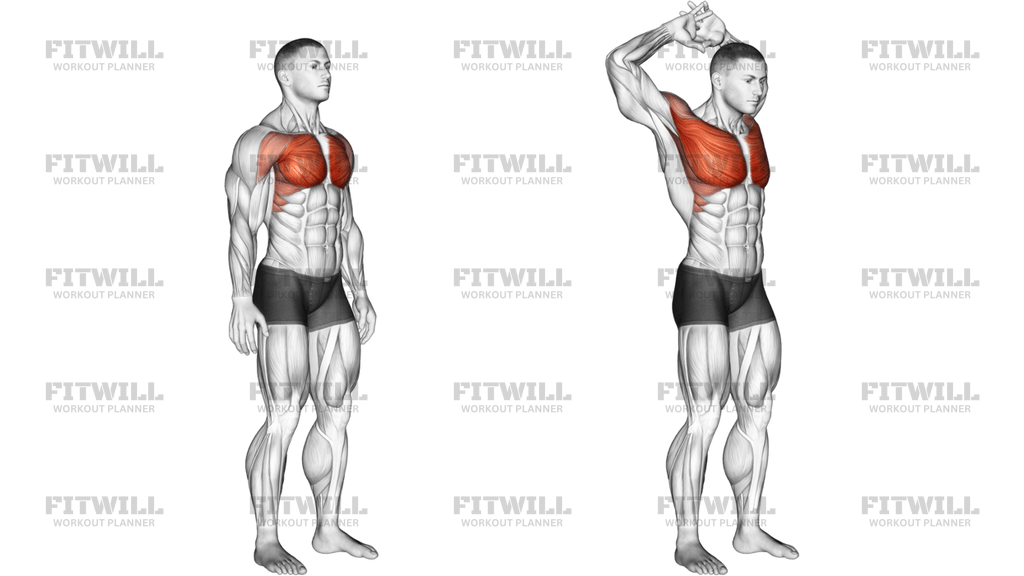
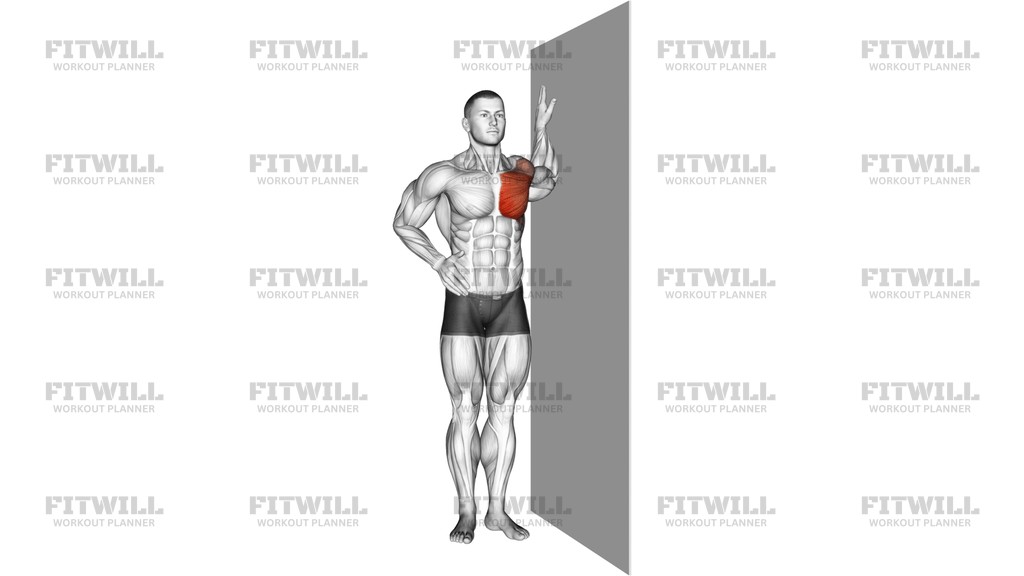
Elbow Prayer Push Circle Draw
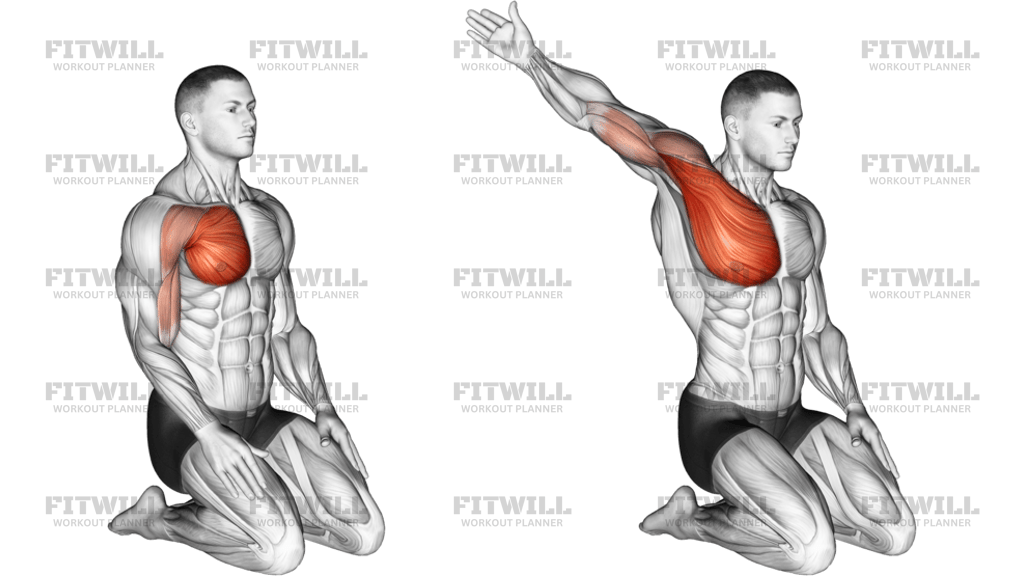
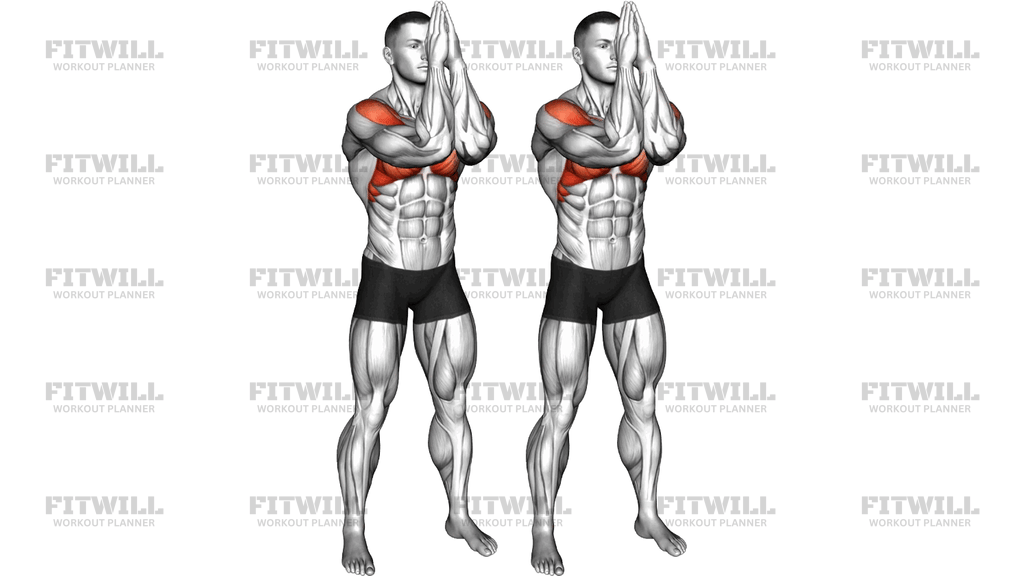
The Elbow Prayer Push Circle Draw is a bodyweight chest exercise performed standing, with the palms pressed together in front of the chest in a prayer position and the elbows held high, pointing straight ahead. Instead of simply squeezing the hands isometrically, the elbows actively trace a circle while you keep constant inward pressure through the palms. That circular draw forces the chest to work through a moving range while still producing a strong, sustained contraction at the center of the pecs.
This is one of the simplest ways to load the chest without any equipment at all. Because you create the resistance yourself by pressing the palms together, the effort can be scaled from light to nearly maximal in a second. It works well as a warm-up to wake up the pecs before pressing, as a finisher to pump the chest after heavier work, or as a standalone option for anyone training at home, traveling, or recovering from a layoff and wanting a gentle reintroduction to chest training.
The main muscles at work are the pectorals, with the front delts and triceps assisting the press. The high-elbow prayer position also asks the shoulder stabilizers to hold the upper arm steady while the elbows circle, which makes the movement surprisingly demanding on control even though no weight moves. The higher your elbows sit and the harder you press, the more the upper chest fibers come into play.
Setup matters more than it looks. Your elbows need to stay at or above chest height for the entire circle; the moment they drop, the tension shifts away from the pecs and into the shoulders and neck. Keep the palms fully in contact, fingers pointing up, and let the pressure come from the chest squeezing the arms inward rather than from gripping or shrugging. A tall spine, relaxed shoulders, and soft knees give you a stable base so nothing leaks energy.
To execute well, press the palms together firmly, then draw a smooth circle with both elbows at once — forward, up, back, and down, or the reverse. Keep the circle small to medium and steady, and never let the hands slide apart or the wrists collapse. Exhale steadily through each circle, and breathe continuously rather than holding your breath, especially when pressing hard.
A practical safety point: the temptation is to crank maximum pressure through the wrists and shoulders. Build the intensity gradually across your first few circles, and if you feel pinching at the front of the shoulder, lower the elbows slightly or reduce the pressing force. Controlled, moderate pressure sustained for 20 to 40 seconds beats a violent squeeze every time.
[ Workout Log & Planner ]
Put your next workout in Fitwill
Keep your plan and training log ready when you are.


Instructions
- Stand tall with feet about hip-width apart, knees soft, and shoulders relaxed down away from your ears.
- Bring your palms together in front of your chest in a prayer position, fingers pointing up, elbows lifted so they point forward at roughly chest height or slightly higher.
- Press the palms firmly into each other so the forearms and chest are already under tension before the circles begin.
- Brace your core lightly and keep your ribs stacked over your hips; avoid leaning back as the press intensifies.
- Keeping constant palm pressure, draw a smooth circle with both elbows together — forward, upward, backward, and down — tracing the same path with each rep.
- Keep the circle small to medium and stay in the upper portion of the arc where the elbows remain at or above chest height.
- After all circles in one direction, reverse and draw the same number of circles the opposite way while holding the same palm pressure.
- Breathe steadily throughout — inhale and exhale in a natural rhythm rather than holding your breath during the hardest presses.
- When finished, release the palm pressure slowly, lower the arms to your sides, and roll the shoulders once or twice before the next set.
Tips & Tricks
- Drive the inward press from the chest, not the hands — think about squeezing your elbows toward each other and let the palms simply meet.
- The most common breakdown is elbows dropping toward the ribs mid-circle; once they sink below chest height, the pecs stop leading, so pause and reset rather than pushing on.
- If your wrists ache, tilt the pressure slightly toward the heel of the palm instead of pressing hard through the fingertips, or reduce the pressing force.
- Shrugging during the upward half of the circle is a telltale sign the front delts are taking over; keep the shoulders pulled down and the neck long.
- Match circle size in both directions and both arms — a lopsided circle usually means one side is pressing harder, which is useful feedback if one pec dominates.
- Use 20-40 seconds of continuous circling rather than counting single reps; the value of this movement comes from unbroken tension.
- Do a light first set at maybe half effort to dial in elbow height and wrist comfort before pressing at full intensity.
- This pairs well as an activation drill before bench pressing or push-ups — two sets here makes the chest feel switched on without fatiguing it.
Frequently Asked Questions
What muscles does the Elbow Prayer Push Circle Draw work?
The pectorals are the primary movers since they produce the inward press, with the front delts and triceps assisting. The shoulder stabilizers also work hard to keep the upper arms steady while the elbows circle.
Why do my elbows need to stay high during the Elbow Prayer Push Circle Draw?
Keeping the elbows at or above chest height keeps the upper chest fibers in a strong line of pull and maintains the prayer-hand position. When the elbows drop, tension shifts to the shoulders and the pec squeeze fades noticeably.
Is the Elbow Prayer Push Circle Draw good for beginners?
Yes — there is no equipment and the resistance is self-generated, so a beginner can start with light palm pressure and small circles. It is a low-risk way to learn what a real chest contraction feels like before moving to pressing exercises.
How hard should I press my palms together?
Press hard enough that the chest is clearly working, but stay below the point where your wrists or the front of your shoulders complain. A strong sustained squeeze you can keep for 20-40 seconds is more productive than a momentary maximal crush.
Which direction should I circle my elbows?
Either works — draw the circle forward, up, back, and down, then repeat the same number in the reverse direction to keep the work balanced. Consistency of the path matters more than the direction you start with.
Can I use the Elbow Prayer Push Circle Draw as a substitute for push-ups?
It trains the chest isometrically and through a small range, so it makes a decent temporary substitute when you have no floor space or want zero joint compression. It will not fully replace push-ups for building pressing strength, but it works well alongside them.
My wrists hurt when I press my palms together — what should I change?
Shift the pressure toward the heels of your palms, keep the fingers relaxed rather than rigid, and ease off the pressing force slightly. If discomfort persists, place a folded towel between the palms and press through that.
Should I hold my breath while pressing?
No — because the press is sustained and self-generated, holding your breath only spikes tension and blood pressure. Breathe in a steady rhythm throughout the circles, even when pressing near your maximum.
Where does the Elbow Prayer Push Circle Draw fit in a workout?
It shines as a pre-press activation drill or as a burnout finisher after heavy chest work. Between sets of bench or push-ups it also works as an active rest that keeps the pecs engaged.