Forward And Top Wall Push
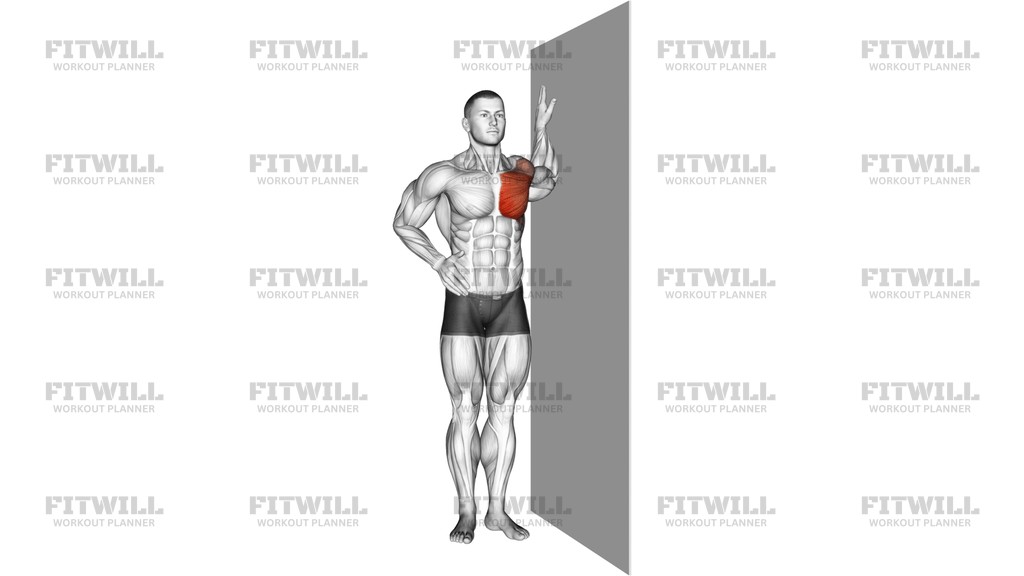
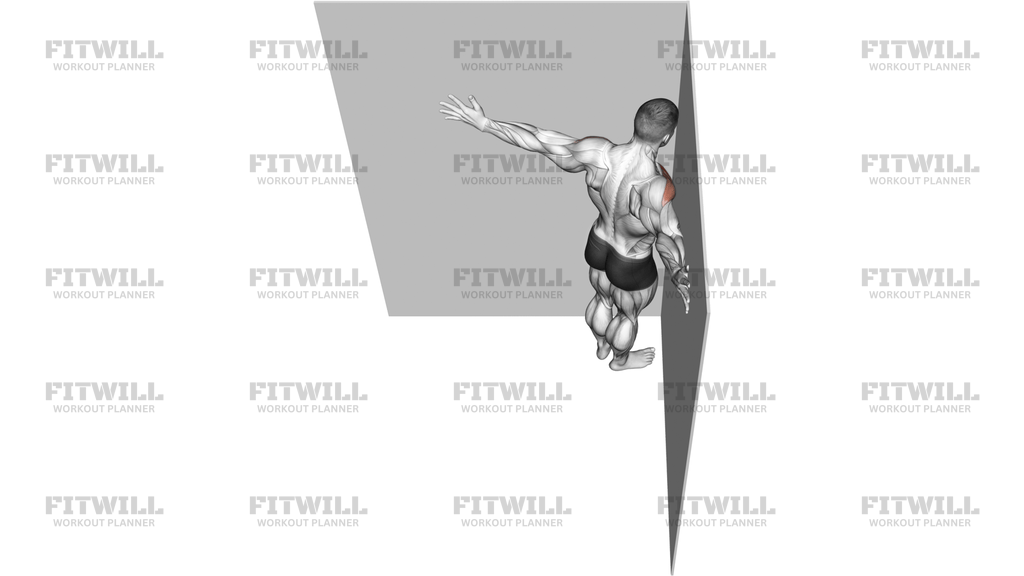
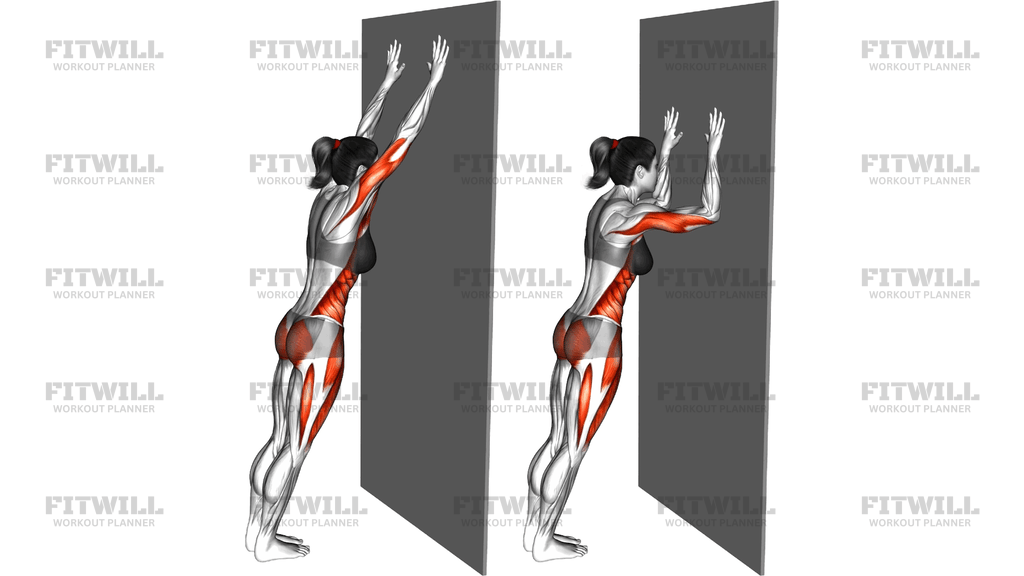
The Forward And Top Wall Push is a body weight pushing exercise performed against a plain wall, where you stand facing the wall with your hands placed flat against it, lean your body forward, and press through your palms to slide your hands from shoulder height up to full extension overhead, then lower them back down under control. Because the wall replaces the floor or a bench, your pressing angle is much more shoulder-friendly than a standard push-up, which makes this a useful drill for people building upper body strength from a low base or recovering pressing capacity after a layoff.
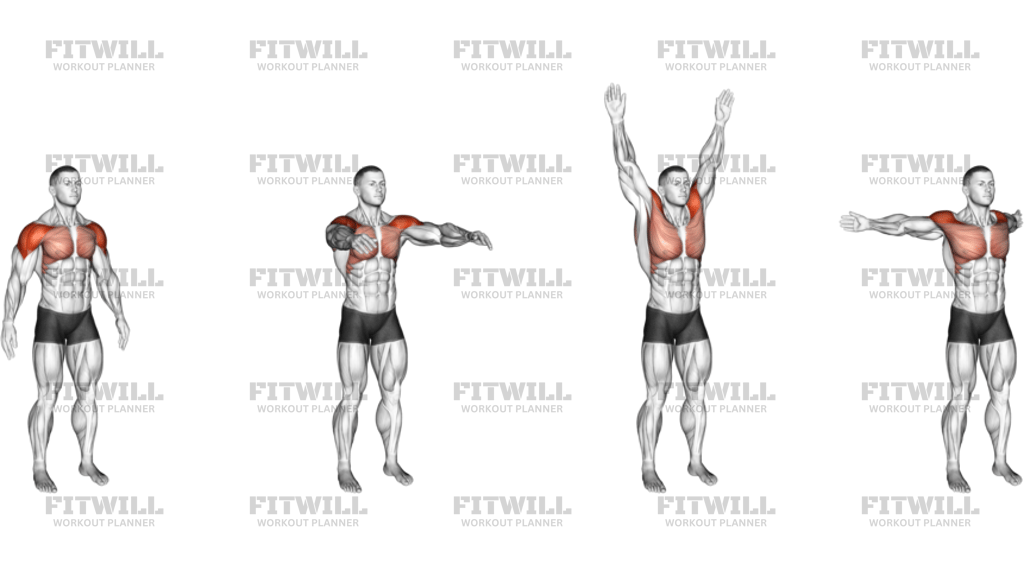
The movement works the triceps as the primary movers, since you actively extend the elbows as your hands travel up the wall. The front and side shoulders assist the press, the serratus anterior and upper back muscles control the shoulder blades as the arms reach overhead, and the chest contributes as you drive your body weight toward the wall. Your core and legs stay engaged the whole time because you are holding an inclined plank position on your feet rather than resting against the wall.
Setup matters more than it looks. The distance your feet are from the wall determines how much body weight you are pressing, so standing close makes the exercise easy and stepping back makes it progressively harder. Keep your body in one straight line from head to heels; if your hips fold or your lower back sags, you lose the pressing benefit and shift stress to your joints. Hands should be flat on the wall at about shoulder width, and the slide should stay smooth in both directions.
To execute well, lean in so your forehead and chest approach the wall, press your palms firmly into the surface, and think about pushing the wall away as you slide your hands upward until your arms are fully extended overhead. Pause briefly at the top, then bend your elbows and slide your hands back down to the starting height, keeping contact with the wall the entire time. The tempo should be slow enough that you feel the triceps and shoulder blades working on both the way up and the way down.
This exercise fits well as a warm-up activation drill before pressing workouts, as a first pushing exercise for beginners, or as a high-rep finisher for shoulder and arm endurance. It also serves desk workers well, since the overhead reach opens the chest and trains upward shoulder blade rotation that prolonged sitting tends to limit. There is no equipment beyond a clear patch of wall, so it works at home, in a hotel room, or in a crowded gym.
For safety, keep the range within what your shoulders allow without shrugging or arching backward, and reduce the lean if your wrists or elbows complain. If you cannot keep a straight body line, step your feet closer to the wall before cutting the set short.
[ Workout Log & Planner ]
Put your next workout in Fitwill
Keep your plan and training log ready when you are.


Instructions
- Stand facing a clear wall and place both palms flat against it at shoulder height, hands about shoulder-width apart with fingers pointing up.
- Step your feet back until your body forms a straight line from head to heels and you lean your weight into the wall; the further your feet are, the harder the press.
- Brace your core and squeeze your glutes so your hips do not fold or sag, and keep your heels down.
- Press your palms firmly into the wall to create tension through your arms and chest before moving.
- Slide your hands up the wall while pushing through your palms, extending your elbows until your arms are straight overhead near the top of your reach.
- Pause for a beat at the top with elbows locked out and shoulders reaching up, without shrugging toward your ears.
- Bend your elbows and slide your hands back down the wall to shoulder height, keeping your palms in contact with the surface the whole way.
- Exhale as you press up, inhale as you slide back down.
- Complete your reps, then step your feet toward the wall and carefully peel your hands off to reset.
Tips & Tricks
- If your hips hinge backward as your hands go overhead, stand an inch or two closer to the wall so the lean is easier to hold.
- Keep your ribs stacked over your pelvis; arching your lower back to gain overhead range usually means the shoulders are being skipped past rather than worked.
- Aim to keep equal pressure in both palms the entire slide, since one side often drifts lazy and takes the triceps out of the movement.
- Do not let your shoulders creep up toward your ears at the top; think of reaching long through the arms instead.
- Slow the downward slide down deliberately, because the lowering half is where the triceps and shoulder blades get most of their work.
- If your wrists ache with fingers pointing straight up, angle your hands slightly outward so the pressure sits in the heel of the palm.
- Scale by foot position, not by speed: closer feet for more reps, further feet for more load.
- Treat the first set as a rehearsal with a very shallow lean, checking that your body line holds before stepping back.
Frequently Asked Questions
Which muscles does the Forward And Top Wall Push work the most?
The triceps are the main movers because you extend the elbows as your hands slide up the wall. The front and side shoulders, chest, and the serratus anterior and upper back muscles around the shoulder blades assist throughout.
How far should my feet be from the wall?
Start close enough that you can hold a straight body line for all your reps, roughly one to two feet away. The further you step back, the more body weight you press, so increase the distance only when the current position feels easy.
Is the Forward And Top Wall Push suitable for complete beginners?
Yes, it is one of the gentlest ways to load a pushing pattern because the wall supports most of your body weight. Beginners should use a modest lean and focus on keeping the hips, torso, and head in one line.
Why do my hands slide or slip on the wall?
Sweaty or dry hands both reduce friction, so wipe the wall first and press evenly through the whole palm rather than the fingertips. Pressing harder into the wall, not just sliding lightly, keeps contact secure.
What is the most common mistake with this exercise?
Losing the straight body line by folding at the hips or sagging the lower back, which turns the press into a passive lean. Re-brace your core between reps, and if the line keeps breaking, step your feet closer to the wall.
Can I use the Forward And Top Wall Push as a warm-up?
Yes, it works well before bench presses, push-ups, or overhead pressing because it wakes up the triceps and trains upward rotation of the shoulder blades. Use a lighter lean and higher reps, around 10 to 15, before heavier work.
What can I do if I do not have a clear wall available?
Any sturdy vertical surface such as a door, a firm column, or a stable cabinet side works, as long as it will not move. Alternatively, incline push-ups on a high counter use a similar shallow pressing angle.
My shoulders pinch when my hands go overhead on the wall. Should I push through it?
No, pinching is a signal to reduce the range, so slide only as high as your shoulders move smoothly. Shrug less, keep the lean shallow, and if the discomfort persists, have it assessed before continuing.
How many reps and sets should I do?
For strength-endurance, aim for 2 to 3 sets of 10 to 20 reps with a slow, controlled slide in both directions. As your pressing strength grows, step your feet further back to add load rather than chasing very high rep counts.