Stepback With Prayer Push
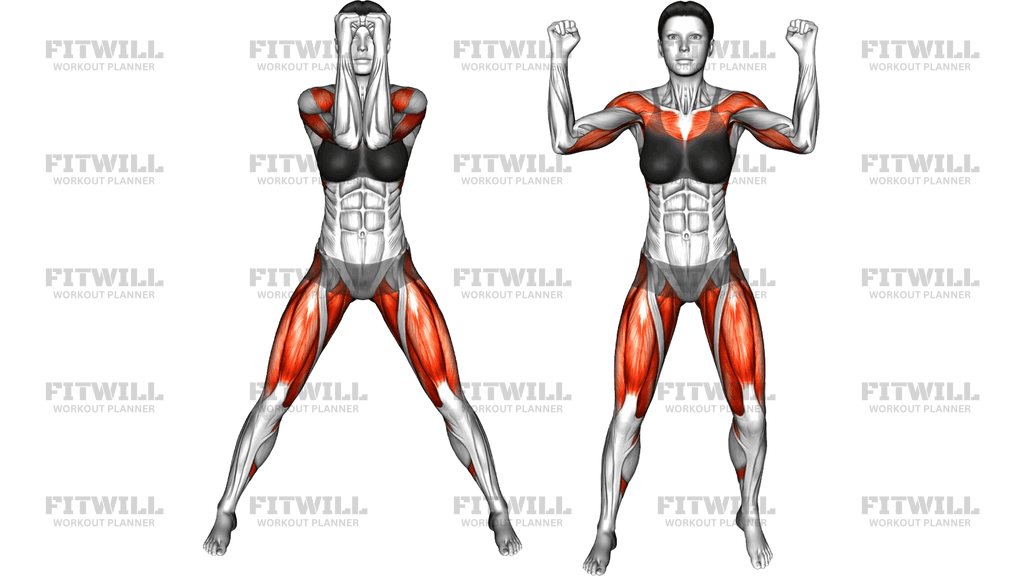
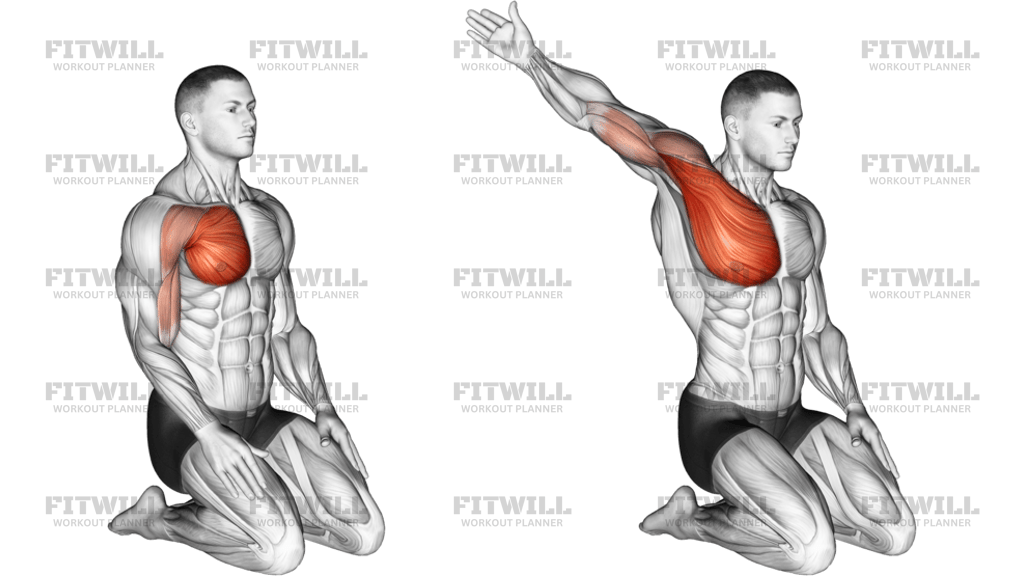
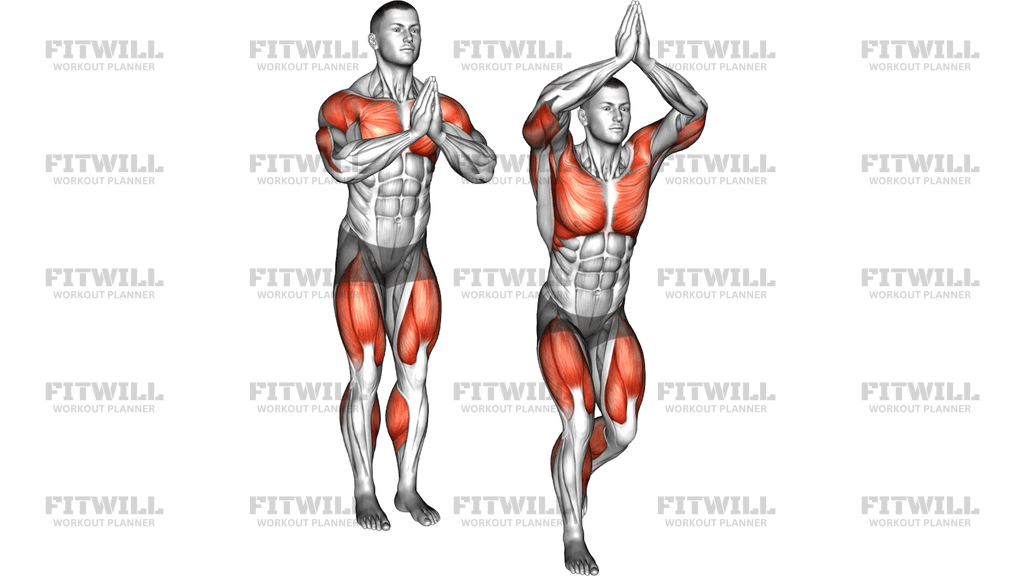
The Stepback With Prayer Push is a bodyweight movement that combines two jobs at once: your arms press inward against each other while your legs handle a controlled reverse step. You start with your palms pressed together at chest height, take one foot back into a staggered stance, and extend your prayer-pressed hands up overhead as you settle into the step. Then you reverse the whole thing to come back to standing. Because the hands never separate, your chest, shoulders, and triceps work the entire time, and the stepback loads the front leg's quads and glutes while your core keeps your ribs and hips stacked.
What makes this exercise different from a standard lunge or a chest squeeze is the constant inward pressure. When you press your palms hard against each other, you create isometric tension through the pectorals and front delts, and moving that pressed position overhead changes the angle of the push as your arms travel. You are not lifting an external load here; the resistance comes entirely from your own opposing hand pressure, which means you control the intensity by how forcefully you squeeze.
This is a useful movement for people training at home with no equipment, for warm-ups before pressing days, and for anyone who needs a low-impact way to wake up the chest, shoulders, and legs together. It also demands balance on one leg as you reach the arms up, so it doubles as light stability work for the ankles, hips, and trunk. Because there is no external weight, it scales naturally: beginners can use a shorter step and a gentler press, while more experienced lifters can hold the bottom position longer and press harder.
Setup matters more than it looks. If your palms are only lightly touching, the upper-body half of the exercise nearly disappears, so press them together with real intent from the first rep to the last. The stepback should be long enough that your front knee can bend over your mid-foot without collapsing inward, but not so long that your back heel has to slam down or your torso tips forward.
To execute it well, stay tall through the spine as the arms rise. A common error is letting the lower back arch and the ribs flare when the hands go overhead, which shifts tension away from the abs and chest. Brace your midsection, exhale as you press up, and think about keeping the palms welded together directly over your shoulders rather than drifting behind your head.
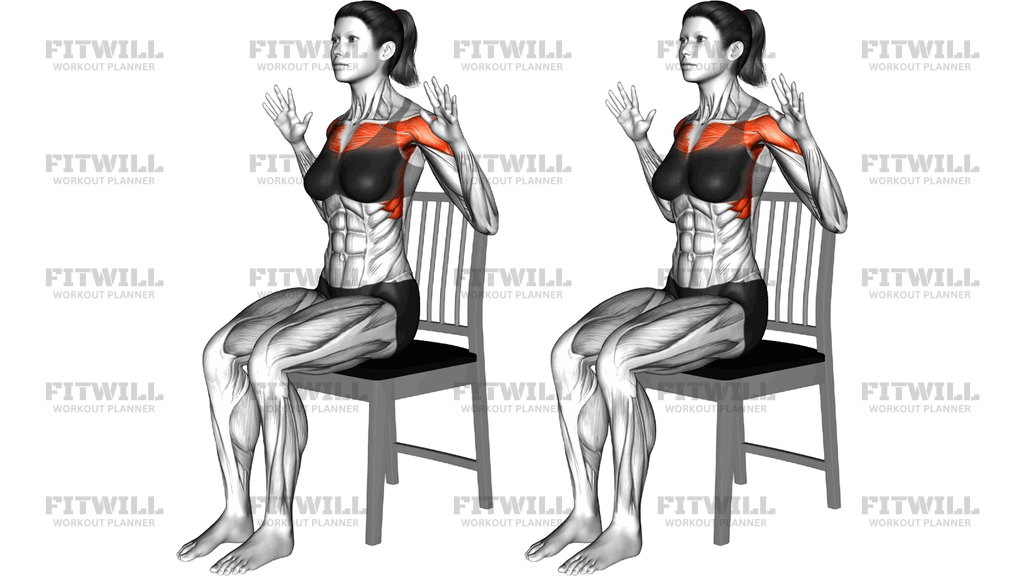
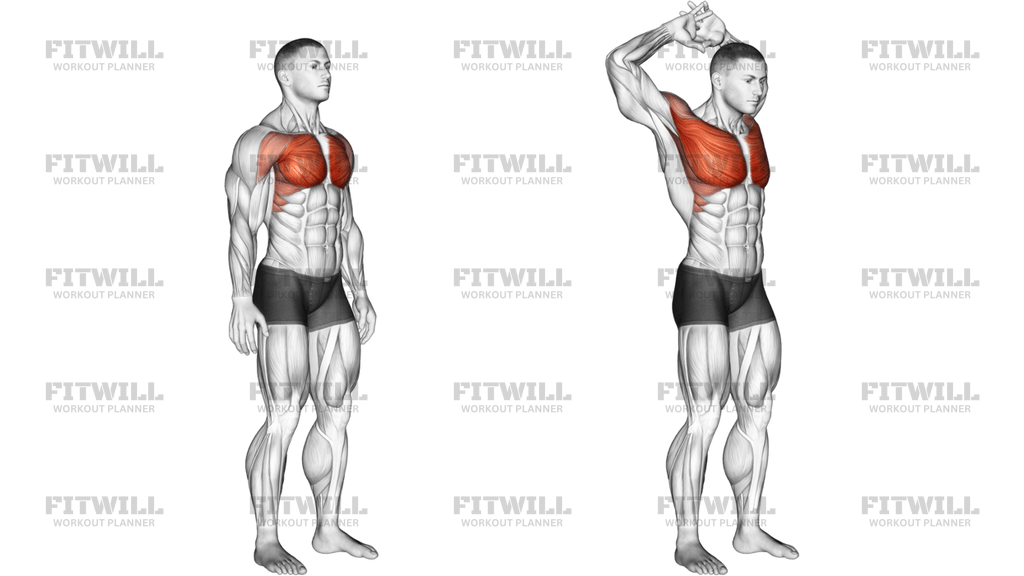
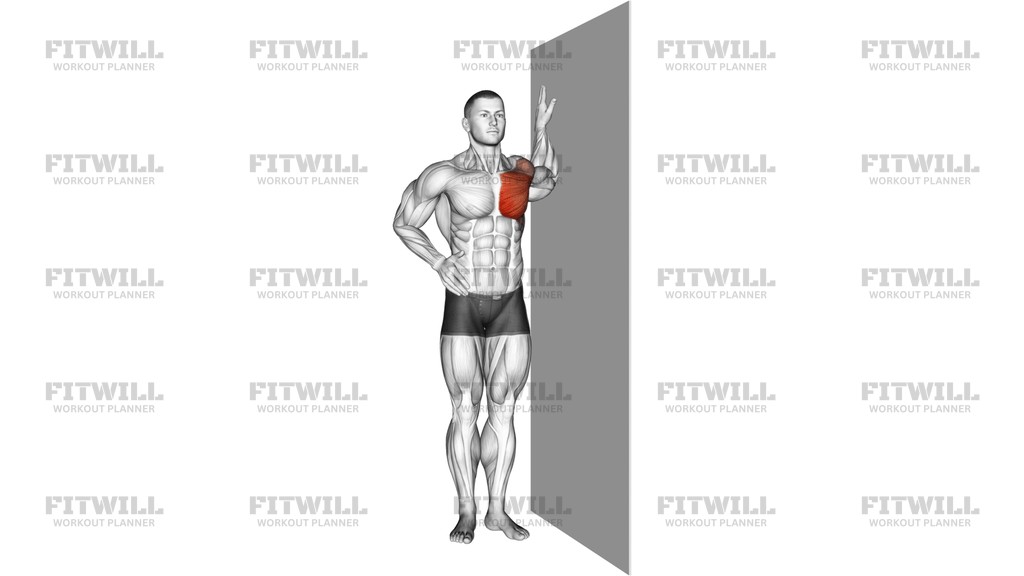
Expect to feel this across the chest, in the caps of the front shoulders, in the front thigh of your standing leg, and through the glute of the leg you step back. Alternate legs rep to rep or complete all reps on one side before switching, depending on whether you want a balanced rhythm or a focused burn on each leg.
[ Workout Log & Planner ]
Put your next workout in Fitwill
Keep your plan and training log ready when you are.


Instructions
- Stand with your feet hip-width apart and your weight evenly distributed over both feet.
- Press your palms together in front of your chest with your fingers pointing up and your elbows lifted out to the sides; squeeze your hands against each other firmly.
- Brace your abdominal muscles and keep your ribcage stacked over your pelvis before you start moving.
- Step one foot straight back, lowering into a staggered stance so your front knee bends over your mid-foot and your back heel lifts naturally.
- As you step back, press your palms together and extend your arms up and slightly forward until your hands are directly over your shoulders, keeping them welded together the whole way.
- Pause briefly at the top of the press and the bottom of the step, holding the inward pressure through your chest and shoulders.
- Reverse the motion under control: bring your back foot forward and lower your pressed hands back to your chest together.
- Exhale as you step back and press overhead; inhale as you return to the start.
- Alternate legs on the next rep, or finish all reps on one side before switching.
- Reset your stance and your palm pressure at the start of every rep rather than carrying a sloppy press into the next step.
Tips & Tricks
- If your palms slide apart as your arms go overhead, the chest tension is lost; squeeze harder or lower your hands slightly and rebuild the press before continuing.
- Ribs flaring and the lower back arching during the overhead press are the most common faults here. Tighten your abs and think of slightly tucking your pelvis as your arms rise.
- Keep the back knee pointing down toward the floor rather than letting it rotate outward; this keeps the stepback honest and protects the knee.
- A front knee that collapses inward when you step back usually means a step that is too short or rushed. Lengthen the step slightly and slow the descent.
- Do not let your pressed hands drift behind your head at the top. Finish with them stacked over your shoulders so the front delts and chest do the work.
- Drive the ball of your back foot into the floor on the way up instead of just letting it trail; this adds glute and calf work and improves your balance.
- Start with 8 to 10 reps per leg. Because the resistance is self-generated, more reps and a harder squeeze matter more than speed.
- If balance is the limiting factor, practice the stepback and the arm press separately before combining them into one fluid rep.
Frequently Asked Questions
What muscles does the Stepback With Prayer Push work?
The pressing action targets the chest and front shoulders isometrically, while the stepback loads the quads and glutes of your legs. Your core and ankle stabilizers also work to keep you balanced on one leg with your arms overhead.
Is the Stepback With Prayer Push good for beginners?
Yes. There is no external load, so beginners can use a shorter step and a moderate palm squeeze. If balance is difficult at first, hold onto a wall or sturdy chair with one hand and press with the other.
Why do my palms need to stay pressed together the entire time?
The inward squeeze is the entire source of upper-body resistance in this exercise. If your hands separate, your chest and shoulders stop working and you are left with just a bodyweight stepback.
How far back should I step during the Stepback With Prayer Push?
Step back far enough that your front knee can bend over your mid-foot without your heel lifting or your torso pitching forward. A step that is too short drives the knee forward; too long and your back heel slams down and your balance suffers.
My lower back arches when I press my hands overhead. How do I fix it?
Brace your abs before the rep starts and tuck your pelvis slightly as your arms rise. Extending the arms with a loose trunk is the most common cause of lower-back discomfort in this movement.
Can I substitute the Stepback With Prayer Push for weighted chest pressing?
Not directly, since the resistance here is self-generated and isometric rather than external. It works well as a warm-up, a finisher, or a no-equipment option, but progressive overload eventually requires added resistance.
Should I alternate legs or do all reps on one side?
Alternating keeps a steady rhythm and highlights the coordination of the movement, while completing all reps on one side increases the leg burn and balance demand. Either approach works; pick based on your goal for that session.
Is the Stepback With Prayer Push safe for my knees?
Generally yes, as it is a low-impact bodyweight movement. Keep your front knee tracking over your mid-foot, avoid letting it collapse inward, and stay within a depth you can control without pain.
How many reps should I do?
Start with 8 to 12 reps per leg for 2 to 3 sets. Since the difficulty scales with how hard you press your palms together, increase the squeeze or add a pause at the top before adding volume.