Seated Cross Leg Stretch Hold
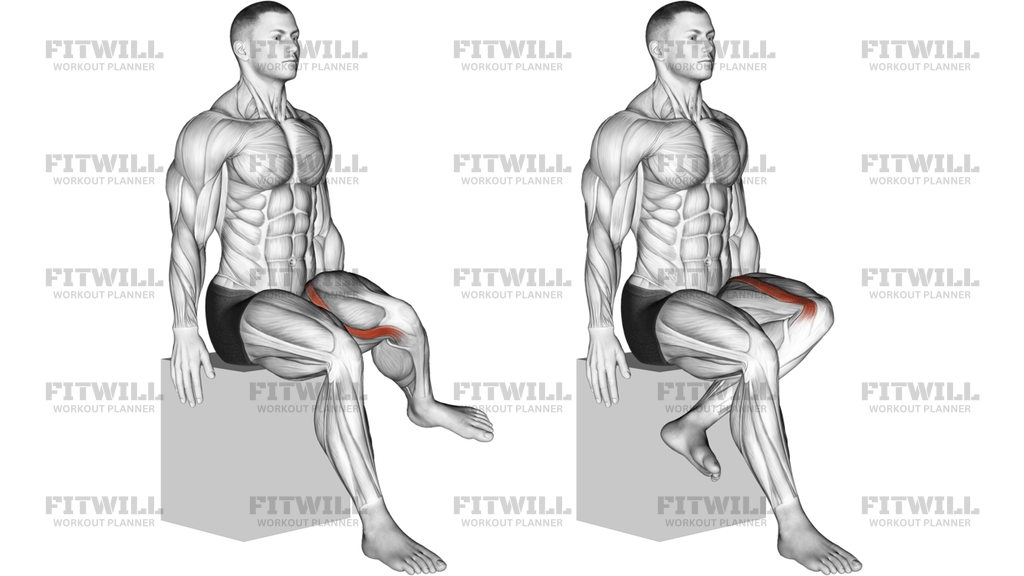
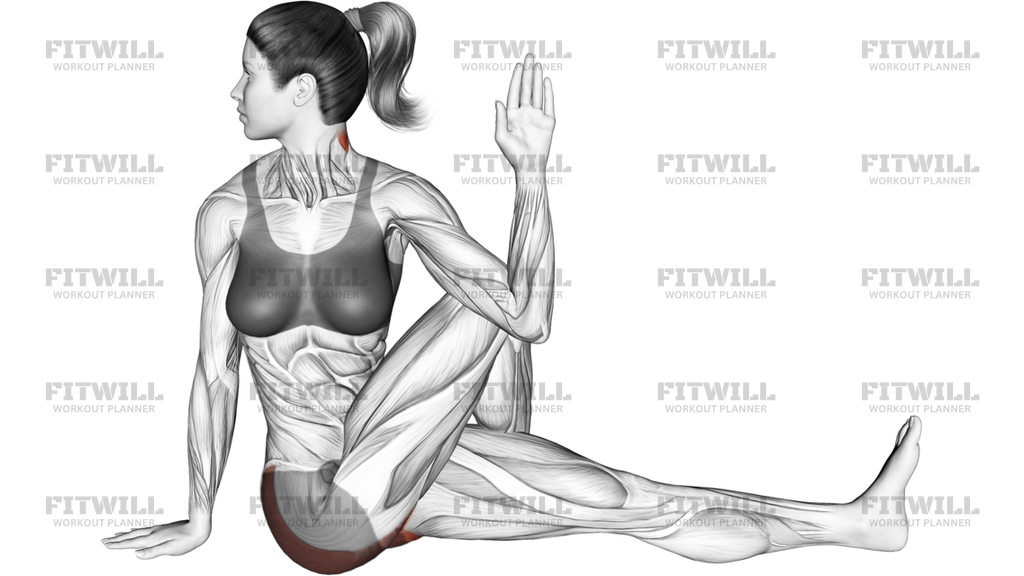
The Seated Cross Leg Stretch Hold is a static stretch performed on the floor in which you sit with one leg extended and draw the opposite knee up and across your body, hugging it toward your chest or opposite shoulder and holding that position. The illustration highlights the glute and outer hip region, which is exactly where most people feel this stretch: the crossing action rotates the hip internally relative to the torso and places the gluteal muscles under a steady, passive lengthening load. Because it is a hold rather than a dynamic movement, the goal is a slow, sustained release rather than repeated reps.
This stretch is especially useful for anyone who spends long hours sitting, since prolonged chair time tends to leave the glutes and outer hips in a shortened, dormant position. Runners, cyclists, and lifters who squat or hinge frequently also benefit, as tight hip external rotators can pull on the lower back and alter hip mechanics. It is a common fixture in cool-downs, yoga-inspired mobility sessions, and post-workout recovery routines.
The setup matters more than it looks. Sitting tall on your sit bones with the extended leg resting straight along the floor gives the pelvis a stable base; if you slump backward or let the pelvis tuck under, the stretch leaks into the lower back instead of targeting the hip. The supporting hand position on the floor behind you lets you modulate torso angle, which is your main tool for adjusting intensity.
To execute it well, draw the bent knee toward the opposite shoulder rather than straight up the midline, clasp your hands around the shin or knee, and keep the shoulders relaxed as you hold. Breathe slowly and let the tension in the glute ease over 20 to 45 seconds rather than forcing the knee closer with a jerky pull. Mild stretch discomfort is expected; sharp pain, pinching in the hip crease, or tingling down the leg means you should ease off immediately.
A practical coaching point: the extended leg wants to bend or drift. Keeping it engaged with the kneecap pointing up and the foot relaxed preserves the pelvic position and keeps the stretch honest. If your hips are particularly tight, elevating the hips on a folded towel or cushion can make the position far more comfortable without reducing the effect on the glutes.
Use this hold after training sessions when the muscles are warm, or as a standalone mobility break during the day. Two to three rounds per side is usually plenty, and consistent, gentle practice over weeks does far more for hip mobility than an occasional aggressive session.
[ Workout Log & Planner ]
Put your next workout in Fitwill
Keep your plan and training log ready when you are.


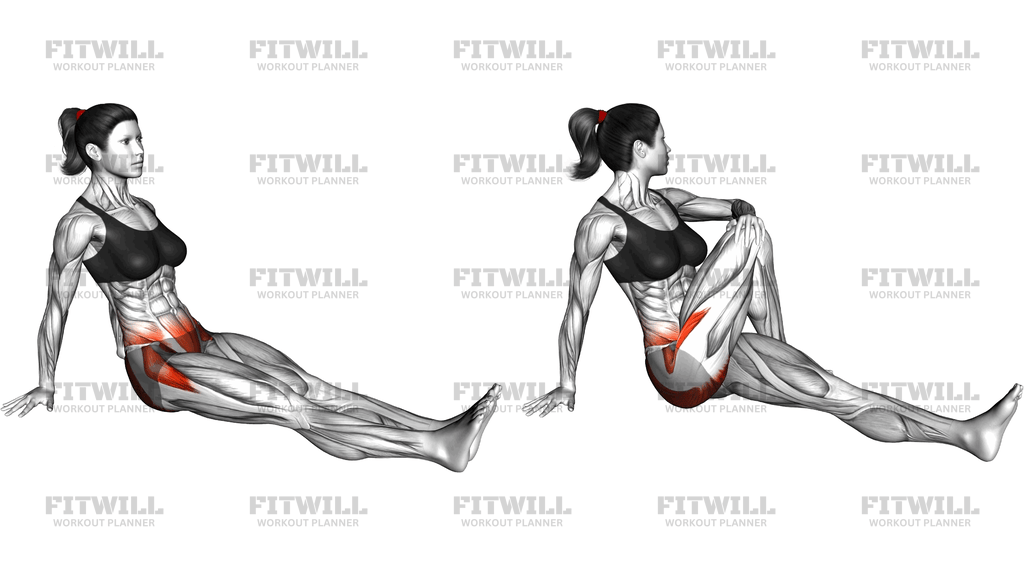
Instructions
- Sit on the floor with both legs extended in front of you and place your palms on the floor slightly behind your hips for support.
- Sit up tall on your sit bones so your spine is long, then bend your right knee and draw the leg up and across your body toward your left shoulder.
- Keep your left leg extended and relaxed along the floor, with the kneecap facing the ceiling and the foot resting naturally.
- Clasp both hands around the right shin or knee and gently guide the leg closer to your chest until you feel a firm stretch in the right glute and outer hip.
- Let your shoulders drop away from your ears and keep your chest lifted rather than curling forward over the knee.
- Hold the position for 20 to 45 seconds, breathing slowly and deeply, and let the stretch ease as the muscle relaxes.
- If you want more intensity, use the hands behind you to lean your torso slightly forward or use the arms to pull the knee a little closer; release tension slightly if it feels sharp or pinches.
- Release the hold slowly, lower the right leg back to the floor, reset your posture, and repeat on the left side.
- Complete two to three holds per side, staying with the side that felt tighter first if there is an imbalance.
Tips & Tricks
- The most common mistake is pulling the knee straight toward the same-side armpit, which mostly stretches the hip flexors instead; aim the knee toward the opposite shoulder to load the glute.
- Avoid rounding your entire spine over the leg to fake extra range; keep the chest tall and let the movement come from the hip joint.
- If sitting on the floor tips your pelvis backward and strains your lower back, sit on a folded towel or yoga block to raise your hips above your knees.
- Do not bounce or pulse the knee during the hold; the value of this stretch comes from a quiet, sustained position where the muscle can down-regulate.
- Watch the extended leg: it often bends or rolls outward without you noticing, which lets the pelvis rotate and softens the stretch. Re-straighten it each time you settle in.
- Keep your neck neutral by looking straight ahead rather than craning down at the knee, especially during longer holds.
- If you feel a pinching sensation at the front of the hip, back off the angle slightly and pull the knee a little more vertical before crossing it over.
- Perform the stretch when the muscles are warm, such as after a workout or a short walk, rather than cold first thing in the morning.
- Expect one side to feel noticeably tighter; match the hold time on both sides rather than chasing extra range on the flexible side.
Frequently Asked Questions
Which muscles does the Seated Cross Leg Stretch Hold target?
The primary targets are the glutes, particularly the gluteus maximus and the deep external rotators of the hip, along with the outer hip structures. The lower back and hip flexors are involved to a lesser degree depending on your torso angle.
Why should the knee be pulled toward the opposite shoulder?
Crossing the knee toward the opposite shoulder adds rotation at the hip, which lengthens the gluteal muscles far more effectively than pulling the knee straight to the chest. Keeping the knee on the same side turns it into more of a hip flexor stretch.
Is the Seated Cross Leg Stretch Hold suitable for beginners?
Yes, it is a low-load body weight stretch that beginners can perform safely by simply moderating how far they draw the knee in. Beginners often benefit from sitting on a cushion to make the seated position more comfortable.
How long should I hold the stretch?
Aim for 20 to 45 seconds per side and repeat two to three rounds. If you are short on time, one longer hold of 45 to 60 seconds per side is a reasonable substitute.
What is the most common mistake in this stretch?
Slumping the lower back and curling the chest down over the knee, which shifts the stretch away from the glute and into the spine. Keep the spine long and let the hip do the work.
My lower back aches when I do the Seated Cross Leg Stretch Hold. What should I change?
Your pelvis is likely tucking under because your hips are tight or the floor is forcing you into a rounded position. Elevate your hips on a folded towel or firm cushion, reduce how far you pull the knee in, and keep your torso more upright.
Can I do this stretch every day?
Yes, gentle static hip stretches like this one can be performed daily, especially if you sit for long periods. Keep the intensity moderate so the tissue is not repeatedly irritated.
What can I use instead if sitting on the floor is uncomfortable?
A supine figure-four stretch, where you lie on your back and cross one ankle over the opposite knee, targets the same glute and outer hip area with less demand on seated posture. A reclined knee-to-chest pull is another close substitute.
Should I feel tingling or numbness during the hold?
No. Tingling, numbness, or shooting sensations down the leg suggest nerve sensitivity rather than a muscle stretch, so release the position immediately and use less range or a different stretch variation.
Is it better to do the Seated Cross Leg Stretch Hold before or after a workout?
It works best after training or during a dedicated mobility session, when the muscles are warm and receptive to lengthening. Long static holds immediately before heavy lower body lifting are generally not ideal.