Downward Dog Hip Circle
The Downward Dog Hip Circle is a mobility drill performed from a downward dog position, where you take one foot off the floor, bend the knee, and let the hip draw a smooth circular path before switching sides. Because your hands and one foot anchor you to the ground, the moving hip is free to travel through a large arc, taking the hip joint through flexion, abduction, extension, and rotation in one continuous flow. It is a staple in warm-ups for lifting, running, and martial arts, and it works just as well as a standalone morning mobility routine.
The main benefit is hip capsule and surrounding muscle preparation. The circling leg targets the glutes and deep hip rotators, while the hamstrings of the standing leg and the calves get a steady stretch from the inverted position. Holding the downward dog shape also asks the shoulders, upper back, and trunk to stay active, so the drill quietly builds stability through the arms and core at the same time as it frees up the hips.
Setup matters more than speed here. Press the floor away with straight arms, keep the neck relaxed between the arms, and distribute weight so the hands are not overloaded. When you lift one leg, the standing foot may drift toward the ball or the outer edge; keep it grounded and let the hips, not the spine, create the motion. A rounded lower back or a shoulder collapsing toward the floor are signs the circle has grown bigger than your control allows.
To execute well, keep the circle deliberate and moderately sized. Lead with the knee, let the hip trace the arc, and pause briefly wherever the movement feels sticky rather than forcing through a pinch. Breathe steadily throughout, exhaling as the leg sweeps up and around. Complete all repetitions on one side before switching legs so each hip gets an even dose of work.
This drill suits a wide range of people: lifters prepping for squats and deadlifts, runners whose hips feel tight after long sits, and anyone easing into yoga-style training. Because it requires no equipment and only a small patch of floor, it travels well and fits into almost any warm-up. Keep the range honest, move with control, and treat any sharp joint pain as a signal to shrink the circle or skip the drill that day.
[ Workout Log & Planner ]
Put your next workout in Fitwill
Keep your plan and training log ready when you are.


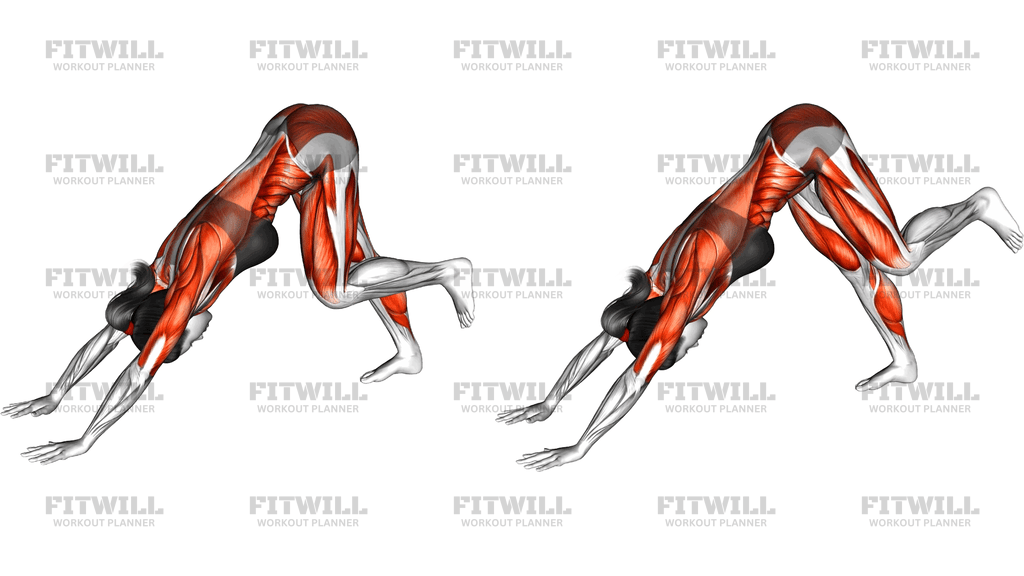
Instructions
- Start on hands and knees, then tuck your toes, lift your knees, and push your hips up and back into a downward dog with straight arms and a long spine.
- Spread your fingers, press the floor away, and position your feet about hip-width apart so both heels reach toward the ground.
- Shift your weight slightly toward the standing side, brace the trunk lightly, and relax your neck so your head hangs between your arms.
- Lift one leg toward the ceiling, then bend the knee and let the hip open as the heel draws toward your glutes.
- Using the hip as the hinge point, circle the bent leg up and out to the side, down toward the floor, and back through the middle in one smooth loop.
- Keep the standing foot flat and grounded, and let your torso stay quiet so the motion comes from the hip rather than the lower back.
- Complete the desired number of circles in one direction, then reverse the direction and switch legs.
- Exhale as the leg sweeps up and around, and inhale as it returns down and through.
- After the final repetition, place the moving foot back down, re-center your hips, and take one steady breath in downward dog before switching sides or finishing.
Tips & Tricks
- If your shoulders feel the strain, bend your knees slightly and push more weight into the legs so the arms share the load instead of carrying it.
- Keep the circle small at first; a big sweeping arc often causes the standing heel to lift and the lower back to twist.
- Watch for the standing foot rolling to its outer edge — press through the whole foot to protect the ankle and keep balance.
- If the hamstrings of the standing leg shake or pull, soften that knee a few degrees; the drill still trains the hip without overloading the stretch.
- Avoid letting the trunk dip toward the floor as the leg circles; imagine your ribcage staying lifted away from the ground the whole time.
- Sticky spots in the arc are normal — slow down at them rather than accelerating past, but never push into a pinching sensation at the front of the hip.
- Warm the hips first with a few gentle cat-cows or leg swings if you are doing this drill first thing in the morning.
- Do equal circles on both sides; a side that feels noticeably tighter is useful feedback, not a reason to load it extra hard.
Frequently Asked Questions
What muscles does the Downward Dog Hip Circle work?
It primarily moves the hip joint through the glutes and deep hip rotators, while the standing leg's hamstrings and calves hold a stretch. The shoulders, upper back, and core stay engaged to keep the downward dog shape stable.
Is the Downward Dog Hip Circle suitable for beginners?
Yes, as long as the range stays modest. Beginners can keep the circle small, bend the standing knee slightly, and focus on smooth control rather than a large arc.
Should my hands bear most of my weight during the Downward Dog Hip Circle?
No — press the floor away but let the legs carry the majority of your load. If your wrists or shoulders feel overloaded, shift your hips further back and bend the standing knee a little.
Why does my standing heel lift when I circle my hip?
The circle is probably too wide for your current hip mobility. Shrink the arc and consciously press through the whole standing foot, letting the hip move within a range your balance can hold.
Should I circle the leg with a straight or bent knee?
A bent knee is easier on the hamstrings and makes it simpler to lead the circle from the hip. You can straighten the leg slightly for a stronger hamstring and calf stretch once the basic pattern feels comfortable.
How many repetitions of the Downward Dog Hip Circle should I do?
Five to eight circles in each direction per leg is a practical dose for a warm-up. Add a second round if the hips still feel stiff before your main workout.
Can I use this drill instead of static stretching?
For pre-workout preparation, this dynamic circle is usually a better choice than long static holds because it warms the joint through motion. It can also serve as a gentle standalone mobility practice on rest days.
What should I do if I feel a pinch at the front of my hip?
Reduce the size of the circle and avoid driving the knee directly toward the chest. A small adjustment to the angle of the arc often removes the pinch, but persistent discomfort is a reason to choose a different hip drill.
Do I need any equipment for the Downward Dog Hip Circle?
No equipment is required — just floor space for your hands and feet. An exercise mat can add comfort for the palms and heels on hard surfaces.