Lying Biceps Curl With Towel
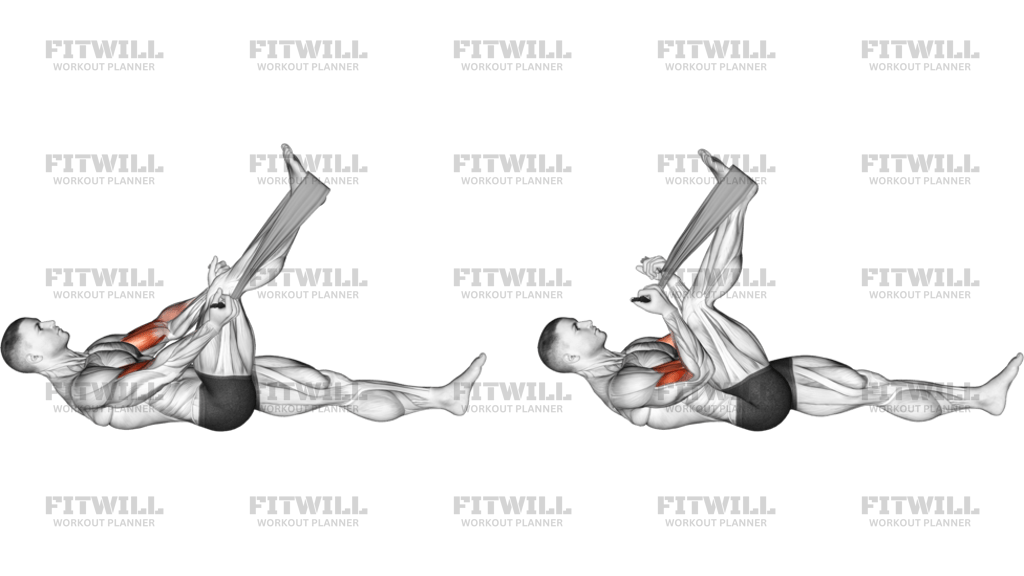
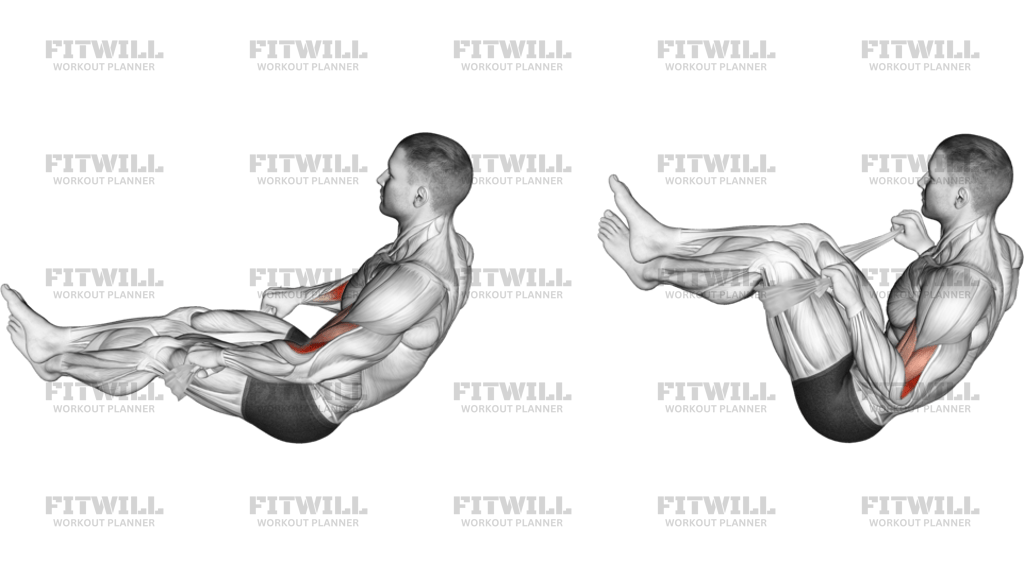
The Lying Biceps Curl With Towel is a self-resisted arm exercise performed on the floor. You lie on your back, loop a towel around one raised foot, and grip the two ends of the towel with the hand on the same side. Your own leg becomes the resistance source: as you try to press the foot away and straighten the leg, the towel transmits that force into your curling arm, and you fight it by curling your hand up toward your shoulder.
This setup makes the exercise useful for people who train at home or travel with no dumbbells, since the only equipment needed is a towel and enough floor space to lie down. It also gives you something most bodyweight biceps exercises cannot: adjustable, continuously applied resistance. Because you control how hard the leg pushes through the towel, you can dial the tension up or down mid-set, which is hard to do with bands or free weights.
The main muscles worked are the biceps brachii on the front of the upper arm, with supporting work from the brachialis and brachioradialis and the forearm flexors that maintain your grip on the towel. The front of the shoulder helps hold the arm position, and the trunk stays lightly engaged to keep you stable on the floor.
Setup details matter more than they first appear. Your elbow should stay pinned near your side or close to the torso rather than drifting forward, because a moving elbow turns a biceps curl into a shoulder movement and steals tension from the target muscle. The towel needs to be secured firmly around the foot so it cannot slip mid-rep, and your grip on both ends should be even so the pull stays straight.
To execute the movement well, start with the arm nearly straight, exhale as you curl the hand up toward the shoulder against the pressure of the leg, pause briefly at the top, then lower the hand back down over two to three seconds while the leg continues to resist. The lowering phase is where much of the training effect lives, so resist the temptation to let the leg win quickly.
This exercise fits well as a finisher after heavier arm work, as a standalone option in minimal-equipment routines, or as a rehab-friendly reintroduction to curling when load needs to be precisely self-regulated. Keep the effort honest but never let the leg drive force that forces your elbow forward or your shoulder up off the floor.
[ Workout Log & Planner ]
Put your next workout in Fitwill
Keep your plan and training log ready when you are.


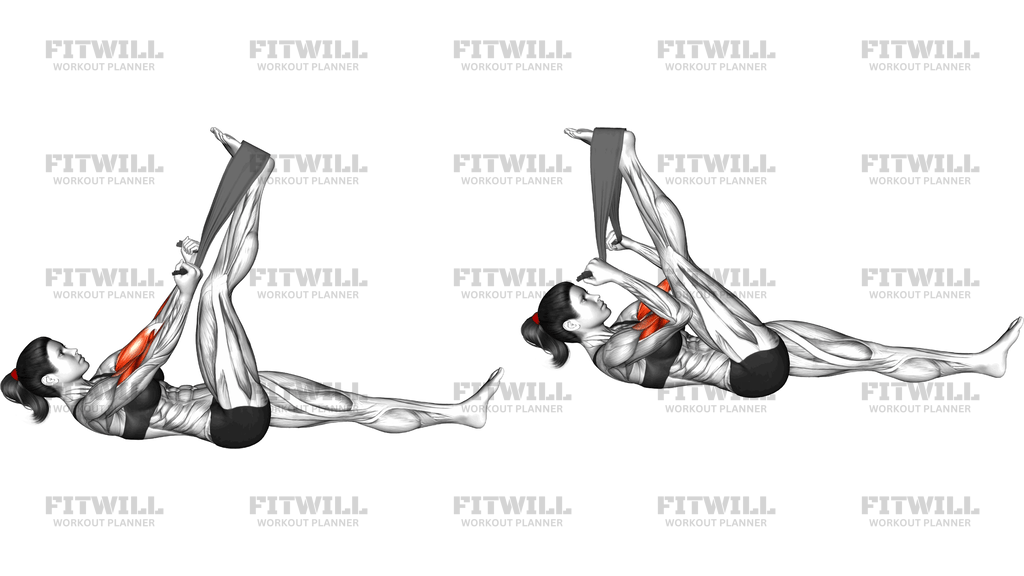
Instructions
- Lie on your back on the floor with both legs extended and your head resting comfortably.
- Loop a towel around the sole of one foot and raise that leg so the knee points toward the ceiling and the leg is roughly vertical.
- Hold both ends of the towel in the hand on the same side as the raised foot, with the arm extended toward the foot and the towel pulled taut.
- Brace your trunk lightly and press your shoulder and upper back into the floor so your torso stays quiet during the set.
- Press your foot down and away through the towel to create resistance, keeping the pressure steady rather than jerky.
- Exhale and curl your hand up toward your shoulder by bending the elbow, fighting against the downward pull from the leg.
- Pause for a moment at the top of the curl with the biceps fully shortened and tension still on the towel.
- Inhale and lower your hand back toward the starting position over two to three seconds while the leg continues to push down.
- Complete all repetitions on one side, then switch the towel to the other foot and work the opposite arm.
- Release the towel grip, lower the leg with control, and shake out the forearm and biceps before the next set.
Tips & Tricks
- Pin your elbow against or close to your side for the whole set; if the elbow travels forward toward the knee, the shoulder is taking over and the biceps are losing tension.
- Create the resistance from the leg first, then curl. If you curl before the leg pushes, the first part of the rep feels empty and the top half is overloaded.
- Keep the towel wrapped flat around the sole of the foot. A twisted or folded towel creates pressure points and is more likely to slip off mid-rep.
- Grip the towel ends at even lengths. A lopsided grip tilts the wrist and shifts work toward the forearm at the expense of the curl.
- Slow the eccentric deliberately. Because the leg supplies the resistance, letting the hand drop quickly is the most common way this exercise loses its value.
- Keep the raised knee soft rather than locked, and lower the leg slightly if pressing with a fully straight leg pulls your hips or lower back off the floor.
- Match the leg pressure to the hardest part of the range: ease off slightly at the bottom where the elbow is straight and push harder as the hand nears the shoulder.
- Do not let your head or shoulders lift to help the pull. If you feel yourself crunching up, reduce the leg pressure and reset your torso.
- If your grip fatigues before your biceps, wrap the towel ends once around each hand instead of squeezing harder with the fingers.
Frequently Asked Questions
Which muscles does the Lying Biceps Curl With Towel work?
The biceps brachii is the primary mover, with the brachialis and brachioradialis assisting elbow flexion. The forearm flexors work to hold the towel grip, and the front shoulder helps stabilize the arm position.
How does a towel and one leg create enough resistance for a biceps curl?
The towel transfers force from your leg directly into your hand, so your own hip and knee extensors act like a weighted load. By pressing harder or softer with the foot, you regulate how much resistance the curling arm faces.
Can beginners do the Lying Biceps Curl With Towel?
Yes, and it is actually a friendly starting point because the resistance is fully self-adjusted. Beginners should start with light leg pressure, focus on keeping the elbow still, and build up the pressing force as coordination improves.
Why does my shoulder keep lifting off the floor during the curl?
That usually means the leg is pushing harder than the arm can handle, so your body recruits the shoulder to compensate. Reduce the foot pressure, recheck that your elbow stays near your side, and rebuild the tension gradually.
How many sets and reps should I do of the Lying Biceps Curl With Towel?
Two to three sets of 10 to 15 controlled reps per arm works well for most people. Since the resistance is elastic and self-generated, err toward higher reps with steady tension rather than max-effort presses.
What is the most common mistake in this exercise?
Letting the elbow drift forward so the movement becomes a shoulder pull instead of a curl. Keeping the upper arm vertical and quiet while only the forearm moves is the key to feeling it in the biceps.
Can I use a resistance band instead of a towel?
You can, but the feel is different. A band provides its own elastic tension, while the towel setup makes your leg the resistance source, which gives you finer control over how hard each rep is.
Is the Lying Biceps Curl With Towel safe for the elbows?
For most people, yes, because the load is self-regulated and the arm is supported by the floor position. Warm up the elbows first, avoid snapping the towel taut at speed, and stop if you feel sharp pinching at the joint.
Where does this exercise fit into a workout?
It works best as a finisher at the end of an arm or upper-body session, or as a stand-alone option in minimal-equipment and travel routines when no dumbbells are available.