Body Up
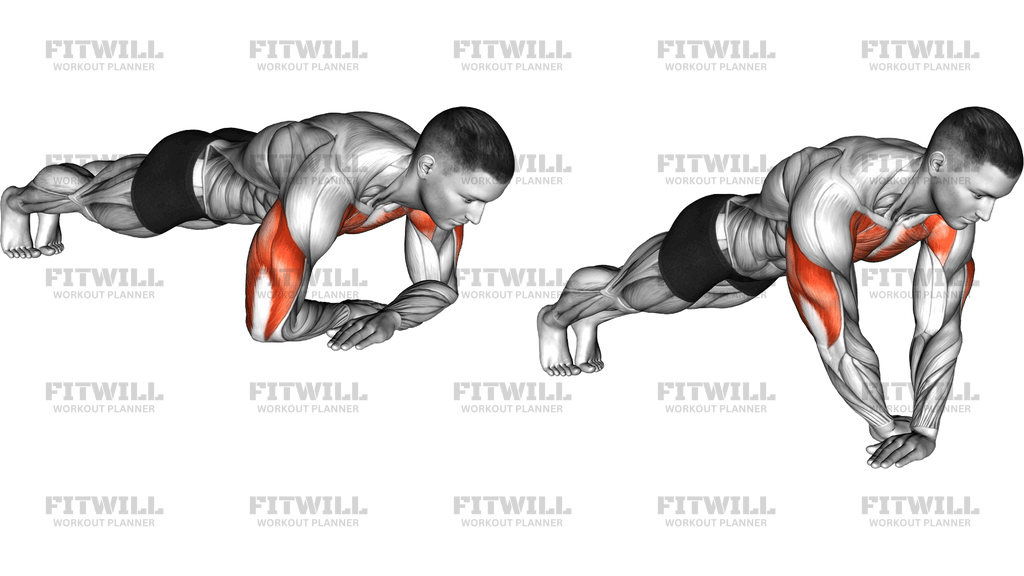
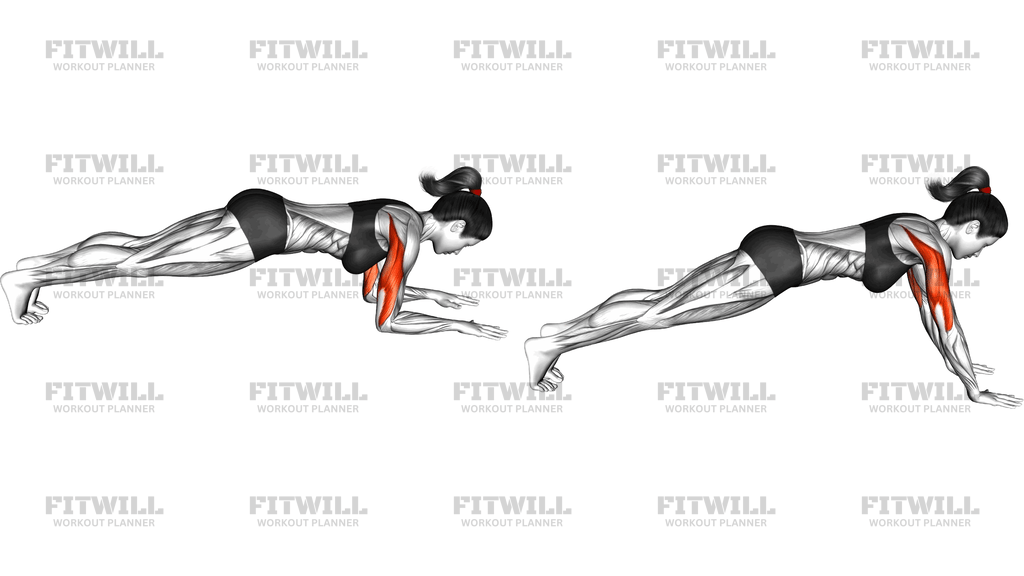
The Body Up is a plank-to-hand press that takes you from a forearm plank up to a straight-arm high plank, one side at a time, then lowers you back down. It looks simple, but pushing your whole body off the floor from a forearm position demands serious triceps strength, front shoulder drive, and a trunk that refuses to twist. Because your base of support keeps shifting between elbows and hands, it also hammers the deep core stabilizers far more than a static plank ever will.
This movement earns its place in almost any program. Calisthenics athletes use it as a stepping stone toward straight-arm strength work, general lifters use it to build pressing power from an unusual angle, and anyone who sits a lot benefits from the shoulder stability and anti-rotation demand it creates. It is also one of the best bridge exercises for people working toward full push-ups, because it trains the exact lockout portion of the press that usually fails first.
The setup matters more than most people expect. Your elbows should sit directly under your shoulders, feet roughly hip-width apart, and your body should form one straight line from head to heels before you press. If your hips start sagging or piked, you will press from a compromised position and lose the core benefit entirely. A mat under your forearms makes the movement far more comfortable on the elbows.
To execute it well, place your left hand where your left elbow was, drive through the palm, then immediately place the right hand and press to the top. Lower back down in the same order, placing one forearm and then the other. The hips will want to swing side to side with each transition — fight that by squeezing the glutes and bracing the abs like you are about to take a light punch.
Expect the triceps and front of the shoulders to do most of the visible work, with the abdominals and obliques working quietly underneath to keep your torso square to the floor. Start with 6-8 reps per side and prioritize a level pelvis over speed. If full reps are too hard, drop to your knees between transitions; if they are too easy, slow the tempo or wear a weighted vest.
[ Workout Log & Planner ]
Put your next workout in Fitwill
Keep your plan and training log ready when you are.


Instructions
- Place an exercise mat on the floor and set up in a forearm plank with your elbows directly under your shoulders, forearms parallel or angled slightly inward, and feet about hip-width apart.
- Pull your shoulder blades down your back, squeeze your glutes, and brace your abdominals so your body forms one straight line from head to heels.
- Shift your weight slightly toward your left side and place your left palm flat on the floor where your left elbow was, fingers pointing forward.
- Press through the left palm and place your right hand in the same position under the right shoulder, ending in a high plank with both arms straight.
- Keep your hips square to the floor the entire time — do not let them rotate or lift as you press up.
- At the top, hold for a beat with your arms locked out, shoulders pressed away from the floor, and ribs pulled down.
- Reverse the movement by placing your left forearm back down, then the right, returning to the starting forearm plank without letting the hips sag.
- Exhale as you press up onto your hands, inhale as you lower back onto your forearms.
- Complete the desired reps leading with one hand, then switch the leading side on the next set so both sides work evenly.
- Reset your brace at the bottom of each rep before starting the next transition rather than rushing reps back to back.
Tips & Tricks
- If your hips rock side to side on every rep, widen your feet to shoulder-width or more — the wider base gives you more stability and lets you focus on a clean press.
- A common mistake is placing the hand too far forward instead of exactly where the elbow was, which turns the press into a low-effort push and shortens the triceps' work. Check your hand placement before each rep.
- Do not let your shoulder collapse toward the floor as you press — think of pushing the ground away at the top so the shoulder blade moves around the ribcage instead of winging.
- If your wrists complain in the top position, grip a pair of hex dumbbells or push-up handles to keep the wrists neutral.
- Leading with the same hand every set builds a side-to-side imbalance. Alternate the leading arm rep for rep or set for set.
- The most common failure point is the hips sagging as you lower onto the forearms — film yourself from the side once to see whether your line breaks on the way down.
- Slow the descent deliberately. Most people rush the lowering half, which is exactly where the core and triceps get their best stimulus.
- Keep your neck long by looking at a spot on the floor slightly ahead of your hands instead of craning up to check the top position.
- If you cannot complete full reps, perform them from the knees or elevate your hands on a low bench to reduce the load while keeping the movement pattern intact.
Frequently Asked Questions
What muscles does the Body Up work?
The triceps and front shoulders do the pressing, while the abs, obliques, and deep core stabilizers work to keep your torso level as you transfer between elbows and hands. The chest assists during the press phase.
Is the Body Up the same as a plank up-down?
Yes, the names describe the same movement: starting in a forearm plank and pressing up to a high plank one hand at a time, then lowering back down.
Can beginners do the Body Up?
Yes, but start from the knees or elevate your hands on a sturdy bench so the press is easier. Once you can keep your hips level for 8 controlled reps per side, progress to the full version.
Why do my hips swing during the Body Up?
The hips rotate because you are lifting your center of mass over a narrow, shifting base. Widen your feet, squeeze your glutes harder, and slow down the transition between arms until the swing disappears.
How is the Body Up different from a regular push-up?
A push-up keeps both hands fixed and moves your whole body up and down. The Body Up moves from forearms to hands one side at a time, which adds a strong anti-rotation demand for the core and stresses the triceps through a longer lockout.
How many reps and sets should I do?
For strength and control, 3-4 sets of 6-10 reps per side with a slow tempo works well. If you are using it as core conditioning, higher rep sets of 12-20 total transitions with short rests are effective.
My wrists hurt at the top of the Body Up — what should I do?
Use push-up handles or hex dumbbells so you can grip instead of extending the wrists flat on the floor. Also check that your hands sit directly under your shoulders rather than drifting forward.
Can I do the Body Up every day?
Light, low-rep practice is generally fine because the load is your body weight, but treat hard sets like any other pressing work and allow a day of recovery between demanding sessions.
What can I use instead if the Body Up is too difficult?
Knee versions of the same transition, incline body ups with hands on a bench, or static forearm planks with shoulder taps all train the same pattern with less load.
Should I alternate the leading arm?
Yes. Because the first arm does more of the pressing work, always leading with the same side can create a noticeable strength imbalance over time. Switch sides each set or alternate rep for rep.