Triceps Dip On High Parallel Bars
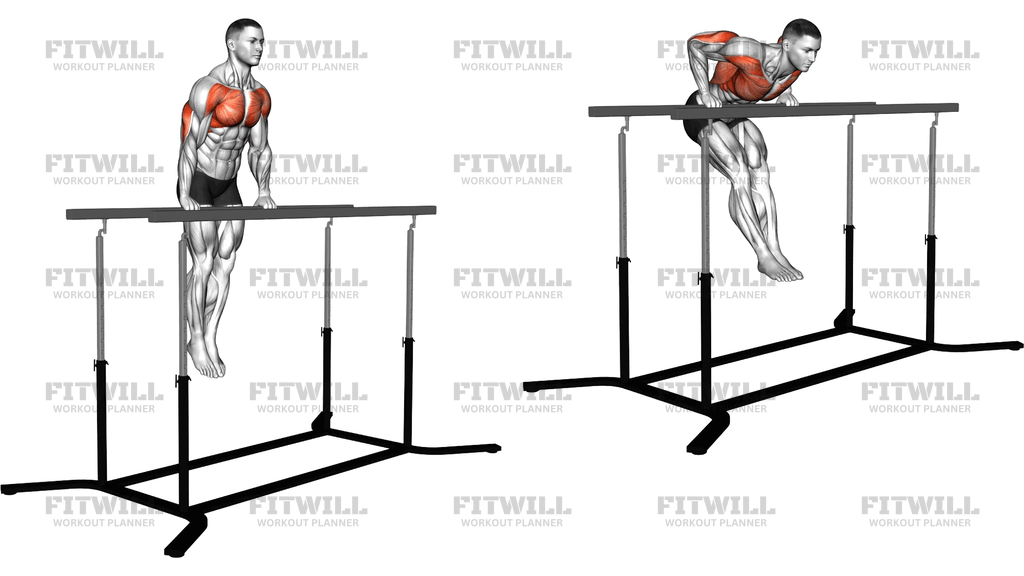
Triceps Dip On High Parallel Bars is a bodyweight pressing exercise performed on a set of elevated parallel bars, where you support your full weight on your hands and lower your body by bending the elbows before pressing back up. Because your feet leave the floor, every rep moves your entire bodyweight, which makes this one of the most demanding triceps exercises you can do without external load.
The main targets are the triceps, which straighten the elbows on every press, with the lower chest and front shoulders assisting throughout. Holding the torso relatively upright keeps the emphasis on the backs of the arms, while a forward lean shifts more work toward the chest. The legs are typically bent back behind the body with knees flexed, which shortens the lever, keeps the hips from swinging, and makes balance on the bars easier to manage.
This movement is useful for anyone who has outgrown bench dips or machine presses and wants to build serious pressing strength with nothing but bodyweight. It carries over well to pushing in sports and daily life, and it pairs naturally with pull-ups on a bar for balanced upper-body development. The high bars also give you room to hang freely at full arm extension, which is what separates this version from dips performed on low or parallel benches.
Setup matters more than most people expect. Grip the bars firmly with the wrists stacked over the elbows, press down into the bars to lift the shoulders away from the ears, and set the shoulder blades before you descend. If you start a rep with slumped shoulders, the shoulder joint takes the load in a vulnerable position, especially at the bottom.
To execute well, lower under control until the elbows reach roughly a right angle, or slightly deeper if your shoulders allow it comfortably, keeping the elbows tracking backward rather than flaring wide. Press through the palms to straighten the arms without locking them hard, exhaling on the way up. The descent should take about two seconds; dropping quickly is the most common reason people lose form on this exercise.
If you cannot yet perform full dips, build up with negatives, assisted dips, or bench dips first. If you feel pinching at the front of the shoulders, reduce the depth rather than pushing through discomfort. Stability on the bars comes quickly with practice, so expect the first few sessions to feel wobbly before the movement settles.
[ Workout Log & Planner ]
Put your next workout in Fitwill
Keep your plan and training log ready when you are.


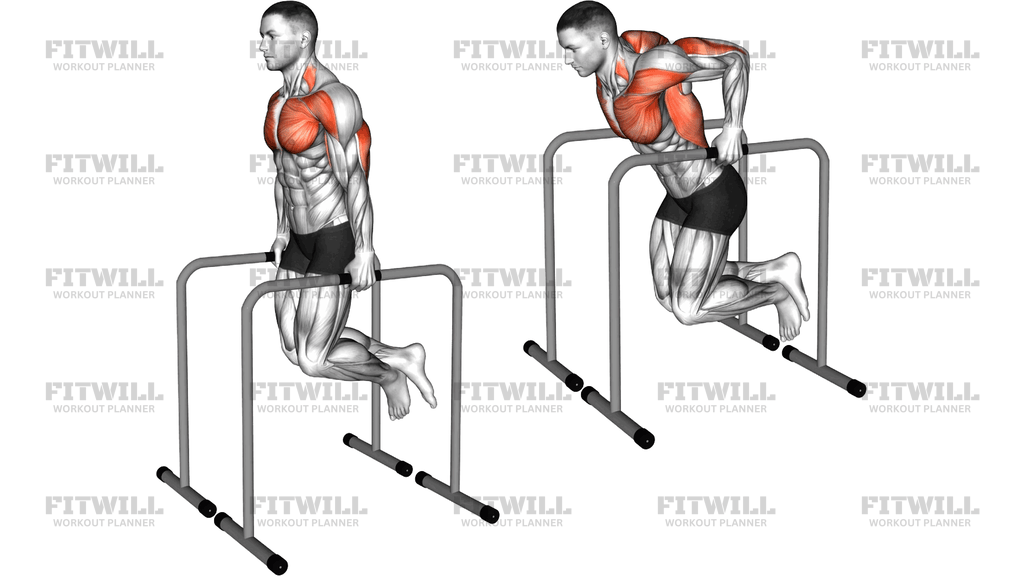
Instructions
- Stand between a set of high parallel bars and place a palm on each bar with a firm overhand grip, knuckles facing forward.
- Press down through the palms to straighten the arms and lift your body so your feet clear the floor, letting your knees bend back behind you with ankles relaxed.
- Draw the shoulder blades down slightly so your shoulders sit away from your ears, and brace the abdominal muscles to keep the torso from swinging.
- Keep the torso mostly upright with a very slight forward lean to bias the triceps, and look straight ahead rather than down.
- Bend the elbows and lower your body in a controlled path, letting the elbows travel backward close to the sides until they reach about a 90-degree angle.
- Pause briefly at the bottom without letting the shoulders ride up or the torso collapse forward.
- Press firmly through the palms to extend the elbows and raise the body back to the supported position, stopping just short of a hard elbow lockout.
- Exhale as you press up and inhale slowly as you lower into each repetition.
- Complete the set, then bend the knees slightly and step down to the floor with control rather than dropping off the bars.
Tips & Tricks
- If your shoulders roll forward at the bottom of the dip, you are descending too deep for your current mobility — stop at the point where you can still keep the chest up and the elbows back.
- Swinging legs are a sign the core has gone slack; squeeze the thighs together and keep the knees tucked back to stabilize the hips before each rep.
- Do not start a set by jumping straight into a rep from the floor — press into a solid support position first, feel the shoulders settle, then begin the descent.
- If your wrists ache during Triceps Dip On High Parallel Bars, check that they are stacked directly over the elbows rather than bent back, and grip with the whole hand instead of just the fingers.
- Slower lowering is the fastest fix for a weak lockout — a two to three second descent builds strength through the exact range where most people stall.
- Avoid letting the elbows flare out to the sides; keeping them pointing backward protects the shoulders and keeps tension on the triceps.
- Once you can complete twelve or more clean reps, add load with a dip belt or hold a dumbbell between the feet rather than turning reps into half-depth bounce dips.
- Warm up the elbows and shoulders with a few push-ups or light bench dips before approaching the bars, especially in cold gyms where the joints stiffen quickly.
Frequently Asked Questions
Which muscles does Triceps Dip On High Parallel Bars work?
The triceps are the primary movers, straightening the elbows on every press. The lower chest and front shoulders assist significantly, and the core works to keep the body stable on the bars.
How is Triceps Dip On High Parallel Bars different from a chest dip?
A triceps dip keeps the torso more upright with the elbows tucked back, while a chest dip uses a stronger forward lean and lets the elbows flare slightly to load the pectorals more heavily.
Can beginners do Triceps Dip On High Parallel Bars?
Full bodyweight dips are demanding, so most beginners should start with bench dips, assisted dips, or slow negatives on the bars before attempting full repetitions. Building to five controlled reps is a reasonable first milestone.
How deep should I lower on Triceps Dip On High Parallel Bars?
Lower until the elbows reach roughly a right angle, and only go deeper if you can keep the shoulders stable without any pinching at the front of the shoulder. Depth beyond your comfortable range adds risk without adding much benefit.
Why do my shoulders shrug up toward my ears during the dip?
This usually means you are not actively pressing into the bars before descending. Push down through the palms to depress the shoulder blades at the top, and re-set that position on every rep.
What can I use instead of high parallel bars?
A dip station, dip handles mounted on a power rack, or the parallel bars at a calisthenics park all work the same way. Bench dips on a flat bench are a weaker substitute but useful when no bars are available.
How do I make Triceps Dip On High Parallel Bars harder?
Add weight with a dip belt, slow the lowering phase to three or four seconds, or pause for a count at the bottom of each rep. All three increase the demand without changing the equipment.
Is it safe to lock out the elbows at the top of the dip?
Extending fully is fine, but slamming into a hard lockout under momentum can irritate the elbow joint over time. Press to full extension with control and keep tension on the triceps at the top.
Why do my legs swing forward during the exercise?
Swinging happens when the core relaxes or when you lower too quickly and lose balance on the bars. Bend the knees back behind the body, squeeze the thighs together, and slow the descent to keep the hips quiet.