Easy Pose (Hands Behind Interlocked And Bend Forwa)
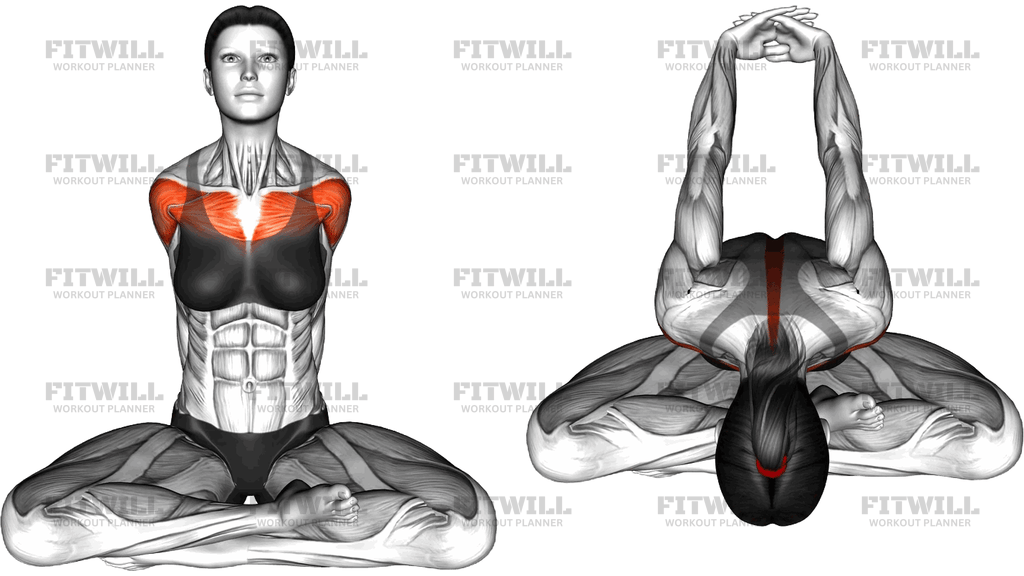
Easy Pose With Hands Behind Interlocked And Bend Forward is a seated yoga-based stretch that opens the chest and front shoulders while lengthening the upper spine. You sit cross-legged in a simple crossed position, clasp your hands behind your back, straighten your arms, and then fold your torso forward so the interlocked hands travel up and over toward the floor behind you. The combination of the arm position and the forward fold creates a strong, deep stretch across the pectorals, anterior deltoids, and the tissues along the front of the shoulders.
This movement is especially useful for anyone who spends long hours sitting at a desk, driving, or training pressing movements like bench presses and push-ups. Those habits round the shoulders forward and shorten the chest muscles, and this stretch directly reverses that position. It is also a common cool-down or yoga warm-up pose, since the cross-legged seat gently opens the hips at the same time the shoulders are being stretched.
The setup matters more than it might seem. Sitting tall before you clasp the hands lets you establish the arm position with a neutral spine, and the width of your grip determines how intense the shoulder stretch becomes. Folding forward from the hips rather than collapsing through the upper back keeps the stretch targeted and protects the cervical spine, since letting the head dangle loosely is one of the most common faults here.
To execute it well, interlock the fingers behind you with the palms facing each other or toward your body, then straighten the elbows as you lift the hands away from the back. Hinge forward from the hip crease and let the arms rise overhead behind you as the torso lowers toward the crossed legs. Breathe slowly and let each exhale soften the chest a little more rather than forcing range.
Because the shoulder is held in a long, extended position, treat this as a gentle end-range stretch rather than a bounce-and-push movement. People with shoulder impingement history or wrist discomfort from the clasped position should reduce the fold depth or use a towel between the hands. Held for thirty to sixty seconds, it pairs well with any upper-body training day or as a standalone posture reset.
[ Workout Log & Planner ]
Put your next workout in Fitwill
Keep your plan and training log ready when you are.


Instructions
- Sit on the floor or an exercise mat with your legs crossed comfortably in Easy Pose, each foot resting beneath the opposite knee, and your sitting bones grounded evenly.
- Sit tall for a few breaths, lengthening through the crown of the head so your spine is neutral before you set the arm position.
- Reach both arms behind your back and interlock your fingers, palms facing inward, with a grip width that lets your elbows stay nearly straight.
- Draw the shoulder blades gently together and down, then begin lifting the interlocked hands away from your lower back without bending the elbows.
- Hinge forward from the hips and lower your torso toward your crossed legs, letting the straight arms travel up and over behind you as the chest stretch deepens.
- At your deepest comfortable position, let the head release toward the floor while keeping the neck long rather than jamming the chin.
- Breathe slowly through the nose, using each exhale to relax the chest and let the hands drift a little higher behind you.
- Hold the position for thirty to sixty seconds without bouncing or pulsing in the shoulders.
- To come out, walk the hands slightly down toward the floor behind you, then exhale and roll the spine back up to seated before unclasping the fingers.
- Release the hands, shake out the shoulders briefly, and switch the cross of your legs before repeating if you plan to hold it again.
Tips & Tricks
- If you cannot clasp your fingers behind your back, hold a towel between both hands instead; the stretch on the chest is nearly identical and the towel lets you adjust the width.
- The most common mistake is bending the elbows to lift the hands higher, which shifts the work to the arms and takes the stretch off the pectorals — keep the elbows straight and accept a smaller range.
- Do not force the forward fold by pulling on the clasped hands; the fold should come from hinging at the hips, and the arms simply follow.
- If your knees float high off the floor in Easy Pose, sit on the edge of a folded blanket or a low cushion so the hips sit above the knees and the fold feels less restricted.
- Keep weight distributed across both sitting bones; leaning to one side during the fold twists the spine and unevenly loads one shoulder.
- Let the head hang heavy rather than holding it up — actively lifting the head creates tension through the neck that fights the release in the chest.
- If you feel a pinching sensation at the front of the shoulder rather than a broad stretch across the chest, narrow your grip slightly and reduce how far forward you fold.
- Warm the shoulders first with a few arm circles if you are stretching first thing in the morning; cold end-range shoulder extension tends to feel tight and guarded.
- Avoid rounding heavily through the upper back to get deeper — a long spine folding from the hips stretches more and strains less.
Frequently Asked Questions
What muscles does Easy Pose With Hands Behind Interlocked And Bend Forward stretch?
The primary targets are the pectorals and the front of the shoulders, with the upper back and the muscles between the shoulder blades working to hold the arm position. The cross-legged seat also adds a mild stretch to the outer hips.
Is this stretch suitable for beginners?
Yes, as long as the range is reduced to match your flexibility. Beginners often cannot straighten the elbows fully or fold far forward, and both are fine — the stretch works at any depth where you feel the chest without pain.
Why do my elbows bend when I lift the hands behind my back?
Tight chest and shoulder tissue usually pulls the hands too close to the back, so the elbows bend to compensate. Widen your grip or hold a towel between your hands so the arms can stay long while the shoulders adapt.
How long should I hold the forward fold?
Thirty to sixty seconds per hold works well, breathing steadily the whole time. You can repeat two to three rounds, deepening slightly on later rounds once the chest has released.
Can I do this stretch if I have a shoulder injury?
Approach it cautiously if you have any history of shoulder impingement or rotator cuff issues, since the position places the shoulder in deep extension. Use a wider towel grip, keep the fold very shallow, and stop immediately if you feel sharp or pinching pain.
My knees sit high off the floor in Easy Pose — is that a problem?
It is common with tight hips and is not a problem on its own. Sitting on a folded blanket or low cushion raises the hips, tilts the pelvis more favorably, and makes the forward fold much more comfortable.
Should the head hang down during the fold?
Yes, let the head release naturally toward the floor so the neck stays long and relaxed. Holding the head up creates tension that reduces the stretch through the chest and can strain the back of the neck.
When is the best time to use this stretch?
It fits well after pressing workouts like bench press, push-ups, or overhead work, and it is also useful as a posture break during long sitting sessions. As a warm-up, do a shorter, gentler version before upper-body training.
What can I use instead of interlocking my fingers behind my back?
A towel, strap, or stick held between both hands works well and lets you widen the grip as needed. You can also hold opposite elbows behind your back for a lighter version of the same chest opening.