Standing Triceps Stretch Against Wall
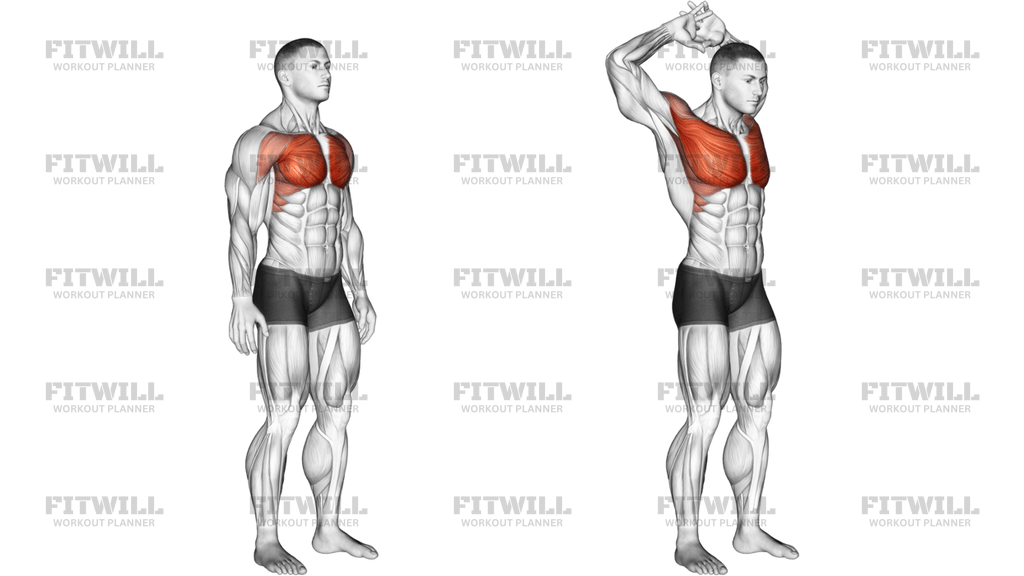
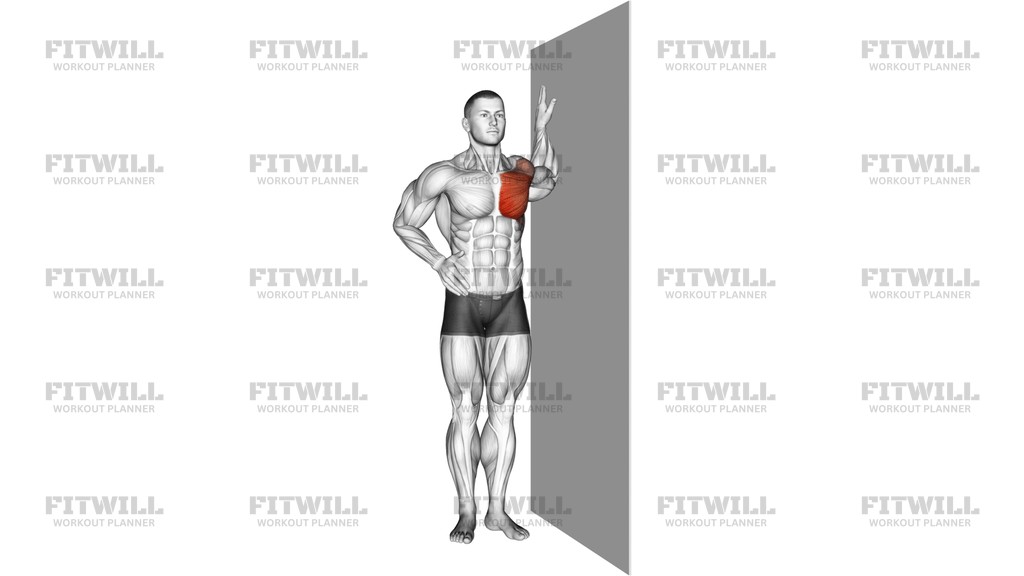
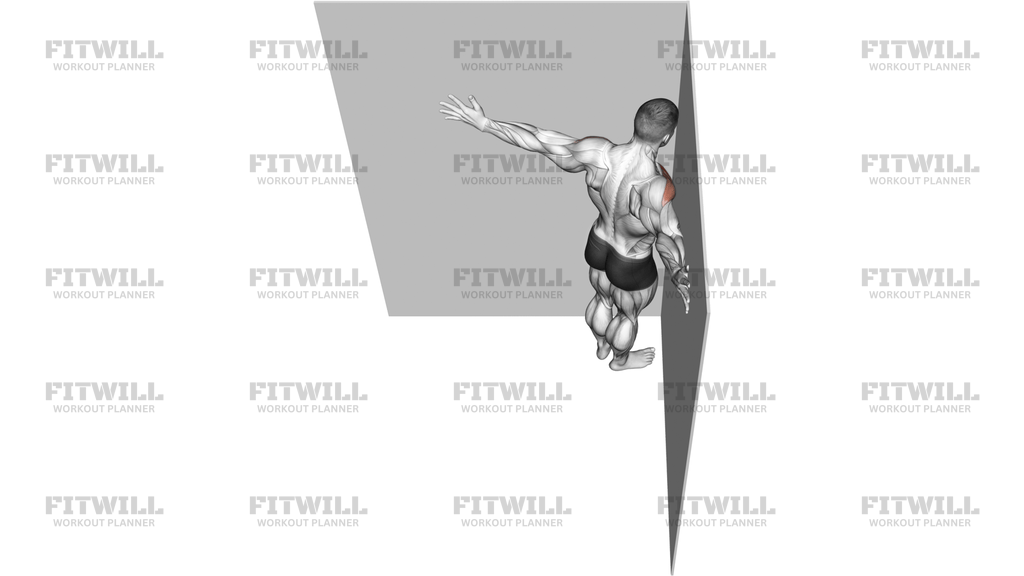
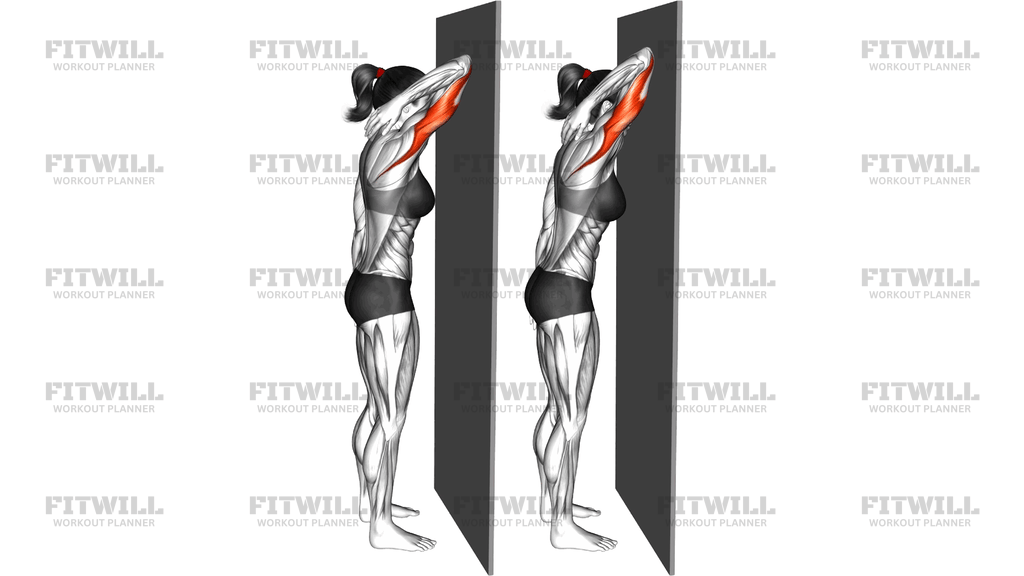
The Standing Triceps Stretch Against Wall is a targeted flexibility drill for the back of the upper arm, performed with your back to a wall so the wall acts as a gentle boundary and support for the working arm. From standing, you raise one arm overhead, bend the elbow so the hand drops behind your head toward your upper back, and let the back of the arm rest against the wall. Small adjustments of your body position relative to the wall control how deep the stretch feels, which makes this version easier to regulate than a free-standing triceps stretch.
The main tissue being lengthened is the triceps brachii, with particular emphasis on the long head because the overhead bent-elbow position puts it on stretch from both ends. The front of the shoulder also gets a mild stretch, and people who spend long hours typing, lifting, or pressing often feel welcome relief through the entire back of the arm and elbow.
This stretch is especially useful after pressing workouts such as bench presses, push-ups, overhead presses, and dips, when the triceps have been worked hard and tend to feel tight. It is also a good fit for anyone whose elbows feel restricted overhead, for desk workers with chronically shortened arm and shoulder muscles, and for lifters who want better arm extension before training. Because you are standing and supported, it fits easily into a warm-up or a cool-down without any floor space or equipment beyond a clear patch of wall.
The wall matters for two reasons. First, it gives you a fixed reference point, so you can lean the back of the arm toward it and know exactly when you have reached your end range instead of guessing. Second, it helps you keep honest body position: if your ribs flare or your lower back arches to fake extra range, the wall setup makes that obvious and easy to correct. Stand tall, keep the ribs stacked over the pelvis, and let the elbow travel where it actually can.
To execute it well, move into the stretch slowly and stop at mild tension, never pain. Keep the elbow pointing up toward the ceiling and the hand relaxed behind the neck rather than pulling on the head or neck. Breathe steadily and let the tension in the triceps ease over 20 to 40 seconds before switching arms. If your shoulder complains or your hand goes numb, back off the range rather than pushing through.
A few practical points will keep the stretch productive. Treat it as a flexibility hold, not a forced movement, and keep the intensity at a level where you could hold a normal conversation. Consistency over weeks, not aggressive one-off sessions, is what actually improves the range in the back of the arm. If the wall version feels too intense at first, let the elbow sit slightly farther from the wall or bend the elbow a little less, and progress gradually.
[ Workout Log & Planner ]
Put your next workout in Fitwill
Keep your plan and training log ready when you are.


Instructions
- Stand with your back facing a clear, flat wall, feet about hip-width apart and roughly a foot in front of the wall so you have room to lift your arm.
- Raise your right arm straight overhead, then bend the elbow so your hand lowers behind your head toward your upper back, palm facing your neck.
- Let the back of your upper arm, from elbow to shoulder, come close to or lightly touch the wall behind you, keeping the elbow pointed toward the ceiling.
- Stand tall with your ribs stacked over your hips and your core lightly engaged so your lower back does not arch to fake extra range.
- To deepen the stretch, bring your upper back or the back of the arm slightly closer to the wall, or gently guide the elbow a little farther back with the opposite hand without pressing on the neck.
- Hold the end position where you feel mild, tolerable tension along the back of the upper arm and around the elbow for 20 to 40 seconds.
- Breathe slowly and evenly throughout the hold, exhaling as the tension in the triceps gradually releases.
- To come out, slowly unbend the arm overhead and lower it back down to your side with control rather than dropping it.
- Reset your stance, then repeat the full sequence on the left arm, matching the hold time on both sides.
Tips & Tricks
- The most common mistake is pulling hard on the elbow with the opposite hand; use the other hand only for a light guide, because yanking the elbow back strains the shoulder.
- If your hand presses into the back of your neck or head, relax the neck and let the hand simply rest; the stretch should come from the arm, not from pushing on your cervical spine.
- Keep the elbow pointing straight up to the ceiling. If it flares out to the side, the stretch drifts off the triceps and into the shoulder joint.
- Watch for rib flare or lower back arching as you reach range; brace the trunk lightly and stand taller instead of leaning the torso to chase depth.
- If the stretch feels sharp at the elbow, bend the elbow slightly less and reduce the lean toward the wall until only the muscle feels the tension.
- Exhale slowly into the hold rather than holding your breath; the triceps tend to relax more on the exhale.
- Keep both feet flat and weight even; shifting the hips to deepen the stretch tilts the torso and changes the line of the arm.
- Do the stretch after pressing workouts or at the end of training, when the triceps are warm, rather than forcing full range on cold muscles first thing in the morning.
- If one side is noticeably tighter, give the tighter side one extra hold instead of stretching it harder during the same set.
Frequently Asked Questions
Which muscles does the Standing Triceps Stretch Against Wall target?
It primarily lengthens the triceps brachii along the back of the upper arm, with the long head receiving the most stretch due to the overhead bent-elbow position. The front of the shoulder also gets a mild stretch.
Why perform this triceps stretch against a wall instead of free-standing?
The wall gives you a fixed point to gauge depth and supports the back of the arm at end range. It also makes it easier to notice and correct rib flare or lower back arching that would otherwise fake extra range.
Is the Standing Triceps Stretch Against Wall suitable for beginners?
Yes. The setup is simple, requires no equipment beyond a wall, and the intensity is easy to adjust by bending the elbow less or standing slightly farther away. Beginners should aim for mild tension, not strong pulling.
When is the best time to do this stretch?
It works well after pressing sessions such as push-ups, bench presses, overhead presses, or dips, when the triceps are warm and tight. It can also be used in a general cool-down or to ease desk-related arm and shoulder stiffness.
My elbow feels pinched when I lean my arm toward the wall. What should I change?
Reduce how close the back of the arm comes to the wall and bend the elbow a little less, keeping the tension in the muscle rather than at the joint. If pinching continues, shorten the hold and rebuild range gradually over several sessions.
How long should I hold the Standing Triceps Stretch Against Wall?
Hold for 20 to 40 seconds per side at mild tension, and repeat for two to three rounds if the arm feels particularly tight. Longer, gentler holds tend to work better than short, forceful ones.
Can I pull my elbow back harder with my other hand to deepen the stretch?
Use the opposite hand only for a light guide on the elbow or upper arm, never a strong pull, and never press on the neck or head. Forcing the elbow back can overload the shoulder instead of stretching the triceps.
What can I use if there is no wall available?
The same overhead bent-elbow position can be done free-standing, using the opposite hand to gently guide the elbow. You lose the wall's reference point, so move more slowly and rely on feel for the end range.
Is it normal for one arm to feel tighter than the other?
Yes, most people have side-to-side differences, especially if one arm dominates in pressing or carrying. Match your hold times on both sides and give the tighter side one extra gentle round rather than pushing it harder.
Is this stretch safe if I have a shoulder or elbow injury?
If you have a recent or painful injury, get clearance from a qualified professional before adding this stretch. If cleared, stay well short of painful range, keep the elbow position comfortable, and stop if symptoms appear.