Cable Incline Single Arm Lat Pulldown
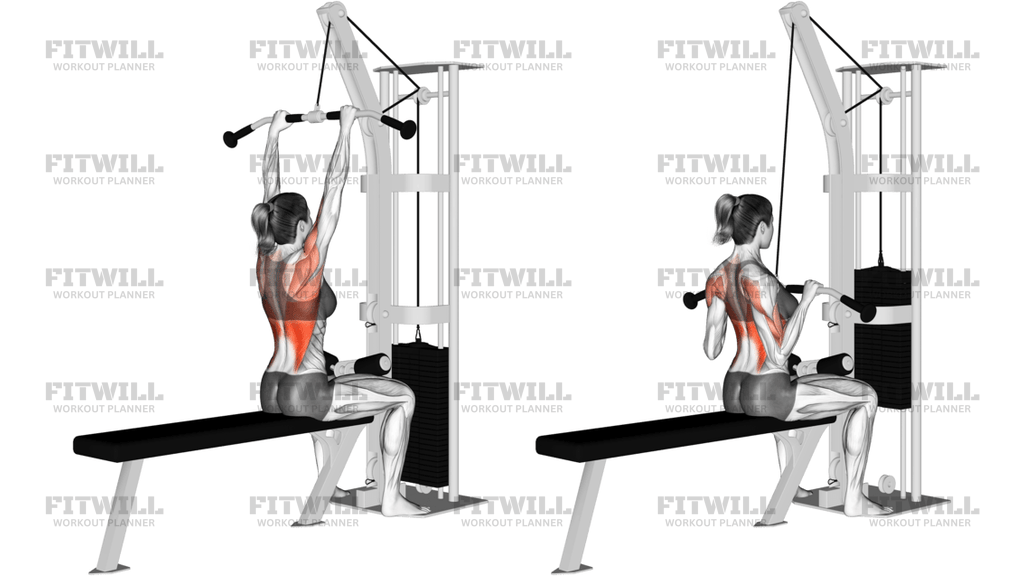
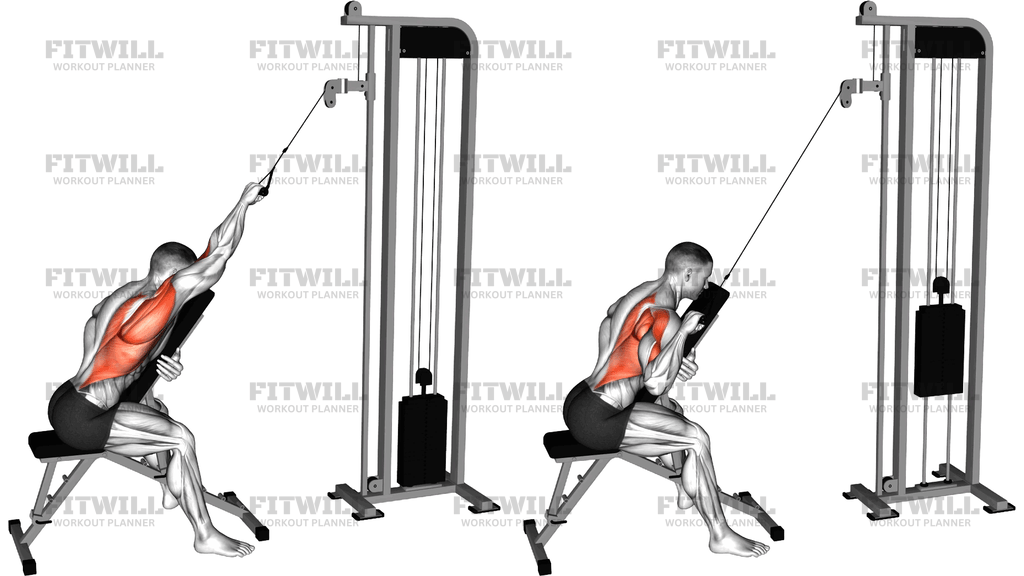
The Cable Incline Single Arm Lat Pulldown is a chest-supported back exercise performed on a cable machine with an incline bench. You sit facing the high pulley with your chest braced against the angled pad, grab a single handle with one hand, and pull the cable down and in toward your chest while the other hand steadies you on the bench. Because your torso is supported by the bench pad, your lower back and core are spared from holding you upright, which lets you concentrate almost entirely on the pulling muscles of the back.
This movement primarily targets the lats, with strong assistance from the teres major, rear delts, rhomboids, and mid traps as the shoulder blade moves toward the spine. The biceps and forearm flexors work through the grip and elbow flexion, but the supported position makes it easier to drive the movement from the elbow rather than yanking with the arm. Training one side at a time also exposes and helps correct left-to-right strength differences that often stay hidden in bilateral pulldowns.
The setup matters more here than in a standard seated pulldown. The bench needs to be angled and positioned so your chest is pressed firmly into the pad and your working arm can reach the high handle with a slight stretch at the top. If the bench is too far from the pulley, the cable drags you forward at full extension; too close, and you lose the stretch that makes the first half of the rep productive. Take a minute to get this right before adding meaningful weight.
Execution is straightforward but unforgiving of sloppiness. Start with the arm extended overhead and slightly out to the side, pull the handle down along a diagonal path toward the side of your chest, and finish by squeezing the shoulder blade back and down. Pause briefly at the bottom, then let the arm travel back up under control until you feel a full lat stretch. The chest should stay glued to the pad for every rep—once your torso starts lifting off the bench, the weight has exceeded what your lats can handle.
This exercise suits lifters who want focused lat work without loading the spine, people rehabbing back into pulling after lower back fatigue, and anyone using unilateral work to balance out a dominant side. It also fits well as a finisher after heavier rows or pull-ups, when fatigue makes it harder to keep a supported torso position honest. Keep the loads moderate and prioritize the stretch and squeeze over moving heavy stack weight.
[ Workout Log & Planner ]
Put your next workout in Fitwill
Keep your plan and training log ready when you are.


Instructions
- Set an incline bench a short distance in front of a cable machine so the high pulley is on the side of your working arm, and attach a single handle to the top pulley.
- Sit straddling the bench facing the machine, lean your chest firmly into the angled pad, and plant both feet flat on the floor with knees bent roughly 90 degrees.
- Grip the handle with one hand using a neutral or slightly pronated grip, and place your free hand on the bench pad or frame for support.
- Start with your working arm extended up and slightly out toward the pulley, feeling a mild stretch through the lat while keeping your chest against the pad.
- Brace lightly and pull the handle down and in along a diagonal path toward the side of your chest, leading with the elbow rather than the hand.
- At the bottom, squeeze your shoulder blade back and down and hold the contraction for a beat without letting your chest lift off the pad.
- Slowly let the handle travel back up the same path until your arm is nearly straight and the lat is fully stretched again.
- Exhale as you pull down and inhale as the arm returns overhead.
- Complete all reps on one side, then switch hands, reposition the bench if needed, and work the other arm with the same range and tempo.
Tips & Tricks
- If the cable pulls your torso off the pad at full extension, you are too far from the machine—slide the bench forward until the stretch is felt in the lat, not the shoulder capsule.
- Keep your working-side shoulder from shrugging toward your ear as you fatigue; think of pressing that shoulder blade down before the pull begins.
- A common cheat is twisting the torso away from the cable to shorten the movement—if your chest peels off the bench, reduce the weight immediately.
- Lead the pull with your elbow tracking down and back; if your hand arrives at your chest while your elbow stays wide, you are turning the rep into an arm curl.
- Use a slower, deliberate return for 2–3 seconds; letting the stack slam down wastes the eccentric half of the lat work.
- Because one arm pulls diagonally across your body, a neutral grip is usually the most comfortable—rotate to a pronated grip only if your wrist stays straight.
- Keep your free hand as a light stabilizer on the bench, not a pushing lever that tilts your torso away from the working side.
- Match reps and weight exactly between sides, starting with your weaker arm so the strong side cannot set an unfair standard.
Frequently Asked Questions
What muscles does the Cable Incline Single Arm Lat Pulldown work?
The lats are the primary mover, supported by the teres major, rear delts, rhomboids, and mid traps. The biceps and forearms assist through grip and elbow flexion.
Why is the bench set at an incline for this pulldown?
The angled pad supports your chest so your torso cannot sway or extend through the lower back. That isolation makes it easier to feel the lat doing the work instead of momentum.
Is the Cable Incline Single Arm Lat Pulldown good for beginners?
Yes, as long as the weight stays light at first. The chest support makes it easier to learn lat engagement than free-standing pulling variations, but beginners should master the path before loading up.
How close should the incline bench be to the cable machine?
Close enough that at full arm extension you feel a stretch in the lat without the cable dragging your chest off the pad. Adjust the bench position before adjusting the weight.
What grip should I use on the single handle?
A neutral grip with the palm facing inward is the most joint-friendly and lets the elbow travel close to the body. Keep your wrist straight throughout the pull.
Why do I feel this more in my biceps than my lats?
Your elbow is likely staying wide and the pull is coming from the hand. Focus on driving the elbow down and back toward your hip, and lighten the load until the lat takes over.
Can I use the Cable Incline Single Arm Lat Pulldown instead of regular pull-ups?
It can substitute when pull-ups are not available or appropriate, but it is less demanding on core and grip stabilization. It works best alongside pull-ups rather than fully replacing them.
How many sets and reps should I do?
Two to four sets of 10–15 reps per side works well, since the chest-supported setup favors controlled, moderate loads over heavy grinding reps.
Is it safe if I have lower back issues?
The chest support removes much of the spinal demand, which is why many people with back fatigue tolerate it well. Still, clear any pre-existing condition with a qualified professional before adding it to your routine.