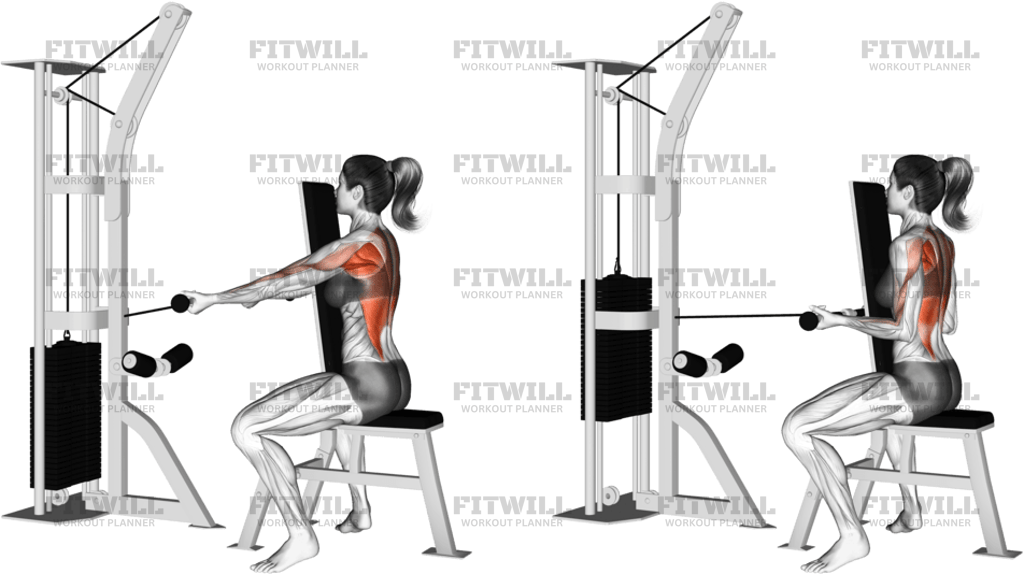
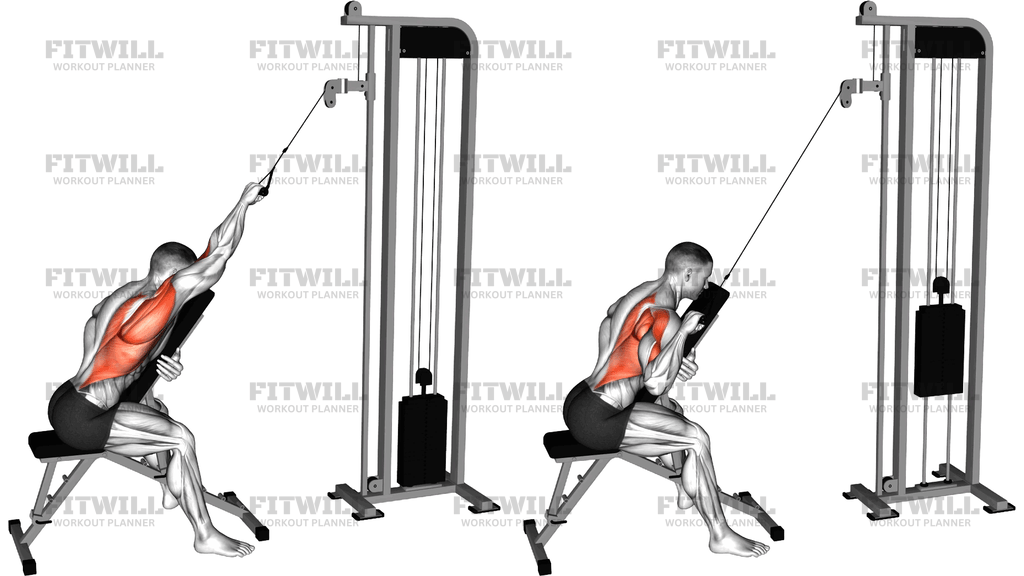
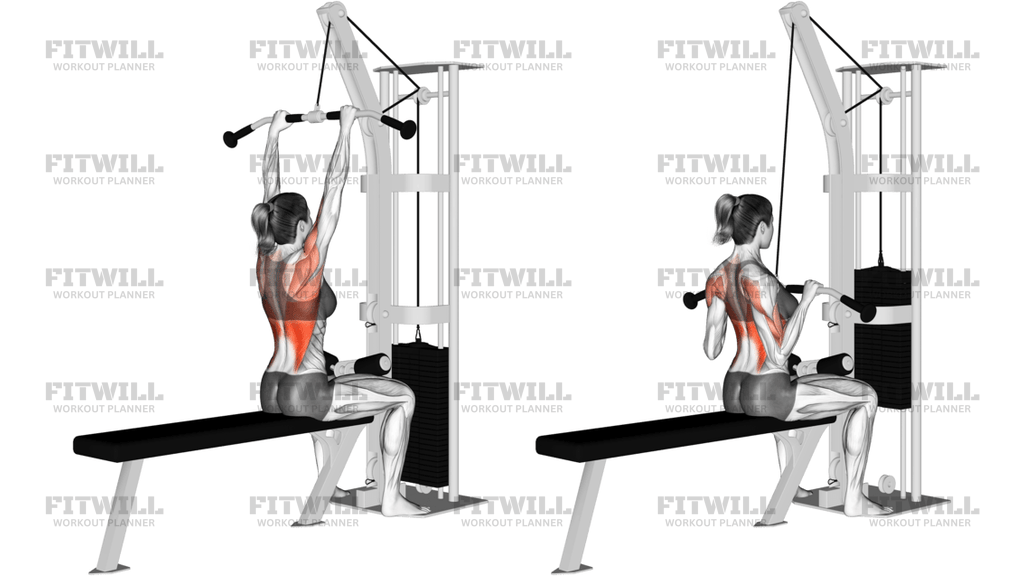
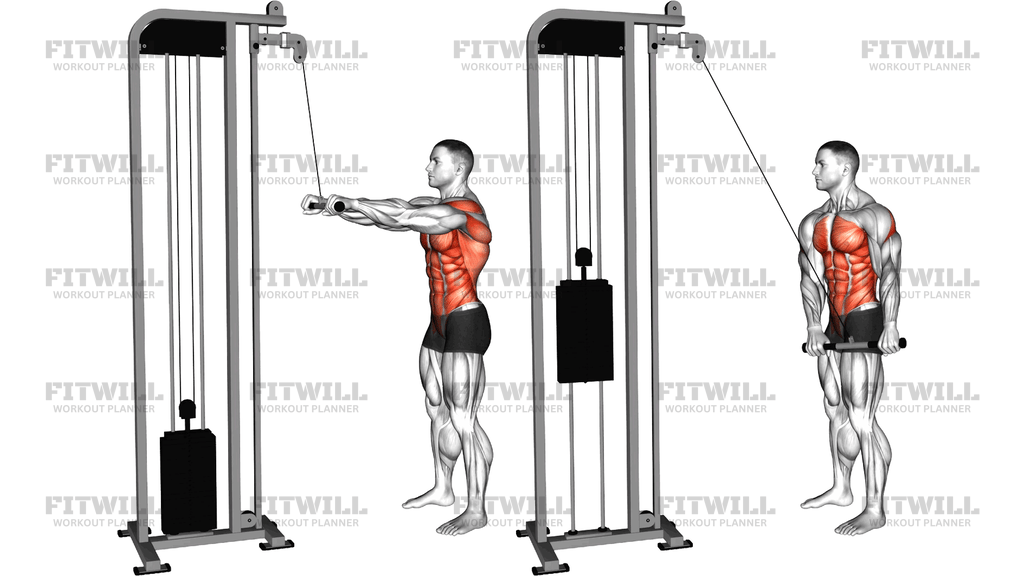
Cable Lat Pulldown Full Range Of Motion
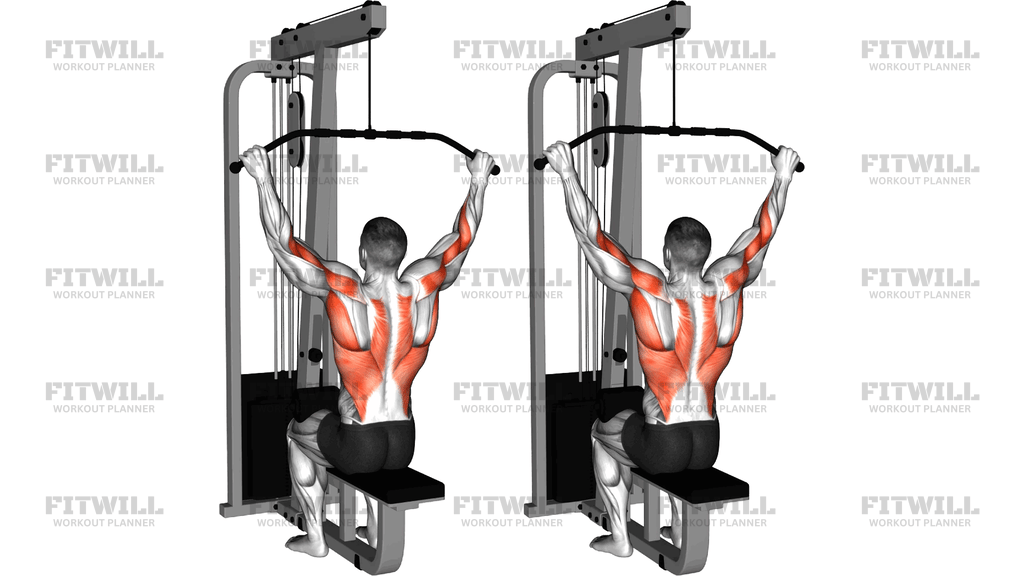
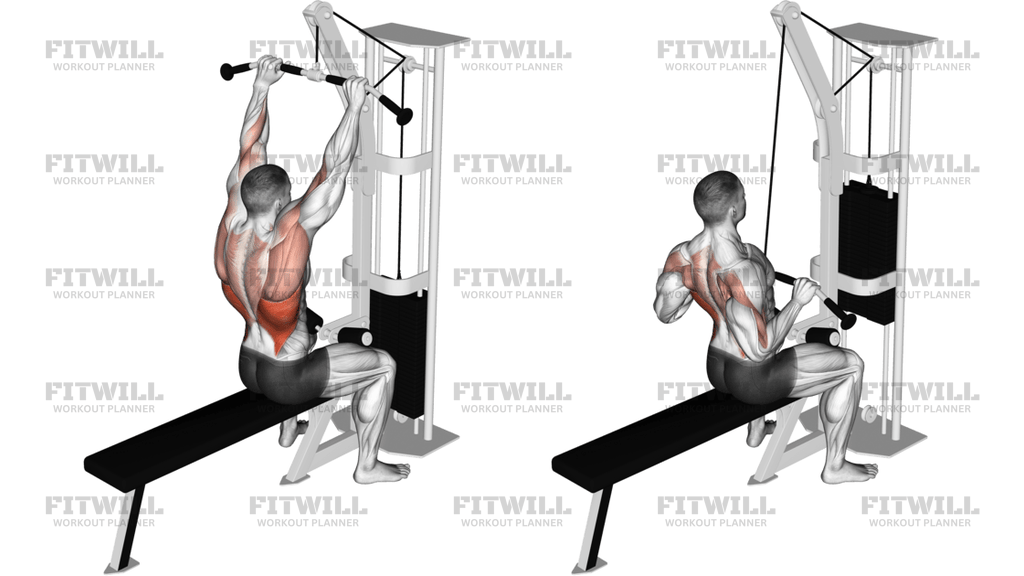
Cable Lat Pulldown Full Range Of Motion is a seated cable back exercise that trains the lats through a long overhead stretch and a strong pull to the upper chest. The full-range version matters because it asks you to control both ends of the rep: the reach overhead where the lats lengthen, and the finish where the elbows drive down without turning the movement into a shrug or a row.
This variation is useful for lifters who want better lat development, clearer scapular control, and a cleaner pulldown pattern than they get from half reps or swinging. The primary target is the latissimus dorsi, with help from the upper back, biceps, and forearms. Because the machine guides the path, the exercise works well for hypertrophy, accessory back work, and learning how to keep the torso steady while the arms move.
The setup should make the rep feel stacked and repeatable. Sit with your thighs secured under the pads, feet planted, and the handle attachment overhead. Grip the handle with a controlled overhand grip, sit tall with a slight lean back, and keep your ribs from flaring as you reach long at the top. A good starting position lets the shoulders rise naturally without losing control, which is what creates the full stretch that gives this exercise its name.
On the pull, drive the elbows down and slightly in toward the front of your body while the handle travels to the upper chest or collarbone line. Keep the wrists straight and the chest lifted rather than yanking the bar lower by folding the torso. The return should be just as deliberate: let the arms lengthen fully, keep tension on the lats, and resist the urge to bounce out of the bottom or slam the stack.
Cable Lat Pulldown Full Range Of Motion is a strong choice when you want a dependable vertical pulling pattern that is easier to load than bodyweight pull-ups but still demands control. It is beginner-friendly if the weight stays light enough to preserve the overhead reach and the pause at the bottom, and it is just as valuable for experienced lifters who need strict lat work without lower-back cheating. If the torso rocks, the shoulders shrug, or the range shortens, the load is too heavy for the intended stimulus.
Fitwill
Log Workouts, Track Progress & Build Strength.
Achieve more with Fitwill: explore over 9600 exercises with images and videos, access built-in and custom workouts, perfect for both gym and home sessions, and see real results.
Start your journey. Download today!




Instructions
- Sit on the lat pulldown machine with your thighs locked under the pads and your feet flat on the floor.
- Grab the handle attachment overhead with an overhand grip slightly wider than shoulder width.
- Sit tall with a small lean back, keep your ribs down, and set your shoulders away from your ears.
- Let your arms reach fully overhead until the elbows are straight and the lats are long.
- Pull the handle down by driving your elbows toward your front pockets and upper ribs.
- Bring the handle to your upper chest or collarbone line without collapsing your torso forward.
- Pause for a brief squeeze, then lower the handle slowly until your arms are long again.
- Reset your posture and breathing before the next rep, and rack the handle safely when the set is done.
Tips & Tricks
- Use a weight that still lets you reach the top stretch with straight elbows and no jerking from the stack.
- Keep the elbows slightly in front of your torso on the way down instead of flaring them behind you.
- Think about pulling the handle to your elbows, not pulling with your hands and forearms.
- If the bar only reaches your chest because you are leaning farther back, reduce the load.
- Let the shoulders rise naturally at the top so the lats can lengthen fully, then pull from that stretched position.
- Keep the wrists stacked over the forearms so the handle does not fold your hands back.
- Use a slow lowering phase to keep tension on the lats instead of dropping straight back to the top.
- If the seat shifts or your thighs pop out of the pads, tighten the setup or lower the weight.
Frequently Asked Questions
What muscles does Cable Lat Pulldown Full Range Of Motion work?
It mainly targets the lats, with the upper back, biceps, and forearms helping to control the pull and the return.
Can beginners do Cable Lat Pulldown Full Range Of Motion?
Yes. Start light enough that you can keep your thighs pinned under the pads, reach fully overhead, and pull without swinging.
Should I lean back during Cable Lat Pulldown Full Range Of Motion?
A small lean back is fine, but the torso should stay mostly fixed. If the pull turns into a big rock backward, the load is too heavy.
How low should I pull the handle on Cable Lat Pulldown Full Range Of Motion?
Pull it to the upper chest or collarbone line. Going lower usually means the chest is collapsing or the body is leaning back too far.
Is a wide grip or shoulder-width grip better on Cable Lat Pulldown Full Range Of Motion?
A shoulder-width overhand grip is a solid default because it makes it easier to keep the elbows driving down and the path controlled.
Why do my biceps take over on Cable Lat Pulldown Full Range Of Motion?
Usually the elbows are bending too early or the load is too heavy. Start the pull by driving the elbows down and keep the wrists from curling the handle.
Can I use a neutral-grip handle instead of a straight bar?
Yes, if the machine has one. A neutral handle can feel friendlier on the shoulders while still letting you reach long overhead and pull to the upper chest.
What is the most common mistake on Cable Lat Pulldown Full Range Of Motion?
Cutting the top range short. If you never let the arms lengthen overhead under control, you lose the full lat stretch that makes this version different.