Bottle Weighted Bent Over Y Raise
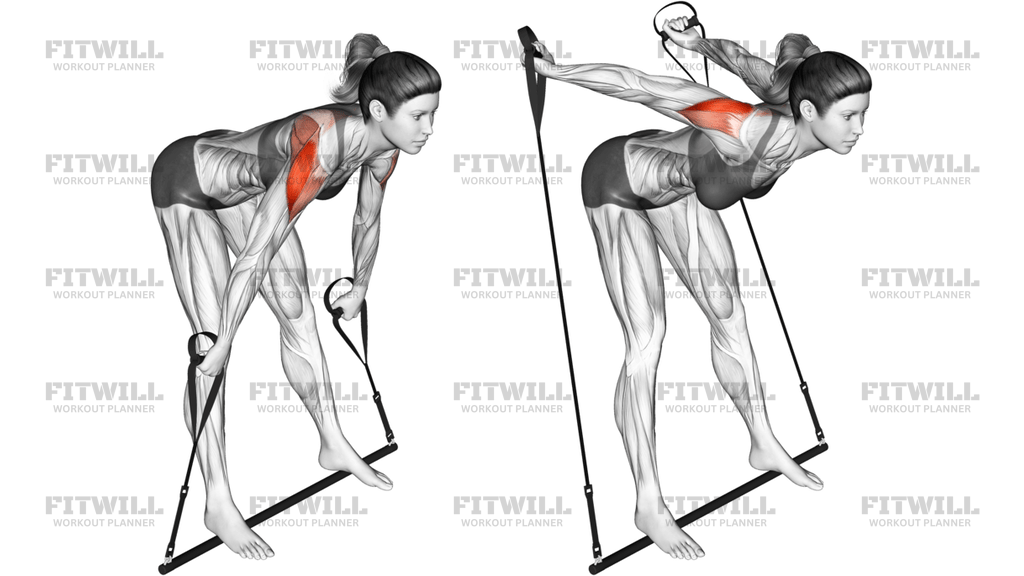
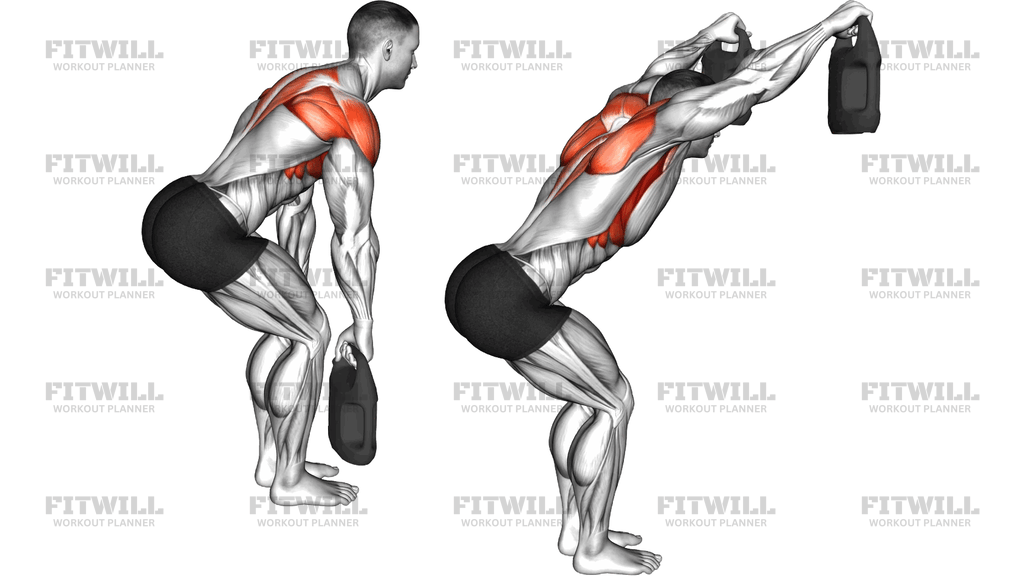
The Bottle Weighted Bent Over Y Raise is a hinged rear-delt and upper-back movement performed with two weighted bottles held by their handles. You set up in a hip hinge with your torso angled well past parallel to the floor, arms hanging straight down, then sweep the bottles up and out to the sides until your arms form a wide Y shape above your head. The long, arcing path and the offset weight of a filled bottle make this a surprisingly demanding shoulder exercise even with modest loads.
This lift primarily targets the rear deltoids, the often-neglected back portion of the shoulder that drives horizontal pulling and helps balance out all the pressing most people do. Because the arms finish overhead in a Y, the lower and middle trapezius and rhomboids work hard to retract and upwardly rotate the shoulder blades, while the erector spinae and glutes hold your hinge position against the pull of the weight. It is a genuine posterior-chain-plus-shoulders combination, not just an arm movement.
The bottle setup matters more than it might seem. A filled bottle hangs below your hand and swings slightly, which forces you to control the weight through the whole arc rather than yank it into place. Grip the handle firmly but keep your wrist neutral, and choose a fill level you can lift smoothly for your target reps. As you get stronger, adding a small amount of water is a simple way to progress in fine increments.
To execute it well, hinge at the hips with a flat back and soft knees, and resist the urge to stand up or bounce as you raise. Think about leading with your elbows and pinkies, keeping a slight bend in the arms, and letting the shoulder blades glide up and together as the bottles travel. The top position has your arms in line with your torso, extended up and out, not pulled forward in front of your head.
This exercise suits lifters who want targeted rear-shoulder and upper-back volume without a cable setup, home trainees working with improvised equipment, and anyone addressing rounded, forward-hunched shoulders from desk work. Because it loads the spine in a hinged position, treat it as a moderate-load, higher-rep movement: prioritize a stable back position and a smooth arc over chasing heavy weight, and stop the set the moment your hinge starts to sag.
[ Workout Log & Planner ]
Put your next workout in Fitwill
Keep your plan and training log ready when you are.


Instructions
- Fill two bottles with an equal amount of water and stand with your feet hip-width apart, holding one bottle by its handle in each hand with palms facing your body.
- Push your hips back and hinge forward until your torso is angled down toward the floor at roughly 45 degrees or lower, with a flat back, soft knees, and your weight centered over mid-foot.
- Let your arms hang straight down from your shoulders, elbows slightly bent, and brace your core as if preparing for a light punch to the stomach.
- Exhale and sweep both bottles up and out to the sides in a wide arc, leading with your elbows and keeping the slight bend in your arms.
- Continue raising until your arms form a Y shape above and slightly outside your head, with the bottles higher than your torso and your shoulder blades pulled up and together.
- Pause for a beat at the top without letting the bottles drift forward or your lower back round.
- Inhale and lower the bottles along the same wide path with control, resisting the pull of the weight instead of dropping your arms.
- Once your arms are hanging vertically again, reset your brace and confirm your back is still flat before starting the next rep.
- Keep your head in line with your spine, looking at the floor a short distance ahead of your feet, and avoid jerking the torso upright as fatigue builds.
Tips & Tricks
- If your lower back rounds as you hinge, reduce the water level first and work on pushing the hips further back rather than simply bending the knees more.
- A common mistake is turning this into a shrug-and-swing: if the bottles jump at the start of each rep, slow the first third of the lift down deliberately.
- Keep your pinkies slightly higher than your thumbs as you raise; rotating the shoulders inward instead takes tension off the rear delts and puts it on the front of the shoulder.
- Because a bottle's weight hangs below your grip, expect a slight pendulum feel—squeeze the handles harder to dampen the swing instead of slowing your whole rep rhythm.
- If you feel it in the front of your shoulders or your neck, you are raising too far forward; the top position should sit above and slightly behind your head, not out in front of your face.
- Sets of 12 to 20 reps work well here; the long lever arm of straight arms means even a half-full bottle becomes challenging quickly.
- Do not lock the elbows hard—keeping a soft bend protects the joint and keeps the rear delts under continuous tension.
- If your grip gives out before your shoulders, use bottles with wider handles or wrap a towel around each handle for padding.
- Check your hinge between sets in a mirror or film yourself: as the set gets hard, most people creep upright, which turns the Y raise into a much easier front raise.
Frequently Asked Questions
What muscles does the Bottle Weighted Bent Over Y Raise work?
The rear deltoids are the primary movers, with strong contributions from the lower and middle traps and rhomboids as the shoulder blades retract and rotate upward. Your lower back and glutes work isometrically to hold the bent-over position.
How full should the bottles be for the Bottle Weighted Bent Over Y Raise?
Start about half full and complete 12 to 15 smooth reps without your hinge collapsing. Because your straight arms create a long lever, even a few hundred milliliters of water per bottle is enough load for most people at first.
Can beginners do the Bottle Weighted Bent Over Y Raise?
Yes, provided they can hold a hip hinge with a flat back. Beginners should practice the hinge without weight first, then start with lightly filled bottles and shorter sets while focusing on the wide, controlled arc.
How is the Bottle Weighted Bent Over Y Raise different from a bent-over lateral raise?
The Y raise continues the arc past shoulder height so the arms finish overhead in a Y shape, which adds significant lower trap involvement. A standard lateral raise stops around shoulder level and isolates the rear delts more exclusively.
Why do my lower back and hamstrings fatigue during the Bottle Weighted Bent Over Y Raise?
The hinged position places a sustained isometric demand on the spinal erectors and hamstrings, and the hanging bottles pull you forward. If this fatigue arrives before your shoulders do, lighten the bottles or shorten your sets so back strength is not the limiting factor.
Should my elbows be bent during the Bottle Weighted Bent Over Y Raise?
Keep a small, fixed bend in the elbows throughout rather than locking them or actively flexing them. Straighter arms make the movement harder and target the shoulders more; a large elbow bend turns it into more of a row.
What can I use instead of bottles for the Bottle Weighted Bent Over Y Raise?
Light dumbbells, kettlebells held by the horns, or small plates work with the same arc and hinge. With a resistance band anchored under your feet you can perform the same Y pattern, though the resistance curve will differ.
How many sets and reps of the Bottle Weighted Bent Over Y Raise should I do?
Two to four sets of 12 to 20 reps, placed at the end of a shoulder or upper-back session, works well for most trainees. Rest about 45 to 60 seconds between sets so your hinge stays solid.
Is it safe to raise the bottles all the way overhead in the Bottle Weighted Bent Over Y Raise?
Yes, as long as you stay within a pain-free range and keep the load light enough to control. If raising fully overhead bothers your shoulders, stop the arc at shoulder height or slightly above and progress gradually.