Standing Eagle Up And Left
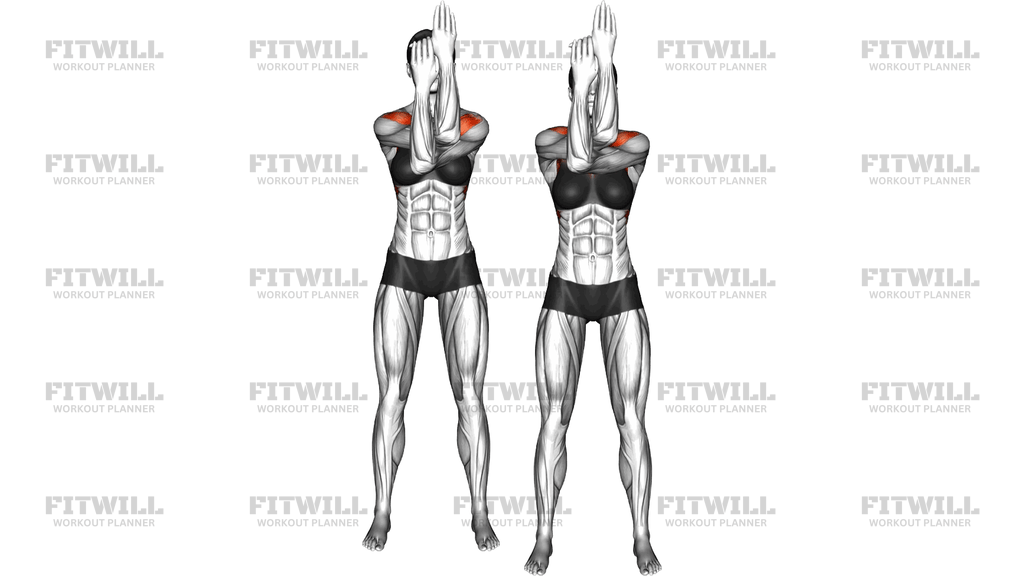
Standing Eagle Up And Left is a bodyweight stretch drawn from the eagle arm position, performed standing with the arms wrapped in front of the chest, forearms crossed, and palms pressed together. From that wrapped position, the arms are lifted upward and the torso bends gently to the left, combining a deep shoulder stretch with a side-body lengthening. It requires no equipment and very little space, which makes it easy to slot into a warm-up, a desk break, or the cool-down after a pushing workout.
The main target is the back of the shoulders and the space between the shoulder blades. Wrapping the forearms and pressing the palms together pins the shoulder blades apart, so when you raise the elbows you feel the rear delts, rhomboids, and upper traps being lengthened. The leftward side bend then adds a stretch along the right side of the waist, the ribs, and the outer hip area, since the whole torso has to travel as one piece to keep the arm position intact.
This movement is especially useful for people who spend long hours typing, driving, or holding a phone, because those habits pull the shoulders forward and tighten the upper back. It is also a common preparatory drill for overhead work: opening the back of the shoulder before pressing, pulling, or throwing tends to make the arms feel freer once you start. Yogis will recognize it as a standing variation of Garudasana arms, and lifters will recognize it as one of the few stretches that reaches the rear shoulder without any equipment.
Setup matters more than it looks. Your stance should be stable, your ribs stacked over your pelvis, and the arm wrap high enough that the forearms stay vertical in front of your face. If the wrap is done too low or the wrists are allowed to bend backward, the stretch leaks out of the shoulder and into the wrists and neck. Keep the elbows lifting as you bend sideways rather than letting them drift forward.
Move into the stretch slowly and breathe steadily throughout. The goal is a firm but comfortable pull across the back of the shoulders and along the side of the trunk, never a sharp pinch in the shoulder joint itself. Hold the leftward position for several relaxed breaths, return to center with the arms still wrapped, and then unwrap and repeat on the other side so both shoulders receive the same treatment.
[ Workout Log & Planner ]
Put your next workout in Fitwill
Keep your plan and training log ready when you are.


Instructions
- Stand with your feet about hip-width apart, weight spread evenly across both feet, and your spine tall with the ribs stacked over the pelvis.
- Extend both arms straight out in front of you at shoulder height, palms facing each other.
- Cross your right arm underneath your left arm, bending both elbows so the forearms cross in front of your chest.
- Continue the wrap so the backs of the hands face each other, then press the palms together (or hold the backs of the hands together if pressing is not possible) with the fingertips pointing up.
- Lift the elbows up and slightly forward until the forearms are vertical in front of your face, keeping the shoulders relaxed down away from the ears.
- Inhale, then as you exhale, reach the wrapped arms up and over to the left while bending your torso sideways to the left.
- Hold the end position for 20-30 seconds, feeling the stretch across the back of the right shoulder and down the right side of the trunk, and keep breathing smoothly.
- Return to upright center while keeping the arm wrap, then slowly unwind the arms and let them hang by your sides.
- Reset your stance, shake out the shoulders, and repeat on the opposite side so the stretch is balanced.
Tips & Tricks
- If pressing the palms together is impossible because of shoulder or wrist tightness, hold the backs of the hands against each other or grip opposite wrists — the stretch across the rear shoulders still works.
- The most common mistake is letting the wrapped elbows drop forward as you bend sideways. Keep the forearms vertical and the elbows lifting so the shoulder stays the target.
- Avoid shrugging. If your shoulders creep up toward your ears, consciously sink the shoulder blades down before you begin the side bend.
- Bend sideways, not forward. If your chest starts rotating toward the floor, the leftward stretch is lost — imagine sliding your right ribs long as you reach up and over.
- Keep your hips square and your weight even on both feet. Leaning the pelvis to the left cancels out the side-body stretch on the right.
- If you feel a pinching sensation at the front of the shoulder rather than a stretch behind it, reduce how far you lift the elbows and re-press the palms before continuing.
- Neck tension is a frequent side effect because the arms are close to the face. Keep the chin level and the jaw relaxed instead of craning around the forearms.
- Start with the side bend small and deepen it over a few breaths. Forcing the lean immediately usually just bends the lower back instead of lengthening the ribs.
- Because this is a hold, not a repetition, resist the urge to bounce in the stretched position — steady breathing and a still hold will get you more range.
Frequently Asked Questions
What muscles does Standing Eagle Up And Left stretch?
It primarily lengthens the rear deltoids, rhomboids, and upper traps between the shoulder blades. The side bend adds a stretch through the obliques and the ribs on the opposite side of the trunk.
Why are the arms wrapped in this position instead of just crossed?
The full eagle wrap with palms pressed together pins the shoulder blades apart and locks the upper arm in internal rotation, which is what allows the stretch to reach the back of the shoulder and upper back so effectively.
Is Standing Eagle Up And Left suitable for beginners?
Yes, it is low-load and easy to control, so beginners can do it safely. If the palm press is too demanding at first, holding the backs of the hands together is a perfectly acceptable modification.
Which arm goes underneath for the left version?
For the leftward version, the right arm wraps underneath the left arm, and you then reach up and bend toward the left. This keeps the stretch concentrated along the right shoulder and the right side of the torso.
How long should I hold the stretch?
Hold the end position for roughly 20-30 seconds while breathing steadily, then unwind and repeat on the other side. One to two rounds per side is enough for most people.
My wrists hurt when I press the palms together. What should I do?
Bend the elbows slightly more so the pressure comes from the forearms and hands rather than bent-back wrists, or simply hold the backs of the hands together. The shoulder stretch does not depend on a forced palm press.
When is the best time to use Standing Eagle Up And Left?
It works well before upper-body pressing or pulling sessions to free up the shoulders, and after long periods of sitting or typing. It also fits naturally into a yoga flow or a cool-down.
Can I do this stretch if I have a shoulder injury?
If you have a current or recent shoulder injury, approach the wrap gently and stay well short of any pinching or sharp sensation. Reduce the elbow lift and side bend first, and skip the movement entirely if symptoms persist.
Should my hips move when I bend to the left?
Keep the hips square and the weight even on both feet so the bend comes from the torso. Shifting the pelvis sideways reduces the stretch along the ribs and turns it into a hip movement.
Do I need to do both sides?
Yes. Even if one shoulder feels tighter, performing the wrap and side bend on both sides keeps your range balanced and prevents one side from progressively compensating for the other.