Side Step Overhead Swing Side Leg Raise
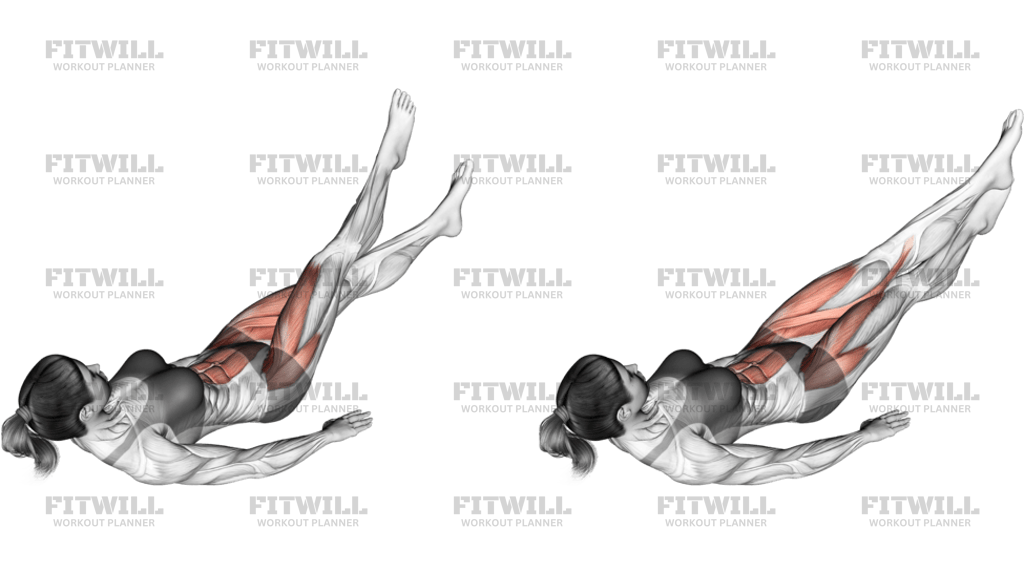
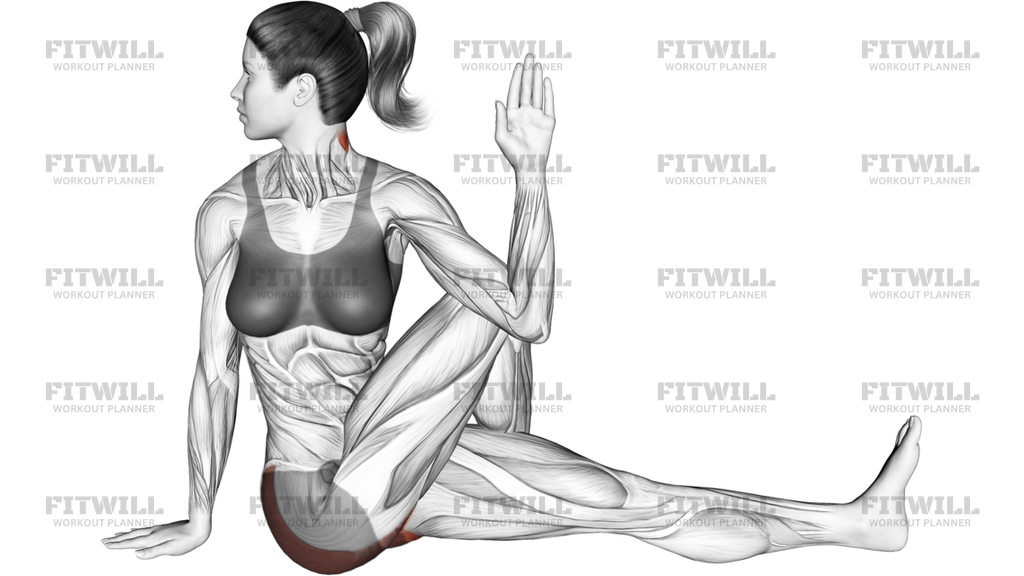
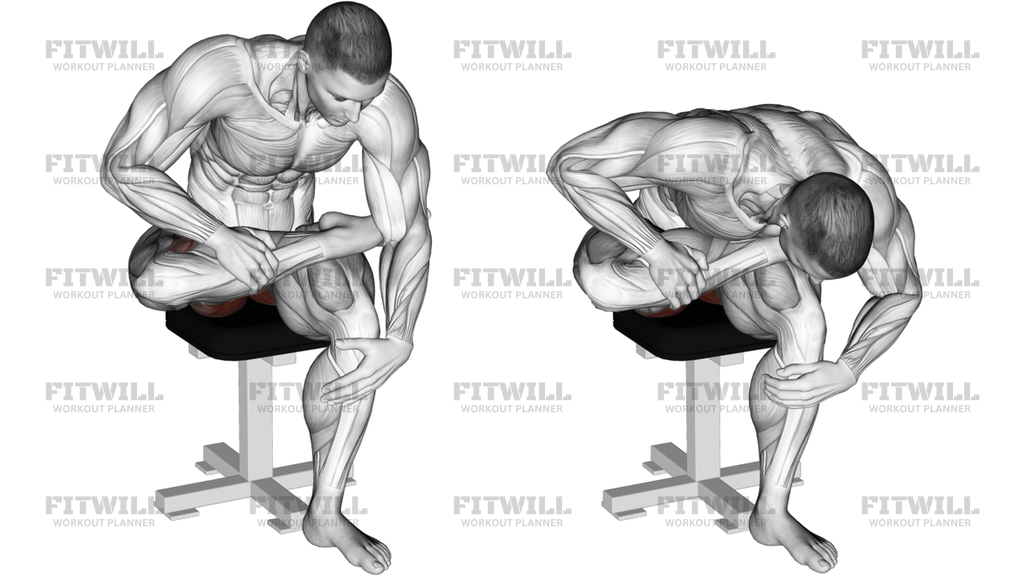
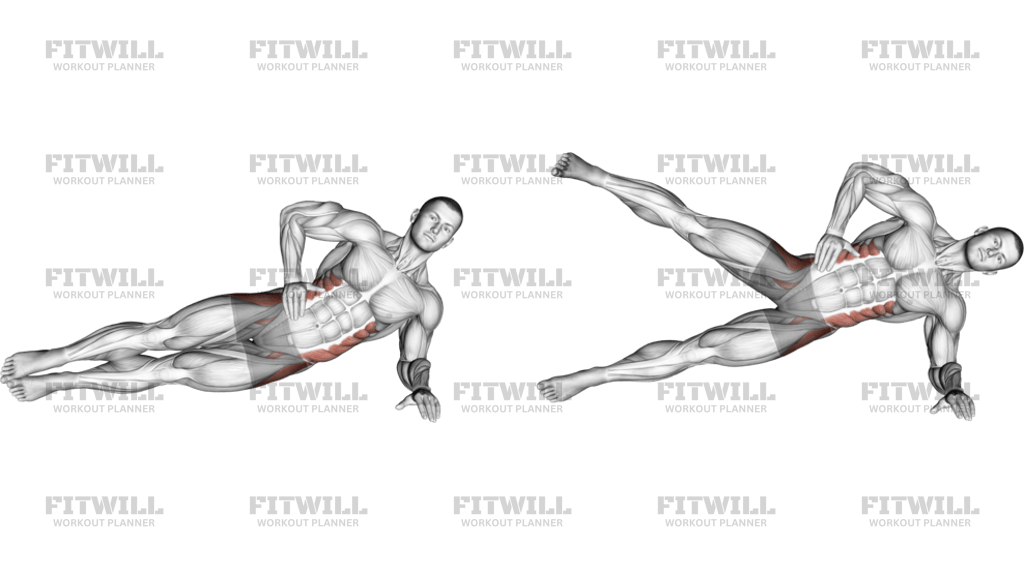
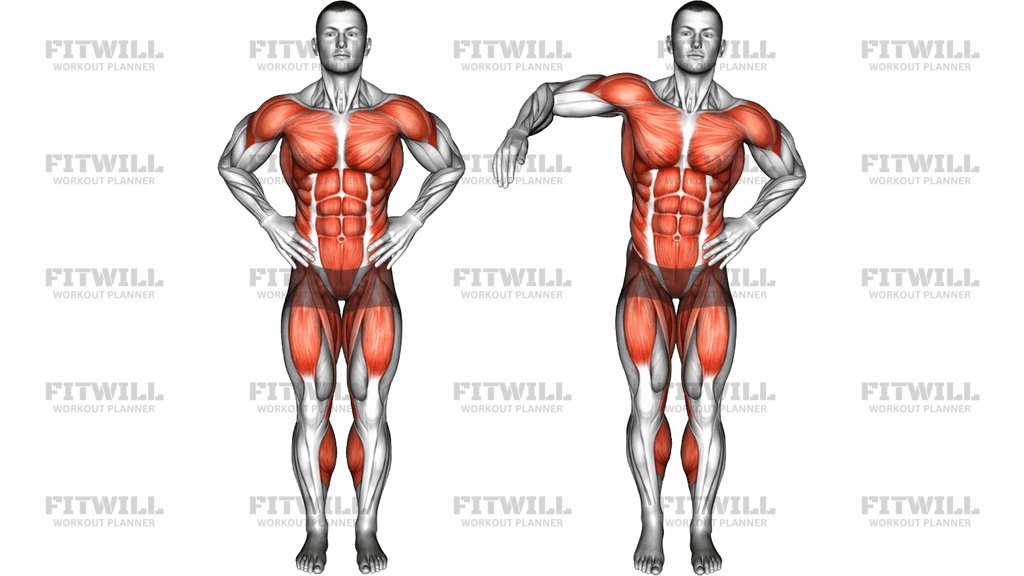
Side Step Overhead Swing Side Leg Raise is a standing body weight movement that combines three actions into one flowing rep: a side step, an arm swing up overhead, and a straight-leg lift out to the side. You start tall with feet together and one hand resting on your hip, then step sideways while the free arm sweeps up and over your head as the opposite leg lifts away from your body. The result is a coordinated hip-abduction pattern that challenges balance, lateral hip strength, and trunk control at the same time.
The main work happens at the hip of the lifting leg. Raising a straight leg out to the side is driven by the gluteus medius and gluteus maximus along with the tensor fasciae latae on the outer hip, and the standing leg has to stay stable through its own hip stabilizers while you balance on it. Meanwhile, the overhead arm swing brings the side shoulders and upper back into play, and keeping your torso upright with a hand on your hip forces the obliques and deep core to resist any sideways lean.
This exercise suits a wide range of trainees because it needs no equipment and no floor work. It is especially useful for runners, hikers, and anyone building hip stability, since weak lateral hip muscles often show up as knee wobble or a hip drop during single-leg activities. It also works well as a warm-up drill before squats, lunges, or lateral workouts, and as a low-impact accessory for people who want to train their hips without loading the spine with weights.
Setup matters more than it looks. A narrow starting stance with feet together gives the lifting leg room to travel, and placing one hand on your hip gives you a physical reference point: if that hip starts to shoot sideways or your torso tips, you will feel it immediately. Keep the knee of the working leg straight but not locked, and turn the toes of both feet forward so the leg lifts in a clean side arc rather than drifting forward.
To execute well, step out to one side, shift your weight fully onto that leg, and as it becomes your support leg, sweep the opposite arm up and across your body until it is overhead. From that position, raise the free leg straight out to the side as high as your hip mobility honestly allows, pause briefly, then lower it under control before bringing your arm and stance back to the start. The swing of the arm should feel natural and rhythmic, not forced.
The most common fault is leaning the torso away from the lifting leg to gain extra height, which turns a hip exercise into a spine-side-bend. Another is rushing, letting momentum from the arm swing yank the leg up. Keep the tempo moderate, prioritize a controlled leg path over height, and alternate sides evenly to keep development balanced.
[ Workout Log & Planner ]
Put your next workout in Fitwill
Keep your plan and training log ready when you are.


Instructions
- Stand tall with your feet together, toes pointing forward, and place your left hand on your hip with the elbow out to the side.
- Let your right arm hang relaxed at your side and brace your abs as if preparing for a light nudge from the side.
- Step your right foot out to the side and shift your weight onto it so it becomes your support leg, keeping a soft bend in that knee.
- As you settle onto the support leg, sweep your right arm up and across the front of your body until it is fully overhead with the elbow straight or nearly straight.
- Lift your left leg straight out to the side in a smooth arc, toes forward, raising it only as high as you can without leaning your torso to the right.
- Pause for a beat at the top of the leg lift, feeling the work on the outer side of the lifted hip.
- Lower the left leg back down with control until the foot returns near the floor, then bring the right arm back down from overhead.
- Exhale as you step, swing, and lift; inhale as you lower the leg and arm back down.
- Bring your feet back together to the starting stance, reset your posture, and repeat on the same side for your planned reps before switching sides.
- On the other side, place your right hand on your hip and lead with the left arm and right leg, matching the number of reps you did on the first side.
Tips & Tricks
- Watch for the classic cheat: tipping your torso away from the lifting leg to fake extra height. Keep the hand-on-hip elbow pointing sideways, and if that hand drifts forward, your trunk is rotating.
- Keep the toes of the lifting leg pointing forward. If the foot turns out, the lift turns into a forward swing and you lose the side-hip focus of the movement.
- Think about pushing the floor away with the support leg rather than just lifting with the free leg. That cue keeps the standing hip engaged and improves balance.
- Do not lock the knee of the supporting leg. A soft bend absorbs small balance corrections and protects the joint during the overhead swing.
- The arm swing should lead slightly into the leg lift, almost like a pendulum, but stop the arm deliberately overhead instead of letting it flop behind your head.
- If balance is shaky, hold the top position of the leg lift for only one second at first, or stand next to a wall with your free hand lightly touching it for confidence rather than support.
- Height is not the goal. A controlled lift to mid-calf or knee height beats a high, leaning swing; hip mobility improves gradually with consistent reps.
- Alternate which side you start with each session so the first side is not always fresher and stronger.
- Breathe steadily throughout. Holding your breath during the overhead reach is common and makes the balance portion harder than it needs to be.
Frequently Asked Questions
Which muscles does Side Step Overhead Swing Side Leg Raise work the most?
The primary work is in the glutes, especially the gluteus medius on the outer hip of the lifting leg. The obliques and deep core stabilize your torso, the standing leg's hip stabilizers keep you balanced, and the side shoulders assist the overhead arm swing.
Is Side Step Overhead Swing Side Leg Raise good for beginners?
Yes, it is body weight only and low impact, so beginners can learn it safely. The single-leg balance component is the hardest part, so new trainees can start with smaller side steps and a lower leg lift until stability improves.
How high should I lift my leg during the side leg raise portion?
Only as high as you can go while keeping your torso upright and your toes pointing forward. For most people that is somewhere between mid-calf and knee height, and range will improve as hip strength and mobility develop.
Why do I keep leaning to the side when I lift my leg?
Leaning away from the lifting leg is the body's way of using momentum instead of hip strength. Keep one hand firmly on your hip as a reference, reduce the lift height, and slow the tempo until you can stay upright through the whole rep.
What can I substitute if the balance is too difficult?
Perform the side leg raise and overhead arm swing while standing beside a wall or chair, touching it lightly with your fingertips for balance. You can also remove the arm swing entirely at first and add it back once the leg lift feels stable.
Should my knee be straight when I raise the leg to the side?
Keep the lifting knee straight but not locked so the leg moves as one long lever. The knee of the support leg, however, should stay softly bent throughout the movement.
Do I need to alternate legs every rep or complete all reps on one side?
Either works, but completing all reps on one side before switching makes it easier to keep the hand-on-hip setup and focus on each side. Just make sure both sides get the same number of reps.
Is the overhead arm swing just for balance in this exercise?
It contributes to balance, but it also actively involves the side shoulders and upper back as you raise the arm overhead, and it trains coordination between the upper and lower body, which is part of what makes this drill useful as a warm-up.
Can I use Side Step Overhead Swing Side Leg Raise as a warm-up before leg training?
Yes, it works well as an activation drill before squats, lunges, or lateral work because it wakes up the lateral hip muscles and single-leg balance. Two to three sets of controlled reps per side at an easy effort is plenty.
Is this exercise safe for people with hip or knee issues?
Because it is low impact and load-free, many people with stiff or achy hips tolerate it well, but range of motion should stay within comfort. If a lift reproduces sharp pain in the hip, knee, or lower back, shorten the range or check with a qualified professional before continuing.