Standing Back Rotation Squeeze
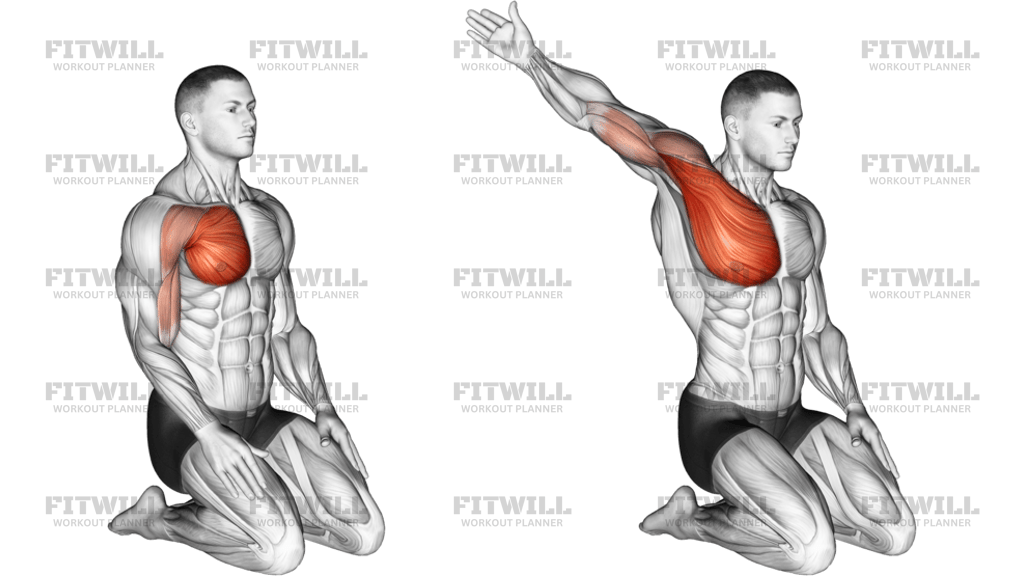
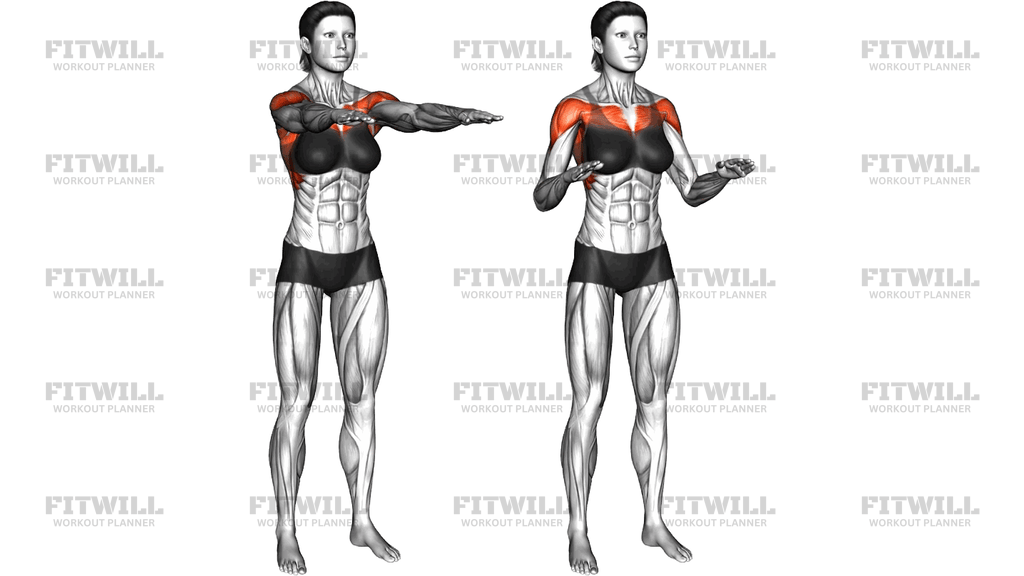
The Standing Back Rotation Squeeze is a bodyweight movement that combines a sustained chest contraction with a backward rotational sweep of the arms. You start standing tall with your arms extended in front of you at chest height, press your hands together to create tension through the pectorals, and then rotate the arms outward and back toward your body while keeping that squeeze alive. It looks simple, but when done deliberately, the continuous inward pressure paired with the external rotation produces a strong contraction through the chest and front shoulders that many people never feel in ordinary push-up variations.
This exercise suits a wide range of trainees. Beginners can use it to learn what a proper chest contraction actually feels like before touching a barbell or machine, and more experienced lifters often use it as a warm-up primer or a burnout finisher after pressing work. Because there is no external load, it is also a practical choice for training at home, during travel, or on deload days when you still want blood flow into the upper body without stressing the joints.
The main muscles at work are the pectorals, which fire hard to hold the hands pressed together, and the front delts, which assist in holding the arms up and guiding the rotation. As the arms sweep back, the muscles between the shoulder blades engage to control the movement, giving the upper back a gentle but real training effect. Your core stays quietly involved the whole time, since you are standing and must keep the ribs stacked over the hips rather than leaning back to cheat the range.
Setup matters more than it appears to. The height of the arms, the position of the feet, and the amount of pressure between the hands all determine whether you get a clean chest squeeze or a sloppy shoulder shrug. Stand with feet about hip-width apart, arms raised straight ahead at chest level, and apply firm but not crushing pressure between the palms. Keep the shoulders pulled slightly down away from the ears so the chest does the work instead of the traps.
To execute well, exhale as you rotate the arms outward and back, letting the hands travel away from each other while the elbows bend and settle near your ribs. Pause briefly at the back position, feeling the chest stay engaged rather than collapsing, then draw the arms forward again, reuniting the hands with the same steady pressure. The entire cycle should take a few seconds in each direction; speed is the enemy of this drill.
A useful programming approach is two to three sets of ten to fifteen slow repetitions, either as part of an upper-body warm-up or at the end of a pressing session. If your shoulders feel pinched during the rotation, reduce the range rather than forcing the arms further back, and if you stop feeling the chest, increase the pressure between your palms instead of adding speed.
[ Workout Log & Planner ]
Put your next workout in Fitwill
Keep your plan and training log ready when you are.


Instructions
- Stand with your feet about hip-width apart, knees soft, and your weight balanced evenly across both feet.
- Raise both arms straight out in front of you at chest height, elbows fully extended, and press your palms firmly together or keep them nearly touching with hands relaxed.
- Draw your shoulders down away from your ears and lightly brace your stomach so your torso stays stacked over your hips.
- Inhale to prepare, then begin rotating both arms outward and backward at the same time, keeping the initial chest tension as the hands separate.
- Continue the rotation until your elbows have bent and drawn back near your sides, with your forearms roughly parallel to the floor and palms turned upward.
- Hold the back position for one to two seconds, feeling the chest stay contracted and the shoulder blades gently draw toward each other.
- Exhale as you rotate the arms forward again, extending the elbows and bringing the hands back to the starting press in front of your chest.
- Move slowly through the full circle of the repetition, taking about two to three seconds in each direction.
- Complete your set, then lower your arms and roll the shoulders briefly before starting the next set.
Tips & Tricks
- The most common mistake is shrugging the shoulders as the arms rotate back. If your shoulders creep toward your ears, consciously press them down and let the chest, not the traps, hold the tension.
- Keep the pressure between your palms consistent as the hands travel. If you release the squeeze the moment the arms start moving, the chest loses its contraction and the exercise becomes an empty arm swing.
- Do not force the elbows far behind your torso. Stop at the point where your shoulders feel comfortable and let the range improve gradually over weeks.
- If your lower back arches as the arms sweep back, tighten your stomach slightly and imagine your ribs staying pulled down toward your hips.
- Moving too fast turns this into momentum practice. Count a slow two seconds out and two seconds back to keep the pectorals under continuous tension.
- Keep your head neutral and eyes forward. Jutting the chin forward during the rotation shifts tension into the neck and away from the chest.
- Think of the hands drawing a wide arc away from the body on the way back, not just bending the elbows straight down. The rotational path is what separates this from a simple curl motion.
- For a stronger chest sensation, press the heels of the palms together rather than only the fingertips.
- If you feel any pinching at the front of the shoulder, slightly lower your arm height so the hands travel at lower-chest level instead of shoulder level.
Frequently Asked Questions
Which muscles does the Standing Back Rotation Squeeze primarily work?
The pectorals are the primary muscles, since they generate and hold the squeeze between the hands. The front delts assist throughout, and the upper back muscles engage as the arms rotate back and the shoulder blades draw together.
Is the Standing Back Rotation Squeeze suitable for complete beginners?
Yes, it is one of the friendliest chest exercises to learn because there is no external load and the range is self-limited. Beginners should focus on slow tempo and steady palm pressure rather than trying to rotate the arms as far back as possible.
Why should my palms stay pressed together at the start of the Standing Back Rotation Squeeze?
The inward pressure between the hands is what creates the chest contraction, since pressing the palms together forces the pectorals to work. Without that squeeze, the movement turns into a simple arm rotation with very little muscle tension.
How far back should my elbows travel during the Standing Back Rotation Squeeze?
Rotate only until your elbows settle comfortably near your ribs with the forearms roughly parallel to the floor. Forcing the arms deeper than your shoulder mobility allows can create pinching at the front of the shoulder.
Can I use the Standing Back Rotation Squeeze as a warm-up before bench pressing?
Yes, it works well as a warm-up because it raises blood flow to the chest and shoulders while grooving the feeling of a chest contraction. Two light, slow sets of ten to twelve reps before pressing is a common approach.
What is the most common mistake in the Standing Back Rotation Squeeze?
The most frequent error is shrugging the shoulders and letting the traps take over as the arms rotate back. Keep the shoulders drawn down and reset your arm position between reps if you notice the shrug.
What can I substitute if the Standing Back Rotation Squeeze bothers my shoulders?
Try lowering the arm path to lower-chest height and reducing how far the elbows travel back. If discomfort persists, a light band chest fly or a wall push-up with a deliberate squeeze at the top offers similar chest work with less rotation.
How many repetitions of the Standing Back Rotation Squeeze should I do?
Ten to fifteen slow repetitions per set works well for most people, with two to three sets. Because the resistance comes from your own muscular tension rather than weight, prioritizing tempo and squeeze quality over rep count matters most.
Does the Standing Back Rotation Squeeze require any equipment?
No, the exercise uses only your body weight and the self-generated pressure between your palms. That makes it easy to perform anywhere, whether at home, in a gym, or while traveling.