Seated Shoulder Tap On A Chair
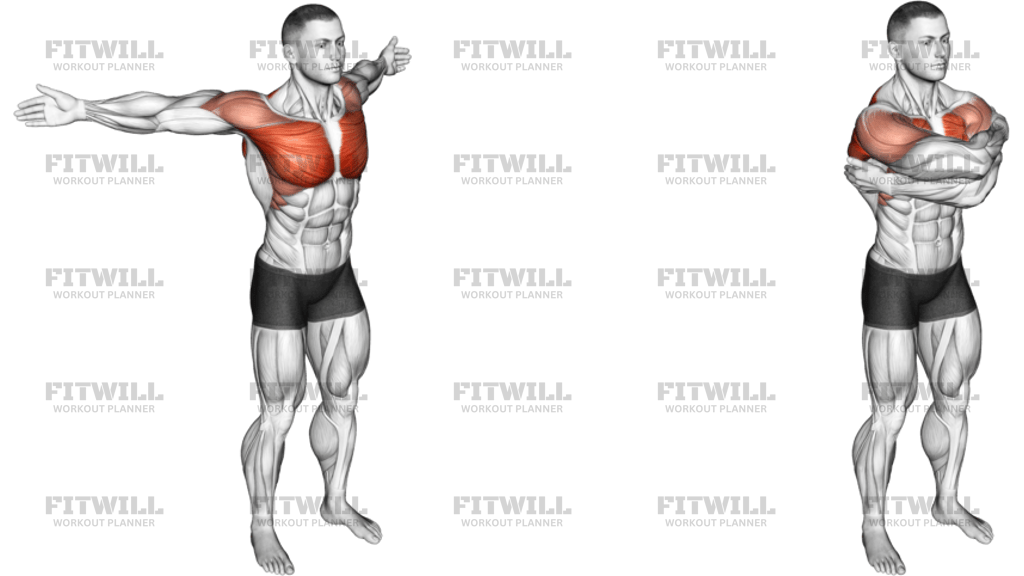
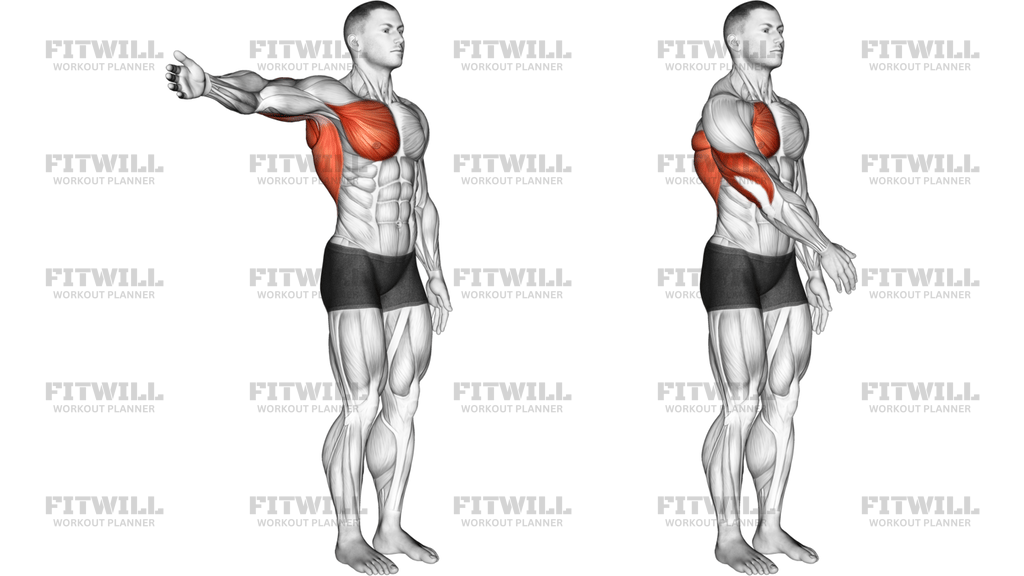
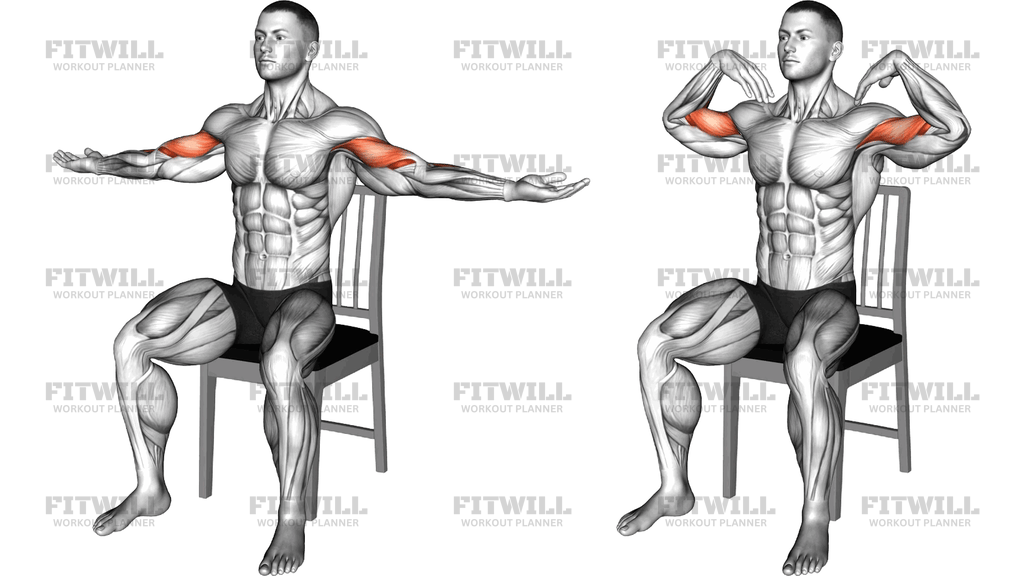
Seated Shoulder Tap On A Chair is a bodyweight arm exercise performed from an upright seat, usually an ordinary sturdy chair. You hold both arms straight out to your sides at shoulder height with palms facing up, then bend your elbows to bring your fingertips in and tap the tops of your shoulders before extending back out to the wide position. Because the upper arms never drop, your shoulders work isometrically to hold the arms up while your biceps do the repeated bending and straightening of the elbows.
The seated setup is what makes this movement special. Sitting removes any need to stabilize your whole body, so you cannot cheat by swinging, leaning, or using momentum from your legs. Every rep comes purely from the elbows and shoulders. That makes it an excellent choice for beginners learning to feel their biceps working, for older adults who want a safe arm exercise without weights, and for anyone rehabbing or easing back into training after a layoff.
Muscularly, the work is split between two areas. The biceps on the front of the upper arm flex the elbow through its full range in a supinated, palm-up position, which is the strongest line of pull for that muscle. Meanwhile the side shoulders and upper back hold the arms out wide against gravity for the entire set, and the muscles of the forearm and core stay engaged to keep the torso tall and steady. It is a surprisingly demanding hold once fatigue sets in.
Setup matters more than it looks. A chair without wheels, with a firm seat and enough height that your knees bend roughly ninety degrees with feet flat on the floor, gives you a stable base. Sitting forward on the seat rather than slumping against the backrest keeps your spine tall and your chest open, which lets the shoulders hold the wide-arm position without rounding forward or shrugging.
To execute it well, think of your upper arms as frozen in place at shoulder height the whole time. Only the forearms move, arcing up and in until your fingers meet the top of each shoulder, then lowering with control back to the wide position. The tempo should be smooth in both directions; the return is where many people rush and lose the tension on the biceps.
This exercise fits well into warm-ups, desk-break routines, senior fitness classes, and bodyweight-only arm circuits. Because it requires no equipment beyond a chair, it is easy to scale by adjusting the number of reps or slowing the tempo rather than adding load. If your shoulders tire before your arms, that is a normal sign the isometric hold is doing its job, and you can lower your arms an inch or two or reduce the set length.
[ Workout Log & Planner ]
Put your next workout in Fitwill
Keep your plan and training log ready when you are.


Instructions
- Sit on a sturdy, armless chair with your feet flat on the floor about hip-width apart and your back tall, not leaning on the backrest.
- Raise both arms straight out to your sides until they are at shoulder height, elbows soft, palms facing up toward the ceiling.
- Draw your shoulder blades gently down and back, brace your core, and keep your chin level so your torso is quiet and upright.
- Keeping your upper arms locked in the wide position, bend your elbows and curl your forearms up and inward until your fingertips tap the tops of your shoulders.
- Pause for a beat at the tap, feeling the squeeze along the front of your upper arms.
- Slowly straighten your elbows and lower your forearms back out to the wide starting position, resisting gravity on the way down.
- Exhale as you curl your hands in toward your shoulders, and inhale as you extend back out.
- Complete your reps without letting the upper arms drop below shoulder height; if they sag, end the set, rest, and reset your arm position before continuing.
Tips & Tricks
- The most common mistake is letting the upper arms sink toward your hips as you fatigue, which turns the hold into a partial movement. Check in a mirror that your elbows stay level with your shoulders on every rep.
- Avoid shrugging your shoulders up toward your ears to help hold the arms out. Keep the space between your ears and shoulders long; if you cannot, the set is over.
- Do not flick or toss your hands off your shoulders on the way down. Lowering the forearms slowly is what keeps tension on the biceps through the second half of each rep.
- Keep the tap light. Slamming fingertips into the top of your shoulders adds nothing and can irritate the wrists and hands.
- If the full wide-arm position is too hard to hold, bring your arms slightly forward and lower, a few inches in front of shoulder line, until your shoulder endurance improves.
- Pick a chair without wheels and without armrests. A rolling office chair or a seat with arms will interfere with the wide path of your elbows.
- Keep your wrists straight and in line with your forearms; bending the hands back at the top of the curl shifts stress into the forearm and wrist rather than the biceps.
- Your torso should stay still. If you find yourself rocking back or arching your lower back to finish reps, cut the set short instead of compensating.
Frequently Asked Questions
Which muscles does Seated Shoulder Tap On A Chair work?
The biceps on the front of the upper arm are the main movers, bending and straightening the elbow with palms up. The side shoulders work isometrically the whole time to hold your arms out at shoulder height, and the forearms and core assist with stability.
Why are the arms held out to the sides instead of hanging down like a normal curl?
Holding the arms wide removes the ability to swing or use body momentum, and it forces the shoulders to work statically while the biceps move. This makes the biceps work in near isolation from a seated position.
Is Seated Shoulder Tap On A Chair good for beginners?
Yes. It uses no external load, the chair provides a stable base, and the range of motion is easy to control. Beginners can start with one or two short sets and build up as shoulder endurance improves.
How many reps should I do?
Aim for sets of 10 to 15 controlled taps to start. Since the resistance is only your arm weight, higher reps with a slow, deliberate lowering phase work better than fast, high-volume sets.
My shoulders burn before my arms do. Is that normal?
Yes, it is common early on because the side shoulders hold your arms up for the entire set. You can drop your arms an inch or two below shoulder line, or shorten the set, until that endurance builds.
What kind of chair should I use?
Use a stable, armless chair without wheels, tall enough that your feet rest flat on the floor with knees bent about ninety degrees. Sit forward on the seat so your torso stays upright rather than slumped against the backrest.
What is the most common form mistake in this exercise?
Letting the upper arms drift down as the set gets hard, which shortens the movement and takes work off the biceps. Keep the elbows pinned at shoulder height and only the forearms should travel.
Can I add weight to Seated Shoulder Tap On A Chair?
You can, by holding light dumbbells with palms up, but most people get plenty of challenge from the static shoulder hold first. Master the bodyweight version before adding load to the hands.
What can I do if I don't have a chair?
Any firm, stable seat works, such as a bench or the edge of a sturdy ottoman. Avoid soft couches, swivel stools, or anything without a solid back support nearby in case you need to steady yourself.
Is this exercise safe if I have shoulder discomfort?
The wide-arm hold demands some shoulder endurance, so if holding your arms out at shoulder height causes pain, reduce the height and width of the arm position or choose a different arm exercise. Stop any version that produces sharp or lasting discomfort.