Biceps Table Row
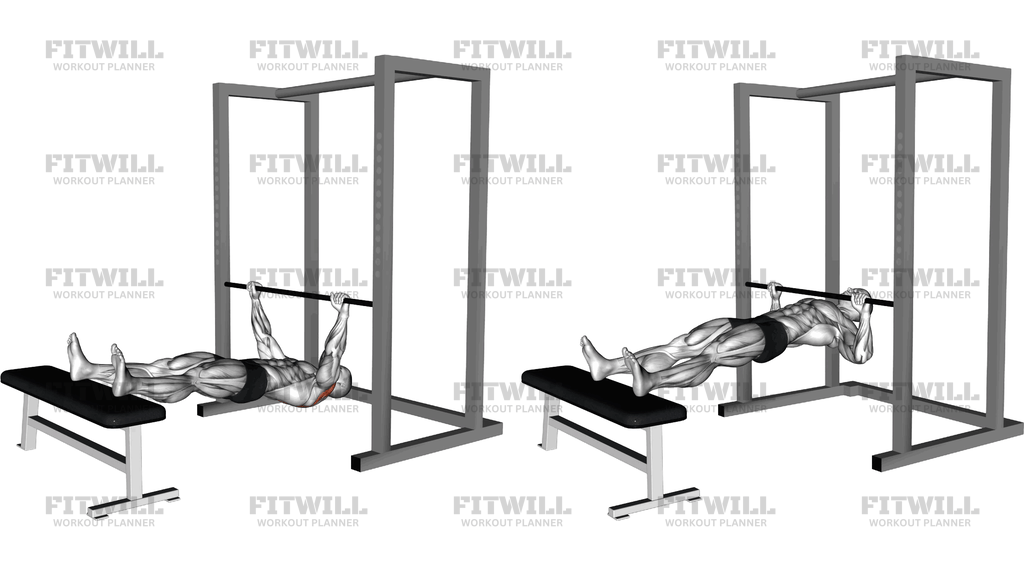
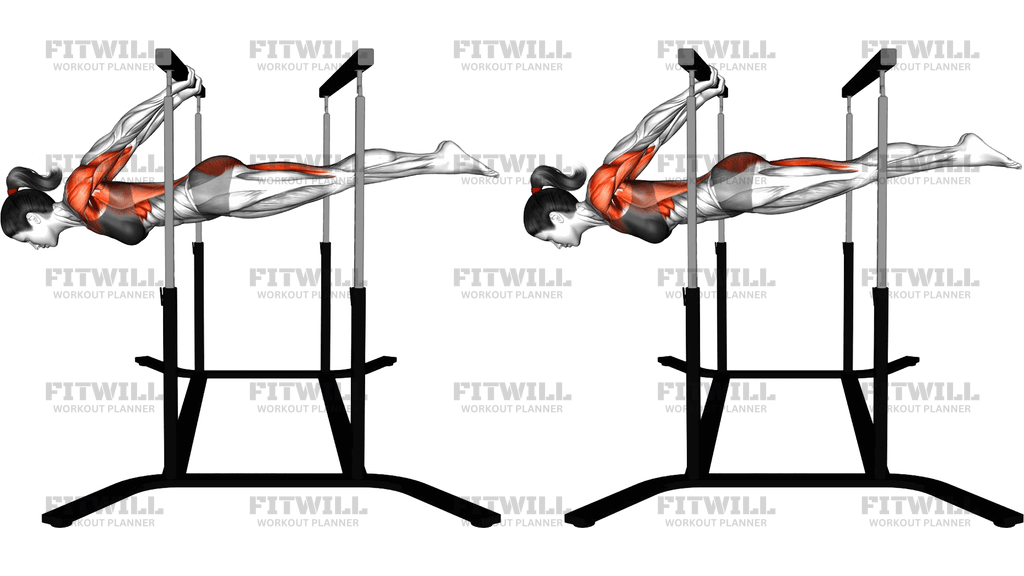
The Biceps Table Row is a bodyweight pulling exercise performed while lying supine underneath a sturdy table. You grip the edge of the tabletop, hold your body in a straight line with your heels resting on the floor, and pull your chest up toward the edge. Because the movement emphasizes elbow flexion against your own body weight, it places the biceps and forearm flexors under substantial load while the muscles of the upper back assist in the pull.
This exercise is especially useful for people who train at home with little or no equipment but still want direct biceps work. A table provides a fixed, stable edge to pull against, which makes the movement feel closer to a chin-up or a close-grip inverted row than a traditional horizontal row. If you usually train with barbells or dumbbells, it also works well as a change of pace that challenges the biceps isometrically and concentrically in a position you rarely load otherwise.
Setup matters more here than in most gym movements, because your grip position relative to the table edge determines both comfort and muscle emphasis. Gripping the edge with palms facing you and hands roughly shoulder-width keeps the forearms vertical as you pull, which channels the effort into the biceps rather than the shoulders. Your body angle controls the difficulty: the more horizontal you are and the further your heels are from the table, the harder the pull becomes.
To execute the Biceps Table Row well, think of pulling your elbows down and back toward your ribs while driving your chest to the table edge. Keep your hips in line with your shoulders and avoid sagging at the waist or pushing off with your toes. Lower yourself under control until your arms are nearly straight, then pause briefly before the next repetition. The descent is where most people rush, and slowing it down dramatically increases the work the biceps do.
Common use cases include home workouts, hotel-room training, and as a regression or companion to chin-ups. Because you can adjust body angle and foot position instantly, the exercise scales from beginners who need an assisted pulling pattern to stronger trainees who elevate their feet or slow the tempo. It also serves as a useful warm-up or burnout movement on arm days.
From a safety standpoint, the table is the one piece of equipment you must verify. Test it by pushing down hard on the edge with your hands before committing your full body weight, and make sure the table will not slide or tip. Keep your neck neutral and your shoulders relaxed away from your ears throughout the set, and stop if you feel any sharp discomfort in the elbows or shoulders.
[ Workout Log & Planner ]
Put your next workout in Fitwill
Keep your plan and training log ready when you are.


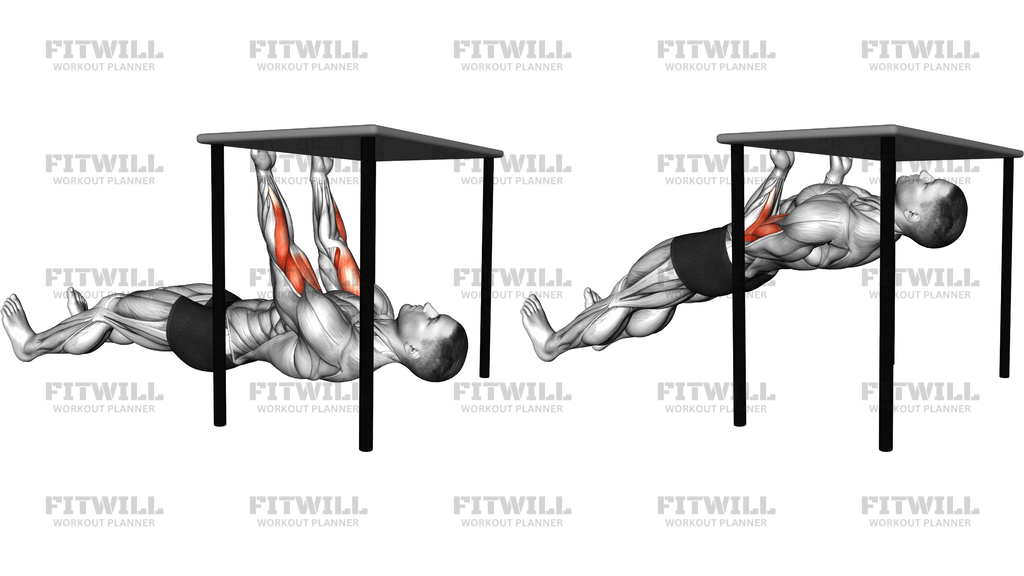
Instructions
- Find a sturdy table that will not slide or tip, and test it by pressing down hard on the edge with both hands before you commit your body weight.
- Lie on your back underneath the table so the edge sits just above your chest, and reach up to grip the edge with palms facing toward you and hands about shoulder-width apart.
- Walk your heels out until your body forms a straight line from head to feet, resting your weight on your heels with your toes pulled up.
- Squeeze your glutes and brace your midsection so your hips do not sag toward the floor.
- Start with your arms nearly straight, shoulders relaxed and down away from your ears, and take a breath in.
- Pull by driving your elbows down and back toward your ribs, bringing your chest up to the table edge while keeping your wrists straight.
- At the top, squeeze your biceps briefly with your chest close to or lightly touching the edge.
- Lower yourself under control until your arms are almost fully extended, resisting the drop instead of collapsing.
- Exhale as you pull up and inhale as you lower down, keeping a steady rhythm across the set.
- Finish the set by bending your knees, releasing your grip carefully, and standing up before your next round.
Tips & Tricks
- If your grip gives out before your biceps do, choke up so more of your hand wraps over the table edge, or use a towel laid over the edge for padding.
- The most common mistake is letting the hips sag, which turns the exercise into a partial movement and strains the lower back; reset your glute squeeze between reps if you feel your line break.
- Do not shrug your shoulders toward your ears as you fatigue — if you notice your traps taking over, reduce the body angle by bending your knees and planting your feet flatter.
- Bending at the hips to shorten the distance is a sign the angle is too hard; make it easier first, then earn the horizontal position back.
- Use a slow three-second lowering phase to make the biceps work harder without changing your setup.
- Keep your elbows tracking close to your sides rather than flaring wide, so the pull stays in the biceps and upper back instead of the front of the shoulders.
- If the table edge digs into your fingers, reposition your hands an inch or two to the side where the edge overhang is widest.
- Elevate your heels on a bench or step only after you can complete clean horizontal reps, since raising the feet sharply increases the load on the biceps.
Frequently Asked Questions
What muscles does the Biceps Table Row work?
The biceps are the primary movers, supported by the forearm flexors and grip. The lats, rhomboids, and mid-traps assist as you draw your chest toward the table edge.
Is the Biceps Table Row good for beginners?
Yes, and it is easy to scale. Bending your knees with your feet flat on the floor shortens the lever and reduces the load, letting you build pulling strength before progressing to a straight-body position.
How is the Biceps Table Row different from a regular inverted row?
A regular inverted row is usually performed on a bar with the focus on the upper back, while this version uses a table edge with a grip and pulling path that emphasize elbow flexion, shifting more of the work to the biceps.
How do I know if my table is strong enough?
Press down hard on the edge with both hands and push side to side before getting under it. If it wobbles, slides, or flexes noticeably, find a heavier table or a fixed surface instead.
Why do my forearms burn more than my biceps?
Grip demands are high when holding a flat table edge, so forearm fatigue often shows up first. Choking up with more of your hand over the edge or slowing the tempo usually shifts the effort back toward the biceps.
How can I make the Biceps Table Row harder?
Straighten your body fully, walk your heels further from the table, elevate your feet on a bench, or add a three-second pause at the top of each rep.
What can I use if I do not have a suitable table?
A low barbell in a rack, a sturdy railing, or a suspension trainer set to a similar height all work. The key is a fixed edge you can grip with your body angled underneath it.
How many reps and sets should I do?
Two to four sets of 8 to 15 controlled repetitions works well for most goals. Adjust your body angle so the last two or three reps of each set feel challenging without your hips sagging.
Is it safe for the elbows and shoulders?
For most people, yes, as long as the load is matched to your strength and you lower yourself under control. Keep the elbows tracking near your ribs, avoid jerky pulls, and stop if you feel sharp pain at either joint.