Standing Elbow Together Scoop
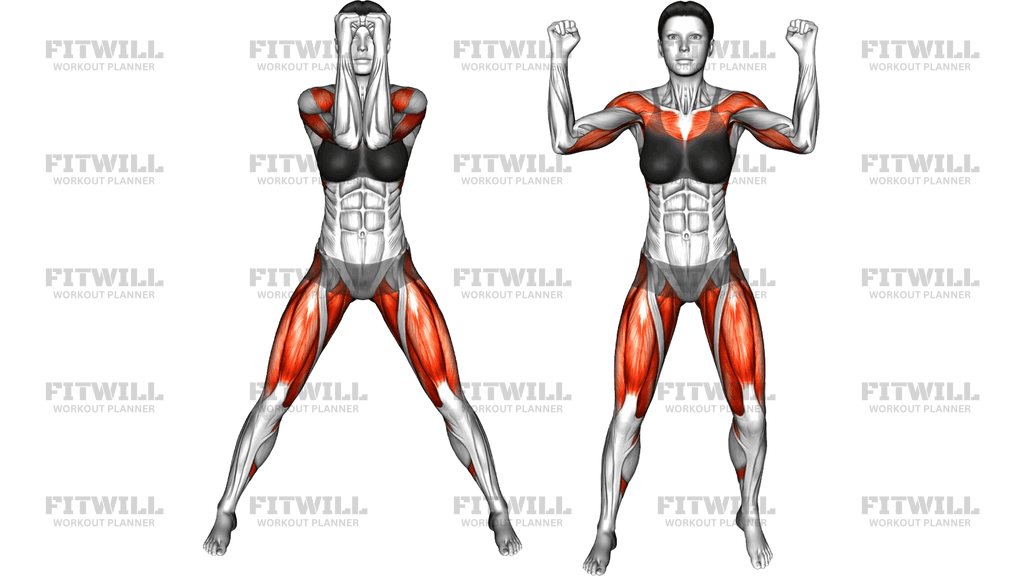
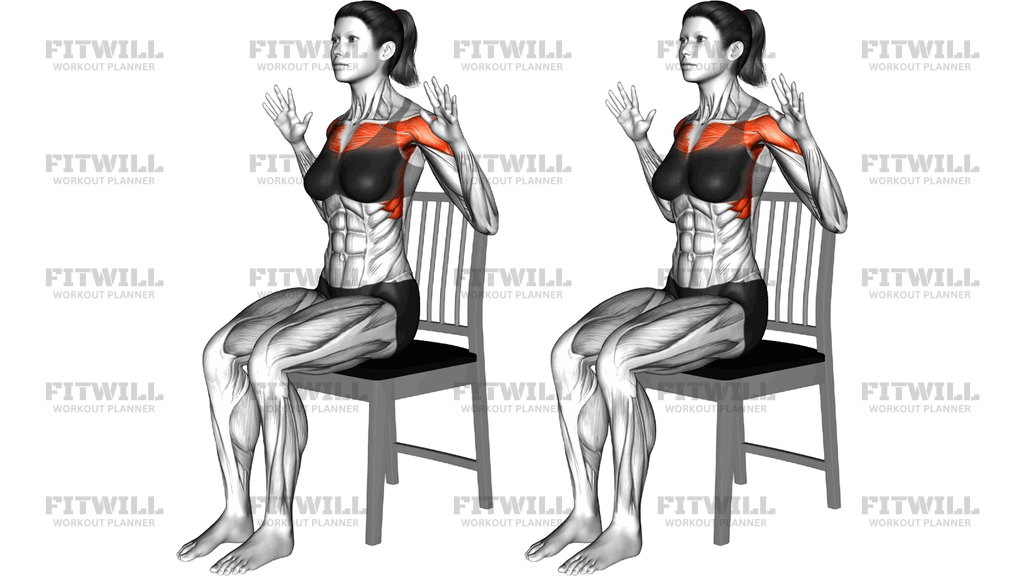
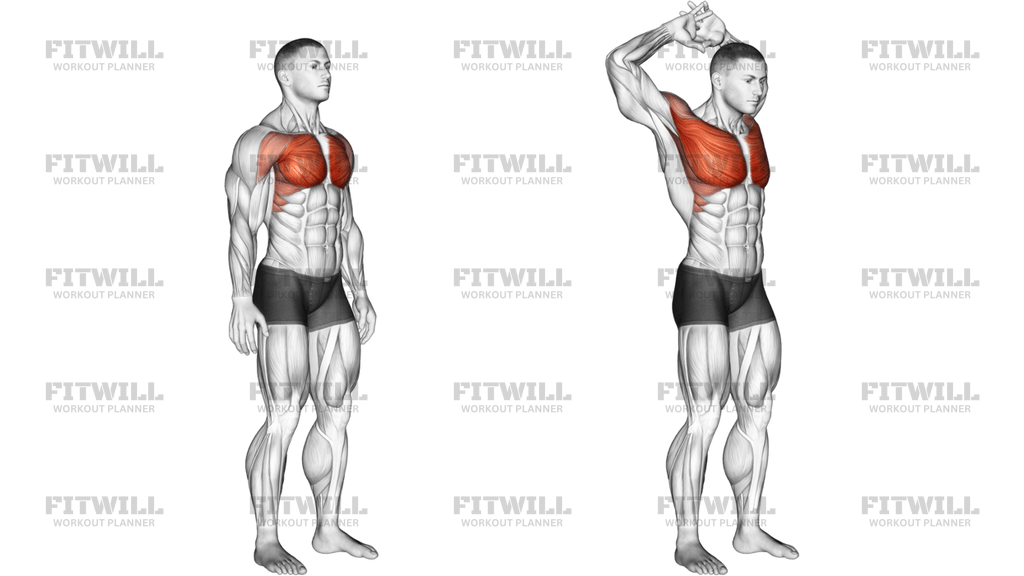
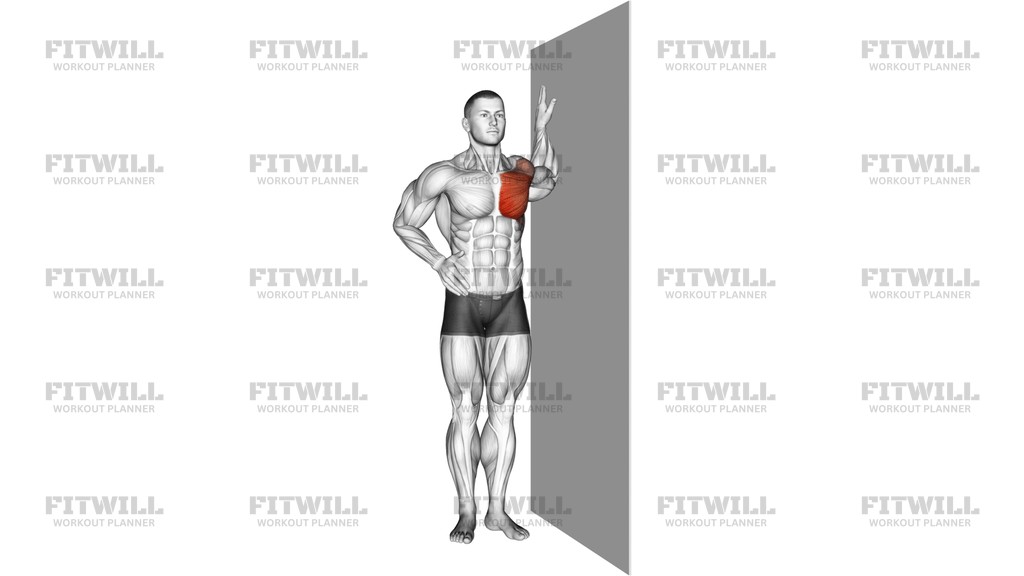
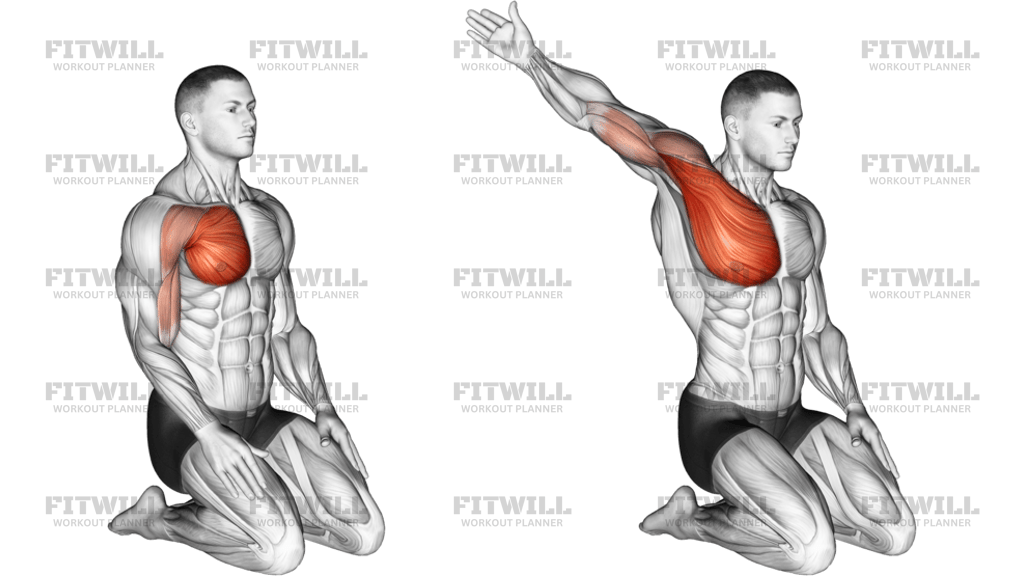
The Standing Elbow Together Scoop is a bodyweight chest exercise that uses a sweeping, scooping arm path to drive the elbows together in front of your body, forcing the pectoral muscles to contract hard without any external load. You start with your arms extended forward at chest height, palms turned up, then pull your elbows in and up so they meet in front of your chest while your hands rise toward your face. The finish position is a strong, deliberate squeeze where both elbows touch or press tightly together and the chest does the work.
Because there is no weight involved, this movement lives or dies on intention. The value comes from actively pulling your elbows toward each other, which puts the pecs into a shortened, contracted position similar to the top of a cable fly or a pec deck rep. That makes it a useful teaching tool for lifters who struggle to feel their chest on pressing day, since the elbow-to-elbow action gives immediate, honest feedback: if you do not squeeze, nothing happens.
The Standing Elbow Together Scoop fits well as a warm-up primer before bench presses, push-ups, or flyes, as a finishing move to flood the chest with blood at the end of a session, or as a low-equipment option for home training and travel. It also gently involves the front shoulders and the biceps and forearms, which control the scooping path and keep the hands steady as the elbows converge.
Setup matters more than it looks. Stand tall with feet about hip-width apart, ribs stacked over your pelvis, and shoulders pulled slightly back so your chest is not slouched forward. If you let your shoulders roll in or your lower back arch, the chest loses its ability to shorten fully and the movement turns into a vague arm wave. Keeping the torso quiet is what channels the work into the pecs.
To execute well, think of the scoop as one smooth arc rather than two separate arm actions. Lead with the elbows, let the hands follow, and accelerate slightly as the elbows come together, then hold the peak contact for a beat before reopening the arms under control. The return is just as important as the squeeze, because reversing the arc slowly keeps tension on the chest instead of letting it rest.
There are no heavy loads or complex joints at risk here, but the elbows and shoulders still deserve respect. Keep the elbow squeeze firm rather than slamming the joints together, and if you feel pinching at the front of the shoulder, reduce how high you scoop and keep the arc slightly lower and wider. Done with focus, this is one of the simplest ways to train chest contraction anywhere, anytime.
[ Workout Log & Planner ]
Put your next workout in Fitwill
Keep your plan and training log ready when you are.


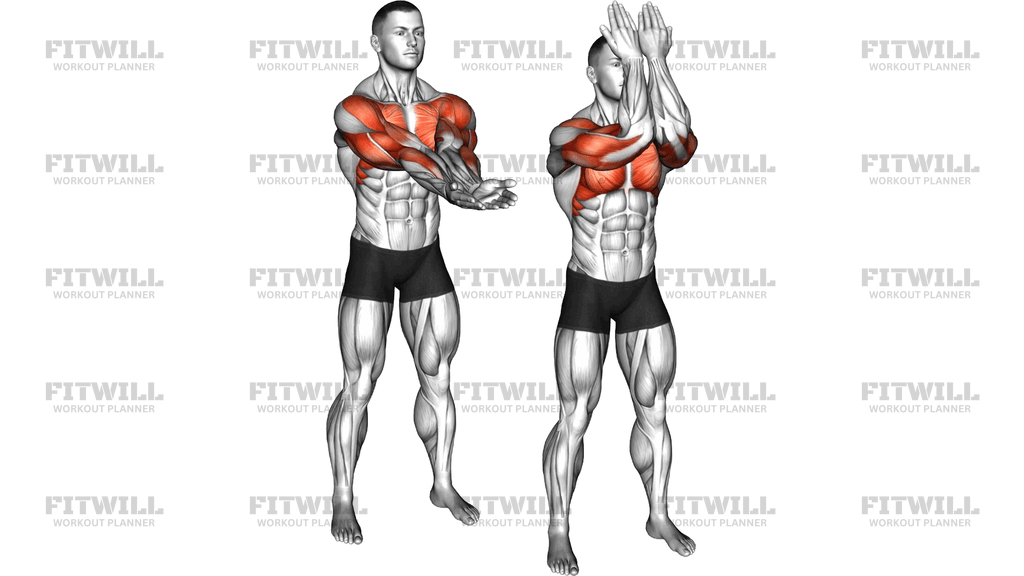
Instructions
- Stand upright with your feet hip-width apart, weight spread evenly across both feet, and your arms extended straight out in front of your chest at shoulder height.
- Turn your palms to face upward and bend your elbows slightly so your forearms and hands form a soft scoop shape.
- Draw your shoulders back and down, brace your abdominal muscles lightly, and keep your ribs stacked over your hips so your torso stays tall and still.
- Inhale, then begin sweeping your hands inward and upward along a curved path, as if scooping water toward your face.
- As your arms travel in, bend your elbows fully and guide them toward each other until both elbows meet or press firmly together in front of your chest.
- In the finished position your hands should be near your face with palms facing forward and your elbows squeezed tight, creating a strong contraction across your chest.
- Hold the elbow-to-elbow squeeze for one to two seconds, actively pressing the pecs together rather than just resting in the position.
- Exhale as you squeeze, then breathe steadily as you slowly reverse the arc, lowering and separating your arms back to the extended starting position.
- Reset your posture at the start of each rep, making sure your shoulders have not crept forward, then repeat for your target number of repetitions.
Tips & Tricks
- The most common mistake is rushing the scoop and flapping the elbows together. Slow the arc down and treat the final two inches before contact as the most deliberate part of the rep.
- If your elbows bang into each other, you are losing tension at the top. Press them together firmly but under muscular control, as if you are trying to crush something between them.
- Watch for your shoulders rolling forward as your arms come in. If that happens, think about keeping a wide collarbone and letting only the arms move while the shoulder blades stay quiet.
- Keep the scoop path curved, not straight. Lifting the hands straight up turns it into a front raise; the inward-and-upward arc is what shortens the chest.
- Do not let your lower back arch or your hips drift forward as your hands rise toward your face. Squeeze your glutes lightly to keep your pelvis neutral.
- A slight bend in the elbows from start to finish is correct, but if your elbows are bending very early and doing all the moving, shift your focus back to leading with the upper arms.
- If you feel a pinch at the front of the shoulder, lower the arc slightly so your hands finish at chin or collarbone level instead of forehead level.
- Use this as a pre-workout primer: two sets of fifteen slow reps before pressing work can help you find the feeling of chest contraction that carries over into loaded sets.
- To make the squeeze harder without equipment, add a two- to three-second hold at elbow contact or slow the lowering phase to a three-count.
Frequently Asked Questions
What muscles does the Standing Elbow Together Scoop work?
The primary muscle is the chest, especially the pectoralis major, which contracts strongly as the elbows are drawn together. The front shoulders assist the upward arc, and the biceps and forearms help control the scooping path.
Do I need any equipment for the Standing Elbow Together Scoop?
No equipment is needed. It is a pure bodyweight movement that relies on your own muscular effort to create the squeeze, so it can be done anywhere you can stand.
Why do my palms start facing up in the Standing Elbow Together Scoop?
The upward-facing palms set the scoop shape and encourage the hands to travel in a curved, cradling arc toward your face. This path is what pulls the elbows together and shortens the chest fully at the top.
Is the Standing Elbow Together Scoop good for beginners?
Yes, it is very beginner-friendly because there is no load and the feedback is instant: either your elbows come together and your chest squeezes, or they do not. Beginners should focus on slow reps and a tall torso rather than speed or rep count.
How is this different from a regular chest fly?
A fly uses external resistance through a wide arc, while the Standing Elbow Together Scoop uses no weight and finishes with the elbows pressed together in a maximally shortened position. It is closer to a concentrated chest squeeze than a stretch-focused fly.
Can the Standing Elbow Together Scoop replace weighted chest exercises?
It can provide a chest stimulus when no equipment is available, but it cannot fully match the progressive overload of presses and flyes. Treat it as a primer, finisher, or travel option rather than your only chest exercise if building size and strength is the goal.
Should my elbows actually touch during the squeeze?
Touching or lightly pressing the elbows together is the goal, but it should feel like a firm muscular press, not a joint collision. If contact is uncomfortable, bring them as close as you can while keeping steady tension.
Why do I only feel it in my arms and not my chest?
This usually means your shoulders are rounded forward or your elbows are doing the moving instead of your upper arms. Pull your shoulders back, lead the arc with your elbows, and imagine your pecs pulling the arms inward rather than your hands lifting.
How many reps and sets should I do?
For a warm-up, two to three sets of twelve to fifteen slow reps work well. As a standalone bodyweight set, aim for three sets of fifteen to twenty reps with a one- to two-second hold at the top of each rep.
Is the Standing Elbow Together Scoop safe for my shoulders?
It is generally gentle since there is no external load, but keep the squeeze controlled and stay within a pain-free arc. If you feel pinching at the front of the shoulder, lower the finishing height of the scoop and reduce the hold time.