Seated Shoulder Flexor Depressor Retractor Stretch Bent Knee
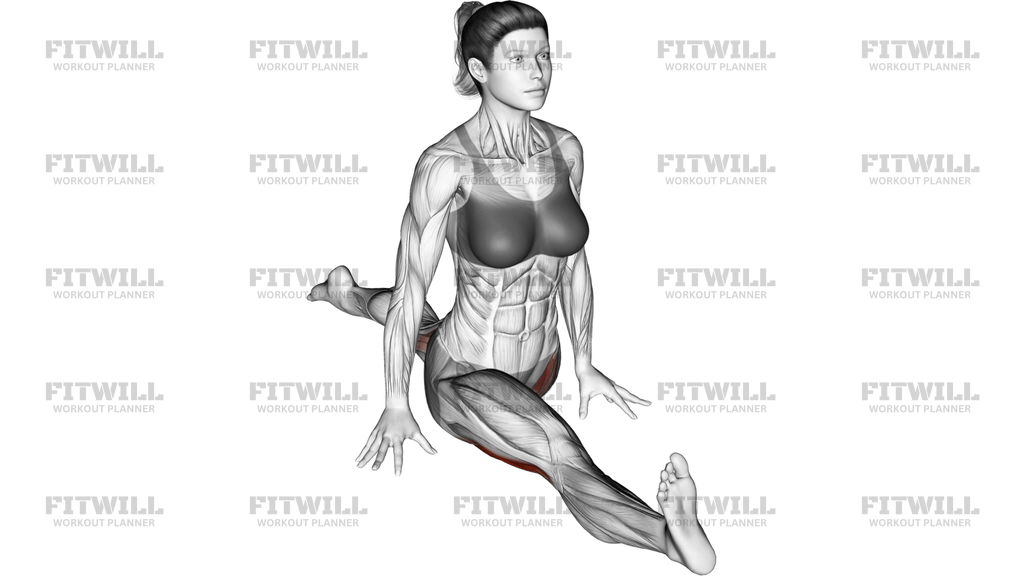
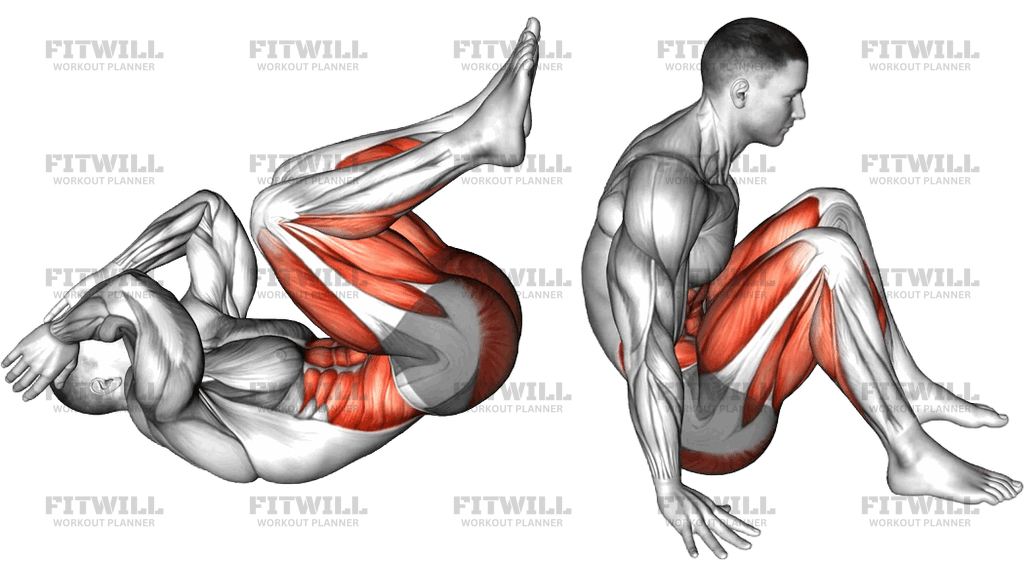
Seated Shoulder Flexor Depressor Retractor Stretch Bent Knee is a floor-based shoulder and chest stretch performed with the knees bent and the hands planted behind the hips. The bent-knee position shortens the lever arm, makes the stretch easier to control, and lets you choose how much body weight to place through the arms. In the image, the torso stays open and lifted while the hands support the body from behind, creating a strong stretch across the front of the shoulders, upper chest, and sometimes the biceps.
This movement is useful when you want to open the front of the upper body without forcing a dramatic backbend. The shoulders move into extension as the arms stay behind the torso, while the shoulder blades stay organized in a retracted and slightly depressed position. That combination is why the exercise can feel very different from a simple chest opener on a doorway or wall: the floor support lets you control how much pressure you place through the palms and how far you let the chest travel upward.
The setup matters more than the depth. Sit tall, bend the knees, and place the hands on the floor a comfortable distance behind the hips before you lean back or lift the chest. If the hands are too far behind, the shoulders can feel jammed; if they are too close, the stretch may disappear. Keep the neck long, keep the ribs from flaring hard, and let the elbows stay only as straight as your shoulders can tolerate. The goal is a clean line through the arms and torso, not a forced arch.
Use slow breathing to soften the front of the shoulders and let the chest open gradually. Stay in a range where you feel a firm stretch but no pinch at the front of the shoulder joint or numbness down the arm. This is best used as a mobility drill, a cooldown stretch, or part of a warm-up when you need to restore shoulder extension after pressing, push-ups, dips, or front-dominant training. Because the position is supported on the floor, beginners can usually scale it by keeping more weight in the feet and less pressure through the hands.
For the best result, treat each hold as a controlled posture drill rather than a passive collapse. Keep the shoulders wide, the chest open, and the movement smooth from setup to release. If one side feels tighter, shift your hand position slightly or angle the wrists until both shoulders can relax into the stretch evenly. The exercise should leave the front of the upper body feeling open and organized, not compressed or irritated.
[ Workout Log & Planner ]
Put your next workout in Fitwill
Keep your plan and training log ready when you are.


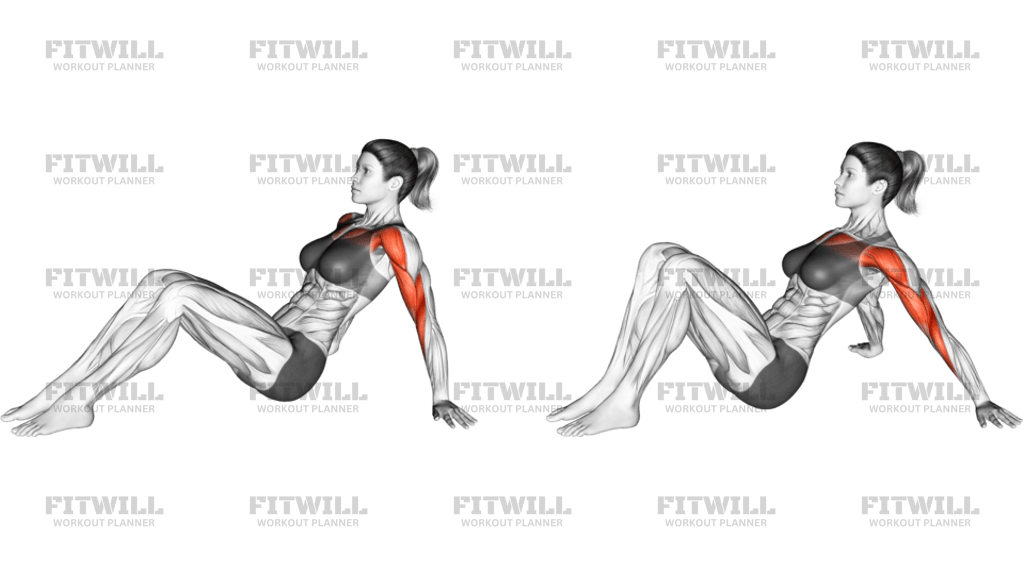
Instructions
- Sit on the mat with your knees bent and your feet on the floor.
- Place both hands on the floor behind your hips, a comfortable distance back from your body.
- Turn your fingers to a wrist angle you can tolerate and keep the palms fully grounded.
- Lift through the chest and lengthen your spine before you lean back into the stretch.
- Press lightly through the hands so the shoulders open and the shoulder blades stay pulled back and down.
- Keep the elbows only as straight as your shoulders allow and avoid shrugging toward your ears.
- Breathe in slowly, then exhale and let the front of the shoulders and chest soften a little more.
- Hold the end position without bouncing, then ease out by reducing pressure through the hands and walking the torso upright.
- Reset your posture before repeating or before switching to the other side if you are working one side at a time.
Tips & Tricks
- Move the hands only a little behind the hips at first; a small change in hand placement can make the stretch dramatically easier or harder.
- Keep the chest lifted instead of letting the upper back round forward, or you will lose the front-shoulder opening.
- If the wrists feel strained, turn the hands slightly outward or reduce how much body weight you place through the palms.
- The bent knees are there to help you control the load, so keep the feet planted if the stretch feels too aggressive.
- Do not chase a huge backbend; the target is a smooth opening across the front of the shoulders and upper chest.
- A gentle exhale often lets the shoulders settle deeper than forcing the position with extra pressure.
- Stop immediately if the stretch turns into a sharp pinch at the front of the shoulder or a tingling sensation down the arm.
- If one shoulder feels tighter, adjust the hand distance or torso angle slightly rather than twisting hard through the spine.
- Keep the neck relaxed and gaze neutral so the stretch stays in the shoulder girdle instead of the lower back.
Frequently Asked Questions
What does the seated bent-knee position change in this stretch?
Bending the knees gives you a shorter, more controllable base of support, so the shoulders can open without forcing a deep backbend.
Where should I feel Seated Shoulder Flexor Depressor Retractor Stretch Bent Knee?
You should feel it across the front of the shoulders, upper chest, and sometimes the biceps or the front of the upper arm.
How far behind my hips should my hands be?
Start only a few inches behind the hips, then move them back gradually if you want a stronger stretch and your wrists and shoulders feel good.
Can beginners do this floor stretch?
Yes. Beginners can keep more weight in the feet, place the hands closer to the body, and use a smaller chest lift to make it easier.
What is the most common mistake with the hand placement?
Placing the hands too far behind the body usually creates wrist strain or a jammed shoulder instead of a clean front-shoulder stretch.
Should my elbows stay locked during the hold?
Not necessarily. Straight arms are fine if they feel comfortable, but a soft elbow bend is better than forcing lockout through the shoulders.
Is this more of a warm-up or cooldown exercise?
It works well in both. Use it gently in a warm-up to open the shoulders, or hold it longer in a cooldown after pressing or upper-body training.
What should I do if the stretch feels more in my lower back than my shoulders?
Bring the ribs down, keep the chest tall instead of arched, and move the hands a little closer to the hips so the stretch stays in the shoulder girdle.