Sitting Dip And Leg Raise On A Chair
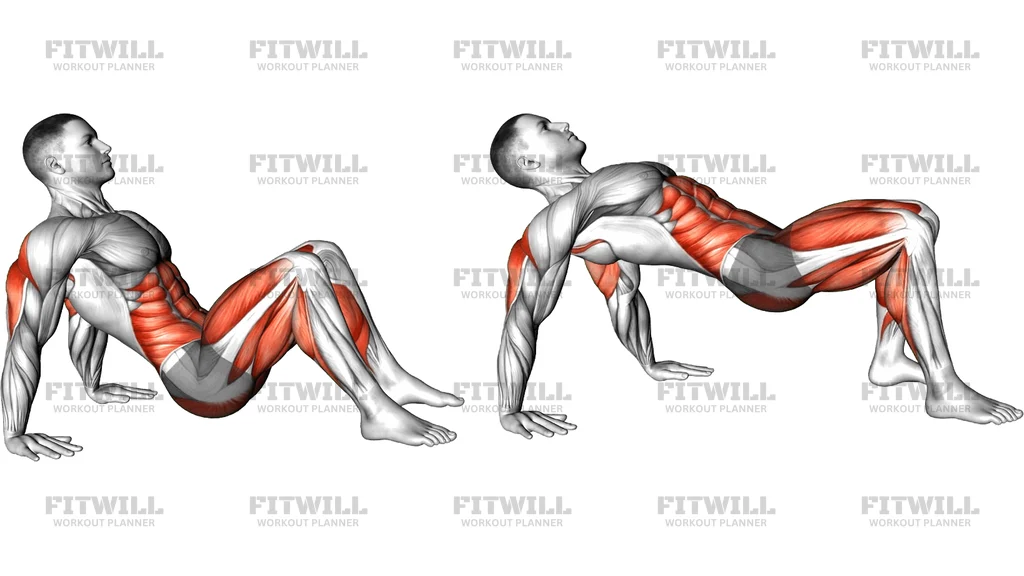
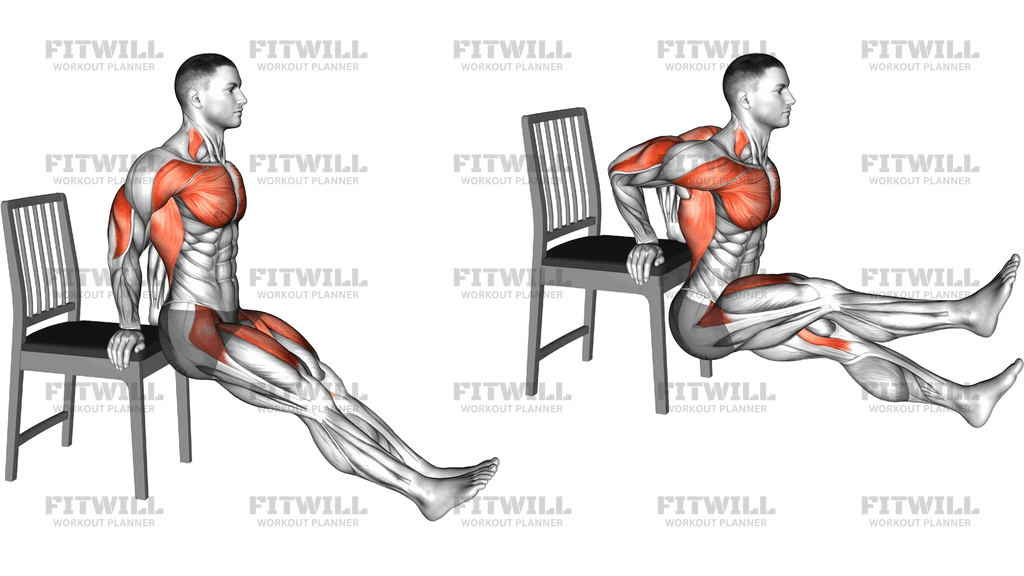
The Sitting Dip And Leg Raise On A Chair is a bodyweight movement that combines two demands in one rep: a chair dip for the upper body and a straight-leg raise held away from the floor. You support yourself on the edge of a sturdy chair with your hands beside your hips, slide your hips off the seat, and extend your legs straight out in front of you. From there, you bend your elbows to lower your torso while keeping your legs lifted, then press back up without letting your heels drop to the ground.
This exercise works the triceps as the primary mover, with strong support from the chest and front shoulders during the pressing portion. The leg raise component shifts load into the lower abs and hip flexors, which must hold your extended legs against gravity for the entire set. Because your torso is cantilevered off the chair while your arms press, your core also works continuously to keep your ribcage and pelvis from collapsing.
It suits people who train at home with minimal equipment and want more challenge than a standard chair dip. Once regular bench dips feel easy, adding the leg raise removes the option of resting your heels between reps and raises the core demand considerably. It is also a compact option for travelers or anyone using a chair-based routine, since one piece of furniture covers both upper body pressing and anterior core work.
Setup quality decides whether this feels crisp or sloppy. Use a chair without wheels, placed against a wall so it cannot slide backward. Your hands should grip the edge directly under your shoulders, and your hips should stay close to the chair rather than drifting forward, which keeps your shoulders in a safer position as you lower.
Execution comes down to two coordinated actions. Press through your palms to straighten your arms at the top, then bend your elbows mostly backward, not outward, as you lower your hips toward the floor. At the same time, hold your legs straight and lifted so your thighs stay roughly parallel to the ground. Exhale as you press up, inhale as you lower, and set your heels down between reps rather than sagging into your shoulders when fatigue builds.
Keep the depth modest, especially at first. Lowering until your upper arms are about parallel to the floor is enough; dropping deeper with a chair this height tends to irritate the front of the shoulder. Stop the set when you can no longer hold your legs up with control, because continuing with dropped legs simply turns the exercise back into a plain dip.
[ Workout Log & Planner ]
Put your next workout in Fitwill
Keep your plan and training log ready when you are.


Instructions
- Place a sturdy, armless chair against a wall so it cannot slide, and sit on the edge with your hands gripping the front of the seat on either side of your hips, fingers pointing forward.
- Walk your feet out, straighten your knees, and slide your hips just off the front of the seat so your weight is fully supported by your hands on the chair edge.
- Lift both legs straight out in front of you until your thighs are roughly parallel to the floor, feet together, and squeeze your thighs and abs to hold them there.
- Brace your core and pull your shoulder blades down and back so you are not shrugging into your ears.
- Inhale as you bend your elbows straight back and lower your hips toward the floor, keeping your chest tall and your legs lifted at the same height.
- Stop when your upper arms are about parallel to the ground or when your shoulders begin to feel pinched at the front.
- Exhale and press firmly through your palms to straighten your elbows, driving your hips back up to the start height while your legs stay extended.
- Complete your target reps, then lower your heels to the floor, sit your hips back onto the chair, and rest your arms before the next set.
Tips & Tricks
- Keep your hips within a few inches of the chair edge throughout the rep. Letting them drift forward lengthens the lever on your shoulders and is the most common reason people feel discomfort at the front of the shoulder in this variation.
- Point your elbows backward rather than flaring them wide. Flared elbows shift the pressing away from the triceps and place the shoulder joint in a weaker position as you descend.
- If your legs start dropping as you fatigue, that is your cue to end the set. Holding the legs up is the point of this exercise; once they fall, you are only doing half the movement.
- Build up by holding the extended-leg position for time first, then add shallow dips, and only then work toward full-depth reps.
- Grip the chair edge with your whole hand and keep your wrists stacked over your hands. Bent wrists under your full bodyweight are a frequent complaint with chair dips.
- Do not bounce out of the bottom. A brief pause with legs still held high makes the triceps and lower abs do the work instead of momentum.
- Keep your neck neutral by looking straight ahead rather than tilting your head back to watch your legs.
- Avoid chairs with casters, soft cushioned edges, or lightweight folding frames. A hard-edged, stable seat against a wall is the safest choice for this loading position.
Frequently Asked Questions
What muscles does the Sitting Dip And Leg Raise On A Chair work?
The triceps do most of the pressing, assisted by the chest and front shoulders. Holding your extended legs up loads the lower abs and hip flexors for the entire set, so you train upper body pressing and anterior core in the same rep.
Is this exercise suitable for beginners?
It is demanding because your legs never touch the floor. Beginners should master regular chair dips with heels down and practice a straight-leg hold separately before combining the two.
How deep should I lower during the dip portion?
Lower until your upper arms are about parallel to the floor. Going deeper on a standard chair height usually stresses the front of the shoulder without adding meaningful triceps benefit.
Why do my legs drop as the set goes on?
Your hip flexors and lower abs are fatiguing, which is expected since they must hold extended legs against gravity the whole time. Treat that as the end of the set rather than continuing with dropped legs.
What kind of chair should I use for the Sitting Dip And Leg Raise On A Chair?
Use a stable, armless chair with a firm seat edge, placed against a wall so it cannot slide. Avoid rolling office chairs, padded or rounded edges, and folding chairs that can collapse under your bodyweight.
What can I substitute if a chair feels unstable?
A sturdy bench, the edge of a couch without wheels, or a low stable step works the same way. The key is a fixed, weight-bearing edge roughly knee to thigh height that your hands can grip beside your hips.
My shoulders ache at the front when I do chair dips. What should I change?
Reduce your depth, keep your hips closer to the chair, and pull your shoulder blades down before descending. If discomfort persists at shallow depths, switch to a regular chair dip with bent knees and heels down or seek guidance from a qualified professional.
How many reps should I aim for?
Start with sets of 6 to 10 controlled reps, stopping when your leg hold or your pressing strength gives out. As that becomes comfortable, add reps or slow the lowering phase before adding external load.
Should my knees stay straight the whole time?
Yes, in this version the legs stay extended and lifted, which is what separates it from a standard chair dip. Bending the knees shortens the lever and significantly reduces the core and hip flexor demand.