Sitting Hip Knee And Ankle Mobilization On A Stabi
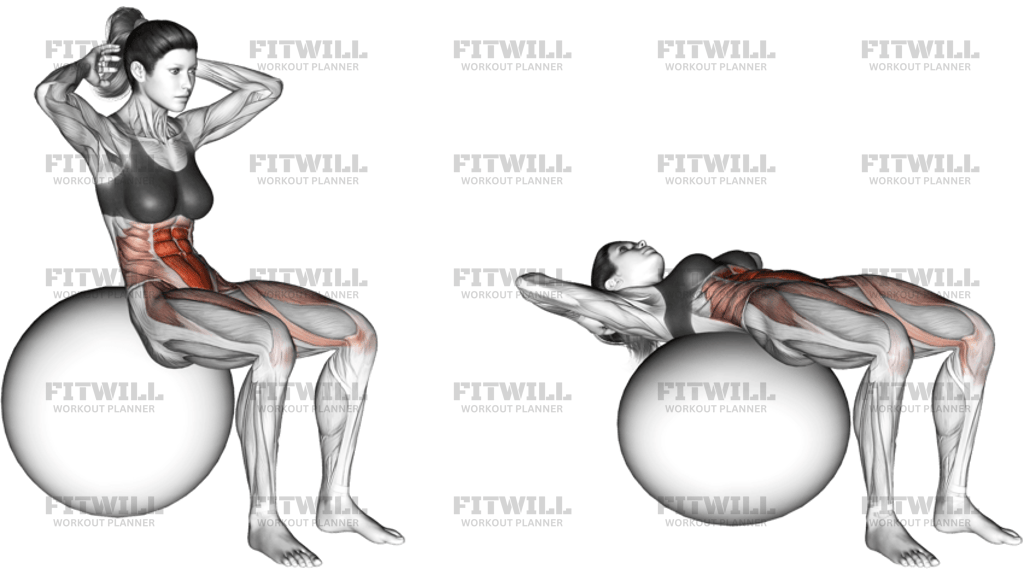
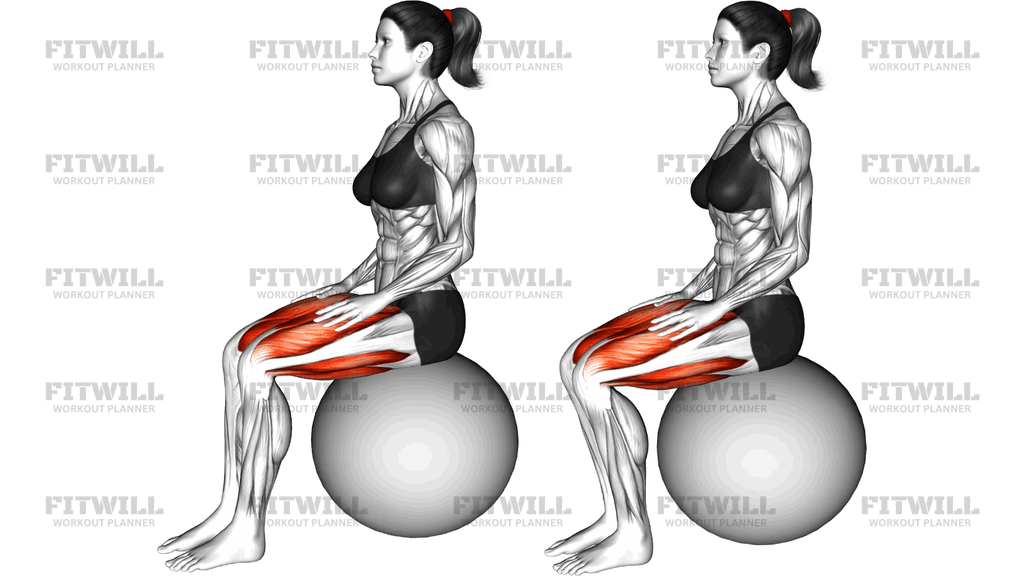
Sitting Hip Knee And Ankle Mobilization On A Stability Ball is a gentle mobility drill performed from a tall seated position on top of a stability ball, with both feet flat on the floor and the hands resting lightly on the thighs. From there you let the ball roll slowly forward and backward beneath you, so the hips, knees, and ankles flex and extend together through a smooth, linked chain of motion. The two positions are subtle: as the ball travels one way the knees bend and the hips close, and as it travels the other way the legs lengthen toward straight while the ankles load through their range.
This is one of those drills that looks almost too easy to matter, but that is exactly its value. Because the ball supports your full torso weight, the joints move without any compressive load, which makes it a strong choice for warming up before squats, lunges, running, or cycling. It is also useful for people who spend long hours sitting and feel stiff through the front of the hips, for beginners who have never consciously moved their ankles and knees as a unit, and for older trainees who want low-risk, controlled joint movement.
The main work happens at the hip, knee, and ankle joints themselves rather than in any one muscle. The hip flexors at the front of the hip get lengthened as the legs extend, the quadriceps work lightly to control the path, and the calves and muscles around the shin and ankle are taken through dorsiflexion and plantar flexion with each roll. Sitting tall on an unstable surface also quietly asks the deep core and trunk stabilizers to keep you upright, though the emphasis stays on the lower-body joints.
Setup matters more than most people expect. A ball that lets your thighs sit roughly parallel to the floor with knees bent about ninety degrees gives you the cleanest path, and your feet need to stay flat and planted the entire time — the ball rolls, your feet do not. If your hips drift off the center of the ball or your spine slumps, the movement turns into a torso exercise and the lower-body joints stop getting their full range.
To execute it well, move slowly and let the ball travel only a few inches in each direction at first. Feel the front of the hip lengthen at one end of the range and the calf and ankle working at the other. Breathe normally and avoid bouncing into either position; the goal is a smooth pendulum, not a stretch you force. Eight to twelve controlled passes in each direction is usually enough as part of a warm-up, and it can be repeated once or twice through the day if you sit for long stretches.
Treat it as a mobility primer, not a strength or stretching challenge. If sitting on a ball feels unsteady, place it near a wall or rack you can touch for balance, and keep the range small until the rolling feels natural. Anyone with a recent knee, hip, or ankle injury should get clearance before adding it to a routine, since the drill deliberately takes all three joints through their range in one motion.
[ Workout Log & Planner ]
Put your next workout in Fitwill
Keep your plan and training log ready when you are.


Instructions
- Place a stability ball on a flat, non-slip floor and sit on its top center with your feet flat on the floor about hip-width apart.
- Adjust until your knees are bent roughly ninety degrees and your thighs are close to parallel with the floor; rest your hands lightly on your thighs.
- Sit tall through your spine and gently brace your core so your trunk stays steady on top of the ball.
- Let the ball roll slowly forward under you by easing your hips ahead of your feet, feeling the hips and knees begin to extend as your shins angle back.
- Roll back the other way until your knees bend further and your hips sit slightly behind your feet, feeling the front of the hips close and the ankles load.
- Keep both feet planted throughout — only the ball moves, while your toes, heels, and soles stay in contact with the floor as much as the range allows.
- Breathe steadily, exhaling as the ball rolls forward, and avoid holding your breath at either end of the range.
- Continue rolling forward and back in one smooth pendulum for eight to twelve passes per direction.
- Finish by rolling the ball back to center, pausing until you are settled, then stand up carefully by pressing through both feet.
Tips & Tricks
- If your lower back rounds as the ball rolls, you are slumping instead of sitting tall — reset your posture at center before continuing.
- Feet lifting or sliding means the range is too large; shorten the roll until only the ball moves and the feet stay grounded.
- Do not bounce at the end positions — a slow pendulum gives the hips, knees, and ankles far more usable range than quick pulses.
- If your shoulders creep up toward your ears, your arms are doing balance work; press your hands lightly into your thighs to relax the upper body.
- A ball that is too tall forces you to reach for the floor and tips you forward — swap sizes until your thighs sit roughly parallel when seated.
- Moving only at the hips while the ankles stay stiff is a common miss; consciously let the ankles flex and extend so the whole chain moves together.
- Keep your gaze forward, not down at your knees, to help the trunk stay stacked over the ball.
- If the ball wanders sideways, your weight is shifting on one sit bone — recenter your hips and roll strictly forward and back along one line.
Frequently Asked Questions
What does Sitting Hip Knee And Ankle Mobilization On A Stability Ball actually train?
It primarily mobilizes the hip, knee, and ankle joints through one linked, unloaded range of motion. The hip flexors and quadriceps get lengthened and lightly worked, while the calves and ankle stabilizers are taken through flexion and extension with each roll.
What size stability ball should I use for this drill?
Choose one that lets you sit with your thighs roughly parallel to the floor and knees bent about ninety degrees. If your hips sink well below your knees or you cannot reach the floor comfortably, the ball is the wrong height for clean rolling.
Is this exercise good for beginners?
Yes, it is one of the gentlest ways to introduce controlled lower-body mobility. The ball supports your body weight, and the range can start very small and grow as balance and comfort improve.
Should my feet move during Sitting Hip Knee And Ankle Mobilization On A Stability Ball?
No — the feet stay planted on the floor while only the ball rolls beneath you. If your heels or toes lift or slide, you are rolling too far for your current ankle and hip range.
Can I do this as a warm-up before squats or running?
It works well as an early warm-up drill because it takes the whole lower-body chain through flexion and extension without load. Follow it with more specific preparation like bodyweight squats or leg swings before heavier work.
Why do my hip flexors feel a stretch at one end of the roll?
As the ball rolls so your hips travel ahead of your feet, the legs lengthen and the front-of-hip muscles lengthen with them. That stretch sensation is the intended effect, and it should stay mild and comfortable.
I feel my knees pinching during the movement — what should I change?
Reduce the rolling distance and make sure your knees track straight ahead over your feet rather than collapsing inward or flaring out. If discomfort persists, stop and check with a qualified professional before continuing.
How is this different from a seated stretch on a bench?
The ball rolls, so your hips, knees, and ankles move together through a continuous arc instead of holding one fixed position. That dynamic element also challenges your trunk to stay balanced, which a static bench seat does not do.
How many repetitions should I do?
Eight to twelve smooth passes in each direction is plenty, once or twice per session. Because the drill is low intensity, quality of motion matters far more than volume.
Is it safe if the ball feels wobbly under me?
Start with a smaller range and position the ball near a wall or sturdy rack you can touch for support. Confidence on the unstable surface usually builds within a few sessions.