Exercise Ball Pike Push-Up
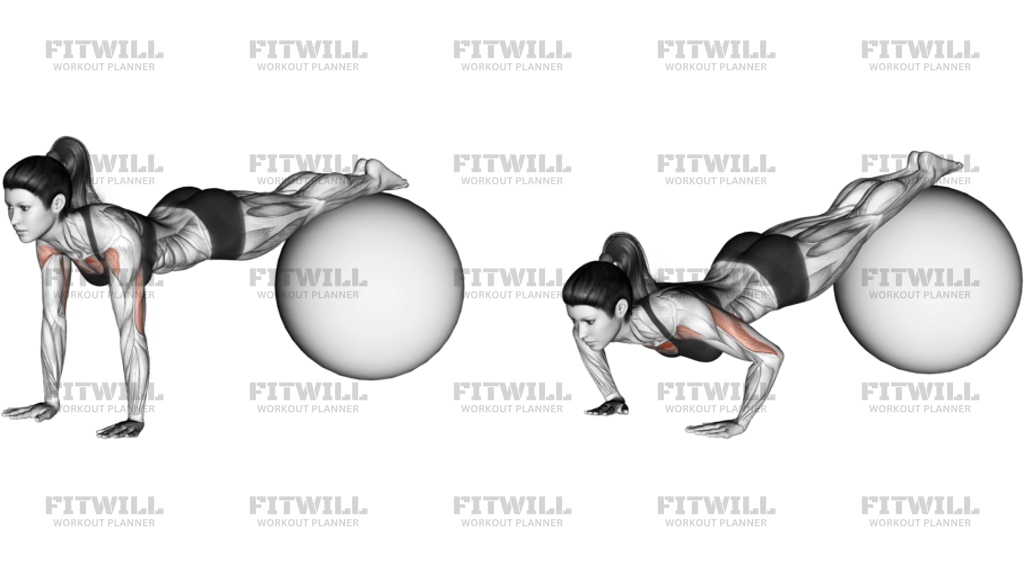
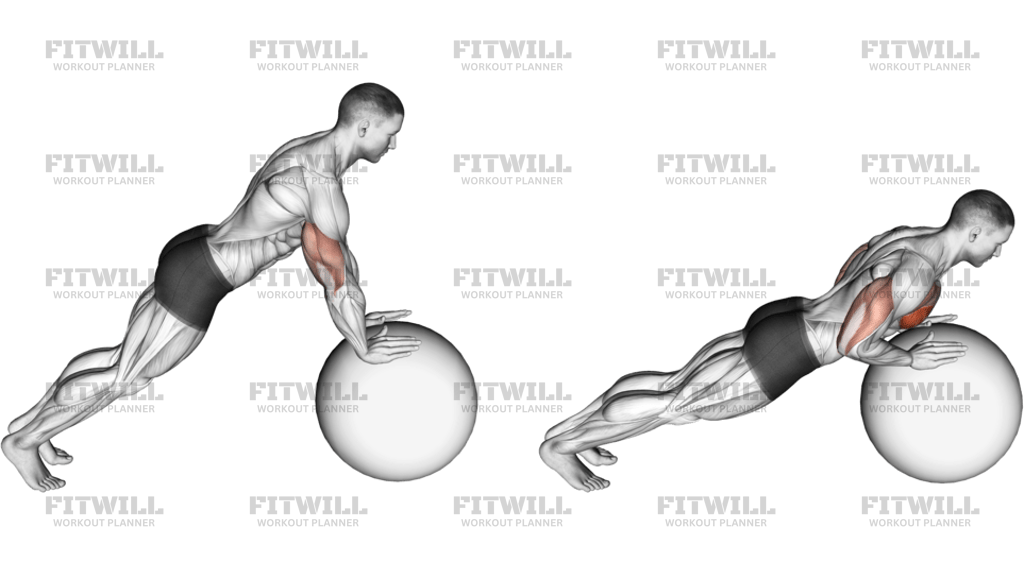
Exercise Ball Pike Push-Up is a bodyweight pressing variation that puts your feet on a stability ball and your hands on the floor, creating an unstable, hips-up position that shifts a lot of work into the shoulders, triceps, upper chest, and core. The ball adds an obvious balance demand, so each rep has to be controlled from the setup all the way through the press.
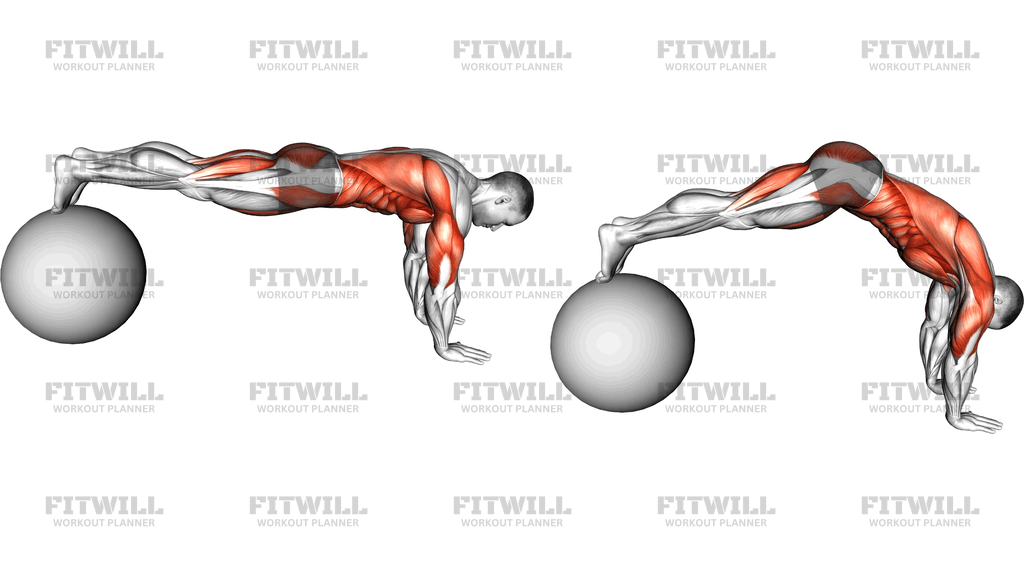
The exercise is most effective when you begin in a strong long plank with your feet supported on top of the ball, then actively pike the hips up before bending the elbows. That shape shortens the distance to the floor and changes the pressing angle so the shoulders take on more of the load than a standard push-up. The abs, hip flexors, and glutes work hard to keep the ball steady and stop the torso from folding or swaying.
Good reps start with the body organized before the elbows bend. Keep the hands planted a little wider than shoulder width, spread the fingers, and press the floor away so the shoulder blades stay controlled instead of collapsing. From there, lower the head toward the floor in front of the hands, not straight between them, and keep the elbows angled back rather than flaring wide. The goal is a smooth arc: hips stay high, head travels down, then you press back to the pike without losing the ball.
Because the feet are on a ball, small mistakes show up fast. If the ball rolls away, the hips sag, or the shoulders drift forward of the wrists, the set stops feeling like a pike push-up and starts turning into a shaky plank. A smaller range of motion is better than chasing depth you cannot control, especially if the wrists, shoulders, or hamstrings are limiting the position.
Exercise Ball Pike Push-Up is useful as a home or gym progression for overhead pressing strength, handstand-style preparation, or harder bodyweight upper-body work when a regular floor pike push-up feels too easy. It also works well as an accessory exercise when you want shoulder-focused pressing without a barbell. Keep the reps deliberate, reset the ball if it moves, and stop the set when the pike position or pressing path gets sloppy.
[ Workout Log & Planner ]
Put your next workout in Fitwill
Keep your plan and training log ready when you are.


Instructions
- Place your hands on the floor slightly wider than shoulder width and put both feet or shins on top of the stability ball.
- Walk your hands forward until your body forms a long plank, then press your shoulders away from your ears.
- Lift your hips up into a pike so your weight shifts toward your shoulders and the ball stays under your feet.
- Brace your abs and glutes, then keep your gaze on the floor just in front of your hands.
- Bend your elbows and lower the top of your head toward the floor in front of your hands.
- Keep your elbows tracking back at a moderate angle instead of flaring wide as you descend.
- Pause briefly near the bottom when your shoulders are loaded and the ball still feels stable.
- Press the floor away to straighten your arms and return to the pike position without letting the hips drop.
- Reset the ball under your feet and repeat for the planned number of reps, breathing in on the way down and out on the press.
Tips & Tricks
- Start with the feet high on the ball and the hips lifted before the first rep; if you begin too flat, the movement turns into an unstable push-up instead of a pike press.
- Think about moving your head forward and down in front of your hands, not just straight down between them, so the shoulders stay in the best pressing line.
- Keep the ball quiet by squeezing the legs lightly into it; if your feet drift, the instability is coming from setup, not effort.
- Use a softer bend in the elbows rather than letting them flare straight out, which can irritate the shoulders in this angle.
- If your shoulders collapse toward your ears, reduce range and press to the highest quality rep instead of chasing depth.
- Keep the wrists stacked under the shoulders at the start of each rep so the press does not turn into a forward slide.
- A slow lowering phase exposes weak control fast; if the descent gets shaky, shorten the set before the ball starts rolling.
- If your hamstrings limit the pike, let the knees bend slightly rather than forcing a straight-leg fold that pulls you out of position.
Frequently Asked Questions
What muscles does Exercise Ball Pike Push-Up work most?
It mainly hits the shoulders, triceps, upper chest, and core, with the abs and hip flexors working hard to keep the ball and hips stable.
Is Exercise Ball Pike Push-Up good for beginners?
It is usually better for intermediate lifters. Beginners often do better with a floor pike push-up first, because the ball adds balance demands that make the setup harder to control.
How do I keep the stability ball from rolling during the set?
Keep your feet or shins centered on top of the ball and squeeze the legs lightly into it as you pike. If it still rolls, shorten the range and reset before each rep.
How low should my head go on Exercise Ball Pike Push-Up?
Lower the top of your head toward the floor in front of your hands until the shoulders are strongly loaded, but stop before the ball or shoulders start drifting.
What is the difference between this and a regular pike push-up?
The feet-on-ball setup adds instability and makes the core work harder to keep the hips lifted, so the press feels less stable than a floor version.
Should my elbows flare out on this movement?
No. Let them drift back at a moderate angle so the shoulders can press smoothly and the load stays organized through the upper body.
What if my wrists hurt during Exercise Ball Pike Push-Up?
Try turning the hands out slightly, using push-up handles, or doing the exercise with your hands on a small elevated surface so the wrist angle is less aggressive.
Can I use Exercise Ball Pike Push-Up to build toward handstand push-ups?
Yes. It is a useful stepping stone because it teaches a steep pressing angle, shoulder loading, and core control without requiring a full wall handstand.