Standing Elbow Push Up And Elbow Fly
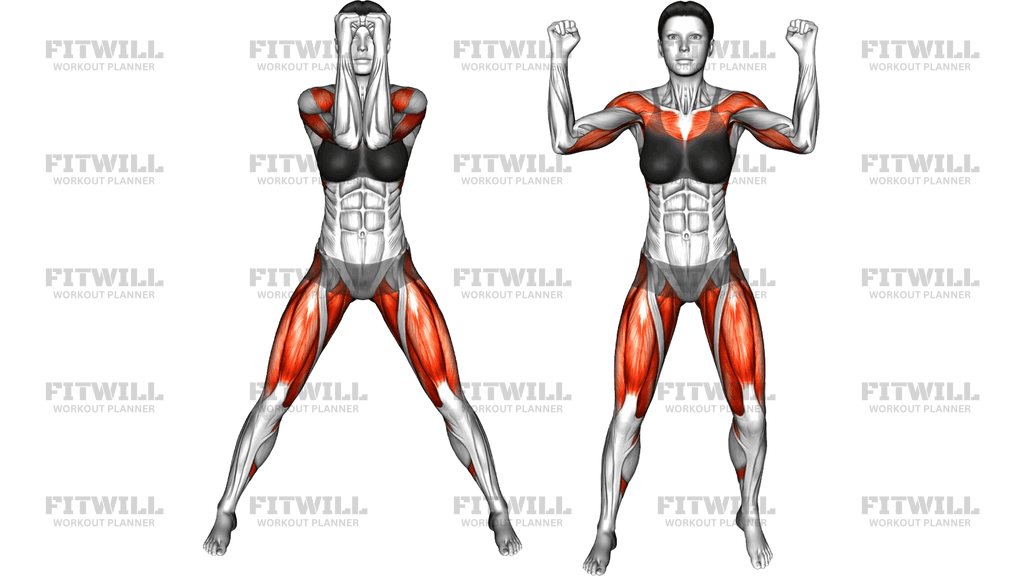
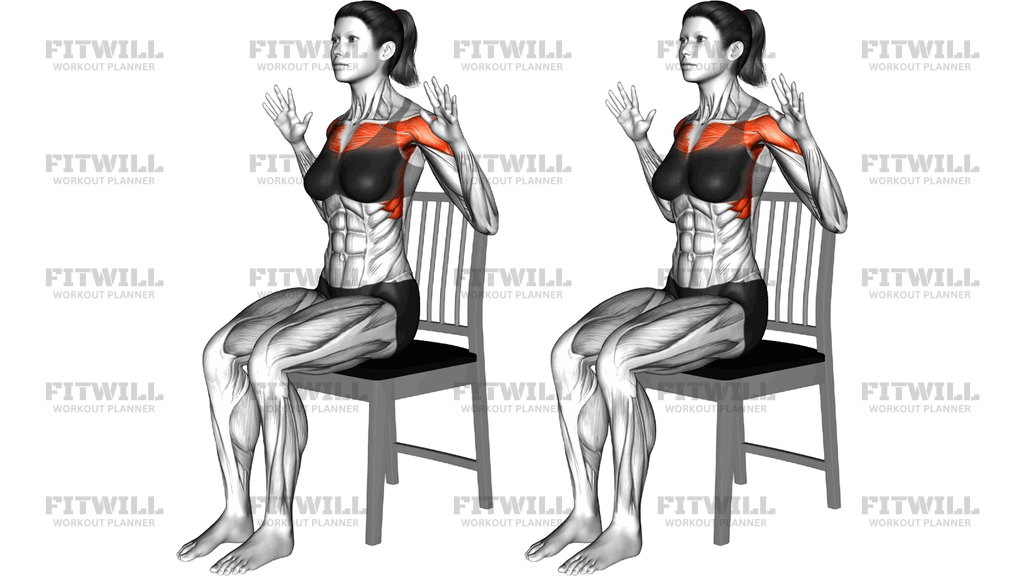
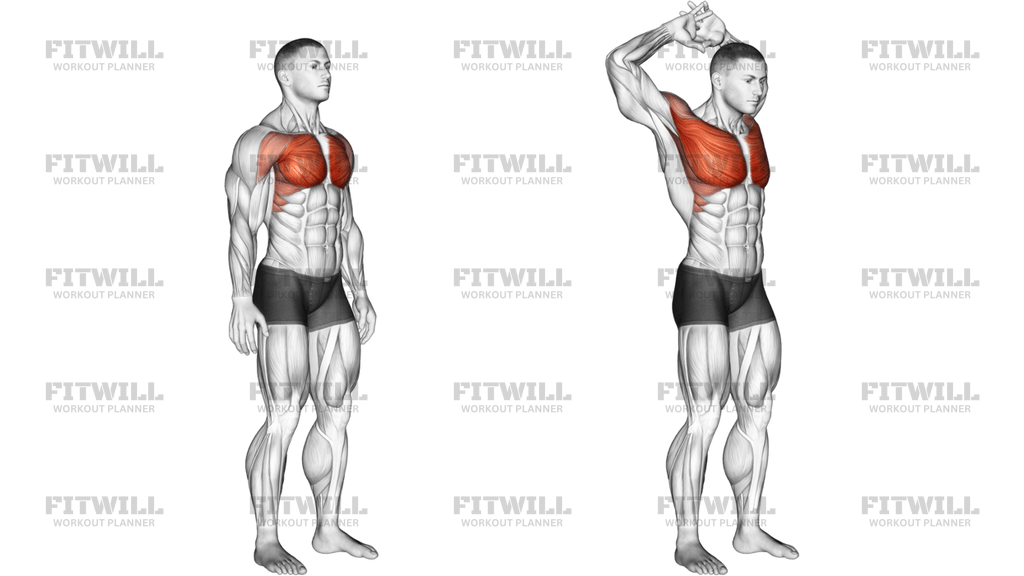
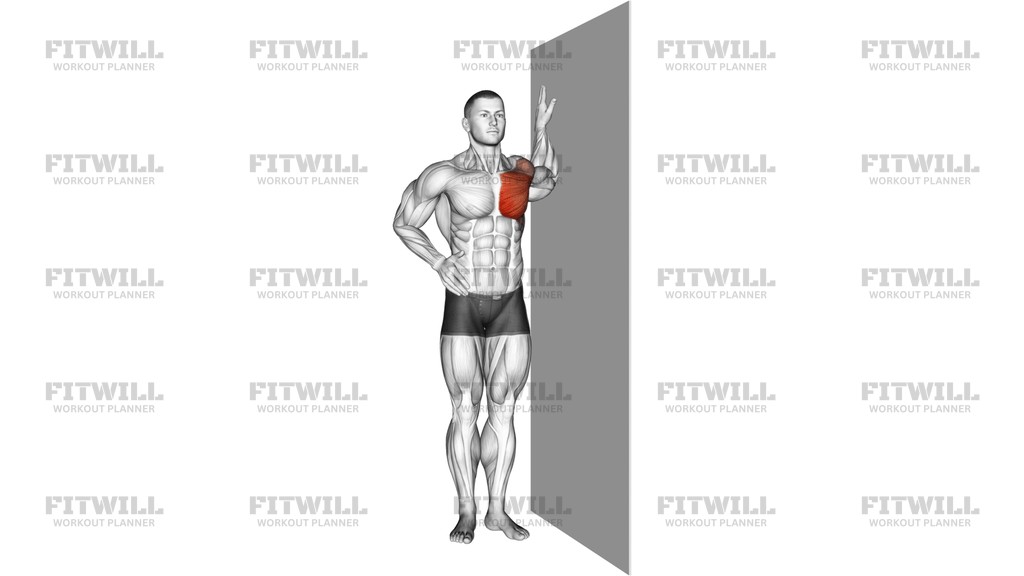
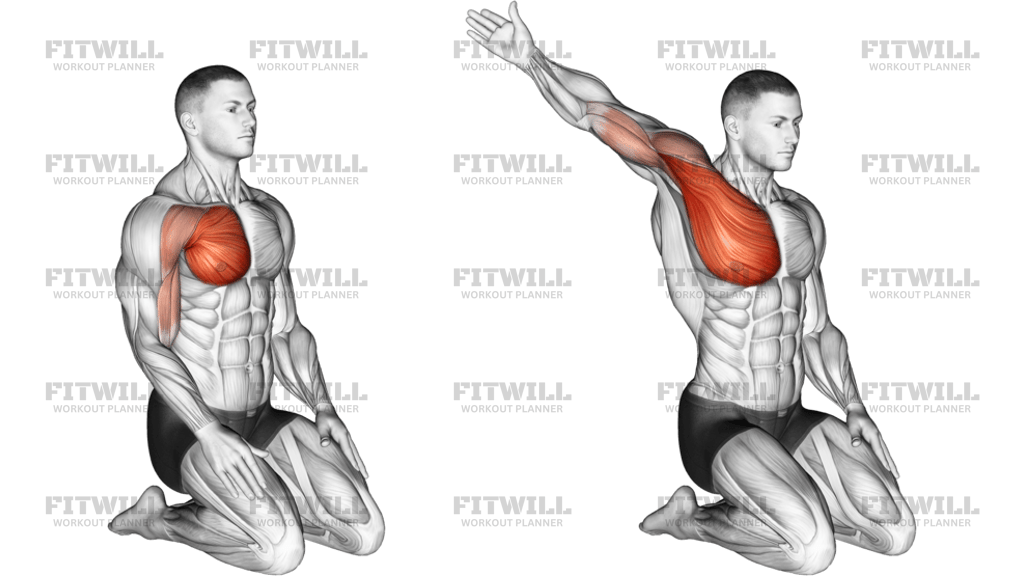
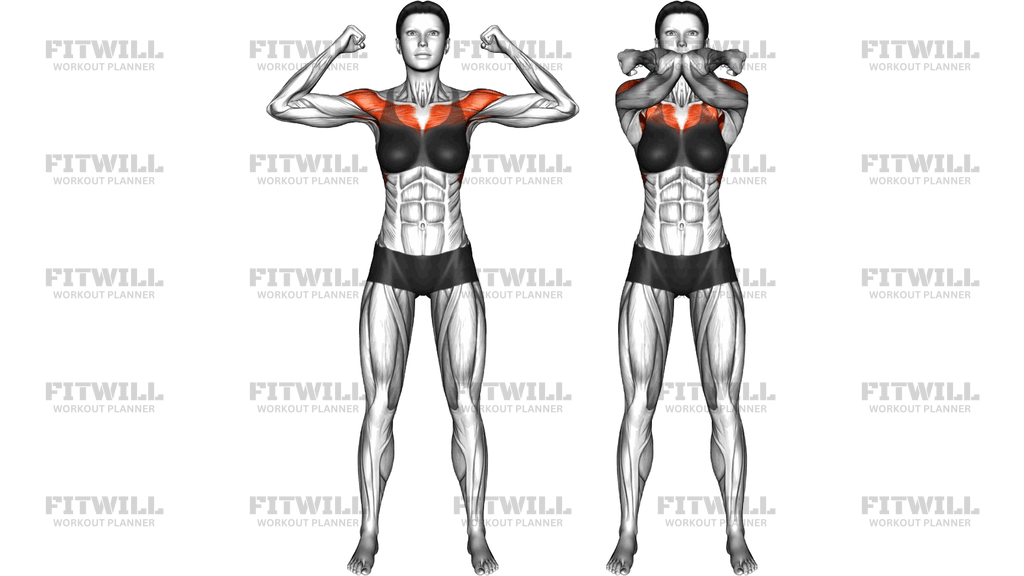
The Standing Elbow Push Up And Elbow Fly is a bodyweight chest exercise performed entirely with your own arms providing the resistance. You start standing with your elbows raised out to the sides at shoulder height, bent to roughly ninety degrees, then drive both elbows forward and together in front of your chest before sweeping them back out wide. The pressing-in phase works like a push up turned inside out, and the opening phase works like a fly, which is where the exercise gets its name.
Because there is no external load, the resistance comes from deliberately squeezing the pectorals as the elbows come together and controlling the return as they open. The front shoulders assist throughout, and holding the arms up at shoulder height for a full set quietly challenges the upper back, the rotator cuff area, and the muscles that keep your posture tall. It looks simple, but if you keep genuine tension in the chest the whole time, the burn arrives quickly.
This movement suits several situations. It is a solid warm-up for pressing days because it takes the shoulders and chest through horizontal adduction and abduction without load. It works as a filler or finisher when you want extra chest volume without equipment, and it is a practical option for travelers or anyone training in a small space where dumbbells and machines are not available. Beginners can also use it to learn what a chest squeeze is supposed to feel like before moving to pressing exercises.
Setup matters more than it appears to. Stand with feet about hip-width apart, ribs stacked over the pelvis, and raise the arms so the upper arms are level with the shoulders and parallel to the floor. If the elbows drop below shoulder height or the shoulders shrug toward the ears, the chest loses its line of pull and the traps take over. Keep the elbows bent at a fixed angle for the entire set; straightening them turns this into a different, much looser movement.
To execute well, think of pushing the elbows toward each other as if trying to touch them in front of your sternum, and squeeze the chest hard at that front position for a beat. Then open the elbows back out wide until you feel a comfortable stretch across the chest, keeping the same elbow bend and shoulder height. Move slowly enough that you could stop at any point of the arc; momentum is the enemy of a bodyweight exercise like this.
A few practical points will keep the set productive. Breathe out as the elbows come together and in as they open. Keep the fists relaxed rather than clenched, since a tight grip tends to creep tension into the neck. If you feel the work shifting into the shoulders or neck, lower the elbows slightly or reduce the range rather than forcing the elbows all the way together. Stop the set when the squeeze quality drops, not when your arms simply feel tired.
[ Workout Log & Planner ]
Put your next workout in Fitwill
Keep your plan and training log ready when you are.


Instructions
- Stand with your feet about hip-width apart, weight spread evenly across both feet, and your torso tall with ribs stacked over the pelvis.
- Raise both arms out to the sides and bend the elbows to ninety degrees so the upper arms are level with your shoulders and parallel to the floor, forearms pointing up and fists loosely closed.
- Draw the shoulder blades down slightly so the shoulders sit away from the ears, and brace the core to keep the torso from swaying.
- Exhale and press both elbows forward and in toward each other, keeping the ninety-degree bend, until the forearms nearly touch in front of your chest.
- Squeeze the chest hard at the front position and hold that contraction for one to two seconds.
- Inhale and open the elbows back out wide in a smooth arc, maintaining the same elbow bend and shoulder height, until you feel a stretch across the chest.
- Pause briefly at the wide position without letting the elbows drop or the shoulders roll forward.
- Continue pressing in and opening out for the desired number of repetitions, keeping constant tension rather than resting between reps.
- When the set is done, lower the arms slowly to your sides and roll the shoulders to release any tension that built up in the neck or traps.
Tips & Tricks
- The most common mistake is shrugging the shoulders as fatigue sets in, which shifts work from the chest to the upper traps; check your elbow height each rep and reset if they have crept up toward your ears.
- Do not let the elbows straighten as they come forward. A fixed ninety-degree bend keeps the chest loaded, while straightening arms turns the rep into a loose arm swing.
- If you cannot feel your chest working, slow the pressing phase down to a three-count and focus on squeezing the pecs as the elbows meet rather than just moving the arms.
- Keep the fists relaxed. Clenching hard tends to create neck and jaw tension over a long set without adding anything to chest activation.
- Avoid leaning the torso forward as the elbows drive in; if your chest starts chasing your hands, brace the core more and think of pressing the elbows around the torso instead of dropping your body toward them.
- The stretch position matters as much as the squeeze. Open only until you feel the chest lengthen comfortably; forcing the elbows far past your back line with no resistance adds nothing and can pinch the shoulder.
- Treat this as a tension exercise, not a speed drill. Fast reps let momentum do the work, and with no external load there is nothing left to resist.
- If your shoulders feel cramped at shoulder height, try the same pattern with elbows slightly lower, around mid-chest level, which is friendlier for many people and still trains the chest.
- Use this as a pre-press primer: one or two slow sets before bench or push up work helps you find the chest squeeze you want on the loaded sets.
Frequently Asked Questions
What muscles does the Standing Elbow Push Up And Elbow Fly work?
The primary muscles are the pectorals of the chest, which contract as the elbows press together and lengthen as they open. The front shoulders assist on every rep, and the upper back and shoulder stabilizers work to hold the arms at shoulder height for the whole set.
How is this different from a regular push up?
A push up moves your whole body against the floor, while here the resistance comes from actively squeezing the chest as the elbows come together. It is much lighter, so it works best as a warm-up, finisher, or learning tool rather than a main strength builder.
Is the Standing Elbow Push Up And Elbow Fly good for beginners?
Yes, it is a low-risk way to learn what a chest contraction feels like before progressing to push ups or pressing weights. Beginners should prioritize slow, deliberate reps over high numbers.
Why do my shoulders and neck get tired instead of my chest?
This usually means the elbows have dropped or the shoulders have shrugged up toward the ears, taking the chest out of a strong line of pull. Reset with the upper arms parallel to the floor, blades drawn gently down, and keep the fists relaxed.
How many reps should I do?
Because the load is only the tension you create, aim for quality contractions rather than a specific number. Somewhere around 12 to 20 slow reps works well for a warm-up set, and you can do 2 to 3 sets as a finisher.
Should my elbows stay bent the entire time?
Yes, keep roughly a ninety-degree bend from start to finish. Letting the arms straighten changes the exercise into an unresisted arm swing and takes tension off the chest.
Can I do the Standing Elbow Push Up And Elbow Fly if I have no equipment at home?
That is exactly the setting it was made for. All you need is enough room to stand with your arms spread wide, making it a reliable option for travel, hotel rooms, or small home workouts.
What can I substitute if standing arm circles at shoulder height bother my shoulders?
Try the same press-in and open-out pattern with the elbows at mid-chest height instead of shoulder height, which shortens the moment arm on the shoulder. Wall push ups or a light resistance band chest fly are also reasonable alternatives.
Should I hold the squeeze when my elbows come together?
A one to two second hold at the front position is worthwhile because that squeeze is essentially the entire resistance. Rushing past it turns the set into empty movement.
Can this exercise replace weighted chest flyes?
No, the resistance here is limited to what you can generate with an isometric squeeze, so it cannot match the overload of dumbbells or cables. Use it to complement pressing and flye work or when equipment is unavailable.