Pigeon Delt Raise
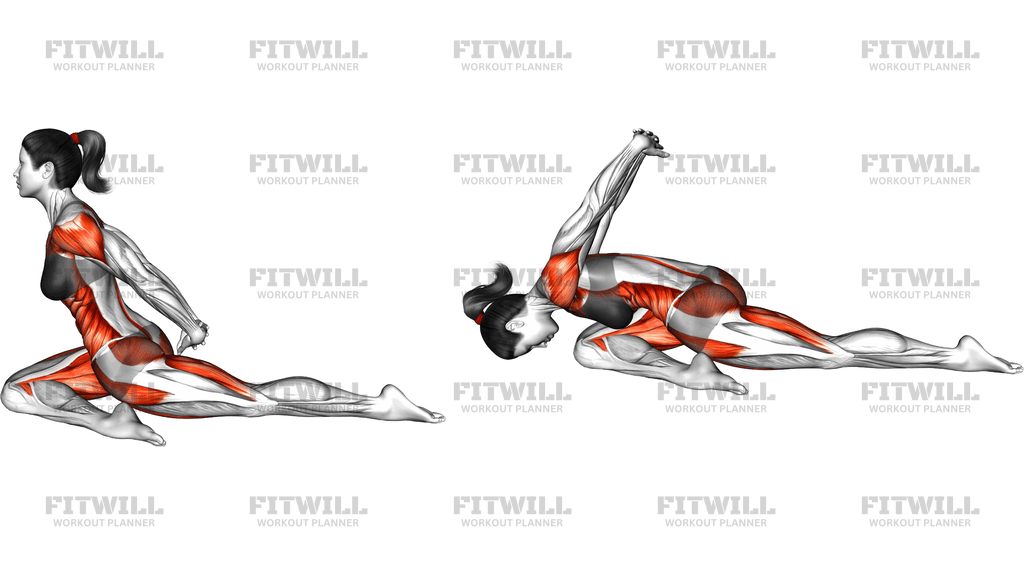
The Pigeon Delt Raise combines a classic pigeon-pose hip position with an arm raise behind the back, so you stretch the front of the shoulders and the chest while the hips are already opening underneath you. You start in a kneeling pigeon position on a mat, clasp your hands behind your lower back, then straighten and lift your arms away from your body as you fold your torso forward over the front leg. The result is a two-in-one stretch that targets the anterior delts and pecs through the raised arms while the glutes and hip rotators of the bent leg release.
This movement is especially useful for people whose shoulders live in a forward, rounded position all day, such as desk workers and drivers, because the clasped-hands raise pulls the shoulders back and down into the opposite range. It also suits lifters who press or bench frequently and need to restore shoulder extension after heavy pressing sessions, and anyone whose hips tighten from sitting. Because the hips are anchored in the pigeon position, you can hold the shoulder stretch comfortably without your lower body fighting you.
Setup matters more than depth here. The front shin angle determines how much hip rotation you get, and the height of your torso determines how far you can raise the arms without straining. If you fold too far forward before lifting the arms, the chest and shoulder stretch turns into a neck and lower-back compromise. Set the fold first, keep the spine long, and only then raise the arms to a height where the front of the shoulders feels a broad, even stretch rather than a pinching sensation at the joint.
To execute it well, move into the raise on an exhale, keep the elbows straight but not locked, and let the lift come from the shoulder blades drawing together rather than from arching the lower back. Breathe slowly and let the range increase over several breaths, not seconds. On a tight day, resting the hands on a towel or holding a strap between them gives the shoulders room to work into the position gradually.
Use this stretch after lower-body or pressing workouts, in evening mobility routines, or as part of a yoga-inspired cool-down. Hold each side for 30 to 60 seconds and always repeat on both hips. Back off immediately if you feel sharp sensation in the front of the shoulder, the knee of the folded leg, or the inner knee of the bent leg, and adjust the shin angle or place a cushion under the hip instead of pushing through discomfort.
[ Workout Log & Planner ]
Put your next workout in Fitwill
Keep your plan and training log ready when you are.


Instructions
- Place an exercise mat on the floor and sit on your heels briefly so you can set up the pigeon position with control.
- Slide your right knee forward toward your right wrist and lower the outer side of the right leg toward the floor; extend the left leg straight behind you with the top of the left foot resting on the mat.
- Square your hips toward the floor as much as possible and check that the right knee does not complain; if the right hip floats high, place a folded towel or cushion under it.
- Tall spine, then reach both hands behind your lower back and clasp your fingers together or hold a towel between your hands if your shoulders are tight.
- Draw your shoulder blades gently toward each other and brace the trunk lightly so the lower back stays long before any movement begins.
- Exhale, hinge the torso forward over the front leg, and simultaneously straighten the elbows and raise the clasped hands up and away from your back until the front of the shoulders and chest feel a broad stretch.
- Hold the top position for 20 to 40 seconds, breathing slowly into the ribs and letting the arms rise a little further with each exhale if comfortable.
- Inhale as you lower the arms and walk the torso back up to the upright pigeon position, keeping the hands clasped until the arms are down.
- Release the clasp, press back out of the pigeon position, shake out the hips, and repeat the full sequence on the other side.
Tips & Tricks
- A pinching feeling at the front of the shoulder usually means the arms are lifted too high too soon; lower the hands an inch or two and widen the clasp with a towel before going further.
- If the right hip hovers well above the floor in pigeon, support it rather than forcing it down; a lifted hip tilts the pelvis and steals range from the arm raise.
- Keep the neck in line with the spine as you fold. Craning the chin up to see forward is a common mistake that strains the neck while the shoulders are extended behind you.
- Bend the front knee less, or keep the shin closer to parallel with the front of the mat, if the knee reports any discomfort; the shoulder stretch does not require maximum hip rotation.
- Let the lift come from the shoulder blades squeezing together, not from arching the lower back; if your ribs flare and your belly drops toward the floor, you are borrowing range from the spine.
- Elbows straight but soft works better than locked elbows, because locking shifts tension into the elbow joint instead of the delt and chest tissue.
- Tight hamstrings in the extended back leg can tug the pelvis out of position; rest the back toes tucked under or let the knee bend slightly if the hips keep twisting.
- Move into the raise on an exhale every time; lifting the arms on a held breath tends to create tension exactly where you are trying to release it.
- Progress by time first, holding 30, then 45, then 60 seconds per side, before chasing a higher arm position.
Frequently Asked Questions
What muscles does the Pigeon Delt Raise stretch?
The primary targets are the anterior deltoids and the chest, stretched by the clasped-hands raise behind the back. The pigeon position simultaneously stretches the glutes and external hip rotators of the bent leg and the hip flexors of the extended leg.
Can beginners do the Pigeon Delt Raise?
Yes, with modifications. Place a cushion under the bent-leg hip, keep the front shin angled closer to the body, and hold a towel between the hands instead of clasping the fingers so the raise stays comfortable.
Why are my hands clasped behind my back during this stretch?
Clasping the hands fixes the arms at shoulder width and turns the lift into a pure shoulder-extension stretch, which targets the front delts and chest. It also prevents one arm from doing more work than the other.
Should I fold forward before or while raising my arms?
Raise the arms as you hinge forward, in one coordinated movement. Folding completely first usually collapses the chest and makes the arm raise feel cramped at the shoulder.
My front knee hurts in the pigeon position. What should I change?
Bring the front foot back toward your body so the shin is less parallel to the front of the mat, and support the hip with a cushion. Persistent knee sensation means back off entirely and choose a supine hip stretch instead.
How long should I hold the Pigeon Delt Raise?
Hold 20 to 40 seconds per side when starting out, breathing steadily, and build toward 60 seconds. Repeat on both sides for balance, even if one shoulder or hip feels looser than the other.
What can I use if I cannot clasp my hands behind my back?
Hold a towel, strap, or stick between your hands and widen your grip until both shoulders can extend without forcing. Narrow the grip gradually over weeks as the shoulders open up.
Is the Pigeon Delt Raise better before or after a workout?
It fits best after training or in a dedicated mobility session, when the muscles are warm and you can hold positions without rushing. Long static holds immediately before heavy pressing or squatting can temporarily reduce force output.
How is this different from a regular pigeon pose?
Regular pigeon pose focuses on the hips with the arms free for support. Adding the clasped-hands delt raise takes the arms out of the equation and loads the shoulder-extension range, so you address the front delts and chest at the same time as the hips.