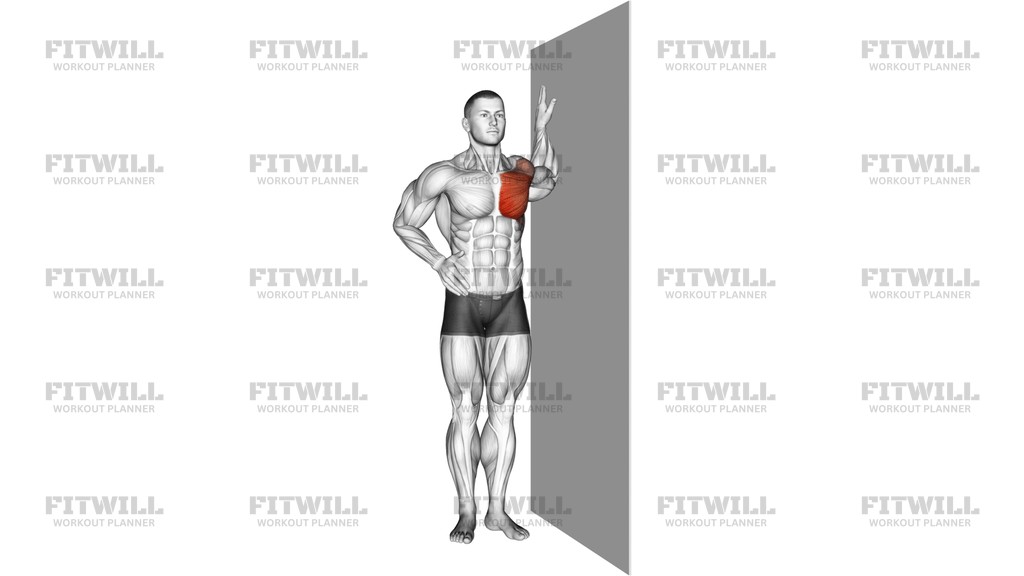
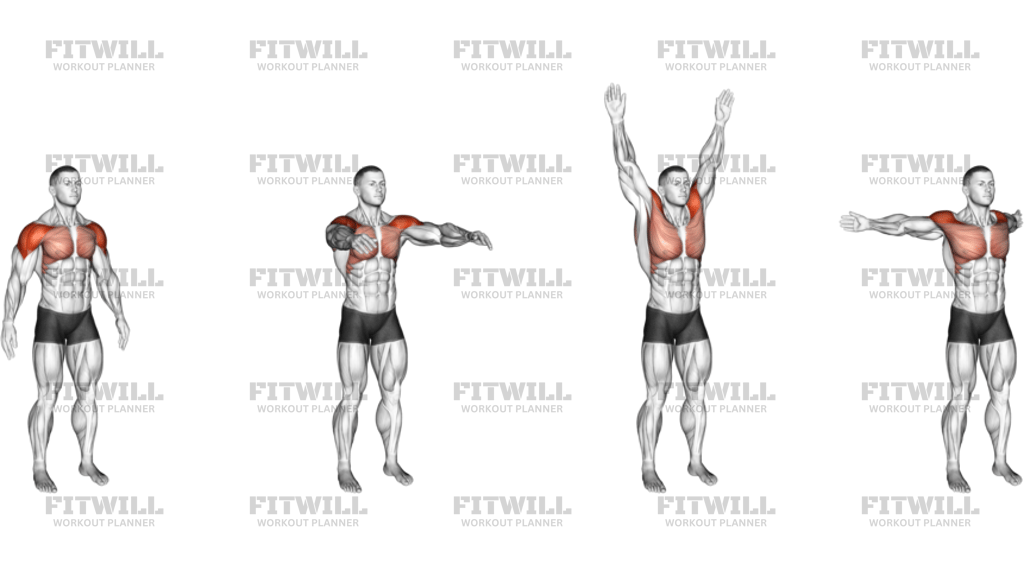
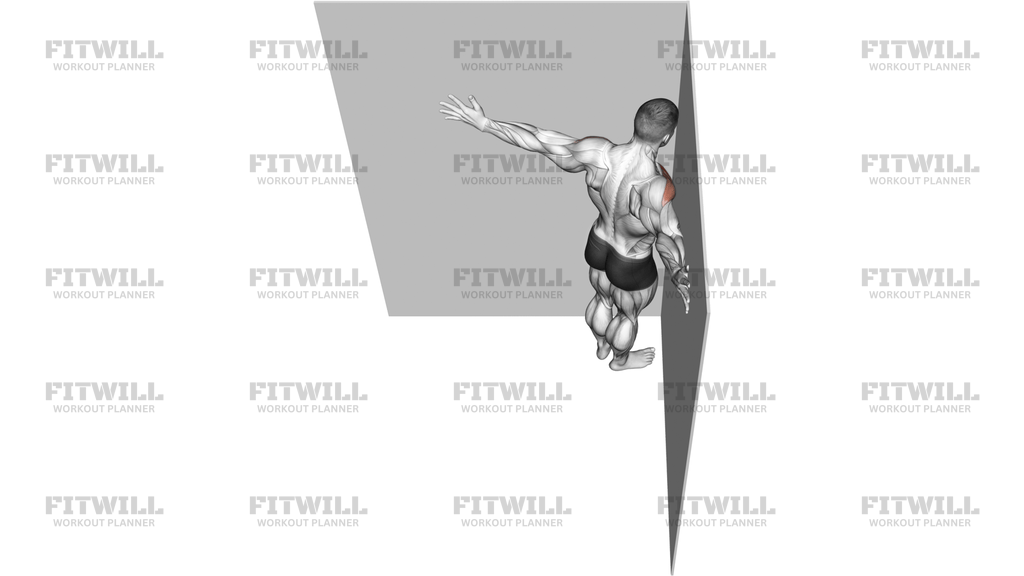
Standing Switching Arm Stretch
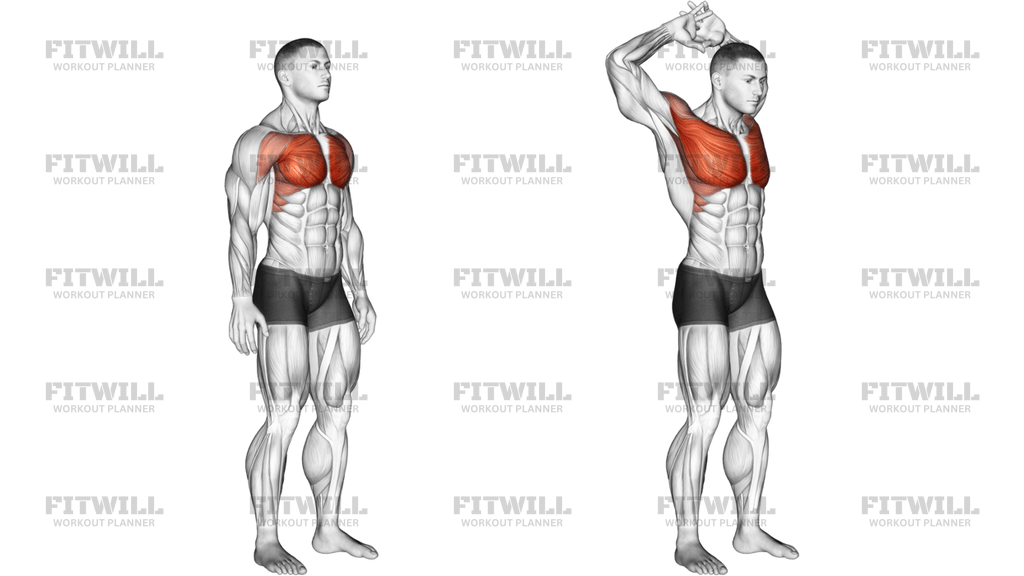
The Standing Switching Arm Stretch is a bodyweight flexibility drill performed from an upright stance, where one arm reaches overhead and bends so the hand drops behind the head and between the shoulder blades, while the opposite hand grips the raised elbow and gently draws it back and across. After holding on one side, you switch arms and repeat on the other, which is what gives the exercise its name. The standing position keeps the torso honest: with no bench or floor supporting you, the stretch stays honest and any leaning or twisting immediately shows up in your posture.
This stretch primarily targets the triceps along the back of the upper arm, but because the arm is fully overhead with the elbow pointed toward the ceiling, it also lengthens the lats, the shoulder muscles, and the tissues along the side of the ribcage. If you press the opposite hand slightly across the elbow rather than straight back, you can bias the stretch further down the arm and into the back of the shoulder, which many people find is exactly where their overhead mobility is limited.
It is a practical choice for anyone whose shoulders and arms take a regular beating: lifters after pressing or pulling sessions, swimmers and racket-sport players, office workers whose shoulders creep up toward their ears, and anyone whose elbows sit slightly bent all day. Because it needs no equipment and almost no space, it works equally well as part of a warm-up, a between-sets release on upper-body days, or a short cooldown routine.
Setup matters more than it looks. Stand tall with feet about hip-width apart, ribs stacked over the pelvis, and neck relaxed. If you arch your lower back or lean sideways to fake extra range, you shorten the very muscles you are trying to lengthen and add strain to the lumbar spine. Keeping the torso quiet forces the stretch into the shoulder and arm where it belongs.
To execute well, lift one arm, bend the elbow, and let the hand settle toward the upper back. Wrap the other hand around the working elbow and ease it a few centimeters back and slightly inward until you feel a clear but comfortable stretch along the back of the arm and into the armpit. Breathe slowly, hold for twenty to thirty seconds, release the elbow first, then straighten the arm gradually before switching sides. Never bounce or yank the elbow; a steady, patient pull does far more for range of motion than an aggressive one.
Two safety points are worth remembering. Keep the elbow of the stretching arm pointed upward rather than flared hard sideways, and if you feel any pinching at the front of the shoulder or sharpness at the elbow, reduce the pull or lower the elbow slightly. The stretch should feel like length, not compression or pain.
[ Workout Log & Planner ]
Put your next workout in Fitwill
Keep your plan and training log ready when you are.


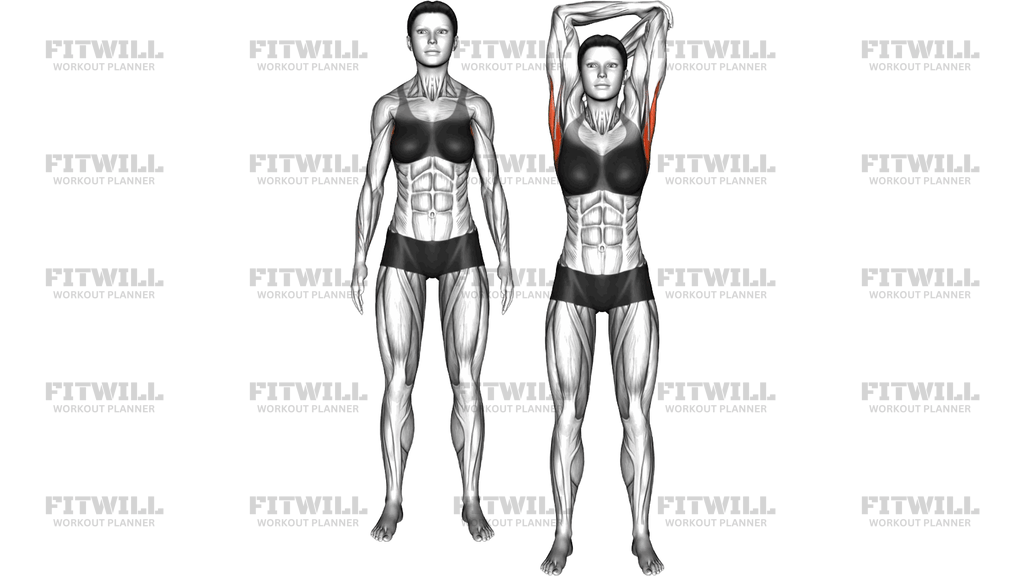
Instructions
- Stand upright with your feet hip-width apart, knees soft but not bent, and your abdominal muscles lightly braced so your ribs stay stacked over your pelvis.
- Raise your right arm straight overhead, then bend the elbow so your right hand drops down behind your head toward the base of your neck or upper back.
- Bring your left hand up and grip your right elbow, wrapping your fingers around it from the outside.
- Keep your head level and your neck relaxed; avoid jutting the chin forward or letting the shoulders shrug toward the ears.
- Gently pull the right elbow back and slightly toward the midline of your body until you feel a stretch along the back of the right upper arm and into the armpit or side of the torso.
- Hold the end position for 20 to 30 seconds while breathing slowly and evenly, letting the stretch deepen slightly with each exhale.
- Release your left hand first, then slowly straighten the right arm and lower it back to your side with control.
- Switch sides: raise and bend the left arm, grip the left elbow with the right hand, and repeat the same pull and hold.
- Complete one to two stretches per side, shaking out the shoulders between reps if they feel tight.
Tips & Tricks
- If your hand cannot reach far down your back, do not force it; simply holding the elbow overhead with a smaller bend still gives the triceps a useful stretch, and range improves over time.
- A common mistake is arching the lower back to push the elbow higher. Keep your ribs down and glutes lightly engaged so the stretch stays in the shoulder and arm.
- Watch for the head drifting forward to 'meet' the stretching arm. Keep the ears stacked over the shoulders and let the elbow move, not the neck.
- Pull the elbow back and slightly inward rather than straight sideways. Pulling straight out can pinch the shoulder joint instead of lengthening the triceps and lats.
- If the wrist of the bent arm aches, relax that hand completely instead of gripping or clenching it during the hold.
- Try both versions: pulling the elbow straight back biases the triceps, while pulling it slightly across behind the head reaches more into the back of the shoulder and lat.
- Do the stretch with both arms before deciding which side is tighter, and give the tighter side one extra hold rather than skipping it.
- Exhale as you deepen the pull. Holding your breath tenses the shoulders and shortens the stretch you are chasing.
- Warm shoulders stretch better. If you are cold, do a few arm circles or easy overhead reaches first so the pull does not feel abrupt.
Frequently Asked Questions
Which muscles does the Standing Switching Arm Stretch target?
The main target is the triceps on the back of the upper arm, with supporting stretch through the lats, shoulder muscles, and tissues along the side of the ribcage. Adjusting the direction of the elbow pull shifts emphasis between the triceps and the back of the shoulder.
How long should I hold each side of the Standing Switching Arm Stretch?
Aim for 20 to 30 seconds per side, and repeat once or twice if the shoulders feel particularly tight. Shorter holds of around 10 to 15 seconds work fine as a warm-up prime.
Why is the exercise done standing instead of seated?
Standing keeps the spine unsupported, so any leaning, arching, or twisting needed to fake extra range becomes obvious. This forces you to keep the torso tall and lets the stretch come genuinely from the shoulder and arm.
My hand will not reach behind my head far. Is that a problem?
No, limited range is normal at first. Bend the elbow as far as is comfortable and focus on the gentle elbow pull; consistency matters more than depth, and your range should improve over weeks of regular stretching.
Should I feel the Standing Switching Arm Stretch in my neck?
You may feel mild tension near the base of the neck because the upper trapezius works to hold the arm overhead, but you should not feel strain. Keep the head level and shoulders relaxed away from the ears, and reduce the pull if the neck complains.
What is the most common mistake in this stretch?
Arching the lower back and flaring the elbow out to the side to gain a false sense of depth. Both habits reduce the stretch on the triceps and lats and can irritate the lower back or the shoulder joint.
Can I do the Standing Switching Arm Stretch every day?
Yes, gentle stretching of the triceps and shoulders is well tolerated daily, especially if you sit at a desk or train pressing movements often. Keep the intensity comfortable rather than forcing maximal range each session.
What can I use if I cannot grip my elbow behind my head?
A towel is a good substitute: drape it over the shoulder of the working arm and hold the hanging end with the lower hand to apply the same gentle pull. You can also perform the stretch with the elbow bent less deeply until flexibility improves.
When is the best time to use this stretch?
It works well after pressing, pulling, or overhead sessions, as a cooldown for swimming and racket sports, and as a short reset during long workdays. As a warm-up, keep the holds brief and the pull light.
Is it safe if I have a shoulder or elbow injury?
If you have a current or recent shoulder or elbow injury, get clearance from a health professional first. Even without one, stop if you feel pinching at the front of the shoulder or sharp pain at the elbow, and reduce the pull rather than pushing through discomfort.