Lying Split Abductor
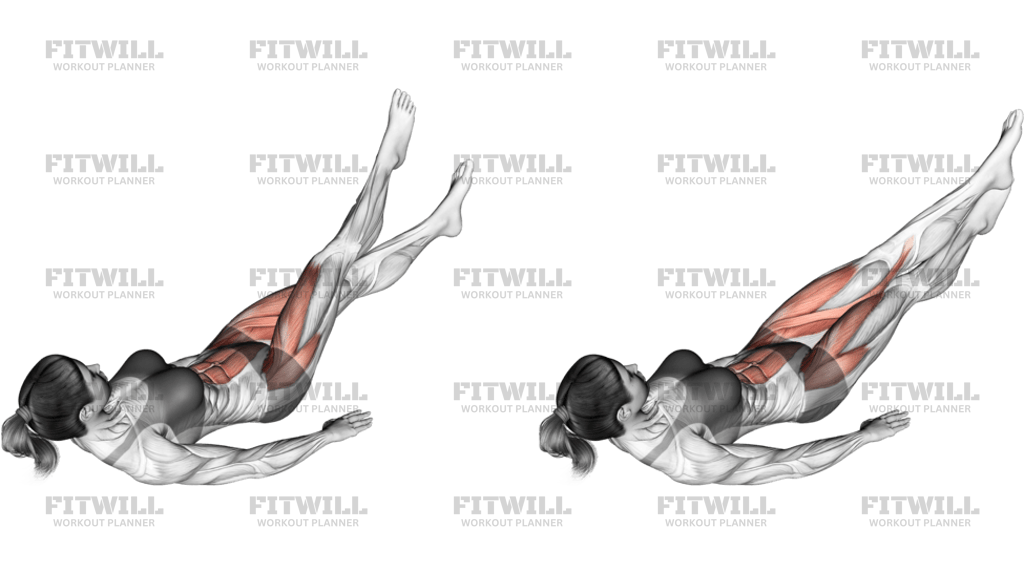
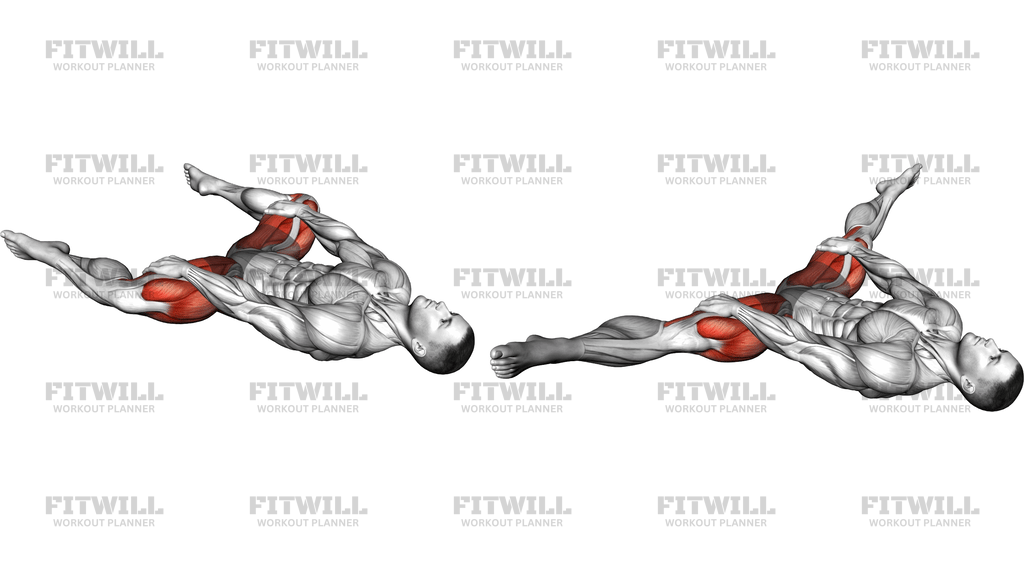
The Lying Split Abductor is a bodyweight hip movement performed on your back with both legs raised straight toward the ceiling. From that vertical position, you open your legs into an aerial split as far as your hips allow, then draw them back together under control. Because your legs work directly against gravity in a vertical plane, the hip abductors on the outside of each hip do the work on the way out while the inner thigh muscles control the return, making this a clean two-way challenge for the muscles that steer the femur at the hip joint.
This exercise is especially useful for anyone who wants to build active hip abduction strength without loading the spine or knees. Runners and cyclists often use it to address weak gluteus medius function, which shows up as knees caving inward during squats or single-leg activities. It also doubles as a mobility drill: the vertical leg position lengthens the hamstrings and adductors while you actively move through the split, so dancers, martial artists, and lifters chasing a deeper straddle benefit from it as well.
Setup matters more here than it might seem. If your lower back peels off the floor or your hips tilt as the legs travel outward, the work drifts away from the hip abductors and into the lumbar area. Lying supine with the legs supported vertically takes momentum and balance out of the equation, which is exactly why this version is a good starting point before moving to standing cable or band abduction variations.
To execute it well, keep both knees fully locked out and move the legs in a slow, even arc, as if tracing the two halves of a fan. The end position is a wide V overhead where you feel a strong stretch through the inner thighs and a clear contraction along the outer hips as you pull back to the start. Range of motion will depend on your flexibility, so open only as far as you can keep the knees straight and the pelvis quiet.
You will see this movement used in warm-ups, glute activation circuits, and flexibility sessions alike. A typical dose is two to four sets of ten to fifteen slow reps, or five to eight breaths held in the wide position if you are using it as a mobility hold. Since it requires no equipment beyond a mat and uses only leg weight as resistance, it scales well for beginners while still challenging experienced trainees who slow the tempo down.
The main safety points are simple: never force the split past a comfortable stretch, keep the movement smooth rather than bouncy, and stop if you feel pinching in the front of the hip or strain in the lower back. Controlled tempo and honest range are what make this exercise effective.
[ Workout Log & Planner ]
Put your next workout in Fitwill
Keep your plan and training log ready when you are.


Instructions
- Lie flat on your back on an exercise mat with both legs extended and together, arms resting at your sides or lightly on the floor for support.
- Raise both legs straight up until they are perpendicular to the floor, knees fully extended and feet stacked over your hips.
- Brace your abdominals and gently press your lower back toward the mat so your pelvis stays neutral before the legs move.
- Keeping both knees locked out, slowly separate your legs in a wide arc out to the sides, as if opening a split in the air.
- Continue until you feel a firm stretch across the inner thighs and groin, stopping before your pelvis tilts or your lower back arches off the mat.
- Pause briefly in the wide position, then pull the legs back together along the same arc, feeling the outer hips work to close the split.
- Exhale as the legs open and inhale as you draw them back together, keeping the breath steady throughout the set.
- Finish each rep with the legs together and vertical, then lower them back to the mat with control rather than dropping them.
- Reset your back position between sets if needed, then repeat for your target reps.
Tips & Tricks
- The most common fault is bending the knees as the legs open, which shortens the lever and hides tight hamstrings; if the knees keep softening, reduce the width of the split instead.
- If your lower back lifts off the mat as the legs separate, you have gone past your available hip range; place a hand on your abdomen to monitor and narrow the arc until the pelvis stays still.
- Point your toes toward the ceiling rather than letting the feet flop outward, so the arc stays driven by the hips and not by ankle rotation.
- The inner thighs will often feel the strongest sensation in this exercise because they are stretching under load, but the actual work of closing the legs comes from the outer hip muscles, so do not chase the stretch at the expense of control.
- Count a slow two to three seconds on the way out and two seconds on the way in; momentum from fast swinging legs is the main reason people fail to feel this movement in the right place.
- If one leg drifts farther than the other, which is common with hip asymmetries, slow down and consciously match the travel of both feet on every rep.
- Tight hamstrings can limit the vertical leg position before the split even starts; slightly soften the angle by bringing the feet a few inches toward your head until flexibility improves.
- Avoid bouncing at the end of the split to gain width; repeated ballistic stretching in this position irritates the groin far more often than it improves range.
- To use this as a flexibility hold instead of a strength rep, open to your comfortable end range and hold for five to eight slow breaths, keeping the legs active rather than fully relaxed.
Frequently Asked Questions
Which muscles does the Lying Split Abductor work?
The primary movers are the hip abductors, mainly the gluteus medius and outer hip muscles, which bring the legs back together from the split. The adductors and hamstrings work and stretch on the way out, and the core stabilizes the pelvis throughout.
Is the Lying Split Abductor suitable for beginners?
Yes, it is one of the most beginner-friendly hip abduction exercises because your legs are supported vertically and no external load is involved. Beginners should simply use a narrower split and prioritize keeping the knees straight and the lower back on the mat.
Why are the legs raised straight up instead of moving on the floor?
The vertical position makes the legs work directly against gravity in both directions and removes floor friction, so the abductors and adductors are active through the whole arc. It also lets you see and feel whether one leg is traveling farther than the other.
I feel this mostly in my inner thighs. Is that wrong?
No. The adductors are under a strong stretch as the legs open, so a pulling sensation in the groin is normal. Just make sure you also feel the outer hips contracting on the way back in, which confirms the abductors are doing their job.
How wide should my split be during the Lying Split Abductor?
Open only to the point where both knees stay straight and your pelvis and lower back remain still on the mat. A controlled three-quarter split beats a forced full split with an arching spine every time.
Do I need a mat for this exercise?
A mat is recommended rather than required. It cushions your spine and tailbone and gives you a clearer reference for whether your lower back is staying in contact with the floor.
What is the most common mistake with this movement?
Using momentum, either by swinging the legs apart quickly or bouncing at the widest point. Slow the tempo down and the exercise becomes noticeably harder and more targeted.
How is this different from standing cable or band abduction?
The lying version moves both legs simultaneously against gravity with no balance demand, while standing versions load one leg at a time and challenge stability more. The lying split is a good foundation to build strength before progressing to single-leg standing work.
Can I use the Lying Split Abductor as a stretch instead of a strength exercise?
Yes. Open to your comfortable end range and hold for five to eight breaths with the legs actively reaching, which makes it a useful straddle mobility drill for dancers and lifters.
Is it safe if I feel pinching at the front of my hip?
A mild stretch is fine, but a sharp pinch in the front of the hip or groin is a signal to reduce the range or stop. If it persists at smaller ranges, it is worth getting assessed before continuing.