Standing Triple Arm Cross
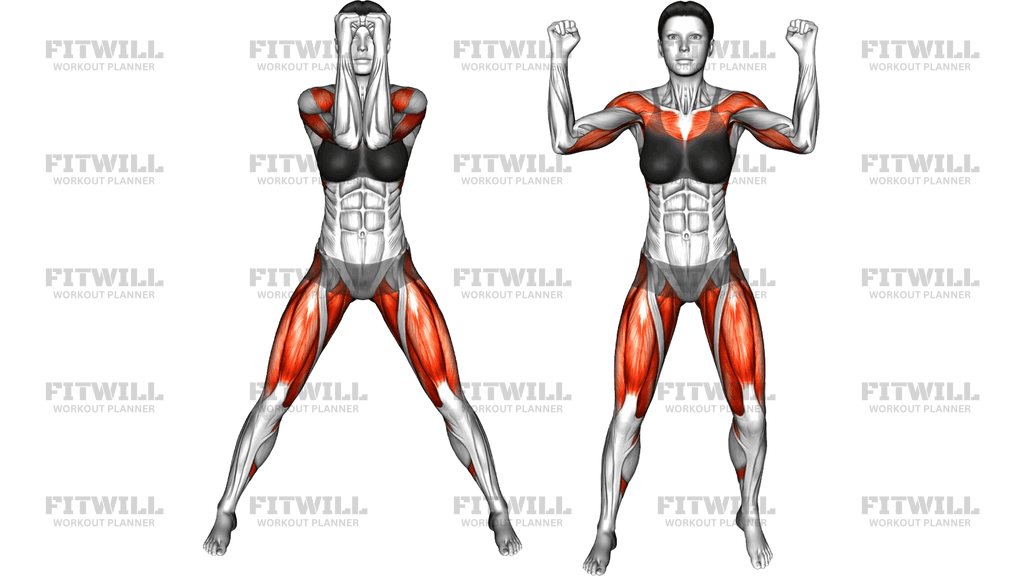
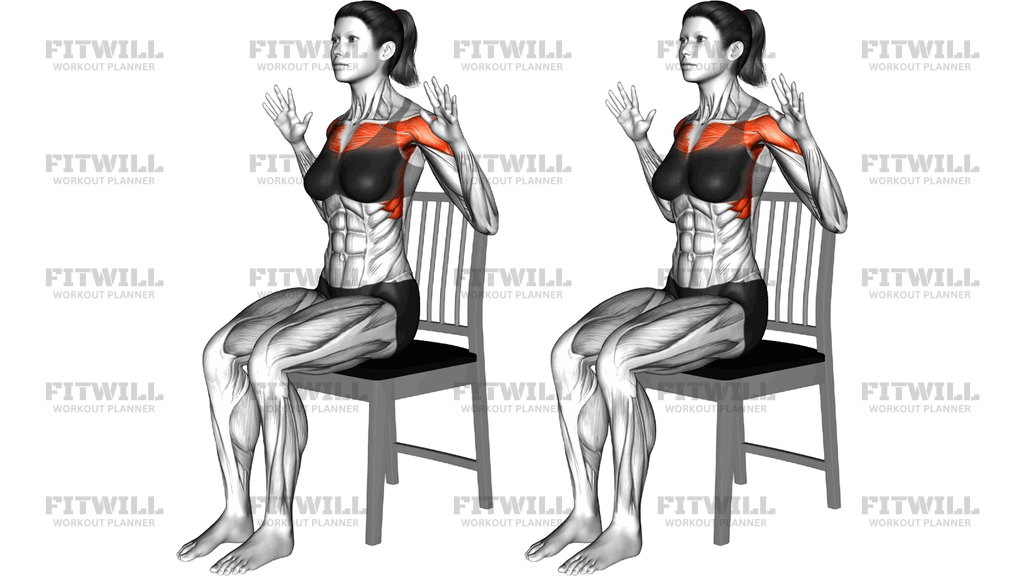
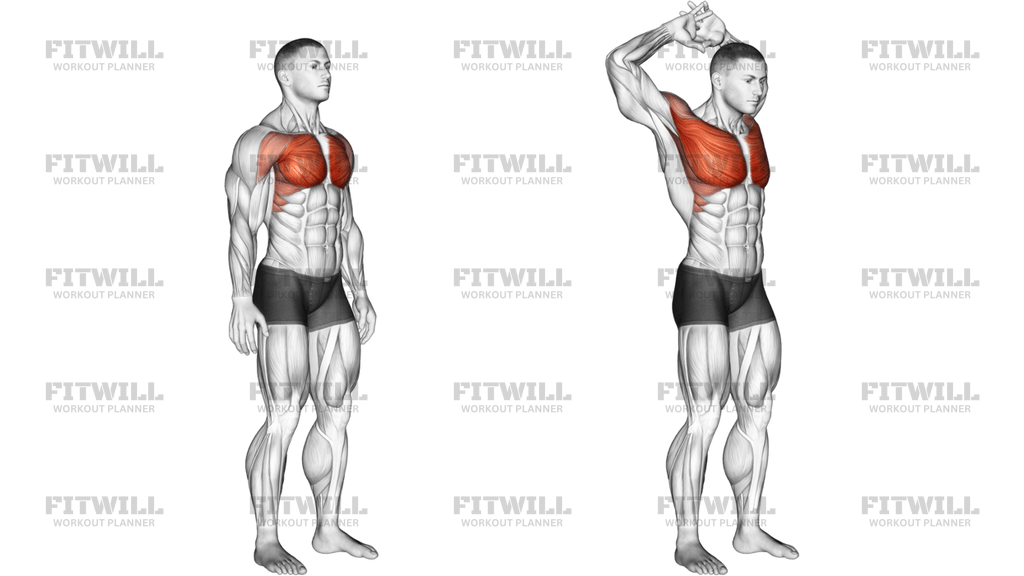
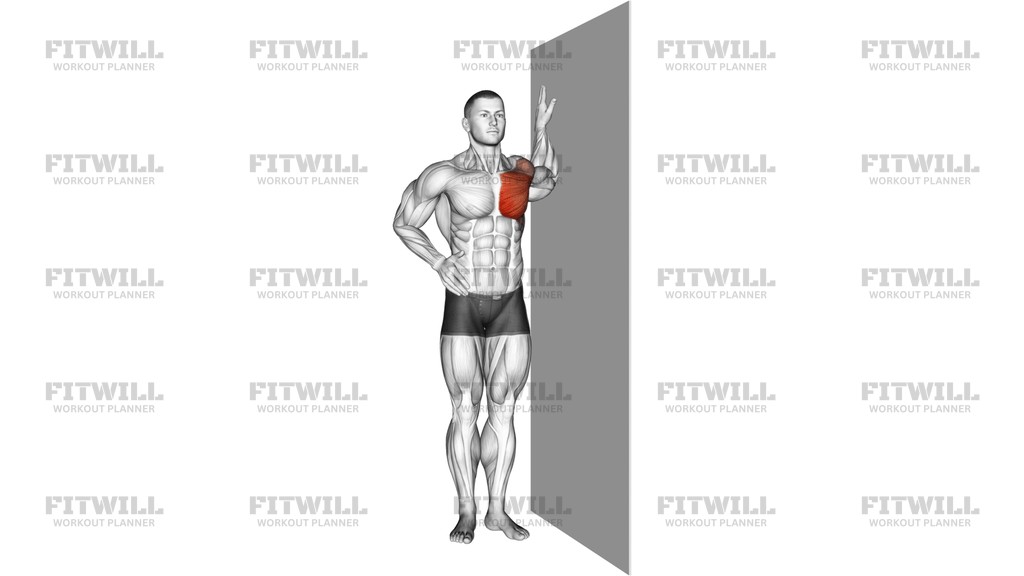
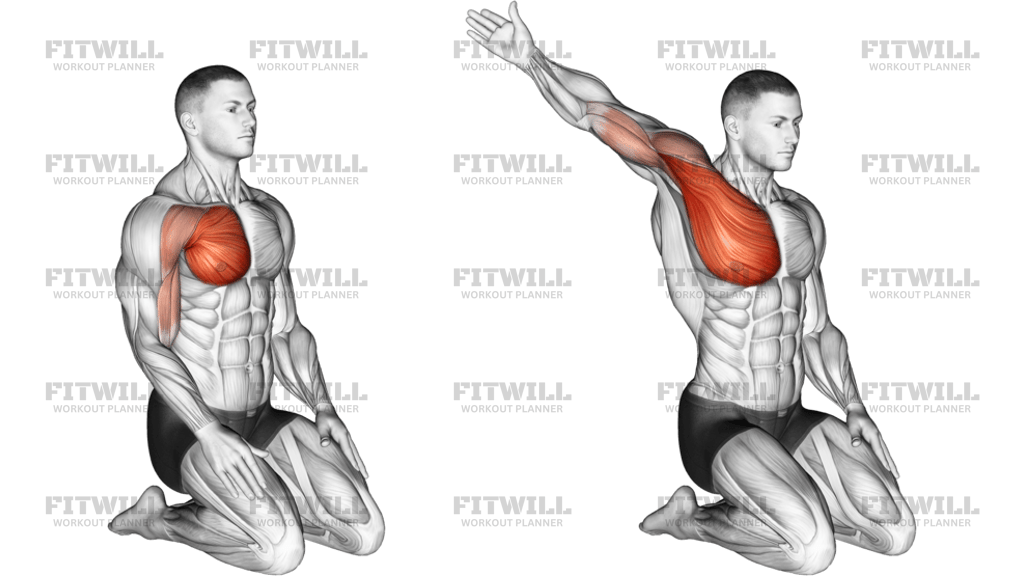
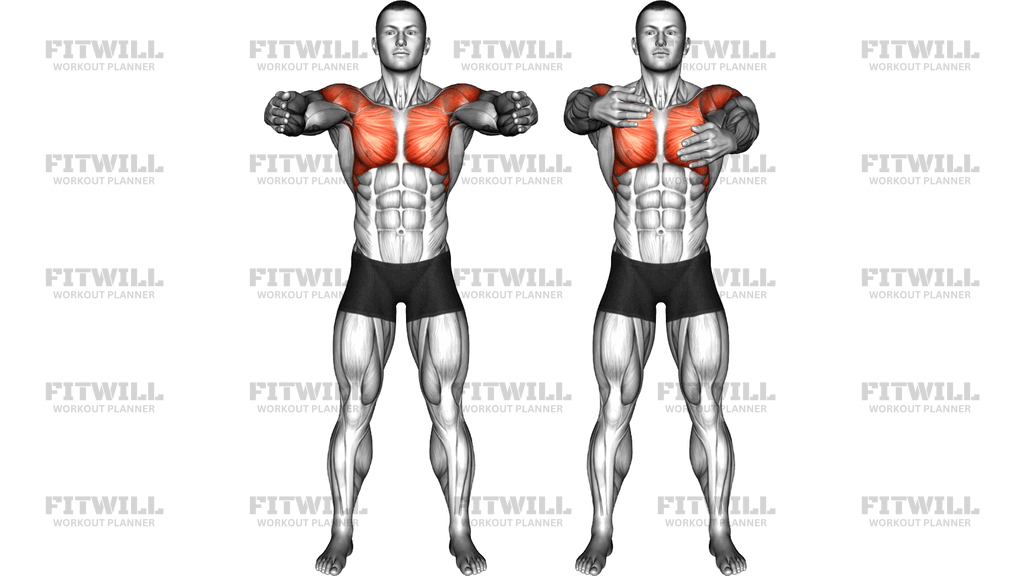
The Standing Triple Arm Cross is a bodyweight chest exercise performed from a tall standing position with the arms raised to shoulder height out to the sides. From there, you sweep both arms horizontally across the front of your body in three repeated crossing motions, squeezing the chest as the hands pass each other, then opening the arms back out to the starting width. The three successive crosses make up one repetition, which is where the movement gets its name.
What makes this exercise interesting is that it trains the chest through horizontal adduction — the same basic action as a cable crossover or flye — but with no external load. Instead of weight, the resistance comes from deliberately squeezing the pectoral muscles as the arms cross, so the quality of the contraction matters far more than speed. The front shoulders assist throughout, and holding the arms at shoulder height also gives the upper back and shoulder stabilizers an isometric job keeping everything elevated.
Because there is no equipment and no joint loading, the Standing Triple Arm Cross works well as a warm-up before pressing days, as an activation drill to help you feel your chest working before bench press or flyes, and as a burnout or high-repetition finisher at the end of a chest session. It is also a practical option when traveling or training at home, since all you need is enough room to extend both arms out to the sides.
Setup is simple but worth getting right. Stand with your feet about hip-width apart, knees soft rather than locked, and your torso upright. Raise both arms straight out to the sides until they are level with your shoulders, palms facing forward. From that wide position, each cross should travel at chest height, not up near your face or down by your waist, so the pectorals — not the shoulders — stay in their strongest line of pull.
Execute each cross by exhaling and sweeping both arms toward the midline of your chest, aiming to overlap your hands or forearms slightly past center while actively squeezing the pecs. Open back out with control until you feel a comfortable stretch across the chest, then cross again. Avoid letting the shoulders shrug up toward the ears or the torso lean and rotate to help the arms across; the movement should come from the shoulder joints with the trunk staying quiet.
The main pitfall with a no-load movement like this is rushing. Fast, floppy arm swings do very little for the chest. Slow the tempo down, make the squeeze at the crossover point the focal point of every rep, and treat the final cross of each set of three as the hardest contraction of the three. Done this way, the Standing Triple Arm Cross is a low-risk, surprisingly effective way to wake up and fatigue the chest.
[ Workout Log & Planner ]
Put your next workout in Fitwill
Keep your plan and training log ready when you are.


Instructions
- Stand upright with your feet about hip-width apart, knees slightly soft, and your core braced so your torso does not sway.
- Raise both arms straight out to your sides until they are level with your shoulders, palms facing forward and elbows fully but comfortably straight.
- Pull your shoulder blades down slightly so your shoulders stay away from your ears throughout the set.
- Inhale, then exhale as you sweep both arms horizontally across your chest at nipple height, overlapping your hands past the midline.
- Squeeze your pectoral muscles hard at the crossover point, holding the crossed position for a brief moment.
- That first cross counts as one of three — open your arms back out to shoulder width under control until you feel a light stretch across the chest.
- Perform the second and third crosses the same way, keeping the same chest-height path and squeezing slightly harder on the third.
- After the third cross, return to the wide starting position and take a breath before starting the next repetition of three.
- Keep your chin level and your torso facing straight ahead; do not rotate or lean your body to help the arms cross.
- Complete your set, then lower the arms slowly to your sides rather than dropping them.
Tips & Tricks
- The most common mistake is swinging the arms quickly without squeezing — slow each cross down to about one to two seconds and make the pec contraction, not the arm motion, the point of the rep.
- Keep the crossing path at chest height. If your hands travel up toward your chin or down toward your belly, the front shoulders take over and the chest loses its best line of pull.
- If you feel the work only in the front of your shoulders, turn your palms to face forward as the arms open and think about pressing your arms inward toward each other rather than just swinging them together.
- Do not shrug. If your shoulders creep toward your ears as the set gets tiring, reset them down and back before continuing.
- Cross slightly past the midline so the hands or forearms overlap; stopping short at center shortens the range and weakens the squeeze.
- Keep your knees soft. Locking the knees while standing still for long sets can make you light-headed, especially with the repeated breathing pattern of exhaling on each cross.
- Use this as a pre-press activation drill: two or three easy sets of the Standing Triple Arm Cross before bench pressing can help you feel your chest engage when the weight goes on.
- To raise the difficulty without equipment, pause for a full two-second squeeze on each cross, or add a light resistance band looped behind your upper back and held in each hand.
- If your shoulders feel pinched when the arms open wide, reduce the opening range slightly — stop just short of full shoulder-height extension and keep the movement pain-free.
Frequently Asked Questions
What muscles does the Standing Triple Arm Cross work?
The pectorals are the primary movers, since crossing the arms in front of the chest is horizontal adduction. The front shoulders assist, and the upper back and shoulder stabilizers work isometrically to hold the arms at shoulder height.
Why does the Standing Triple Arm Cross use three crosses per repetition?
The three successive crosses let you build the squeeze rep by rep, with the final cross typically being the strongest contraction. It also extends time under tension without needing any load.
Can beginners do the Standing Triple Arm Cross?
Yes. It requires no equipment and no load, so beginners can learn it safely. The key coaching point is moving slowly and focusing on the chest squeeze rather than arm speed.
Can the Standing Triple Arm Cross build muscle without weights?
It can contribute to muscle endurance and help you learn to feel and contract the chest, but the resistance is limited by your own arm weight. For significant chest growth, use it alongside loaded pressing and flye movements.
Where should my hands cross during the Standing Triple Arm Cross?
At chest height, roughly level with your nipples. Crossing near the face or waist shifts the work away from the pecs and toward the shoulders at a weaker angle.
Why do my shoulders burn more than my chest during this exercise?
You are likely rushing the crosses or letting the elbows drift so the arms move forward rather than inward. Slow down, keep the path strictly horizontal at chest level, and think about squeezing the arms toward each other with the pecs.
What can I use instead of the Standing Triple Arm Cross if I want more resistance?
Cable crossovers, resistance band chest flyes, or dumbbell flyes all train the same horizontal adduction pattern with added load. A light band looped behind the upper back is the closest low-equipment substitute.
Should I use the Standing Triple Arm Cross as a warm-up or a finisher?
Both work. As a warm-up, do two or three smooth sets to activate the chest before pressing. As a finisher, take a higher-rep set to fatigue after your main chest exercises.
Is it safe to do the Standing Triple Arm Cross with shoulder problems?
Because it is unloaded and controlled, it is generally gentle on the joints, but anyone with a current shoulder injury should reduce the opening range and stop if they feel pain. Check with a qualified professional before returning to training after an injury.