Sitting Hip Mobilization On Exercise Ball
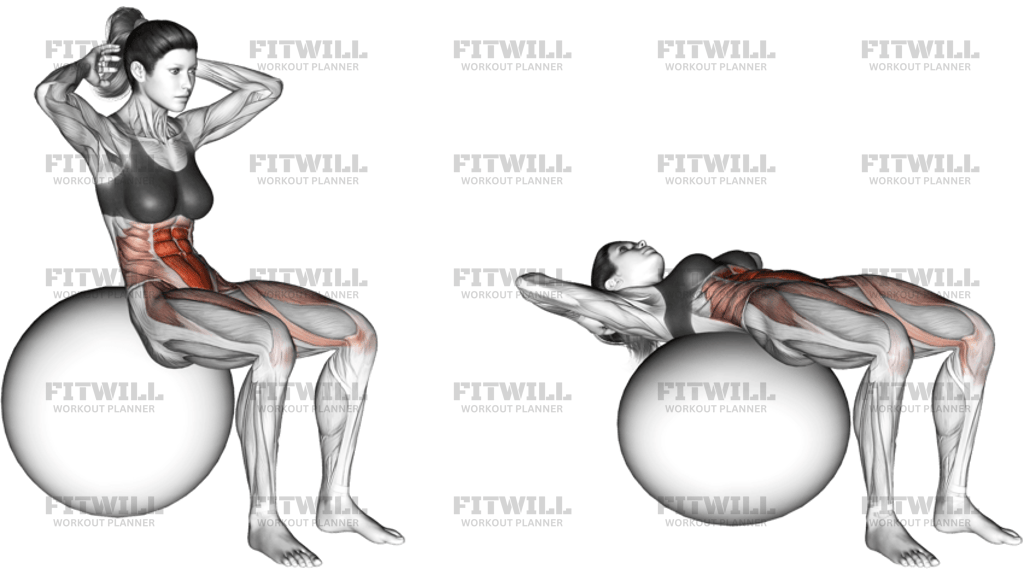
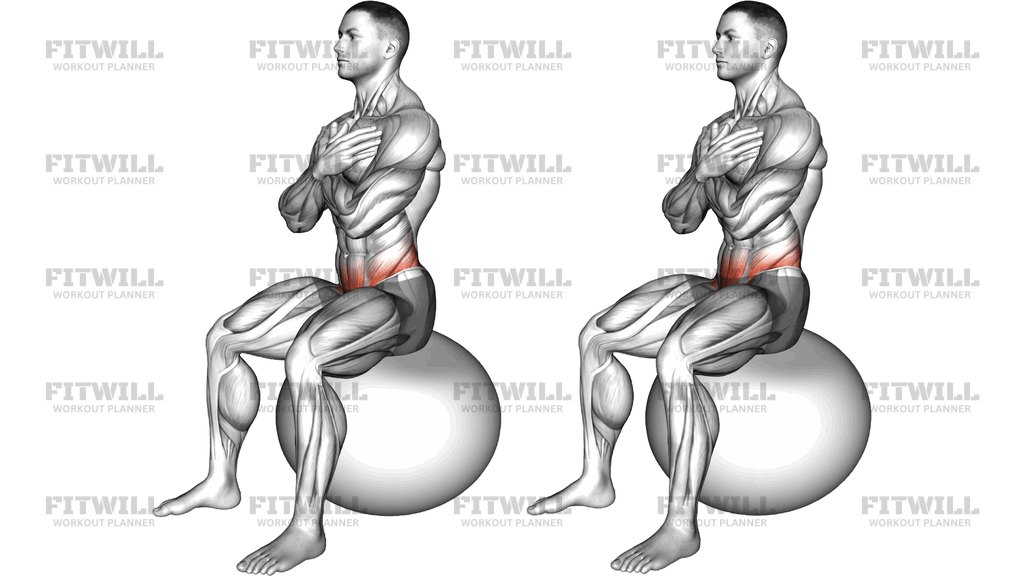
Sitting Hip Mobilization On Exercise Ball is a low-load mobility drill performed while seated on a stability ball with the arms crossed over the chest. Instead of stretching a muscle in a static hold, you use gentle pelvic tilting and controlled hip shifting to take the hip joints through their natural range of motion while the ball rolls beneath you. The highlighted working area sits deep at the front of the hip, where the hip flexors and deep core muscles control the pelvis as it tilts forward, back, and side to side.
This drill is especially useful for people who spend long hours in a chair. Prolonged sitting keeps the hips in one fixed position, and the hip flexors adaptively shorten while the glutes and deep core become less responsive. Sitting on an unstable ball and deliberately mobilizing the hips reintroduces movement into joints that have been held still, and the rolling surface lets you explore small ranges without loading the spine or knees.
The setup matters more than it looks. The ball height should place your thighs roughly parallel to the floor with feet flat, because a ball that is too high or too low changes the hip angle and makes the tilt harder to feel. Crossing the arms over the chest removes the temptation to push off the thighs and forces the trunk to stabilize itself, which is exactly what makes the drill effective for both hip mobility and core control.
Execution is slow and deliberate. From an upright seated position, tilt the pelvis forward and backward so the ball rolls a few centimeters under you, then progress to small circles or side-to-side shifts. The movement should come from the pelvis and hips, not from bending the upper back or craning the neck. Keep the ribcage stacked over the pelvis and let the breath stay relaxed throughout.
Use this drill as a movement break during the workday, as part of a warm-up before squats, deadlifts, or running, or as a gentle re-introduction to exercise after long periods of inactivity. Because it is body weight only and low intensity, it suits beginners, older adults, and anyone managing stiff hips, provided the ball is stable and the movements stay pain-free.
Fitwill
Log Workouts, Track Progress & Build Strength.
Achieve more with Fitwill: explore over 9600 exercises with images and videos, access built-in and custom workouts, perfect for both gym and home sessions, and see real results.
Start your journey. Download today!




Instructions
- Choose a stability ball sized so that when you sit on it, your knees bend to about 90 degrees and both feet rest flat on the floor.
- Sit on the center of the ball with feet hip-width apart, shins vertical, and press the feet lightly into the floor for balance.
- Cross your arms over your chest with each hand touching the opposite shoulder, and sit tall so your ribcage stacks over your pelvis.
- Gently brace the deep core as if preparing for a light nudge, keeping the shoulders relaxed and the gaze forward.
- Tilt the pelvis forward by letting the belly ease toward the thighs, feeling the ball roll slightly forward under you as the hips flex.
- Tilt the pelvis backward by tucking the tailbone under, rounding the low back just slightly and letting the ball roll back beneath you.
- Continue moving between the forward and backward tilts in a slow, smooth rhythm, staying within a range that feels easy and pain-free.
- Breathe steadily throughout, inhaling as you tilt forward and exhaling as you tuck back, without holding your breath.
- After several repetitions, add small side-to-side shifts or gentle hip circles if the front-and-back motion feels comfortable.
- Finish by returning to a neutral upright pelvis, sitting still for a few breaths before standing carefully off the ball.
Tips & Tricks
- If you wobble noticeably, widen your stance to shoulder-width and place the ball against a wall until your balance improves.
- The most common mistake is bending from the upper back instead of tilting the pelvis; if your shoulders round forward, the movement is coming from the wrong place.
- Keep the tilt small at first. A range of a few centimeters of ball travel is enough to mobilize the hips when done with control.
- Do not let the heels lift off the floor during the tilt; planted feet give you the anchor the pelvis needs to move independently.
- If you feel pinching at the front of the hip when tilting forward, reduce the range rather than pushing through the discomfort.
- A slightly deflated ball is easier to control than a fully inflated one, so let some air out if the surface feels too twitchy.
- Avoid letting the head and neck lead the movement; the eyes stay level and the head travels with the trunk, not ahead of it.
- Use this drill before heavy lower-body training to wake up the hips, but keep it under two or three minutes so it energizes rather than fatigues you.
Frequently Asked Questions
Which muscles does Sitting Hip Mobilization On Exercise Ball work?
The primary working area is the hip flexors at the front of the hip, particularly the iliopsoas, which controls the pelvic tilt. The glutes, lower abs, and small muscles along the lower back work continuously to keep you balanced on the ball.
Is this drill a stretch or a strength exercise?
It is best classified as a mobility drill with a light stability component. It mobilizes the hip joints through controlled movement while the trunk muscles work isometrically to keep you centered on the ball.
What size stability ball should I use for Sitting Hip Mobilization On Exercise Ball?
Pick a ball that lets you sit with thighs roughly parallel to the floor and feet flat. For most adults this means a 55 to 65 centimeter ball, adjusted for your height.
Why are the arms crossed over the chest during this movement?
Crossing the arms prevents you from bracing on your thighs and forces the pelvis and trunk to do the work. It also makes it easier to notice when you start substituting with your upper back instead of tilting from the hips.
I feel the movement mostly in my lower back instead of my hips. What am I doing wrong?
You are likely tilting too far or rounding from the spine rather than hinging at the pelvis. Shrink the range, sit taller, and focus on moving the tailbone rather than the shoulders.
Can beginners do Sitting Hip Mobilization On Exercise Ball safely?
Yes, it is one of the gentlest ball exercises available because it uses body weight and small ranges. Beginners should start near a wall or sturdy chair for a handhold until they feel steady.
How long should I spend on this drill in one session?
One to two minutes of continuous, slow tilting is enough for most people. You can repeat it a few times a day, especially if you sit for long stretches.
What can I use if I do not have a stability ball?
Seated pelvic tilts on the edge of a firm chair or bench train the same motion, though you lose the rolling, balance-challenging surface that makes the ball version unique.
Should I feel soreness the next day from this exercise?
Significant soreness is unlikely given the low load. If your hips ache afterward, you probably moved through too large a range or spent too long on the drill in your first session.
Is it safe to do this exercise if my hips click or pop?
Painless clicking during controlled movement is usually harmless, but stop if you feel pain, catching, or sharp pinching. Reduce the range first, and check with a qualified professional if the sensation persists.