Standing Single Arm Circle With Torso Twist
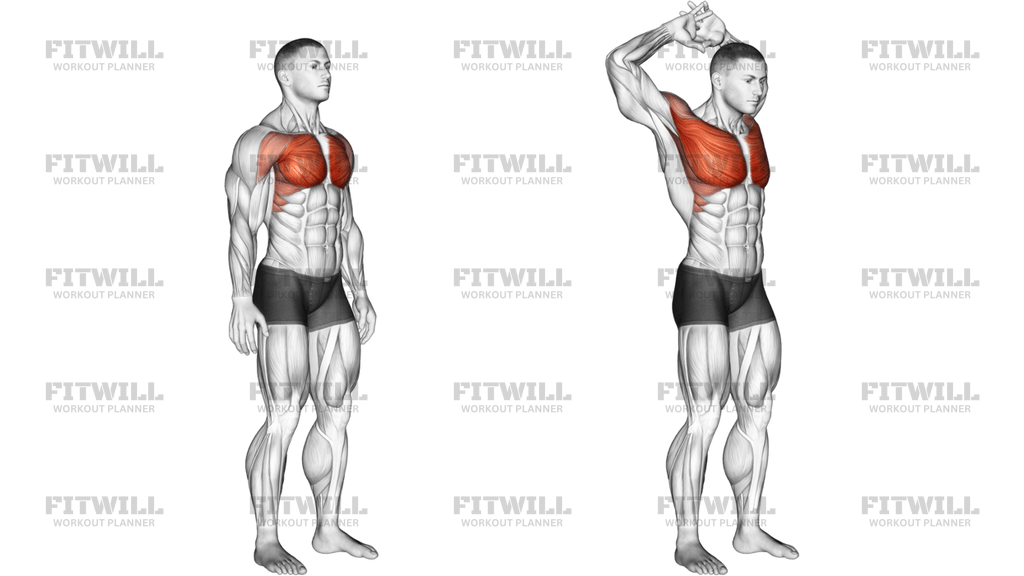
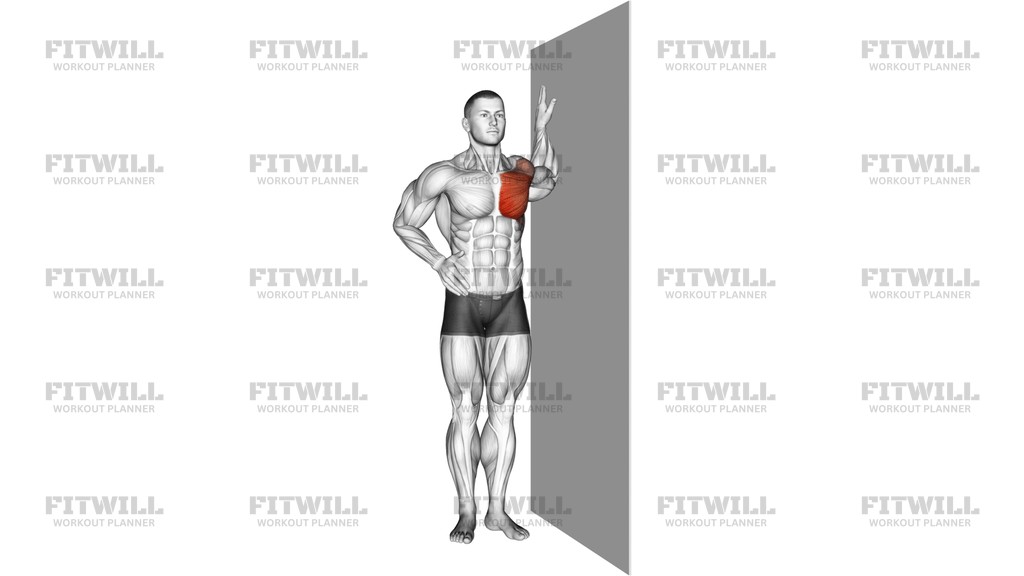
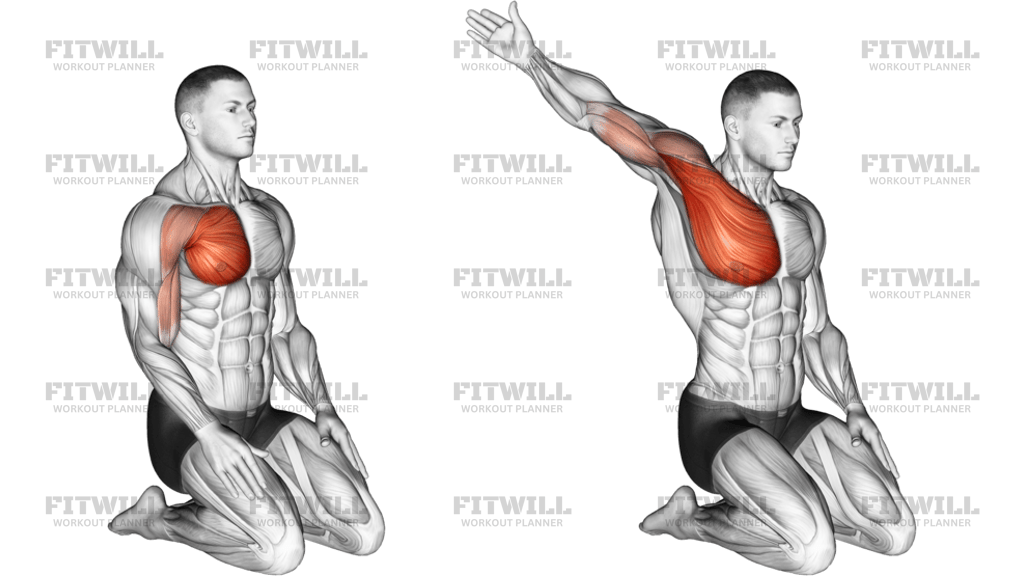
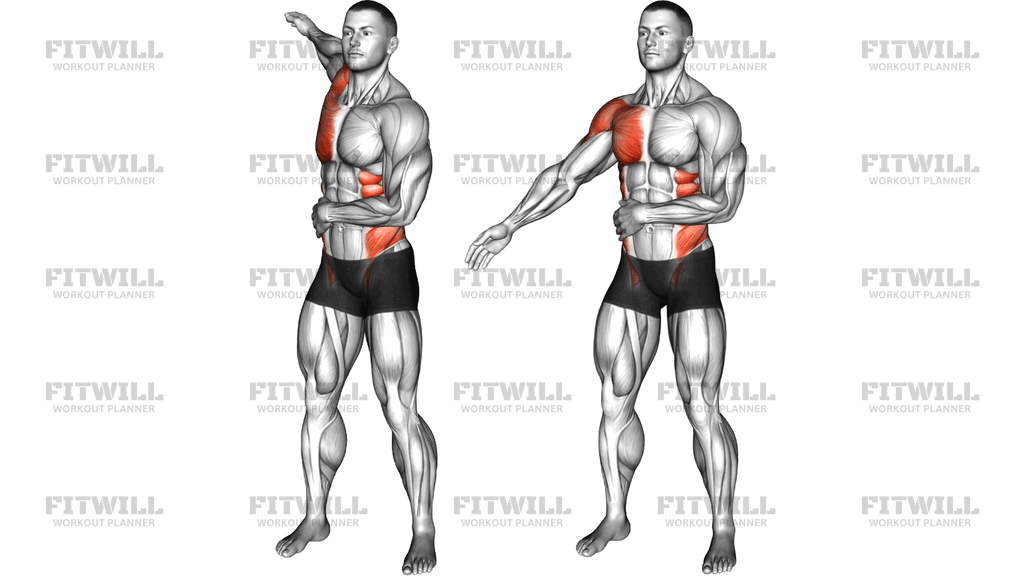
The Standing Single Arm Circle With Torso Twist is a dynamic mobility drill performed entirely with body weight. You stand tall with one hand braced against your waist or abdomen, extend the other arm out to the side, and sweep it in a large, continuous circle while your torso rotates with the arm. The traveling arm swings across the front of your body, up overhead, out wide, and back down, which makes it quite different from a standard arm circle where the shoulders stay square.
Because the trunk rotates with each revolution, this movement combines an active chest and shoulder stretch with rotational work for the obliques. The working arm lengthens the pectoral muscles every time it sweeps behind the midline, while the twist loads and elongates the obliques on both sides of the waist. The front of the shoulder and the muscles that control the arm through a big arc also get a gentle, rhythmic warm-up rather than a static hold.
Setup matters more than it looks. Keep your feet planted roughly shoulder-width apart with a soft bend in the knees, and keep the free hand pressed against your waist so the rotation comes from your trunk, not from your hips drifting. If your feet turn with the twist, you lose most of the stretch across the chest and waist, so treat the lower body as the anchor while everything above the waist moves.
Execute the circle at a moderate, smooth pace. Let the extended arm lead and the torso follow, keeping the head up and the eyes forward rather than chasing the hand. The circle should be as large as feels comfortable through the shoulder, not so big that you pinch or strain at the top. One complete revolution spans from across your body, past your hip, overhead, and back out to the start.
This drill fits well at the start of an upper-body session, before pushing or pressing movements, or as part of a general morning warm-up. It is also useful for people who spend long hours seated, since it opens the front of the shoulders and chest while gently reintroducing rotation to the spine. Swimmers, throwers, and racket-sport players often use large circling patterns like this to prepare the shoulder for overhead and cross-body ranges.
Keep the effort relaxed and controlled. This is a warm-up and mobility tool, not a strength test, so there is no need for speed, force, or added load. If the shoulder complains at the top of the arc, shrink the circle slightly and build the range gradually over a session or two. Stop if you feel sharp pain rather than a stretching sensation.
[ Workout Log & Planner ]
Put your next workout in Fitwill
Keep your plan and training log ready when you are.


Instructions
- Stand with your feet about shoulder-width apart, knees softly bent, and your weight spread evenly across both feet.
- Place your left hand against your waist or abdomen with the elbow tucked in, and extend your right arm straight out to the side at roughly shoulder height.
- Brace your midsection lightly, lift your chest, and keep your gaze forward so your head does not turn with the arm.
- Begin a large circle with the extended arm: sweep it across the front of your body toward the opposite hip, then up and across your chest toward the ceiling.
- As the arm passes overhead and out to the side, rotate your torso in the same direction so the shoulders and chest turn with the arm while your feet stay planted.
- Complete the circle by bringing the arm back down across the body to the starting point, then keep the circle flowing continuously without pausing.
- Inhale on the upward half of the circle and exhale on the downward half, keeping the breathing steady and relaxed.
- Perform an even number of revolutions, then switch hands so the opposite arm circles and the torso twists the other way.
Tips & Tricks
- A common mistake is letting the feet pivot with the twist. Keep your toes pointing forward and let the rotation happen strictly above the waist, or you will lose the chest and oblique stretch.
- If your lower back takes over during the twist, reduce the size of the circle and think about turning from the ribcage rather than swinging the arm from the shoulder alone.
- Do not lock the elbow of the circling arm. A soft elbow lets the shoulder travel through the arc smoothly and reduces stress at the top of the range.
- Keep the free hand pressed into your waist the whole time. If it floats away, the twist tends to become sloppy and the torso stops rotating as one unit.
- Start with smaller circles and grow them over your first few revolutions. Diving straight into a maximal arc can pinch the front of the shoulder, especially early in a warm-up.
- Watch the temptation to lean the trunk back as the arm passes overhead. Stay tall and upright so the movement stretches the chest instead of arching the spine.
- Control the tempo. This drill should take two to three seconds per revolution; whipping the arm around turns a mobility drill into an uncontrolled swing.
- If one side feels noticeably tighter, do a few extra gentle revolutions on that side, but keep the range within a comfortable, pain-free arc.
Frequently Asked Questions
Which muscles does the Standing Single Arm Circle With Torso Twist work?
It primarily stretches and warms up the chest and the front of the shoulder, while the obliques drive the torso rotation. The arm muscles and rotator cuff help control the circling path but are not being strength-trained here.
Why does one hand stay on my waist during the Standing Single Arm Circle With Torso Twist?
The free hand anchors your trunk so the rotation comes from the torso rather than loose arm swinging. It also keeps your posture tall and makes the twist consistent on every revolution.
Is the Standing Single Arm Circle With Torso Twist good for beginners?
Yes, it is low-skill and requires no equipment. Beginners should simply start with smaller circles and fewer revolutions, then expand the arc as the shoulders and waist feel looser.
Should my feet move during the torso twist?
No, keep your feet planted and pointing forward. If your whole body rotates from the ground up, the chest and obliques stop getting stretched and the drill loses its purpose.
How many revolutions should I do per side?
Around 8 to 12 smooth circles per arm is a good starting point. Match both sides evenly, even if one side feels tighter than the other.
Can I add weight to the Standing Single Arm Circle With Torso Twist?
It is best performed unloaded. Adding weight to a large circular arm pattern puts unnecessary stress on the shoulder joint, especially at the top of the arc.
What is a good substitute if my shoulder does not like the full circle?
Shrink the circle so the arm travels in a comfortable arc without passing fully overhead, or perform the movement with a bent elbow. You keep the torso twist and chest stretch without forcing the end range.
When is the best time to use this drill?
It works well as a warm-up before pressing, throwing, or swimming, and as a general mobility break after long periods of sitting. Save it for before or between sessions rather than as heavy training itself.
Is it normal to feel my lower back during the twist?
Some mild movement awareness in the trunk is normal, but you should not feel strain. Stay upright, keep the circle moderate, and turn from the ribcage rather than arching backward to keep the load off the lower back.