Standing Balance Single Leg Hip Rotation
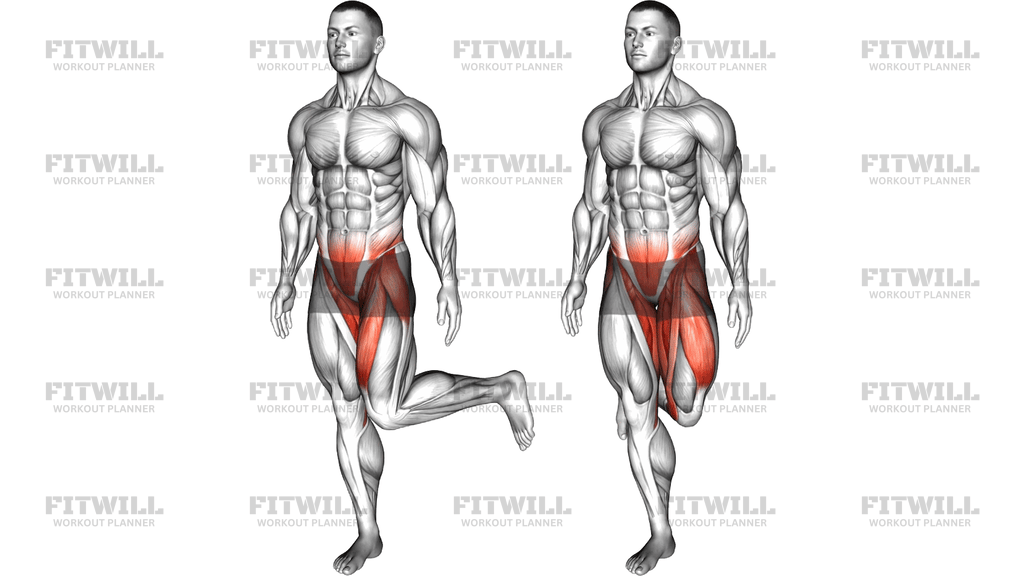
The Standing Balance Single Leg Hip Rotation is a body-weight control drill performed entirely on one foot. You balance on one leg, bend the free leg, and slowly rotate the hip inward and outward while keeping your torso tall and your pelvis level. The movement looks simple, but it demands a rare combination of single-leg stability, hip joint control, and trunk bracing at the same time.
This drill is especially useful for runners, hikers, and anyone returning from a period of reduced activity, because walking and running both require you to control hip rotation while standing on one leg. It trains the glutes — particularly the gluteus medius — along with the deep hip rotators, the obliques, and the small stabilizing muscles around the ankle and foot. Because there is no external load, the challenge comes from balance and precision rather than strength, so it fits well into warm-ups, cooldowns, or standalone balance sessions.
Setup matters more than most people expect. Your standing foot should be planted with the toes spread and weight spread across the whole foot, the standing knee soft rather than locked, and your gaze fixed on a still point at eye level. If your base is sloppy, the rotation will turn into a whole-body wobble and you will lose the targeted hip work. Keep the pelvis square to the front and let the rotation happen at the hip joint of the moving leg, not by twisting your lower back or shoulders.
To execute it well, lift one foot off the floor and bend the knee so the lower leg hangs behind you. Slowly rotate the bent leg across your body, then rotate it outward as far as you can control, pausing briefly at each end. The tempo should be deliberate — two to three seconds each way — because speeding up turns the drill into momentum practice instead of hip control. Breathe steadily throughout and keep your arms relaxed at your sides or slightly out for balance.
Common use cases include rehab-style hip work, warm-up activation before squats or lunges, and balance training for older adults who want to reduce the risk of stumbles. It is also a useful self-assessment: if one side wobbles dramatically more than the other, that asymmetry is worth addressing before adding load to single-leg exercises.
For safety, stand near a wall or sturdy chair when first learning, and only progress to fully unsupported reps once you can rotate smoothly without touching down. Stop short of any position where your standing knee collapses inward or your lower back starts doing the rotating. Quality reps at a modest range always beat large, shaky swings.
[ Workout Log & Planner ]
Put your next workout in Fitwill
Keep your plan and training log ready when you are.


Instructions
- Stand upright with your feet hip-width apart and your arms relaxed at your sides, then shift your weight fully onto one leg so the other foot clears the floor.
- Bend the free knee to about 90 degrees so the lower leg hangs behind you and your weight is distributed evenly across the standing foot, toes spread and gripping lightly.
- Soften the standing knee slightly and brace your core as if preparing for a light push from the side.
- Fix your gaze on a stationary point at eye level to give your balance system a stable reference.
- Keeping your pelvis square to the front, slowly rotate the bent leg inward, drawing the knee across the midline of your body.
- Reverse the rotation smoothly and swing the bent knee outward, opening the hip as far as you can without leaning your torso away.
- Pause for a beat at the outer position, then rotate the leg back inward with the same slow tempo.
- Exhale as you rotate outward and inhale as you bring the knee back across the body, keeping the breath continuous rather than held.
- Complete your repetitions on one side, then set the free foot down, reset your stance, and switch to the other leg.
- If you lose your balance, place the free foot down calmly, re-establish your posture, and resume rather than fighting through a wobble.
Tips & Tricks
- The most common mistake is letting the standing knee cave inward during the rotation — think about gently pressing the standing knee slightly outward over your second toe to keep the hip engaged.
- If your torso starts twisting with the leg, the rotation has moved into your spine; hold your chest and shoulders facing forward and reduce the rotation range until only the hip moves.
- Speed is the second biggest failure point — a fast swing uses momentum and hides poor hip control, so count a two-second rotation out and a two-second return.
- Holding your breath is a reliable sign you are straining; if you notice it, slow the movement down and restart your breathing rhythm.
- Practice beside a wall with one fingertip resting on it when starting out — use the wall for balance only, not to lean your weight into.
- Spreading the toes of the standing foot and pressing through the big toe base dramatically improves ankle stability and makes the hip rotation smoother.
- Keep the bend in the free knee constant throughout; straightening and bending the leg as you rotate changes the leverage and turns the drill into an uncontrolled swing.
- If one side is noticeably shakier, start your sessions with that side while you are fresh rather than always beginning with your stronger leg.
- Keep your pelvis level — if the hip on the free-leg side drops, your gluteus medius on the standing leg is fatiguing or under-recruiting, so cut the set short and rest.
Frequently Asked Questions
What muscles does the Standing Balance Single Leg Hip Rotation work?
The primary work comes from the glutes, especially the gluteus medius of the standing leg, along with the deep hip rotators of the moving leg. The obliques and deep core stabilize your torso, and the small muscles around the ankle and foot handle the balance demand.
Is the Standing Balance Single Leg Hip Rotation suitable for beginners?
Yes, it is one of the more accessible single-leg drills because there is no load and the range is self-selected. Beginners should start next to a wall or chair for light support and use a smaller rotation range until balance improves.
Why should I keep my pelvis square during the Standing Balance Single Leg Hip Rotation?
A square pelvis ensures the rotation happens at the hip joint rather than through your lower back. If your pelvis swings with the leg, you lose the targeted hip training and add unnecessary twisting stress to the spine.
How many repetitions and sets should I do?
A practical starting point is 8 to 12 slow rotations per leg for 2 to 3 sets. Focus on smooth, controlled tempo rather than pushing volume, since balance quality drops quickly once you fatigue.
My standing foot cramps or wobbles constantly — what should I change?
Spread your toes and distribute your weight across the whole foot, pressing lightly through the base of the big toe. If cramping continues, shorten your sets and practice barefoot on a firm surface before progressing.
Can I do this exercise every day?
Yes, in most cases. Because it is low-load and control-based, it can be used daily as part of a warm-up or balance routine, as long as your standing knee and hip joints feel comfortable.
What can I use as a substitute for the Standing Balance Single Leg Hip Rotation?
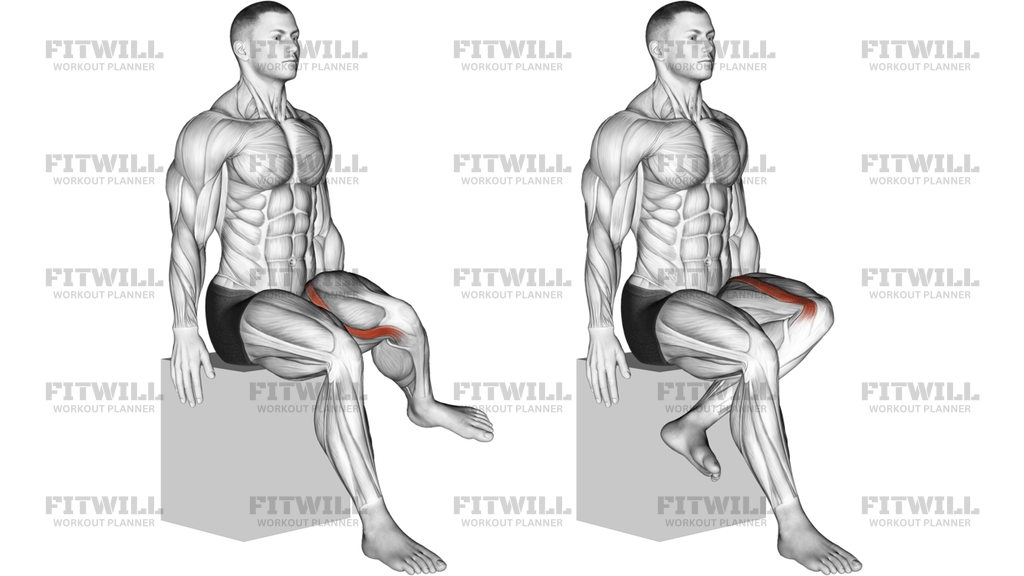
A standing hip circumduction on one leg, a single-leg stand with slow knee drives, or seated hip internal and external rotations all cover similar ground. The closest substitute is the single-leg stand itself, adding slow hip circles once you are stable.
Should the Standing Balance Single Leg Hip Rotation hurt my knees?
No, it should not cause knee pain when performed correctly with a soft standing knee and controlled range. If you feel pinching or discomfort in the knee or hip, reduce the rotation range and, if it persists, consult a qualified professional before continuing.
Is it normal for one side to be much harder than the other?
Yes, most people have a noticeable side-to-side difference in single-leg balance and hip rotation. Start each set with your weaker side and give it slightly more practice volume, and the gap usually narrows over a few weeks.