Side Step Folded Arms Lift
The Side Step Folded Arms Lift is a standing balance and hip-strengthening exercise performed with no equipment at all. You fold your arms across your chest, shift your weight onto one leg, step the other foot out to the side, and lift that leg away from your body while staying tall and controlled. Folding the arms removes the temptation to swing or wave them for balance, which forces your hips, core, and the stabilizing muscles of the standing leg to do the real work.
This movement is especially useful for anyone who wants stronger, more responsive hips without machines or weights. The outer hip muscles, particularly the gluteus medius, control the lift and keep your pelvis level, while the quads and hip stabilizers of the standing leg hold you steady. Because your torso stays upright with arms fixed across the chest, the obliques and deep core stay switched on the whole time to stop you from leaning or twisting.
The setup matters more than it looks. With your arms folded, you cannot use momentum or upper-body counterbalance, so every rep exposes how well you can move one hip while the rest of your body stays quiet. Keep the step modest at first; a short, smooth lift with a level pelvis trains the hip far better than a big sweep that tips you sideways.
You will see this style of drill in warm-ups, glute-activation circuits, balance training for older adults, and rehab-style programs for hip stability and knee control. Runners, hikers, and anyone who plays court or field sports benefit from it, since single-leg control under fatigue is where most hip and knee problems start.
Keep the pace slow and the range honest. If you find yourself hitching the hip, rotating the torso, or dropping the standing knee inward, shorten the lift and slow down. The goal is clean hip separation from a quiet trunk, not height.
[ Workout Log & Planner ]
Put your next workout in Fitwill
Keep your plan and training log ready when you are.


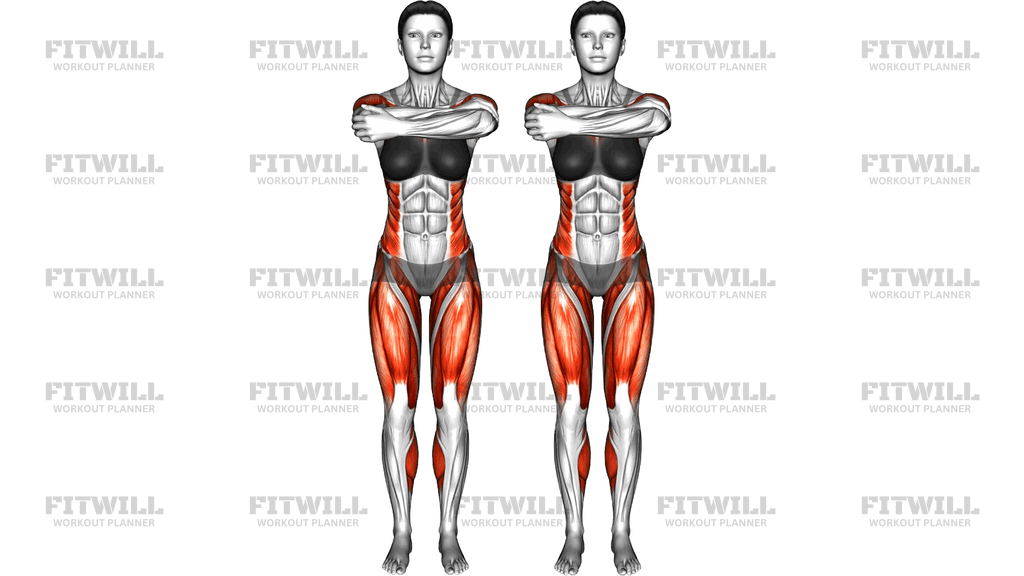
Instructions
- Stand tall with your feet together, weight spread evenly, and gaze straight ahead at a fixed point.
- Fold your arms across your chest, placing each hand on the opposite upper arm or shoulder so they stay fixed for the whole set.
- Brace your stomach lightly and squeeze the glutes of your standing leg to lock in a level pelvis.
- Shift your weight fully onto one leg with a soft, not locked, knee.
- Step your free foot out to the side, placing it down only briefly if needed, then lift that leg away from your body a short distance, leading with the heel.
- Keep both hips facing forward and your torso completely upright as the leg lifts; the movement should come only from the hip.
- Pause for a beat at the top of the lift, feeling the work along the outer hip of the moving leg and the standing glute.
- Lower the leg slowly with control until the foot is back beside or lightly touching the floor.
- Exhale as you lift, inhale as you lower, and keep breathing steadily instead of holding your breath.
- Complete your reps on one side, then reset your stance, unfold and refold your arms if needed, and repeat on the other leg.
Tips & Tricks
- A common mistake is letting the torso lean away from the lifting leg to buy range. Stand next to a wall with your folded arms a few inches from it; if you touch the wall, you are leaning.
- Watch for the standing knee drifting inward as you lift. Press the big toe into the floor and think of pushing that knee slightly out to keep the leg aligned.
- If your hip hikes up toward your ribs at the top, you are lifting too high. Cut the range in half until the pelvis stays square.
- Keep the folded arms genuinely still. If your elbows are wobbling around, your core is disengaged and you are borrowing balance from your upper body.
- Point the toes of the lifting leg forward, not up and out, so the lift comes from the hip rather than a rotation of the whole leg.
- Do this barefoot or in flat shoes. Cushioned, unstable soles make the single-leg balance noticeably harder and sloppier.
- If true single-leg balance is too shaky, tap the stepping foot down lightly between reps instead of holding it in the air the whole time.
- Quality beats volume here. Ten slow, level-pelvis reps per side do more for your hips than thirty fast swings that twist your torso.
- Warm the hips up first with a few gentle standing leg swings so the first rep does not feel restricted or pinchy.
Frequently Asked Questions
What muscles does the Side Step Folded Arms Lift work?
The main work comes from the outer hip muscles, especially the gluteus medius, which lifts and controls the leg. The standing leg's glutes and quads stabilize you, while the obliques and deep core keep your torso upright with the arms folded.
Why are the arms folded across the chest in this exercise?
Folding the arms takes your upper body out of the balance equation, so you cannot swing or counterbalance with your hands. This forces the hips and core to control the movement, which is exactly what makes the drill effective.
Is the Side Step Folded Arms Lift suitable for beginners?
Yes, as long as the range stays small. Beginners can tap the stepping foot down between lifts or stand within arm's reach of a wall for reassurance while still keeping the arms folded.
How high should I lift my leg during the Side Step Folded Arms Lift?
Lift only as high as you can while keeping both hips facing forward and your pelvis level. For most people that is a modest distance; once the torso starts leaning or the hip hikes up, the lift is too big to be useful.
Why do I wobble so much when I step onto one leg?
Single-leg balance is a skill, and the folded arms make it harder by removing upper-body assistance. Shorten the lift, slow the tempo, fix your eyes on one spot, and the steadiness usually improves within a couple of weeks of practice.
Can I use the Side Step Folded Arms Lift as a warm-up?
It works very well as one. A set or two per side at a easy pace wakes up the glutes and hip stabilizers before squats, lunges, running, or any single-leg training.
What should I do if I feel the exercise in my lower back instead of my hips?
That usually means you are leaning or arching to gain range. Stand taller, tighten your stomach, and reduce the lift height so the motion stays isolated at the hip joint.
How many reps and sets should I do?
Two to three sets of eight to twelve controlled lifts per side is a solid starting point. Prioritize slow lowering and a level pelvis over adding more reps.
What can I use instead if standing balance is too difficult right now?
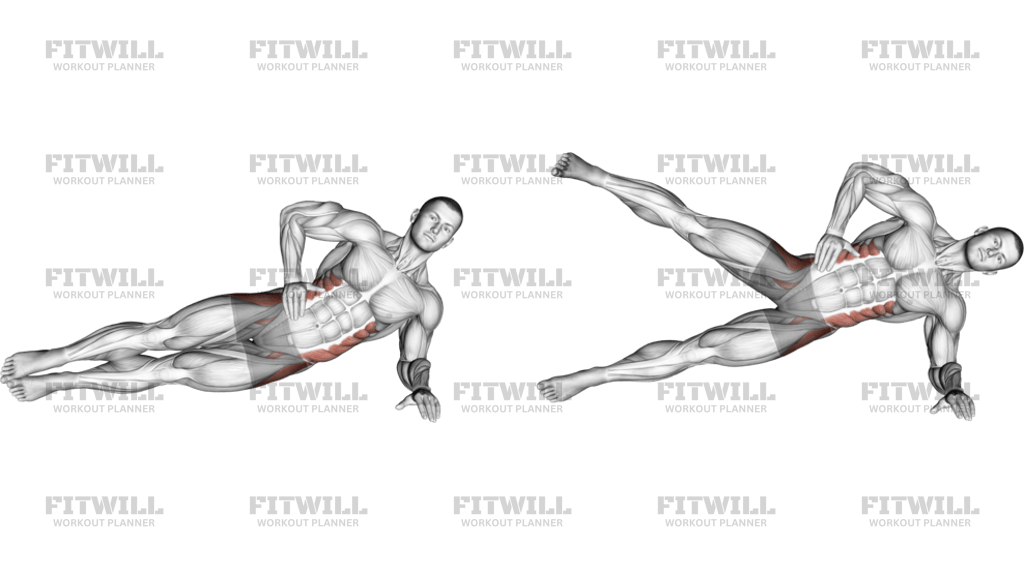
Perform the same side lift lying on your side, or do the standing version with a fingertip resting lightly on a wall. Keep the arms folded as soon as you can manage it so the hips and core continue doing the stabilizing work.