Side Toe Tap Wall Supported
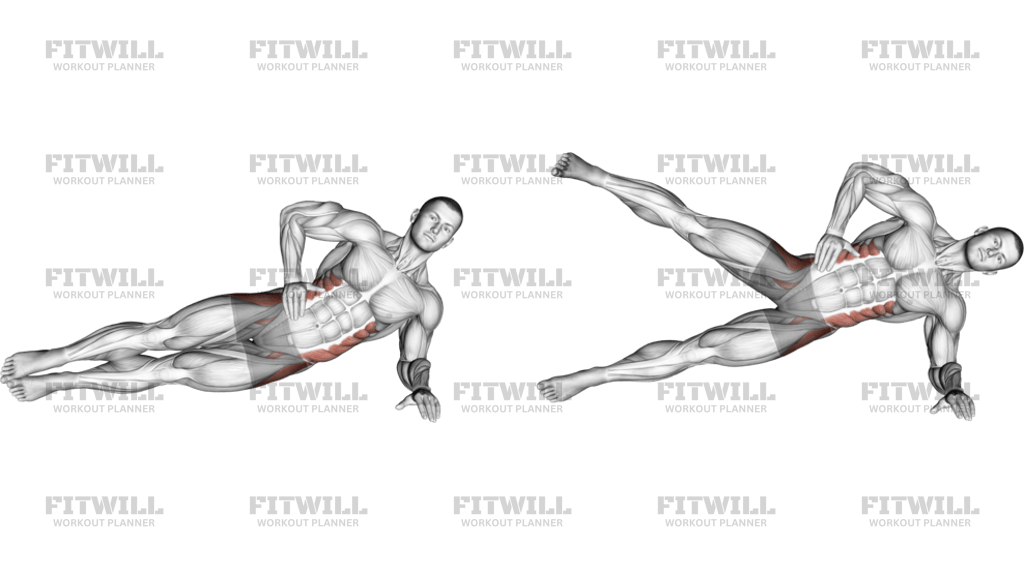
Side Toe Tap Wall Supported is a simple standing hip abduction drill performed with both hands braced against a wall for balance. From an upright stance, you lift one foot slightly off the floor and tap your toes out to the side, away from your body, then bring it back in with control. Because the wall removes the balance demand, all of your attention can go into feeling the outer hip and glute of the moving leg do the work instead of chasing stability.
The main target is the gluteus medius and the other hip abductors on the outside of the working hip, with the gluteus maximus assisting as the leg travels back and out. The standing leg is not passive either — its glutes, calf, and ankle stabilizers work quietly to keep your torso tall and your hips level while the other leg moves. That makes this a useful two-for-one: the moving side trains abduction, and the support side trains single-leg control.
This movement suits a wide range of people. Beginners use it to learn what a hip abduction actually feels like before progressing to band work or standing cable variations. People returning from time off, older adults who want a low-impact way to strengthen the hips, and lifters who need more gluteus medius activation before squats or single-leg work all benefit from it. It is also a common choice in routines aimed at knee comfort, since stronger hip abductors help control the thigh and knee position during walking and stairs.
Setup matters more than it looks. Stand close enough to the wall that your hands rest comfortably at shoulder or chest height, but keep your weight in your own feet rather than leaning into your arms. The wall is a light touch point, not a crutch. If you lean heavily on it, your torso tips forward and the hip stops moving through a clean arc. Keep the standing knee soft, ribs down, and hips square to the wall throughout.
To execute well, think about sweeping the foot out to the side in a slight arc rather than lifting straight up. The toe taps down at the far point, hence the name, then the leg returns so the feet are close together again. Keep the range modest — a controlled tap slightly outside shoulder width beats a big fling that rotates your pelvis. Slow the return down on purpose, since the way in trains the hip just as much as the way out.
The most common errors are twisting the pelvis, hiking the hip to gain height, and turning the movement into a fast swing. All three shift work away from the outer hip. You will know the set is going well when your shoulders stay level, your hips stay square, and you feel a focused burn along the side of the standing-hip-to-glute area of the moving leg after ten to twenty reps. Do it barefoot or in flat shoes, and progress by slowing the tempo or adding a light ankle weight rather than increasing the range.
Fitwill
Log Workouts, Track Progress & Build Strength.
Achieve more with Fitwill: explore over 9600 exercises with images and videos, access built-in and custom workouts, perfect for both gym and home sessions, and see real results.
Start your journey. Download today!




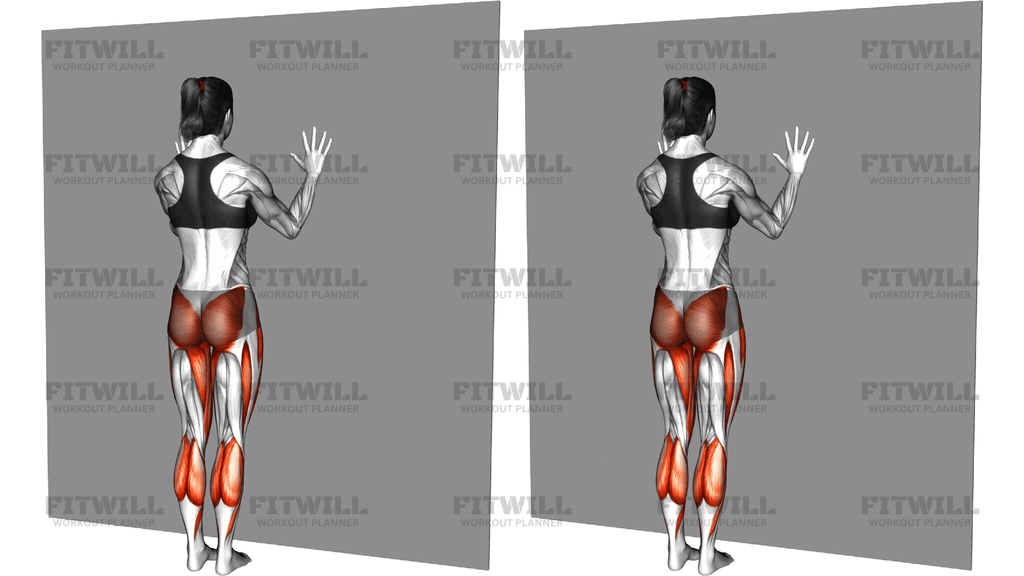
Instructions
- Stand facing a wall with your feet together and place both palms flat against the wall at shoulder or chest height, arms mostly straight.
- Step back slightly or adjust your distance so your body is upright with only a light lean into the hands, and soften the knees a little.
- Shift your weight onto one leg and brace your core gently, keeping your hips square to the wall and your shoulders level.
- Exhale and lift the free foot a few centimeters off the floor, sweeping the toes out to the side away from the standing leg.
- Continue the arc until the leg is slightly outside your shoulder width, then tap your toes lightly down onto the floor at that far point.
- Pause for a beat at the tap without letting the hips rotate or the torso twist toward the moving leg.
- Inhale and slowly draw the foot back in along the same arc until the feet are close together again, hovering it just above the floor.
- Complete all reps on one side, then switch legs and perform the same number of taps with the other leg.
- Between sets, reset your hand position on the wall and check that your weight is still over the standing foot rather than hanging on your arms.
Tips & Tricks
- If your torso drifts toward the wall as the leg lifts out, push your palms into the wall a touch more and imagine growing taller through the crown of your head.
- Aim for a low arc slightly forward of straight sideways; sweeping the leg too far behind you turns on the lower back instead of the outer hip.
- Do not crank for height — the moment your hip hikes up toward your ribs, the gluteus medius has handed the job off to your trunk muscles.
- Keep the toes of the moving foot relaxed and pointing mostly forward; curling or flaring the foot usually signals you are twisting from the pelvis.
- Press the big toe of the standing leg into the floor; that small cue keeps the ankle steady and stops the foot from rolling outward as the other leg moves.
- Treat the wall like a steering wheel, not a crutch — hands contact it, but your body weight stays stacked over the standing hip.
- Move slower on the way in than the way out; most people only control the lift and let the leg fall back, which halves the training effect.
- If you feel it in the front of the hip instead of the side, reduce the range and make sure you are not arching your lower back as the leg reaches out.
- Start with ten to fifteen controlled taps per side and only add reps or a light ankle weight once your shoulders and hips stay perfectly level for the whole set.
Frequently Asked Questions
What muscles does Side Toe Tap Wall Supported work?
The moving leg's hip abductors, especially the gluteus medius on the outer hip, do most of the work, with the gluteus maximus assisting. The standing leg's glutes, calf, and ankle stabilizers also work to keep you upright and level.
Why does Side Toe Tap Wall Supported use a wall instead of free balance?
The wall gives just enough support that you can focus on the quality of the hip movement rather than wobbling. It makes the exercise accessible to beginners while still training single-leg stability on the standing side.
Is Side Toe Tap Wall Supported good for beginners?
Yes, it is one of the gentlest ways to learn hip abduction because the balance demand is minimal and there is no equipment. Beginners should keep the range small and prioritize level shoulders over leg height.
How high should I lift my leg during the toe tap?
Lift only until the toes reach the floor slightly outside shoulder width — the foot stays low because the end position is a tap, not a raise. If your pelvis tilts or your hip hikes up, you have gone too far.
Why do I feel Side Toe Tap Wall Supported in my lower back instead of my hip?
That usually means the leg is sweeping too far behind you or your lower back is arching to extend the range. Bring the arc slightly forward, shorten the range, and keep your ribs down so the outer hip does the reaching.
Can I do Side Toe Tap Wall Supported without a wall?
You can, but free-standing taps turn it into a balance exercise and often reduce the quality of the hip movement. If you want more challenge, keep the wall contact but slow the tempo, pause longer at the tap, or add a light ankle weight.
How is this different from a standing cable hip abduction?
Both train hip abduction, but the wall version uses no load and a floor tap as the end point, so it is easier to control and better for learning the pattern. Cable work adds resistance through a longer range and is a natural next step once the tap version feels easy.
How many reps and sets should I do of Side Toe Tap Wall Supported?
Two to three sets of ten to twenty controlled taps per side works well as activation or as a standalone hip exercise. Because there is no external load, quality and tempo matter far more than chasing high numbers.
Is it safe to do this exercise if my knees bother me during lunges?
Many people with cranky knees tolerate this movement well because the standing knee stays nearly straight and carries no extra load. Still, keep the movement pain-free, and check with a qualified professional if your symptoms persist or worsen.