

Day 3 of Week 7 - Crystal park 3
वर्कआउट पूरा करने वाला Stan_Nesklada · 24 सितंबर 2026
This is a gym-based full-body hypertrophy workout that combines dumbbell free-weight training with cable-machine accessory work. It prioritizes posterior-chain strength and muscle development through the glutes and hamstrings, then adds substantial volume for the lats, upper back, rear delts, triceps, side delts, calves, and upper traps. With five working sets per movement and mostly moderate-to-high rep work, it is best suited to intermediate lifters, although beginners can use it by reducing load, total sets, and technical complexity. The workout does not contain a complete superset pairing; “Dumbbell Standing Calf Raise” is listed with a letter suffix but has no matching exercise, so perform each exercise as straight sets.
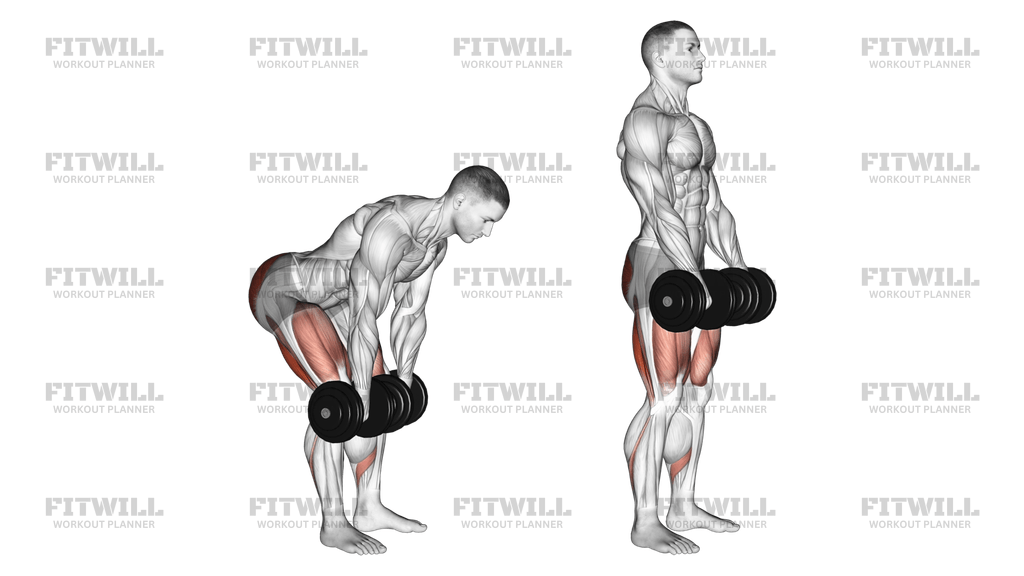
“Dumbbell Romanian Deadlift” is the primary lower-body compound movement and the workout’s main hip hinge. It primarily trains the hamstrings and gluteus maximus, while the adductors, spinal erectors, upper back, forearms, and core stabilize the dumbbells and torso. Start tall with the dumbbells close to the front of your thighs, keep a soft bend in the knees, brace your midsection, and push the hips straight back as the weights slide down close to the legs. Descend only as far as you can maintain a neutral spine and feel a strong hamstring stretch, then drive the hips forward to stand tall. Avoid squatting the weight down, rounding the lower back, letting the dumbbells drift forward, or leaning back at lockout. This movement establishes the workout’s posterior-chain emphasis and provides a strong foundation for the calf and upper-back work that follows.
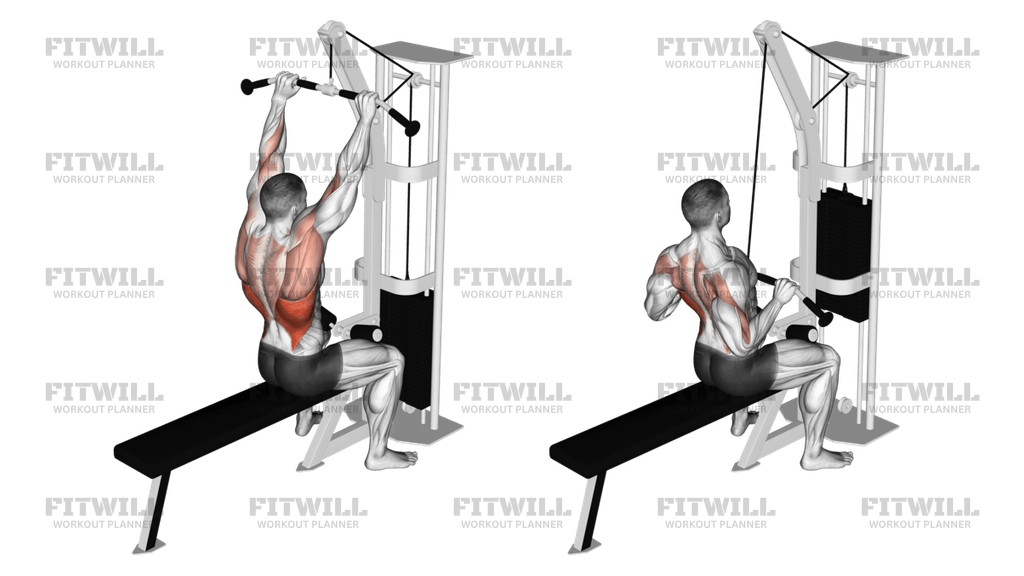
“Cable Bar Lateral Pulldown” is the main vertical pulling exercise, targeting the latissimus dorsi while involving the biceps, brachialis, teres major, rhomboids, mid-to-lower traps, and rear delts. Secure your thighs or kneel in a stable position, take a comfortably wide grip, lift the chest slightly, and set the shoulders down away from the ears before beginning. Pull the bar toward the upper chest by driving the elbows down and slightly back, then control the bar upward until the lats receive a comfortable stretch. Do not yank the bar with the hands, excessively lean backward, shrug the shoulders, or pull behind the neck. The pulldown complements the Romanian deadlift by building the upper-body pulling musculature and reinforcing the shoulder stability needed to hold a strong torso under load.
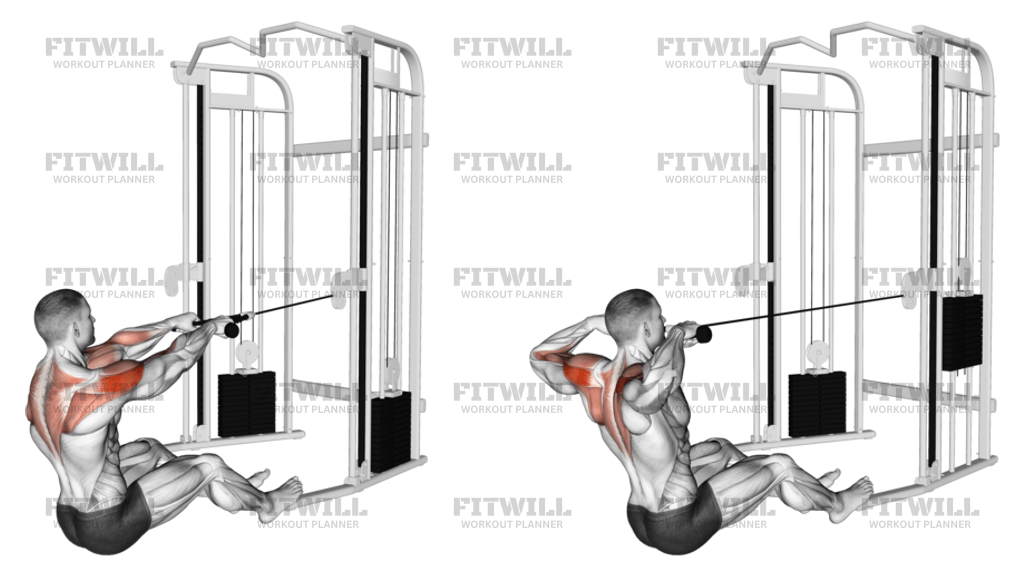
“Cable Rope Seated Face Pull” develops the upper back and rear shoulder musculature that supports balanced pressing and healthy shoulder mechanics. The primary muscles are the rear deltoids, middle and lower trapezius, and rhomboids, with assistance from the rotator cuff external rotators. Sit tall facing the cable, begin with straight arms and a braced rib cage, then pull the rope toward your nose, forehead, or upper face. Let the rope ends separate as the elbows travel high and outward, and pause while squeezing the shoulder blades together without shrugging. Avoid leaning the torso back, flaring the ribs, jamming the neck forward, or using a load that turns the exercise into a jerky arm pull. This exercise complements the pulldown by training horizontal scapular retraction and external rotation rather than simply adding more lat-focused pulling.
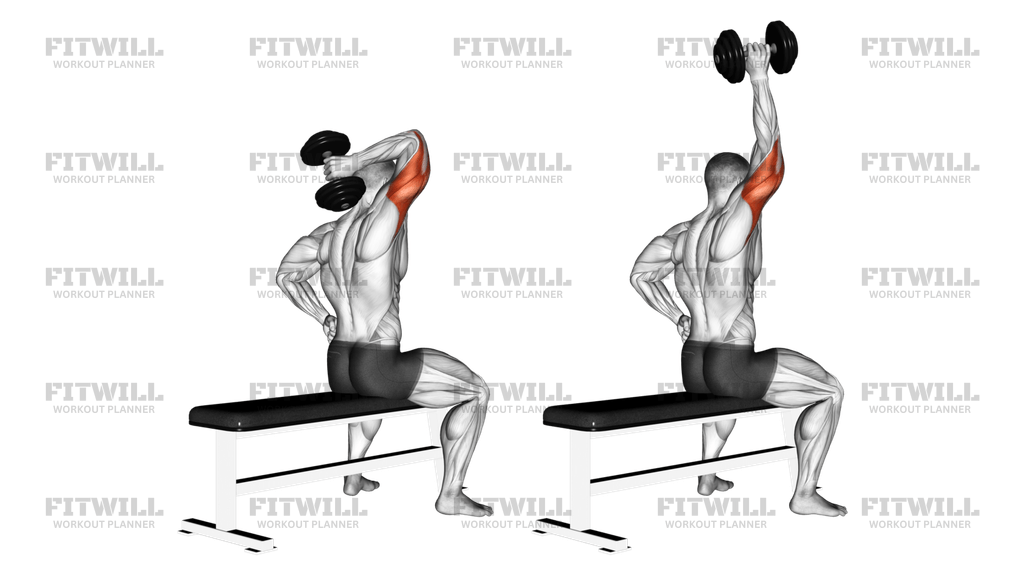
“Dumbbell One-Arm Triceps Extension” is a unilateral overhead isolation exercise that strongly emphasizes the triceps, especially the long head because it crosses the shoulder joint and is lengthened overhead. The lateral and medial triceps heads assist, while the shoulder and core stabilize the position. Sit upright on a bench, hold the dumbbell overhead with the working elbow near your ear, and lower it behind the head by bending at the elbow while keeping the upper arm relatively still. Extend the elbow smoothly to return overhead without aggressively snapping into lockout. Keep the ribs stacked over the pelvis and use the free hand for support if needed. Common mistakes include arching the lower back, allowing the elbow to drift far forward, twisting through the torso, and choosing a weight too heavy to control. Following the pulling exercises, this direct triceps work adds arm volume without requiring more chest or shoulder pressing.
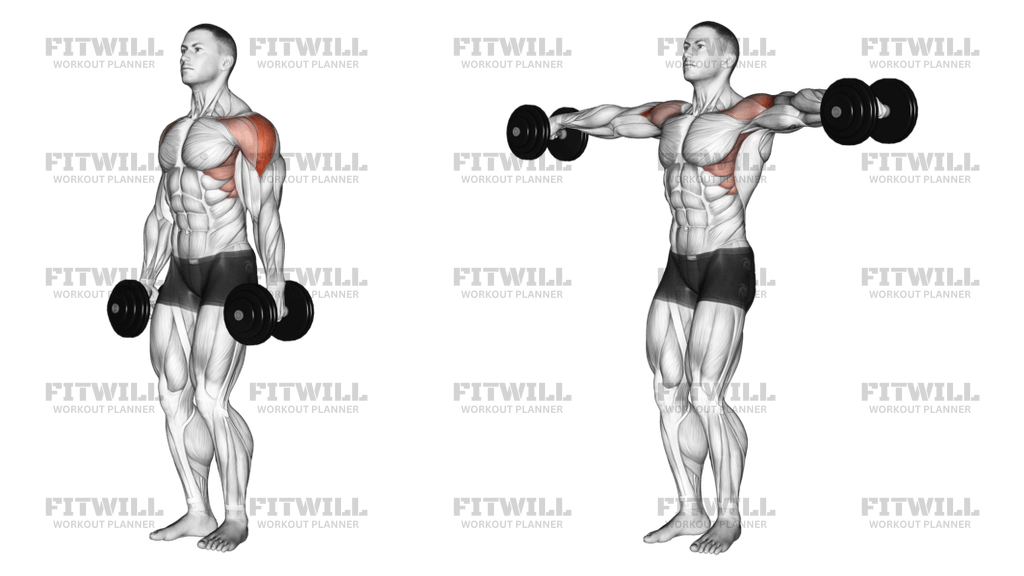
“Dumbbell Lateral Raise” isolates the lateral deltoids to help build shoulder width and improve overall upper-body proportions. The supraspinatus initiates the movement, while the upper traps and rotator cuff provide support, but the goal is to keep the side delts as the limiting factor. Stand with a stable stance, dumbbells at your sides, a slight bend in the elbows, and the ribs stacked over the pelvis. Raise the arms out and slightly forward in a smooth arc, leading with the elbows until the upper arms reach roughly shoulder height. Lower slowly and keep tension rather than bouncing at the bottom. Avoid swinging from the hips, leaning back, turning the lift into a shrug, or forcing the dumbbells well above shoulder height. This exercise pairs well within the overall session because it adds focused shoulder volume that the pulldown, face pull, and triceps extension do not fully provide.
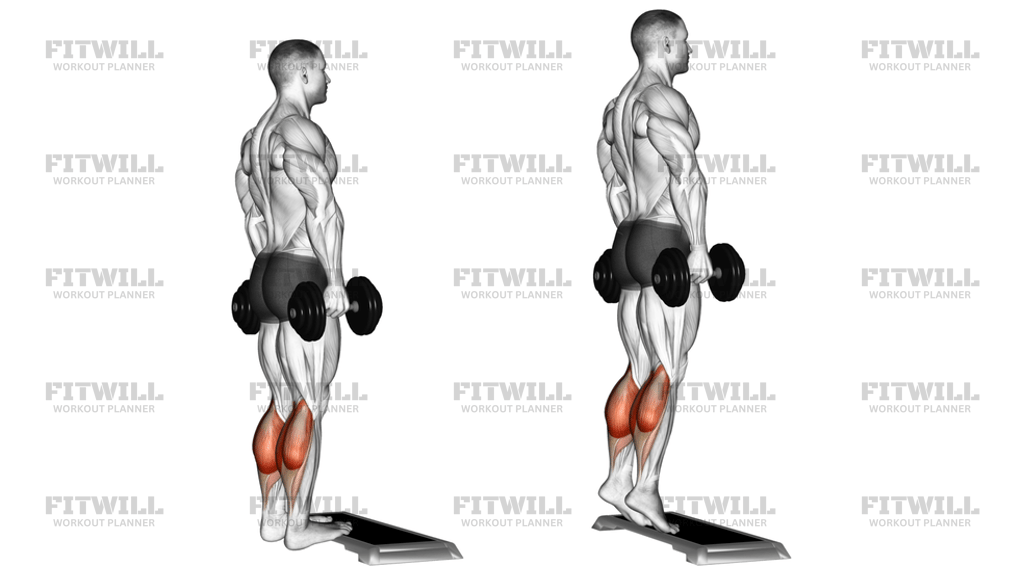
“Dumbbell Standing Calf Raise” targets the gastrocnemius most directly with the knees nearly straight, while the soleus, intrinsic foot muscles, and ankle stabilizers contribute to control and balance. Stand with the balls of both feet on a sturdy raised edge if available, hold the dumbbells quietly at your sides, and maintain a tall posture. Lower the heels slowly into a comfortable calf stretch, then press through the big toe and second toe to rise as high as possible. Pause at peak plantar flexion before descending under control. Do not bounce out of the bottom, roll to the outside edges of the feet, bend the knees excessively, or use torso sway to create momentum. The higher 20-rep prescription makes this an effective lower-leg endurance and hypertrophy accessory after the more demanding Romanian deadlift.
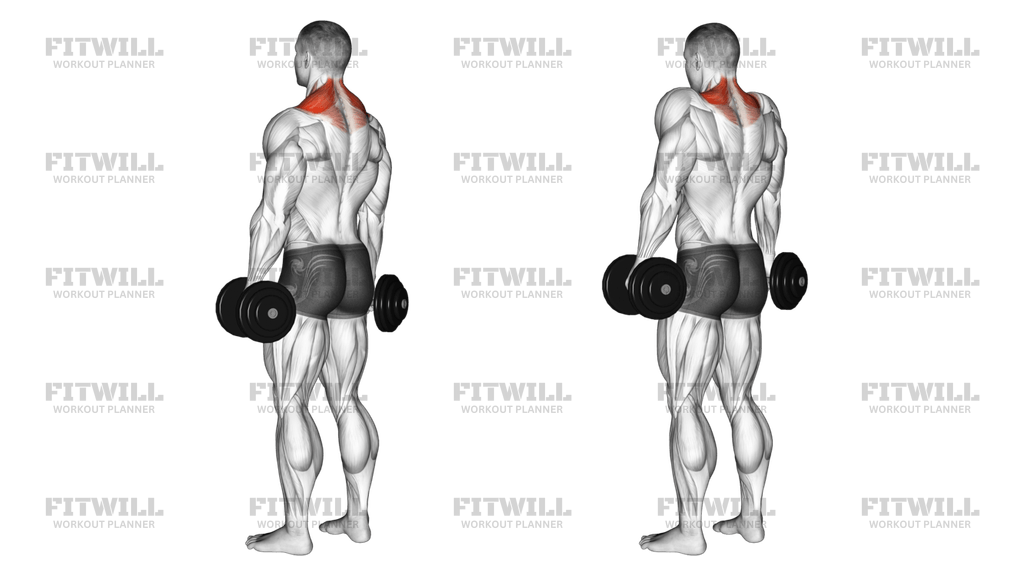
“Dumbbell Shrug” finishes the workout with direct upper-trapezius training. The upper traps are the primary movers, with the levator scapulae, forearms, and grip muscles assisting in dumbbell control. Stand tall with the weights beside the thighs, arms long, chin gently tucked, and core braced. Elevate the shoulders straight up toward the ears, pause briefly, and lower them slowly to a full controlled stretch. Keep the movement vertical and deliberate. Avoid rolling the shoulders in circles, bending the elbows into a row, bouncing the knees, or leaning back to move heavier weight. Shrugs complement the face pulls and pulldowns by adding direct work for the upper traps, creating more complete upper-back development.
Overall, this workout is a high-volume full-body muscle-building session with particular emphasis on the posterior chain and upper back. Rest about 90 to 150 seconds after the Romanian deadlift and pulldown, and 45 to 90 seconds for the isolation exercises; take longer if form or breathing has not recovered. Perform it one to two times per week, ideally allowing at least 48 hours before repeating the same heavily loaded muscle groups. Begin with 5 to 10 minutes of light cardio, then perform hip hinges, bodyweight squats, band pull-aparts, shoulder circles, and a few lighter ramp-up sets for the first two movements. Progress gradually by improving rep quality, adding repetitions within the prescribed targets, slowing the lowering phase, or increasing load in small increments only when every rep remains controlled. Stop sets short of technical failure on Romanian deadlifts and use strict, near-failure effort mainly for the safer isolation exercises.
पूरा वर्कआउट Fitwill ऐप में देखें।
[ Fitwill — वर्कआउट रिकॉर्ड और प्लानर ]
अगला वर्कआउट तय करें। अपनी प्रगति देखें।
जिम या घर के लिए रूटीन बनाएँ, हर सेट दर्ज करें और एक ही जगह अपनी प्रगति देखें।
