Cow Stretch
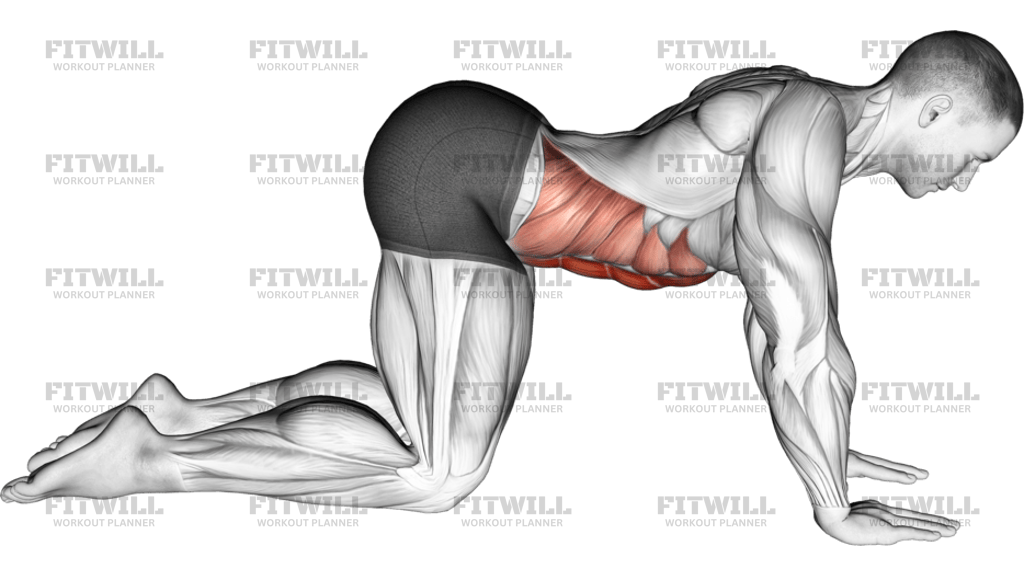
Cow Stretch is a quadruped spinal extension drill performed on an exercise mat. From hands-and-knees support, you drop the belly toward the floor, lift the sitting bones, and gently open the chest so the spine moves into a controlled arch. It is commonly used to warm up the back, hips, and shoulders, but the real value is in teaching you how to move the trunk without dumping tension into the neck or pinching the low back.
The setup matters because the position itself creates the shape of the stretch. With the hands planted under the shoulders and the knees under the hips, you have a stable base that lets the pelvis tilt and the spine extend in a controlled way. That support also keeps the movement honest: if the shoulders drift, the elbows lock hard, or the knees slide around, the stretch becomes less precise and harder to repeat.
A good Cow Stretch feels smooth and deliberate, not forced. As you move into the arch, the sternum reaches forward, the tailbone tips up, and the lower belly softens toward the mat. The head stays long through the neck instead of cranking upward. Breath is part of the rep, so use a slow inhale to expand the ribs and a relaxed exhale as you return toward a neutral tabletop or into the opposite phase if you are pairing it with a cat stretch.
This movement is useful in warmups, recovery sessions, mobility work, or as a reset between harder exercises. It can help loosen a stiff thoracic spine, reduce the feeling of compression in the low back, and prepare the shoulders for pressing, crawling, or overhead work. The goal is not an extreme backbend; it is a repeatable, controlled spine extension that stays comfortable and pain-free while you build better awareness of posture and pelvic position.
[ Workout Log & Planner ]
Put your next workout in Fitwill
Keep your plan and training log ready when you are.


Instructions
- Start on an exercise mat in a quadruped position with your hands under your shoulders and your knees under your hips.
- Spread your fingers, press through the full palm, and keep your elbows soft but not collapsed.
- Set your neck in line with your spine and look slightly ahead of your hands or down between them.
- Tilt your pelvis forward so your sitting bones rise and your lower back begins to arch.
- Let your belly drop toward the floor while you open your chest and broaden across the collarbones.
- Keep the movement smooth through the mid-back instead of jamming all the motion into the low back.
- Inhale as you move into the stretch, then pause briefly at the end range without forcing it.
- Exhale and return to a neutral tabletop, or flow into the matching cat position if you are alternating reps.
- Reset the hands and knees before the next rep so each repetition starts from a stable base.
Tips & Tricks
- Press evenly through both hands so the shoulders stay square instead of sinking into one side.
- Keep the elbows unlocked; hard locking usually shifts stress into the wrists and shoulders.
- Think about lengthening the tailbone up and the sternum forward at the same time, not just arching the low back.
- If your neck feels compressed, keep your gaze down and make the chest opening smaller.
- Move slowly enough that you can feel each segment of the spine change position.
- Do not force the pelvis so far forward that the lower back feels pinched or cranked.
- Use the exercise as a mobility drill, not a strength test, so the range stays easy to repeat.
- If the wrists complain, rotate the hands slightly outward or place the hands on a higher support during warmups.
Frequently Asked Questions
What does Cow Stretch actually stretch?
It mainly opens the spine in extension while also lengthening the front of the torso, including the abdominals and hip flexors.
Should my hands stay under my shoulders in Cow Stretch?
Yes. That hand position gives you a stable base so the chest and pelvis can move without the shoulders drifting forward.
What should my back look like at the top of the stretch?
Your low back should be gently arched, your chest open, and your neck long rather than cranked upward.
Do I need to push my stomach all the way to the floor?
No. Drop the belly only as far as you can control without creating a sharp pinch in the low back.
Is Cow Stretch good for beginners?
Yes. It is simple to learn because the knees and hands on the mat give a very stable start position.
What is the most common form mistake?
Rushing the arch and dumping all the motion into the low back instead of spreading it through the full spine.
How should I breathe during the stretch?
Use a relaxed inhale as you open into the cow shape, then exhale as you come back to neutral or into the opposite phase.
Can I use this before lifting?
Yes. It works well before squats, deadlifts, overhead pressing, crawling, or any session that benefits from spinal and shoulder mobility.