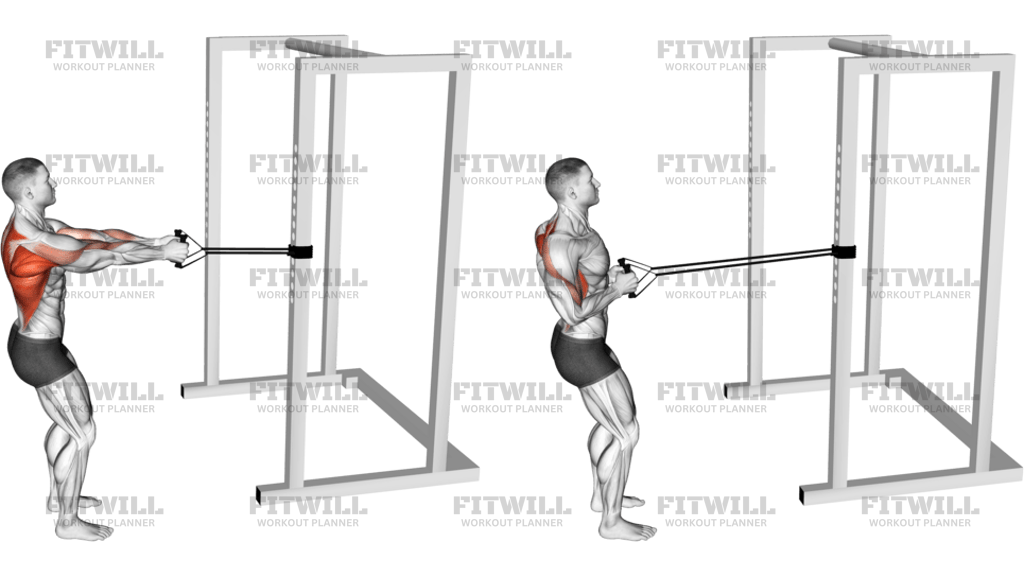
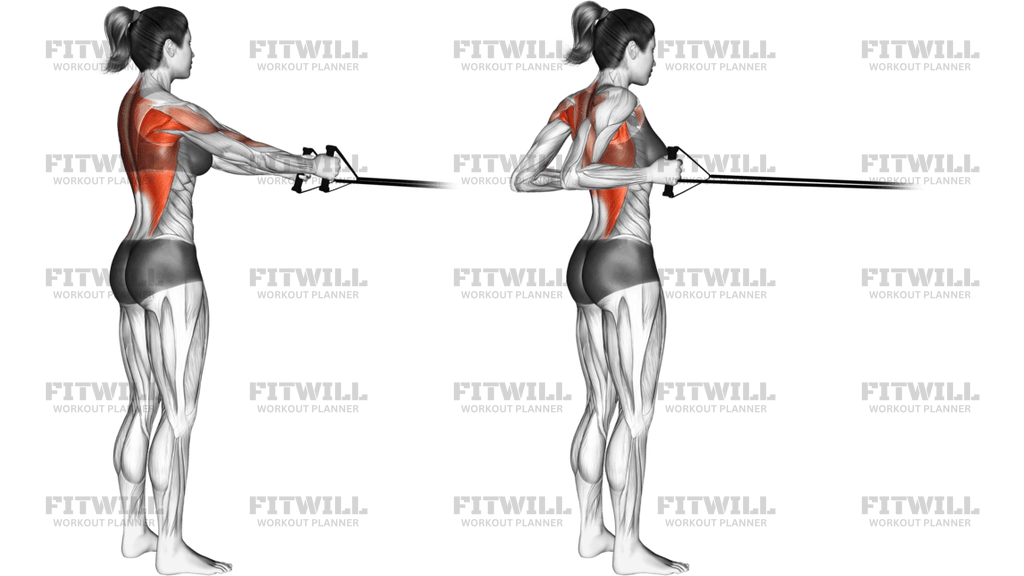
Band Back Extension
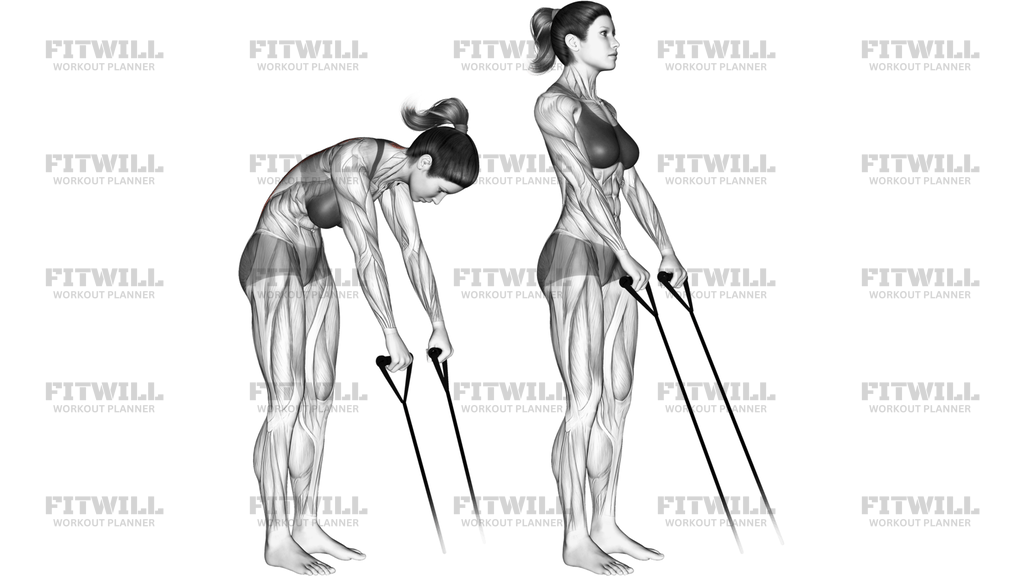
Band Back Extension is a standing band hip hinge that trains the muscles along the back of your body while teaching you to keep your spine organized under tension. With the band standing on the floor under your feet and the handles in your hands, the resistance increases as you stand tall, so the movement rewards control more than speed. It is a useful exercise for building awareness in the lower back, glutes, and hamstrings without needing a machine or heavy barbell.
This exercise works best when the setup is exact. A narrow or wide stance changes the line of pull, and a loose grip makes the band wander forward instead of staying close to the thighs. The goal is not to yank the band upward with the arms, but to hinge cleanly, keep a soft bend in the knees, and extend the hips until the torso is stacked over the pelvis. That makes the movement feel like a controlled back extension rather than a rounded pull from the shoulders.
Band Back Extension is especially useful as a light posterior-chain drill, a warm-up for hinging patterns, or accessory work when you want low spinal loading but still need a strong hip extension stimulus. The band provides a smooth resistance curve, which makes it easy to rehearse posture, bracing, and tempo. Done well, the exercise can help bridge the gap between bodyweight hinges and more demanding hip-hinge lifts.
The key is to keep the ribs down and the neck long while you move. At the bottom, the torso should fold forward from the hips rather than collapse through the low back. At the top, finish tall without leaning back or locking the knees hard. That keeps the working muscles doing the work while the spine stays in a safe, repeatable position.
Use a light to moderate band that lets you keep the handles close to your legs and return under control. If the band pulls you off balance, shorten the range or lighten the resistance before adding reps. Smooth repetitions matter more than maximal stretch here, because the exercise is meant to build clean hinge mechanics and endurance in the posterior chain, not to chase momentum.
[ Workout Log & Planner ]
Put your next workout in Fitwill
Keep your plan and training log ready when you are.


Instructions
- Stand on the center of the band with your feet about hip-width apart and hold a handle in each hand in front of your thighs.
- Soften your knees, let your arms hang long, and set your feet so the band stays even on both sides.
- Hinge your hips back until your torso leans forward with a flat back and your chest stays long.
- Keep the handles close to your legs as you lower, stopping when you feel a strong stretch in the back of your thighs and lower back.
- Brace your trunk and drive your hips forward to stand back up, letting the band travel straight up along your thighs.
- Finish tall with your ribs stacked over your pelvis and avoid leaning back at the top.
- Lower the handles under control by sending your hips back again instead of rounding your spine.
- Keep your breathing steady, exhaling as you stand and inhaling as you hinge into the next rep.
- Reset your feet if the band shifts, then continue for the planned repetitions.
Tips & Tricks
- Keep the handles brushing the front of your thighs so the band does not drift away from your body.
- A small knee bend is enough; turning this into a squat changes the load away from the back extension pattern.
- Stop the descent when your pelvis starts to tuck under or your low back wants to round.
- Think about pushing your hips backward on the way down and forward on the way up, not pulling with your arms.
- Do not snap into lockout at the top; finish tall with a quiet glute squeeze instead.
- If the band is too light, add tension by stepping wider on it before reaching for a heavier tube.
- Use a shorter range if your shoulders creep up toward your ears during the return.
- Keep the neck aligned with the torso so the head does not lead the movement.
- Choose a band that lets you control the lowering phase for at least two seconds.
- If your balance shifts to your toes, move the feet slightly wider and keep pressure through the midfoot and heel.
Frequently Asked Questions
What muscles does Band Back Extension work?
It emphasizes the lower back, glutes, and hamstrings, with the core and upper back helping you stay braced and balanced.
Is Band Back Extension the same as a Romanian deadlift?
It is very similar in setup and hip hinge pattern, but the band changes the resistance curve and usually keeps the load lighter and smoother.
How should the band sit under my feet?
Stand on the middle of the band so both sides match, then adjust your stance until each handle feels even and stable before you start.
How far should I bend forward?
Go only as far as you can keep a flat back and steady tension on the band. The bottom position should feel like a hip hinge, not a rounded reach.
Should my knees stay straight?
Keep them slightly bent. That lets the hips move back cleanly and keeps tension on the posterior chain instead of locking the knees hard.
Can beginners do Band Back Extension?
Yes. It is a good entry-level hinge drill if you start with a light band and focus on a slow, controlled return to the bottom.
Why do I feel this in my lower back?
That is normal, especially if you are hinging well and keeping the torso rigid. You should also feel the glutes and hamstrings helping the movement.
What is the most common mistake with this exercise?
People usually round forward or lean back too aggressively at the top. Keep the handles close, hinge from the hips, and finish tall without overextending.
How can I make Band Back Extension harder?
Use a thicker band, step wider on the tube for more tension, slow the lowering phase, or add a pause at the top without leaning back.