Band Overhead Side Bend
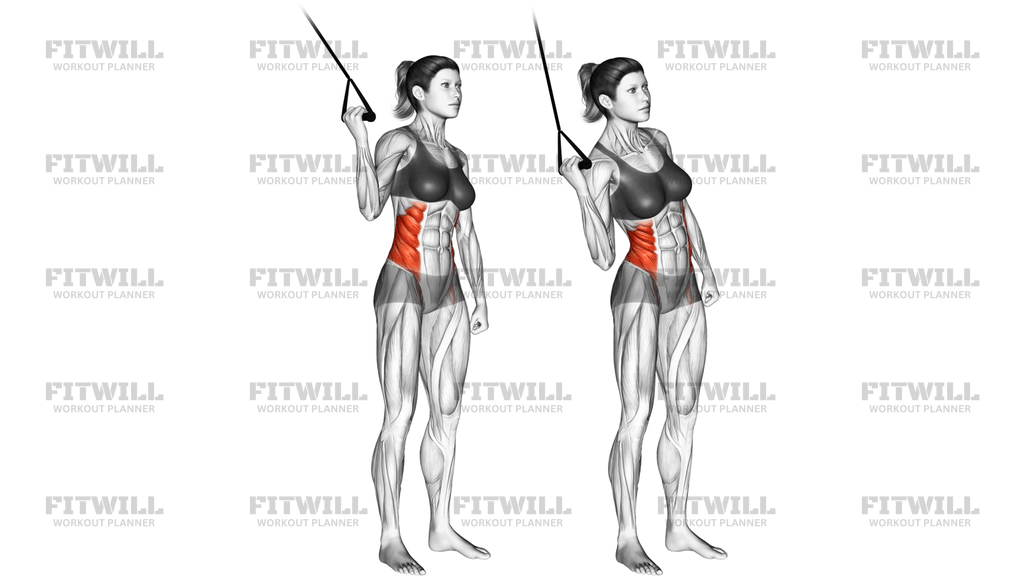
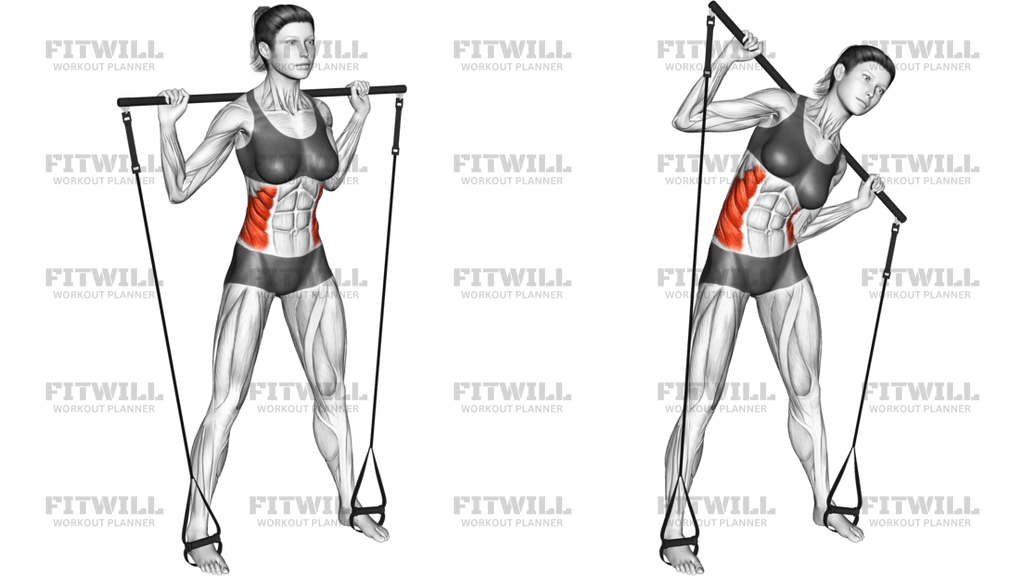
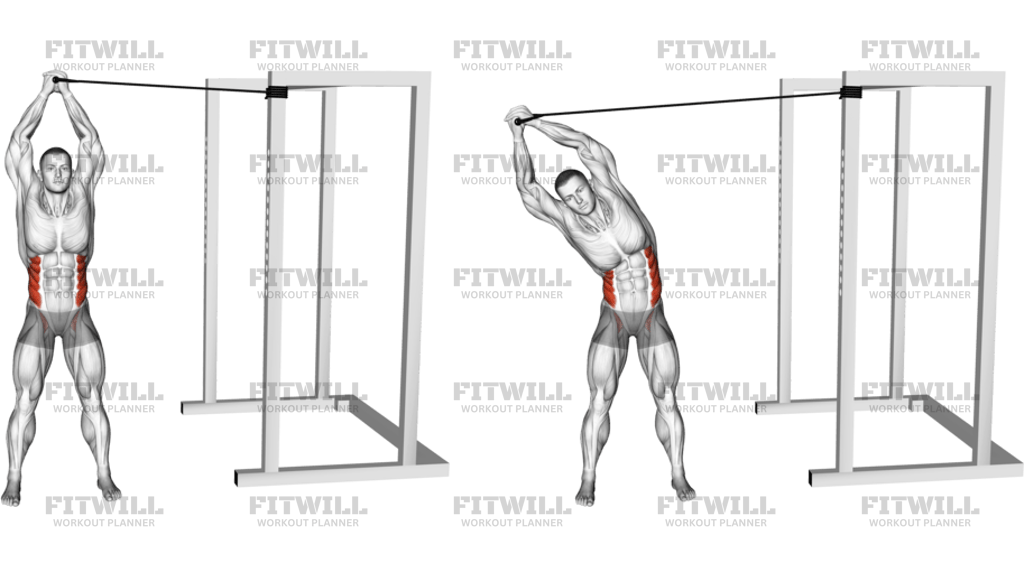
Band Overhead Side Bend is a standing anti-lateral-flexion and side-bending drill that loads the obliques through a long arc while the arms stay fixed overhead. A high anchor and a steady band make the line of pull obvious, so the exercise is easy to scale but also easy to cheat if you let the torso twist or the hips drift. The goal is not to yank the band down farther; it is to create a clean bend through the waist while keeping the ribs stacked over the pelvis.
The main training effect is on the external obliques, with help from the rectus abdominis, transverse abdominis, quadratus lumborum, and spinal erectors as stabilizers. Because the band is overhead, the lats and shoulder stabilizers also have to keep the arms organized while the torso moves. That makes this a useful accessory for core strength, trunk control, and side-chain conditioning, especially when you want work that feels more athletic than a floor-based crunch.
Setup matters more than range of motion. Step far enough from the anchor that the band has tension before you start, then stand tall with feet planted and both hands locked on the band overhead. Keep the elbows straight or only slightly bent, brace lightly, and let the head stay between the arms as you lean away from the pull. If the anchor is on your right, the body should arc to the left without rotating the chest or shifting the hips sideways.
Use a smooth side-bend on the way down, pause briefly when the waist is fully shortened, and return under control until you are tall again. Exhale as you bend and inhale on the way back up, but do not lose trunk position just to force a bigger breath. The best reps feel long, deliberate, and symmetrical rather than fast or jerky.
This movement fits well in warmups, trunk accessory blocks, and high-rep core finishers. It is especially useful when you want to teach control through the rib cage and pelvis while loading the obliques in a standing position. Choose a band tension that lets you stay strict, because once you start hitching the shoulder, rotating the torso, or bouncing out of the bottom, the exercise stops training the intended side bend pattern.
[ Workout Log & Planner ]
Put your next workout in Fitwill
Keep your plan and training log ready when you are.


Instructions
- Attach the band to a high anchor, then step away until you have steady tension with both hands holding the band overhead.
- Plant your feet about hip to shoulder width apart and stand tall with your ribs stacked over your pelvis.
- Keep your arms overhead, elbows straight or softly bent, and square your chest to the front.
- Brace lightly, then let your torso lean away from the anchor without letting your hips slide sideways.
- Bend through the waist in a smooth arc until you feel a strong stretch and contraction along the side of the trunk.
- Pause briefly at the bottom without twisting or bouncing.
- Drive back to tall using the obliques, keeping the band under control the whole way up.
- Exhale as you bend, inhale as you return, and repeat for the planned reps before resetting your stance.
Tips & Tricks
- Step only far enough from the anchor to create tension; if the band is slack, the first part of the rep turns into a setup reset instead of a working set.
- Keep the belt line and hips facing forward so the movement stays in the waist instead of becoming a standing twist.
- Think about shortening the side of your ribs on the way down, not dropping your shoulders toward the floor.
- Let the arms travel as one unit overhead; if one elbow starts bending more than the other, the load is drifting into the shoulders.
- Use a smaller range if your low back starts to arch or if you have to push the hips out to make the bend happen.
- Choose band tension that lets you return to tall without snapping back or losing control at the midpoint.
- Keep the neck long and the chin neutral so you do not chase the band with your head.
- Stop the set when the torso starts rotating toward the anchor or when the side bend turns into a sway.
Frequently Asked Questions
What muscle does Band Overhead Side Bend target most?
The external obliques do most of the work, with the lats and deeper trunk muscles helping stabilize the overhead position.
Can beginners perform this exercise?
Yes. Beginners usually do best with a light band and a small, controlled range so they can keep the ribs and pelvis stacked.
How heavy should I train this movement?
Use the lightest band tension that still gives you a clear pull overhead and lets you return to tall without jerking.
Should I bend toward or away from the anchor?
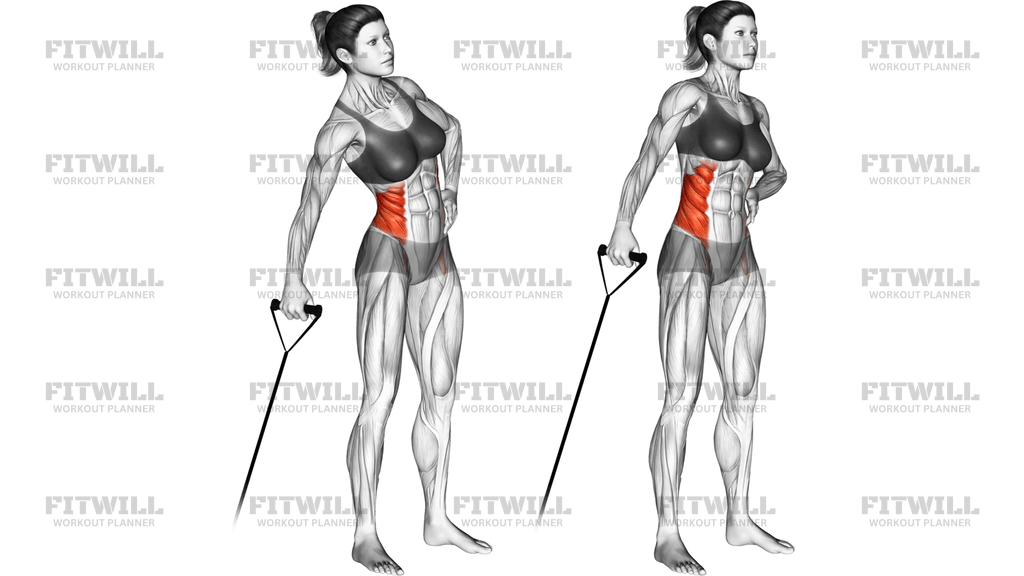
Bend away from the anchor side while keeping the chest square and the hips still; that is the direction shown in the image and the usual working direction.
What is a common mistake to avoid?
The biggest mistake is turning the rep into a side lean plus twist. If the chest rotates, the obliques lose the clean line of work.
How far should I bend?
Only as far as you can keep tension even through both arms and keep your hips from drifting. A shorter, stricter range is usually better.
Why are my shoulders getting tired before my waist?
If the band is too heavy or the arms are drifting out of position, the shoulder stabilizers take over. Lower the tension and keep both hands fixed overhead.
Can I use this as a core finisher?
Yes. It works well near the end of a session when you want direct oblique work without needing a bench or floor setup.
Should my elbows stay locked?
Soft elbows are fine, but the arms should stay mostly fixed so the torso, not the shoulders, creates the side bend.