Lever Preacher Curl Plate Loaded
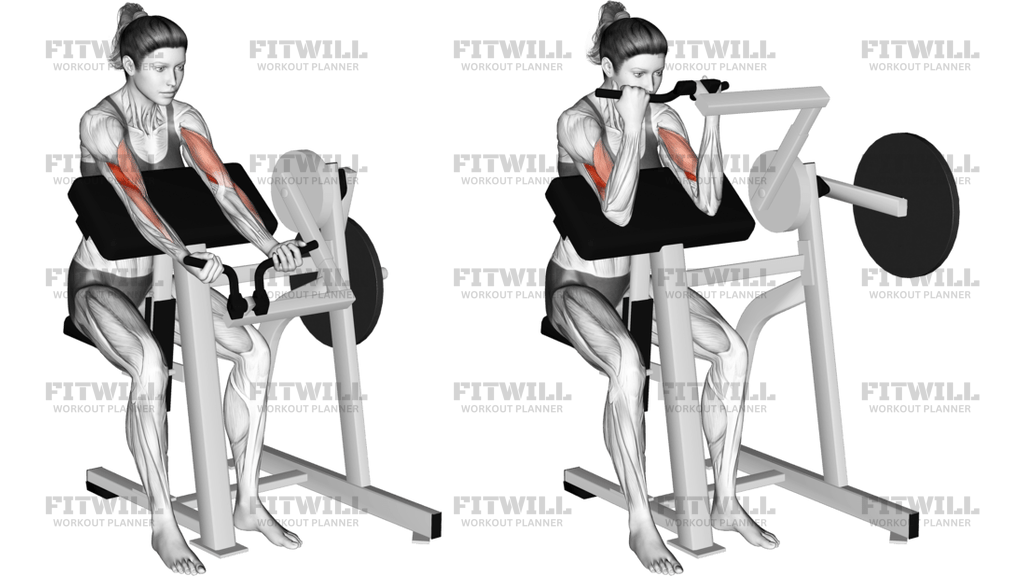
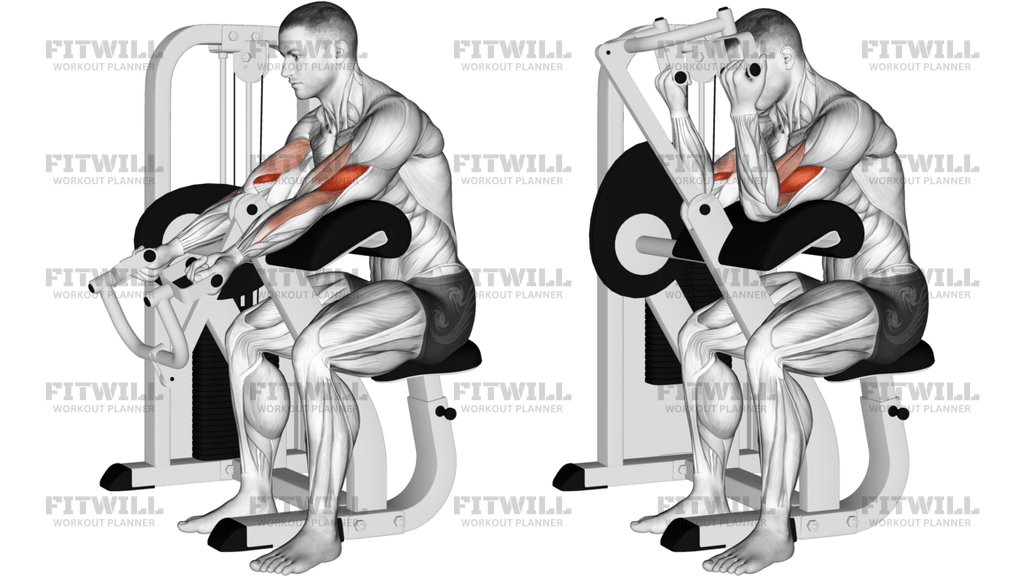
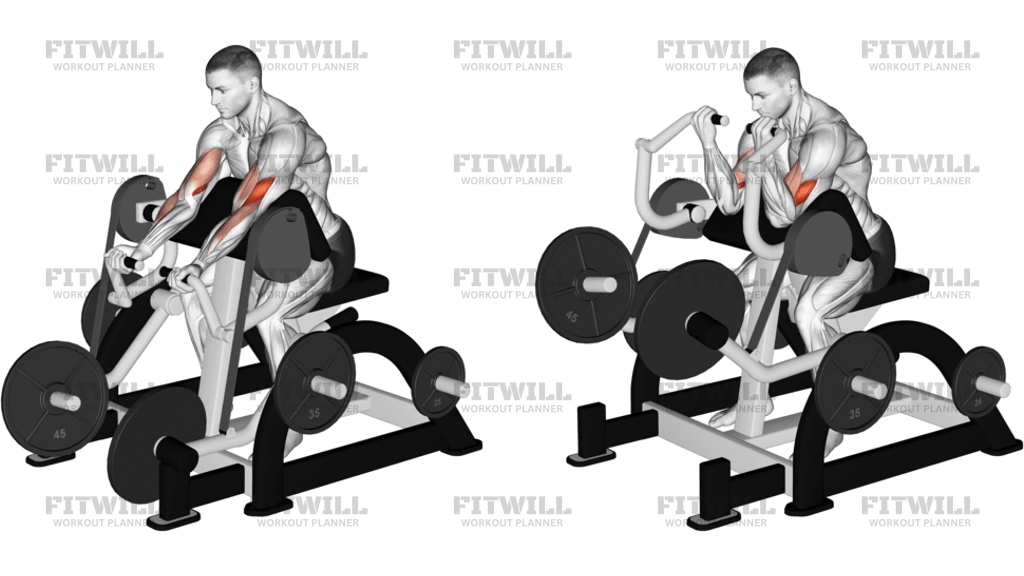
Lever Preacher Curl (plate Loaded) is a strict elbow-flexion exercise done on a plate-loaded preacher machine, where the upper arms rest on an angled pad and the hands curl the lever toward the shoulders. The pad fixes your upper arms in place so the biceps, brachialis, and forearms have to do the work without much help from hip drive or shoulder swing. That makes it a strong choice when you want the curl pattern to stay honest and the tension to stay on the front of the arm.
The preacher setup matters because it changes the line of pull and removes a lot of the cheating that happens in standing curls. With the chest supported against the pad and the elbows pinned forward, the exercise loads the elbow flexors hardest through the lower and middle part of the rep. That is useful for building arm strength, improving curl control, and getting a more isolated arm stimulus with a predictable machine path.
A good repetition starts with the seat height adjusted so your armpits and upper arms sit comfortably on the pad and the handles line up with your forearms. Your feet should stay flat, your torso should stay anchored to the pad, and your wrists should remain in line with your forearms as you curl. The lever should move smoothly through a controlled arc, not snap up with momentum or bounce off the bottom.
At the top of the curl, squeeze the arm hard without letting the shoulders roll forward or the wrists break back. On the way down, lower the lever slowly until the elbows are nearly extended and the muscle is still under tension. That controlled lowering is where a lot of the training effect happens, so treat every rep as a full curl plus a deliberate return rather than a quick lift-and-drop.
This movement fits well in arm-focused sessions, upper-body accessories, or any program that benefits from a stable machine curl. It is usually easier to learn than a free-standing curl because the pad and lever guide the path, but the strict setup also exposes sloppy loading fast. Use a weight you can control for the entire set, keep the range pain-free, and stop short of forcing the elbows into discomfort at the bottom.
[ Workout Log & Planner ]
Put your next workout in Fitwill
Keep your plan and training log ready when you are.


Instructions
- Adjust the seat so your upper arms and armpits rest comfortably on the preacher pad, with your chest supported and your feet flat on the floor.
- Grip the handles with an underhand or neutral grip if the machine allows it, and line your wrists up with your forearms before you start.
- Set your shoulders down and back lightly, then keep your upper arms pressed into the pad for the whole set.
- Start with the elbows almost straight and the lever under control, not hanging loosely at the bottom.
- Curl the handles upward by bending at the elbows until the hands move toward shoulder height or the top stop of the machine.
- Keep the wrists straight and the elbows fixed on the pad as you lift so the lever moves in a clean arc.
- Squeeze the biceps hard for a brief moment at the top without shrugging or leaning forward.
- Lower the lever slowly until you are back near the bottom stretch, stopping before the elbows lock hard if that bothers your joints.
- Breathe out as you curl up and breathe in as you lower under control.
Tips & Tricks
- Set the seat height first; if the pad is too low, your shoulders drift forward, and if it is too high, your elbows lose the curl line.
- Keep the back of your upper arms glued to the pad so the lever cannot turn into a shoulder movement.
- Do not let your wrists bend back at the top, because that shifts tension away from the elbow flexors and can irritate the forearms.
- Use a grip width that lets the handles sit in the center of your forearm, not jammed into your palms or fingertips.
- Lower the lever a little slower than you raise it; the controlled negative is where this machine becomes especially effective.
- Stop just short of bouncing out of the bottom position, because the stretched bottom can get harsh if you dump the weight there.
- Keep your chest on the pad and avoid lifting your shoulders as the set gets hard.
- Choose a load that lets you own the last third of the lowering phase; if the lever drops, it is too heavy.
- If your elbows feel cranky, shorten the bottom range slightly and keep the rep smooth rather than forcing a deep stretch.
Frequently Asked Questions
What does the Lever Preacher Curl (plate Loaded) work most?
It mainly trains the biceps through elbow flexion, with the brachialis and forearms helping keep the curl strong and controlled.
Can beginners perform this exercise?
Yes. The preacher pad guides the path, so beginners usually find it easier to learn than a standing free-weight curl.
Where should my upper arms be on the machine?
Your upper arms should stay planted on the pad with the armpits supported near the top edge, so the elbows can flex without the shoulders taking over.
Should my elbows move during the curl?
They should stay in contact with the pad. A little natural pivot is fine, but they should not drift forward off the support.
How low should I lower the handles?
Lower until the arms are nearly straight and you still feel tension. If the bottom position hurts the elbows, shorten the range slightly.
Why use a preacher curl machine instead of standing curls?
The pad reduces body English and keeps tension on the elbow flexors, which makes it easier to isolate the arms and repeat the same path each rep.
What grip works best on this machine?
Use the grip the machine is built for, usually an underhand handle position that keeps the wrists stacked over the forearms.
What is the most common mistake on this movement?
Letting the shoulders roll forward or bouncing out of the bottom. Both reduce biceps tension and make the set feel heavier than it needs to.
Is this exercise safe for the elbows?
Usually yes when the load is controlled and you do not force a painful bottom stretch. If your elbows dislike deep extension, trim the range a bit.