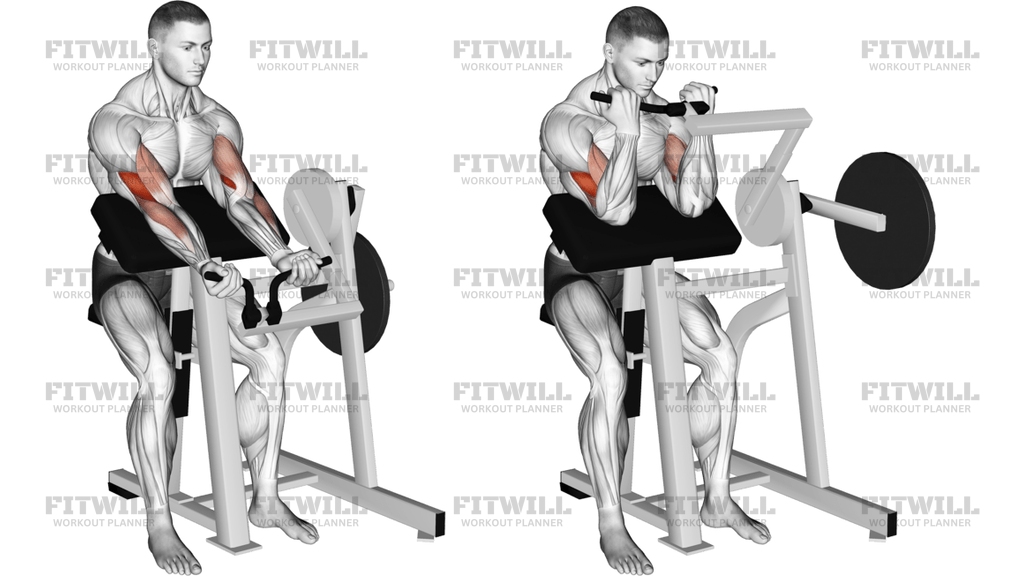
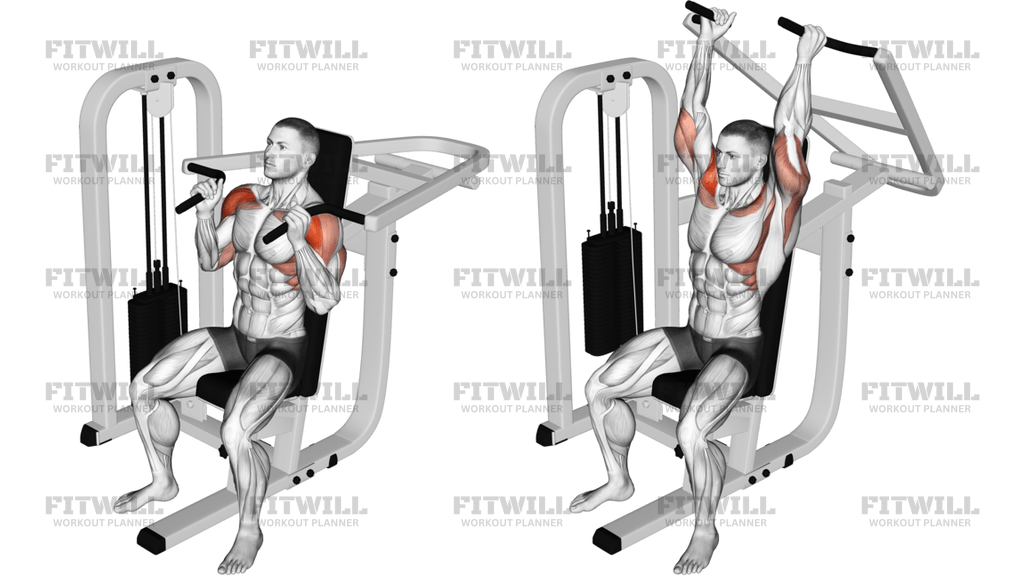
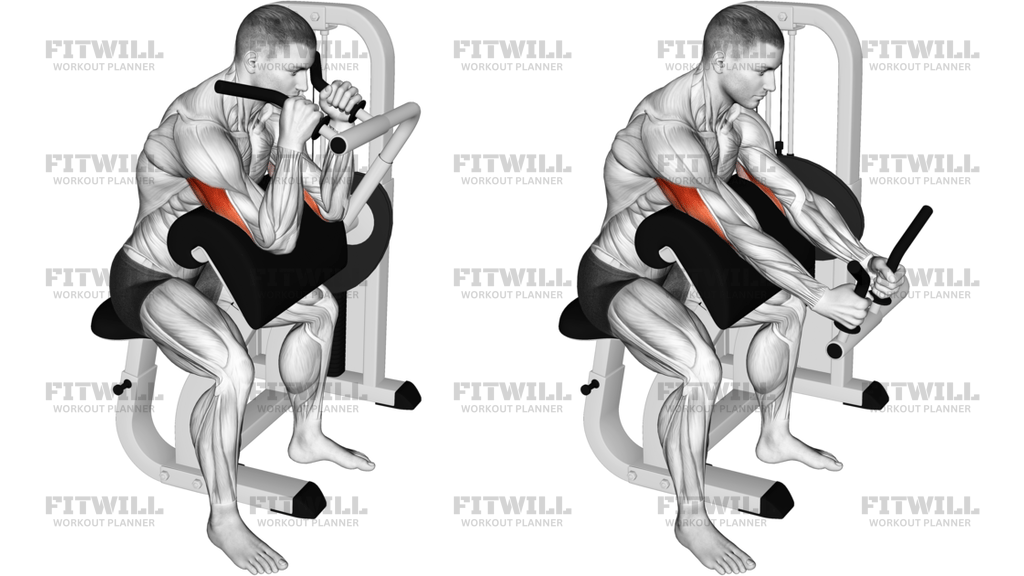
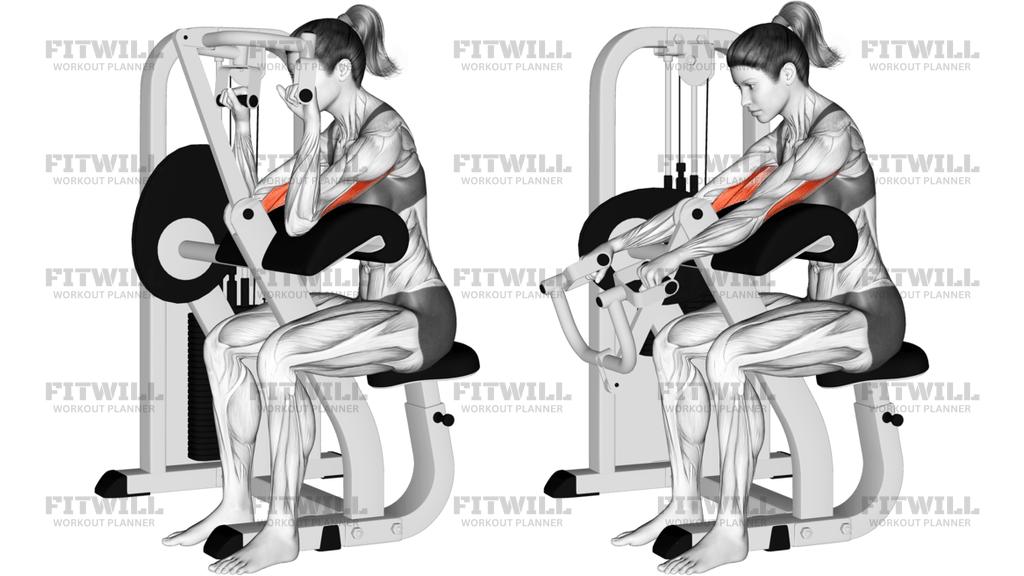
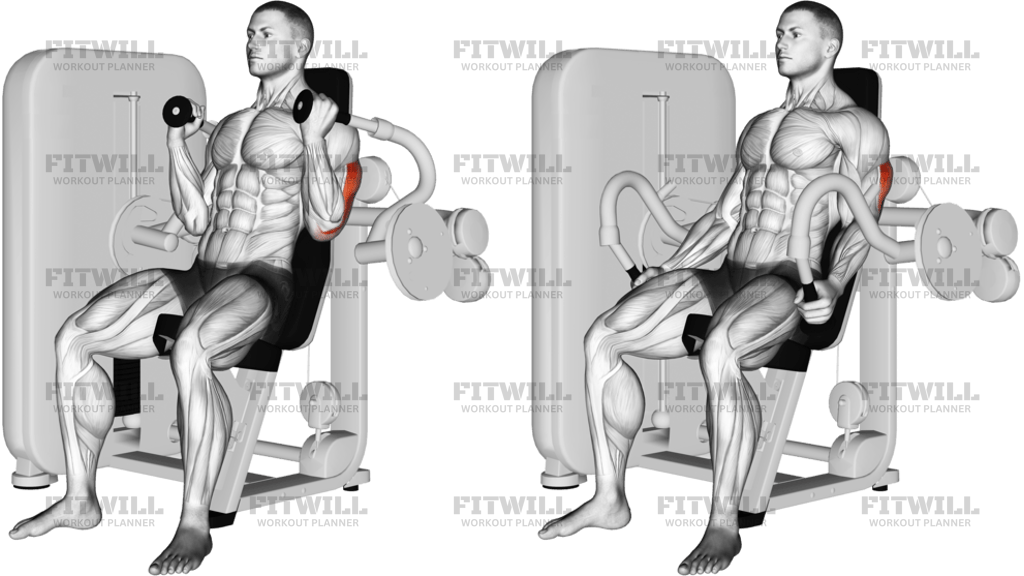
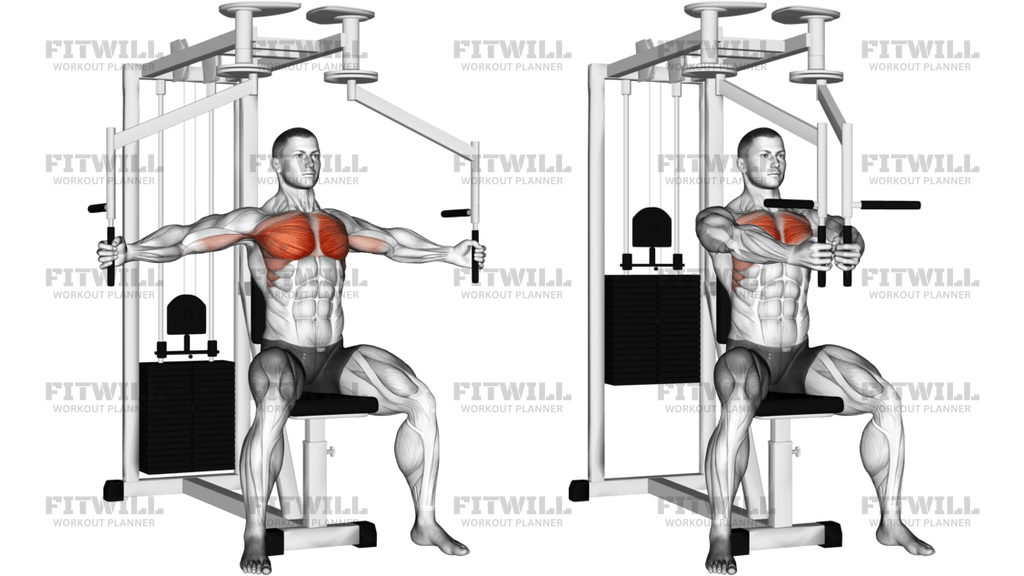
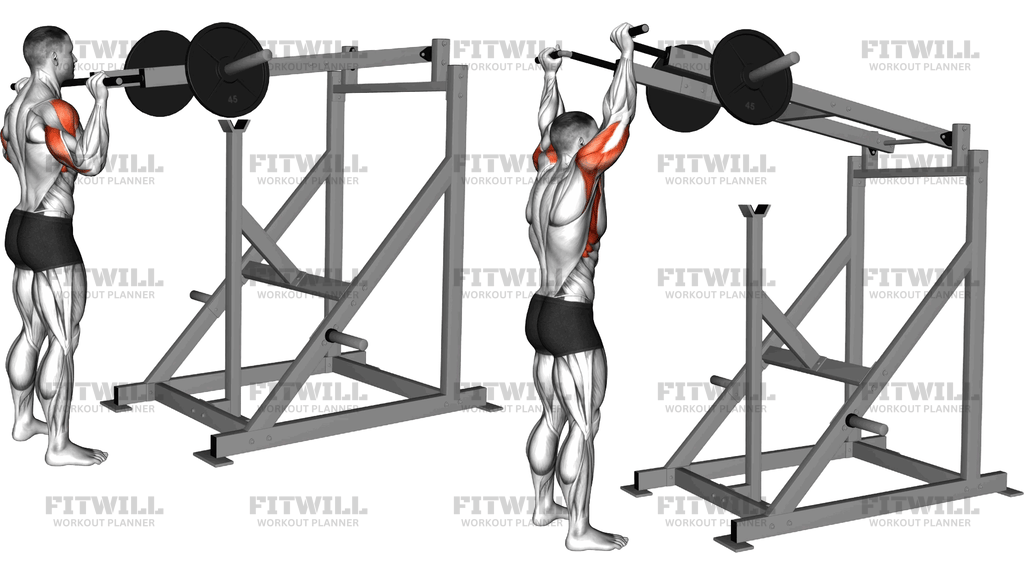
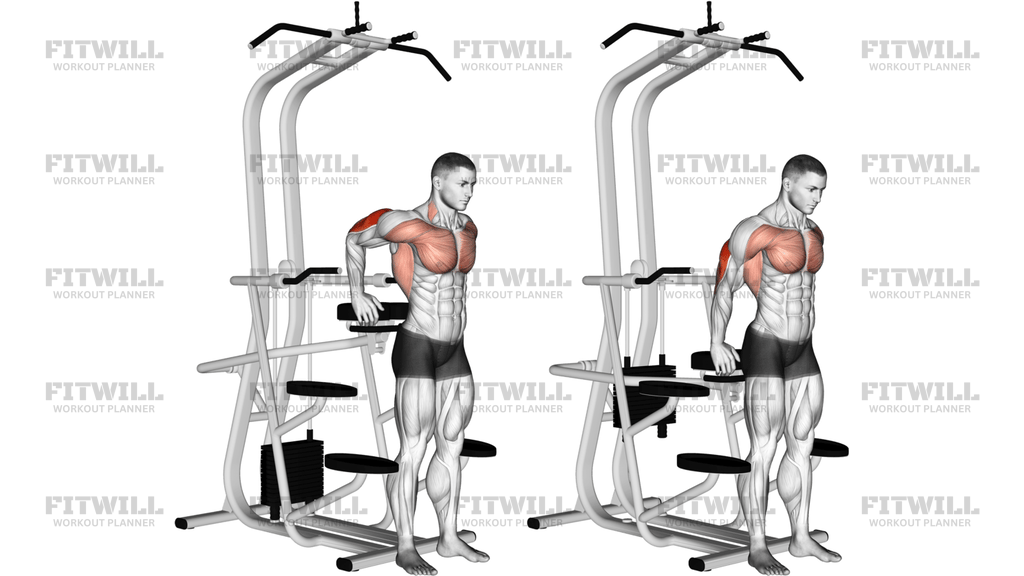
Lever Triceps Extension
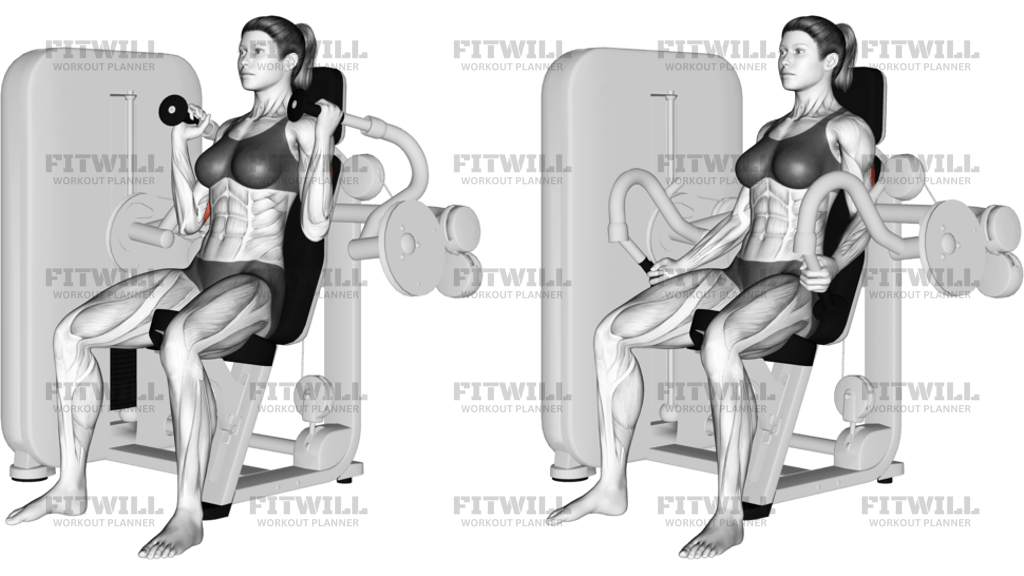
Lever Triceps Extension is a seated machine exercise that isolates elbow extension and puts the triceps under steady resistance through a fixed lever path. Because the handles travel on a guided arc, it is useful when you want to load the triceps hard without balancing a free weight or worrying about bar path. The movement is especially practical for accessory work after pressing exercises, arm-focused sessions, or beginner strength training where a controlled machine pattern is easier to learn.
The setup matters a lot on this machine. Sit all the way back against the pad, place your feet flat, and adjust the seat so the handles start near shoulder or upper-chest level with your elbows comfortably bent. Keep your wrists straight and your chest tall so the shoulders do not roll forward as you press. In Lever Triceps Extension, the goal is not to throw the weight; it is to keep the upper arms organized and let the elbow joint do the work.
Press the handles down and slightly forward by straightening the elbows until the triceps are fully contracted, then pause briefly before returning under control. The return phase should be slow enough that you still feel tension in the back of the arms as the elbows bend again. If the load is appropriate, the shoulders stay quiet, the torso stays pinned to the pad, and the machine path feels smooth from start to finish.
Lever Triceps Extension is a good choice when you want direct triceps work with a stable seat and a predictable range of motion. It can be used by beginners with light resistance, and it also works well for experienced lifters who want extra volume without overloading the shoulders or lower back. Keep the movement pain-free, avoid locking the elbows aggressively if that bothers the joints, and stop the set when you can no longer press without shrugging, twisting, or shortening the lowering phase.
Because the machine fixes the arc, you can use Lever Triceps Extension to practice a clean squeeze at the end of each rep and a deliberate return on the way back. That makes it a useful option when free-weight triceps work feels unstable or when you want a simpler isolation drill to finish a push workout. Treat the handles like a hinge driven by the elbows, not a press driven by the chest or shoulders, and the exercise will stay focused where it belongs.
Fitwill
Log Workouts, Track Progress & Build Strength.
Achieve more with Fitwill: explore over 9600 exercises with images and videos, access built-in and custom workouts, perfect for both gym and home sessions, and see real results.
Start your journey. Download today!




Instructions
- Sit on the Lever Triceps Extension machine with your back against the pad and your feet flat on the floor.
- Adjust the seat so the handles begin around shoulder or upper-chest height and your elbows start bent without your shoulders reaching forward.
- Wrap your hands around the handles with straight wrists and keep your upper arms close to the pad.
- Set your chest tall, draw your ribs down, and keep your shoulders away from your ears.
- Exhale and press the handles down and slightly forward by straightening your elbows.
- Finish the rep when your arms are extended and your triceps are fully squeezed without shrugging the shoulders.
- Pause briefly in the extended position, then inhale as you let the handles rise back with control.
- Return until your elbows are bent again and the triceps are loaded, then start the next repetition or rack the machine safely.
Tips & Tricks
- Set the seat height first; if the handles start too low, your shoulders will help too much, and if they start too high, the press usually feels jammed.
- Keep your elbows from flaring wide. The cleaner triceps line is usually a tucked or slightly forward elbow path, not a chest press motion.
- Hold the handles with straight wrists so the force goes through the heel of the hand instead of collapsing into the wrist joint.
- Press smoothly through the middle of the range instead of snapping the last few degrees of elbow extension.
- Let the handles come back far enough to feel the triceps lengthen, but stop before your shoulders roll forward off the pad.
- If your torso starts rocking, the load is too heavy for strict Lever Triceps Extension work.
- Use a controlled lowering phase of about two to three seconds to keep tension on the back of the arms.
- Do not chase a huge lockout if your elbows are sensitive; a strong, pain-free finish is better than forcing the joint end range.
Frequently Asked Questions
What does Lever Triceps Extension train most?
It mainly trains the triceps brachii by extending the elbow against the machine's lever path, with the shoulders and forearms helping to stabilize the handles.
How should the seat be set on Lever Triceps Extension?
Set the seat so the handles start around shoulder or upper-chest height and you can grip them without reaching your shoulders forward. That keeps the press in the triceps instead of turning it into a shrugging motion.
Should my elbows stay tucked during Lever Triceps Extension?
Yes, keep them close to your sides or only slightly forward so the elbows, not the shoulders, drive the movement. If they flare out, the press usually gets less precise.
Is Lever Triceps Extension good for beginners?
Yes. The fixed machine path makes it easier to learn elbow extension without balancing a free weight, as long as the load is light enough to keep the seat and torso still.
Why do my wrists feel strained on Lever Triceps Extension?
The wrists usually hurt when they bend back or collapse during the press. Keep them stacked over the handles and lower the load if you cannot hold that position for every rep.
How is Lever Triceps Extension different from a cable pushdown?
A cable pushdown lets the line of pull shift a bit more, while Lever Triceps Extension follows a fixed arc with back support. The machine is usually easier to control and better for strict, repeatable reps.
What is the most common mistake on this machine?
The biggest mistake is using too much weight and turning the rep into a shoulder press or torso rock. The machine should move smoothly while your upper body stays pinned to the pad.
Can I lock out hard at the top?
Only if your elbows tolerate it well. A brief squeeze is enough; forcing a hard snap into lockout can irritate the joint for some lifters.